


Antique Nested Tables
Antique nested tables bring together clever space-saving design and fine cabinet-making from the nineteenth and early twentieth centuries.
Antique Nested Tables
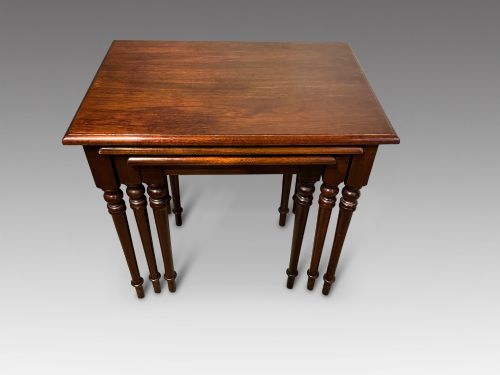
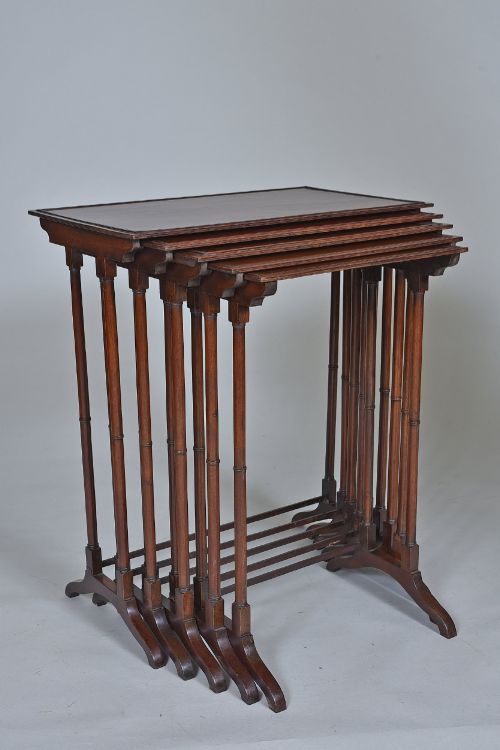
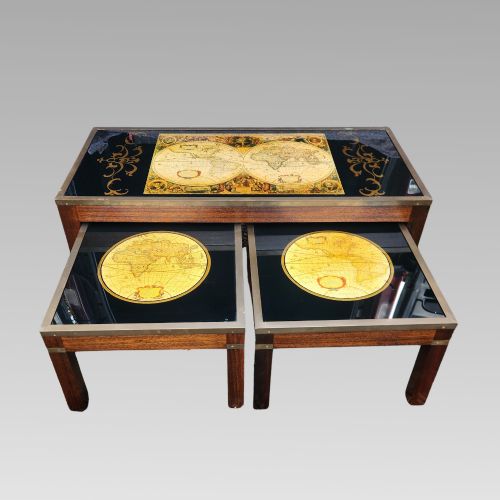
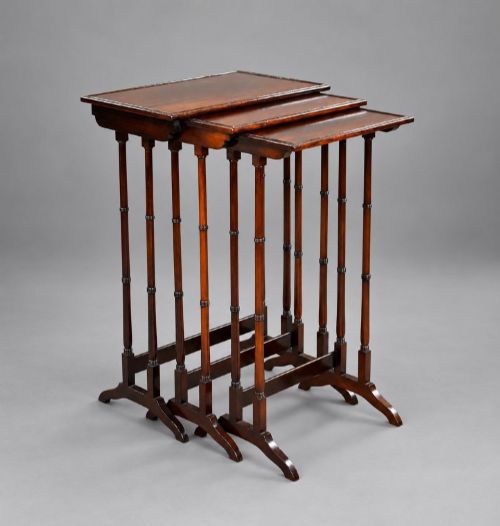
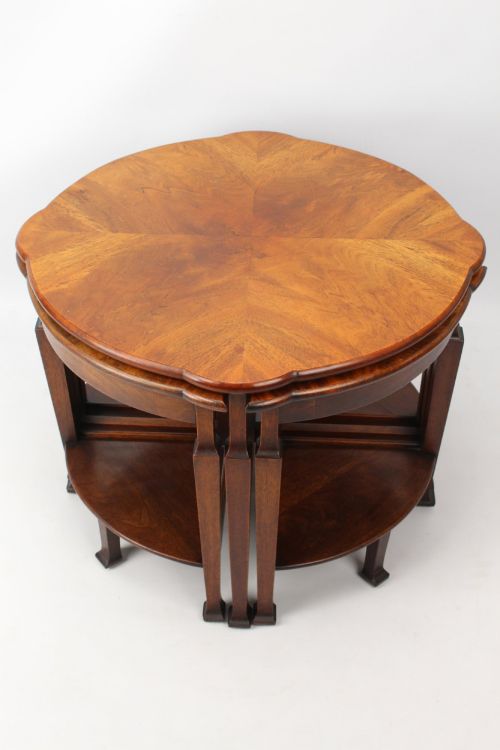
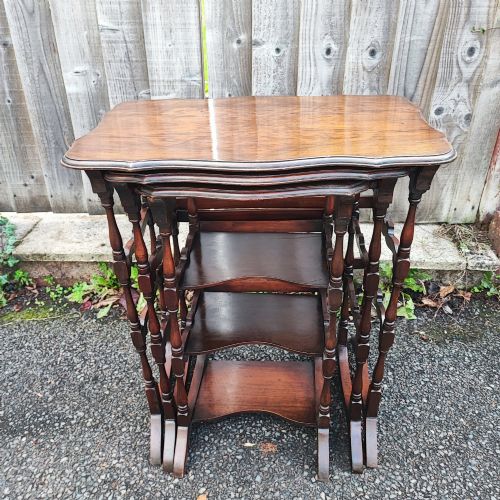
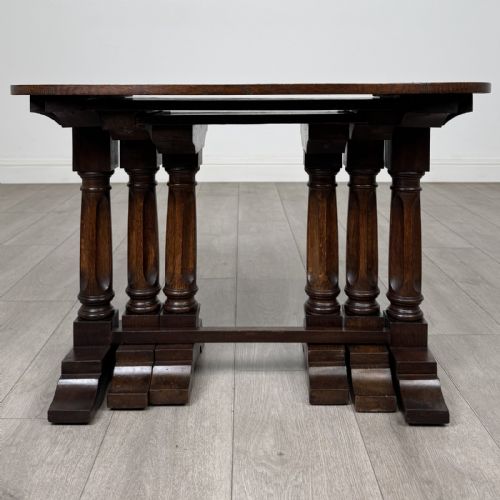
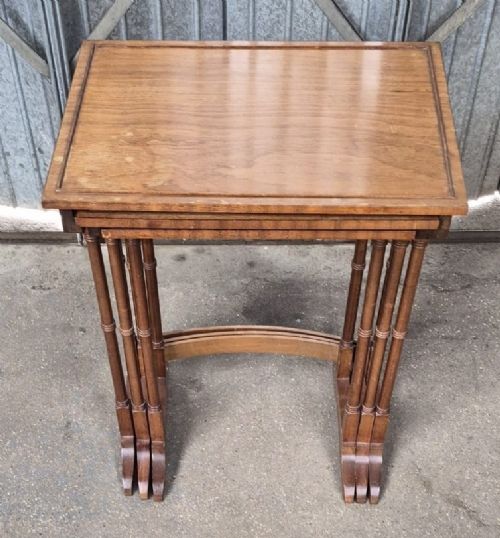
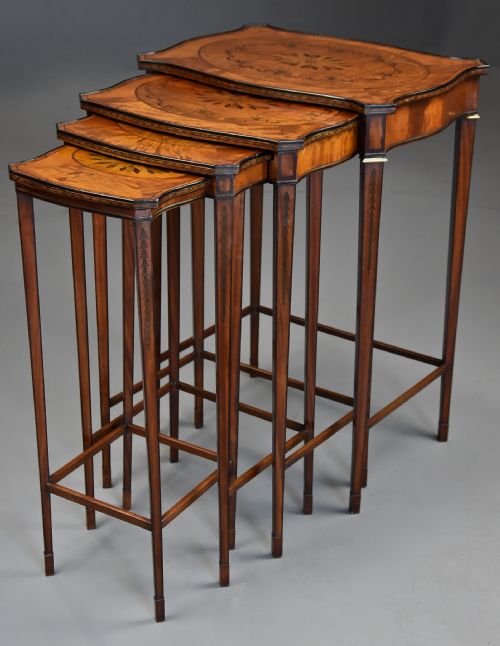
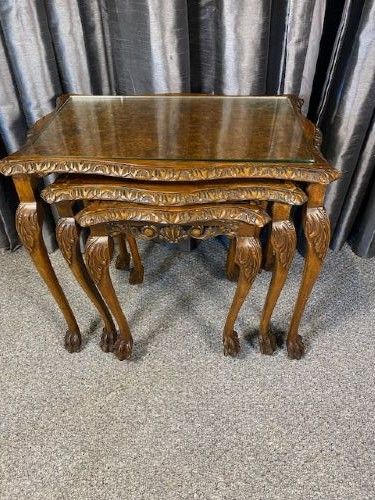
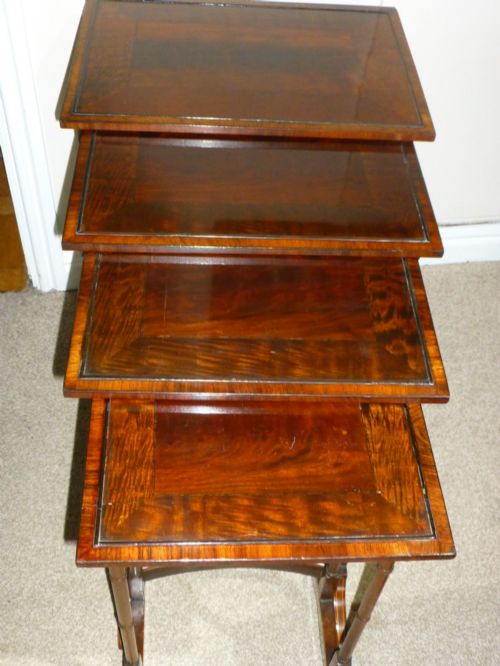
When you search for antique nested tables, you encounter sets of graduating occasional tables designed to slide neatly beneath one another when not in use. The examples on this page predominantly date from the Edwardian period, the nineteenth century, and the nineteen-twenties, appearing in forms ranging from traditional trios to larger quartetto sets of four or five.
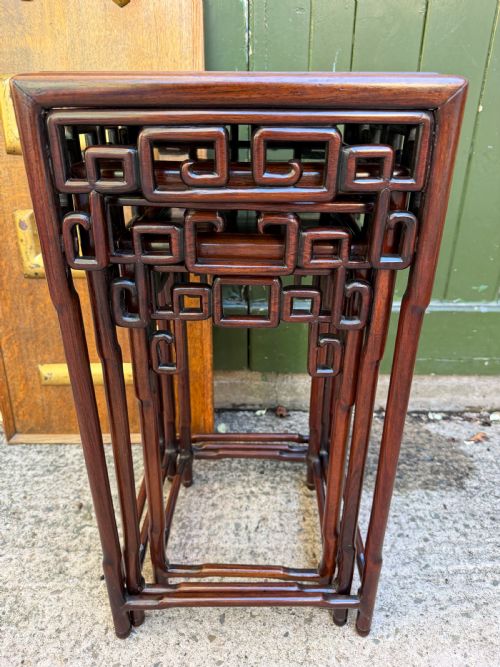
The materials span rich hardwoods such as mahogany and rosewood, alongside lighter satinwood and burr walnut. You will find styles that reflect Georgian restraint, Regency elegance, Edwardian inlay, and occasional decorative touches like Chinoiserie or faux bamboo.
Makers utilised these versatile pieces as tea tables, side tables, or occasional surfaces within drawing rooms and parlours. Their primary appeal lies in this combination of compact storage and multi-tiered utility.
Materials and construction methods
Cabinet-makers constructed these sets using solid hardwoods and decorative veneers, applying satinwood cross-banding, boxwood stringing, or brass inlay to accentuate the tops. The frames rely on stable joinery to support the graduating proportions required for tables to slip smoothly into one another.
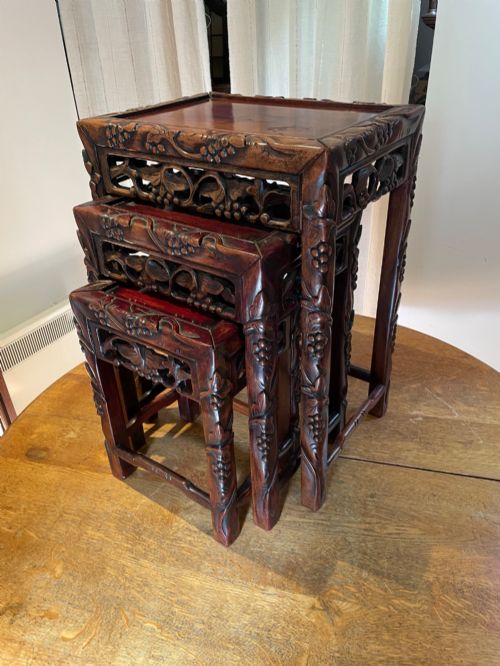
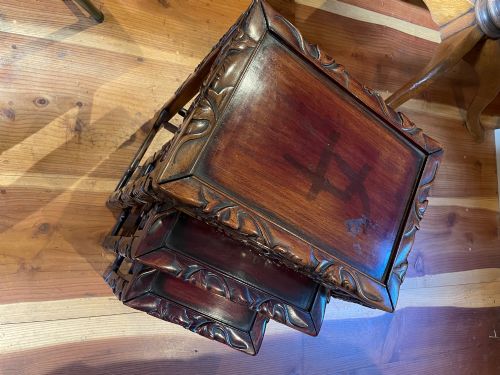
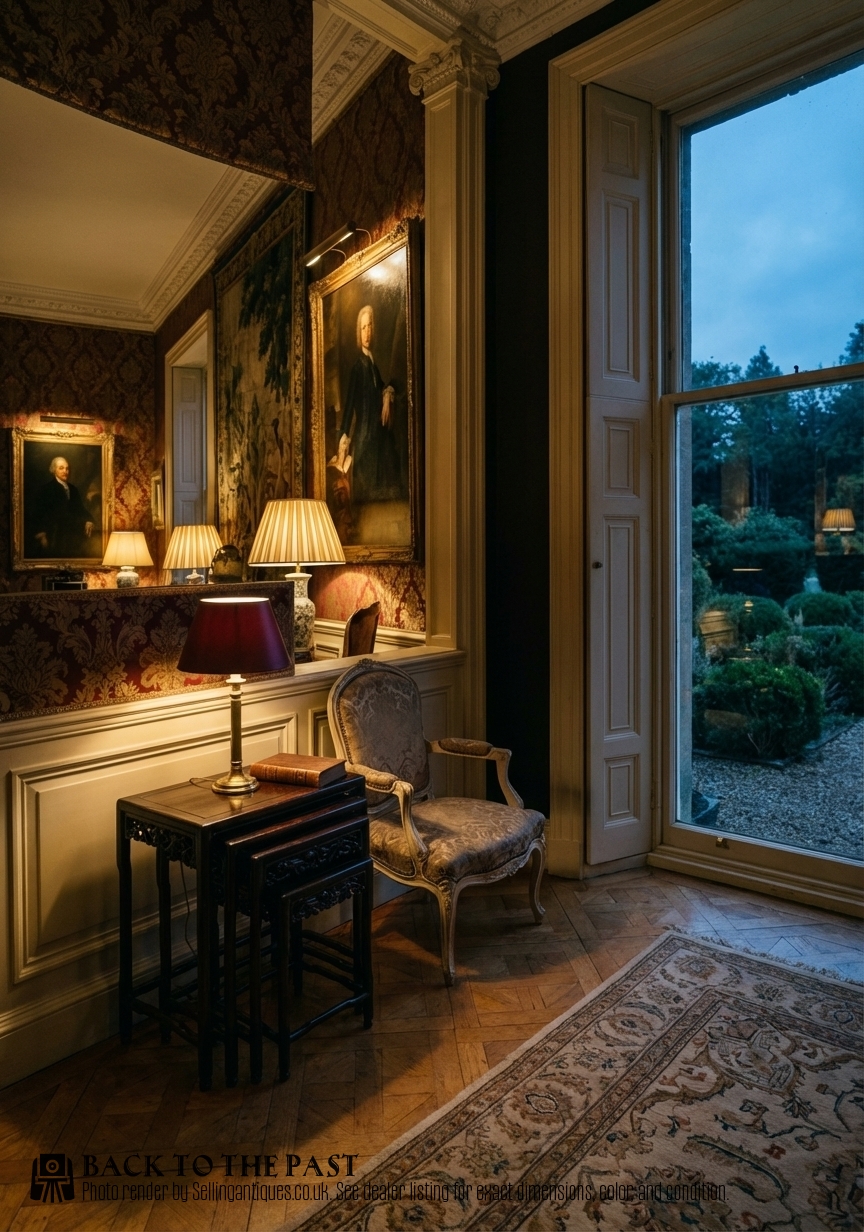
Many Edwardian and nineteenth-century pieces incorporate finely turned or square tapered legs, sometimes joined by trestles or serpentine rails. Surface decoration includes floral painting, lacquer work, and carved detailing found on Chinese hardwood and Hongmu imports.
Antique Nested Tables Retail Price Guide 2026
Typical asking prices for nested tables among the pieces listed under this phrase on Sellingantiques today, from the lower quarter to the upper quarter. They describe what is for sale here now, not the wider market.
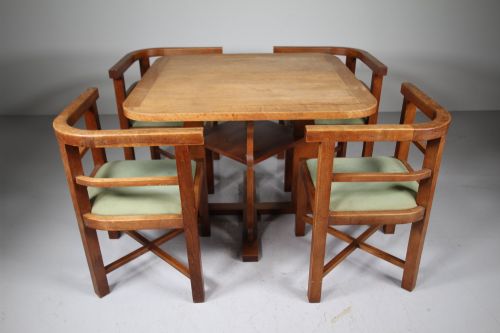
One exceptional nineteenth-century set hides a fully integrated chess table within its nested design.
Factors that separate the finest examples
The standard of a set rests upon the choice of timber and the precision of the graduated fit. Superior pieces employ heavily figured burr walnut, rich rosewood, or carefully matched mahogany, ensuring each smaller table slides smoothly without binding or excessive clearance.
Refinement in secondary details elevates a piece further, such as crisp floral marquetry, delicate satinwood inlay, or integrated chess boards. The integrity of the original polish and the crispness of any hand-carved elements distinguish workshop production of high merit from standard commercial output.
Émile Gallé
The Antique Nested Tables Glossary
- Quartetto
- A set of four nesting tables designed to slide together. This term appears frequently in nineteenth-century and Edwardian descriptions.
- Cross-banding
- A border of veneer laid around the edge of a table top with the grain running perpendicular to the centre. It provides a neat contrasting frame.
- Stringing
- Thin inlay lines of a contrasting wood, such as boxwood, set into the surface of furniture. It outlines panels and table edges on inlaid pieces.
- Hongmu
- A category of dense, heavy Chinese hardwoods used for carved furniture. Pieces in this material often feature intricate traditional motifs.
- Faux bamboo
- Wood turned and carved to resemble natural bamboo stalks. This decorative technique enjoyed popularity during the nineteenth century.
Antique Nested Tables: Frequently Asked Questions
How were nested tables used?
Victorian and Edwardian households deployed them during tea service or entertaining.
Individual tables could be pulled out for guests and returned to the stack afterwards.
How many tables make a set?
Sets usually consist of three or four tables, though occasional pieces form sets of five.
Each table diminishes in height and width to slide into the largest frame.
How do I date an antique nest?
Dating relies on timber selection, leg shape, and decorative elements such as stringing or inlay.
Edwardian pieces often display satinwood and fine tapering legs, while nineteenth-century examples lean towards solid mahogany or rosewood.