
Nesting Occasional Tables
Nesting occasional tables deliver clever space-saving utility through graduated sets sliding neatly beneath one another.
Nesting Occasional Tables
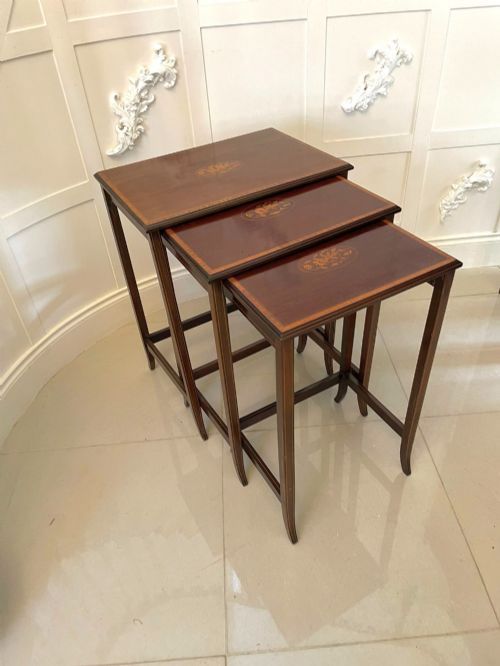
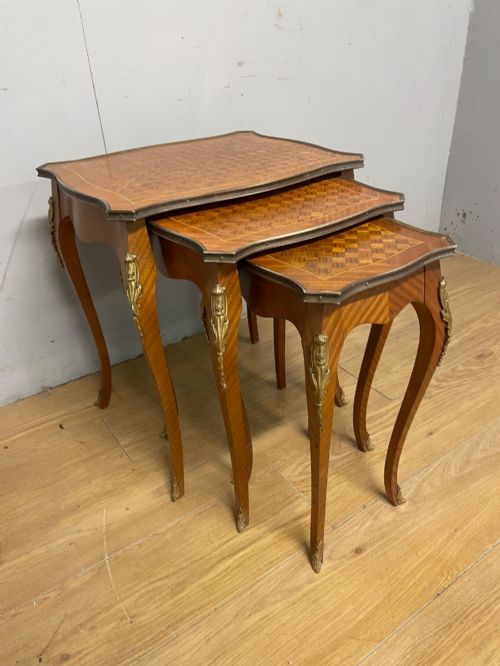
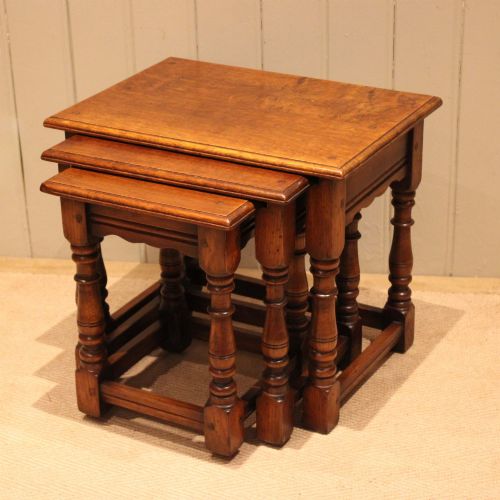
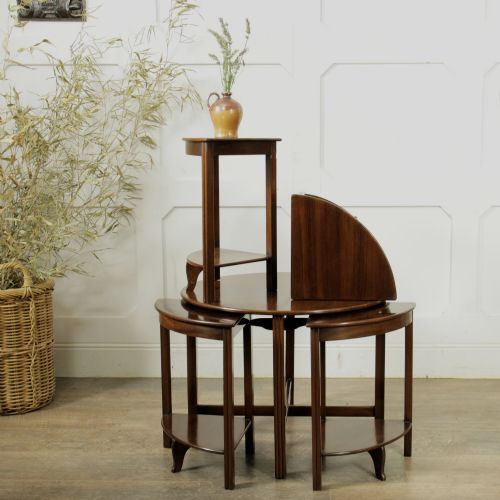
When you search for nesting occasional tables, you look at clever sets of graduated tables designed to slide neatly beneath one another when floor space matters. These pieces appear across multiple periods, with Edwardian and nineteenth-century examples forming the majority of what you will meet on this page. Makers produced sets containing three, four, or five tables, allowing households to deploy extra surfaces instantly.
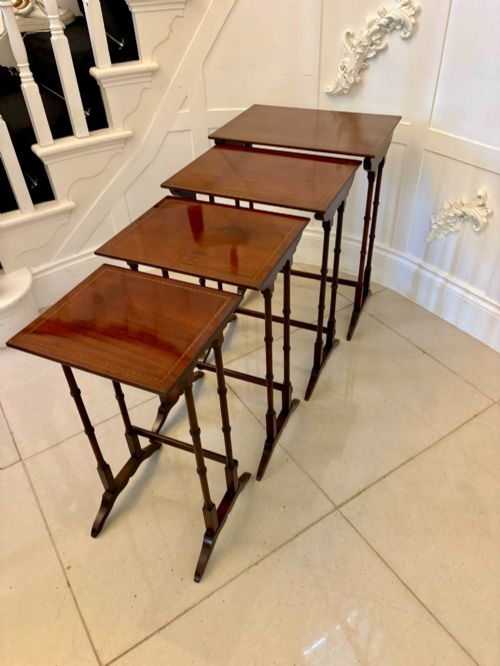
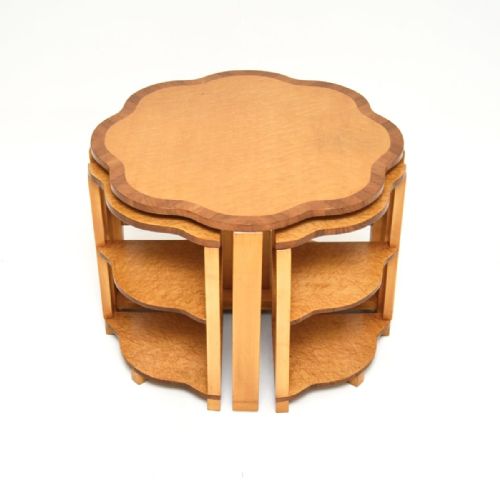
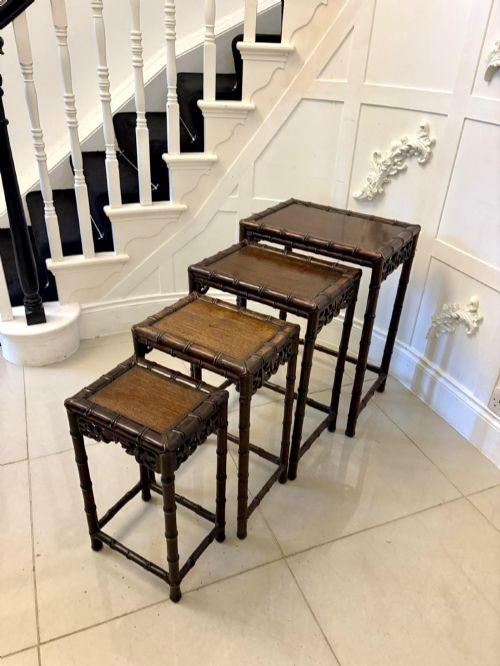
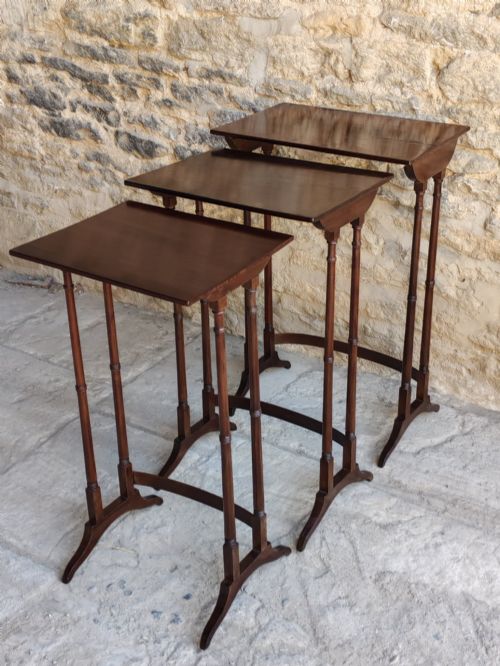
The styles span from simple Georgian and Regency mahogany designs to decorative Edwardian inlaid versions and striking Art Deco bird's-eye maple or walnut creations. You also encounter exotic woods and distinct aesthetics like Chinoiserie decoration or faux bamboo detailing. Each set offers a practical solution for entertaining without cluttering a room permanently.
Materials and Construction
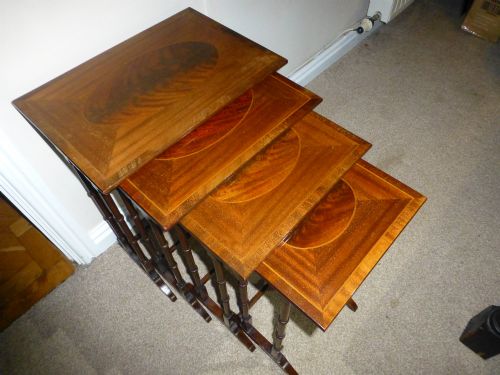
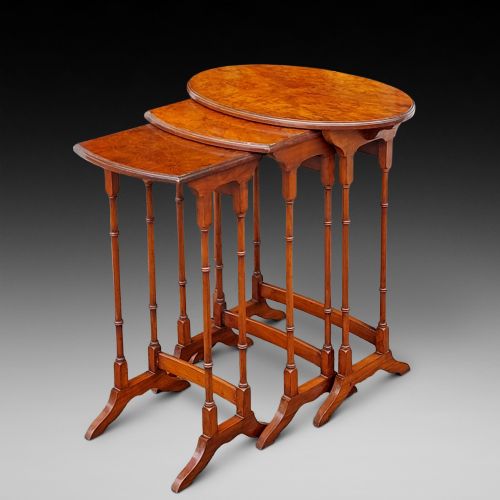
Cabinetmakers relied heavily on rich timbers such as mahogany, walnut, rosewood, and satinwood to construct these interlocking sets. Artisans often enhanced plain surfaces using burr walnut figuring, boxwood stringing, or cross-banding to create subtle visual borders.
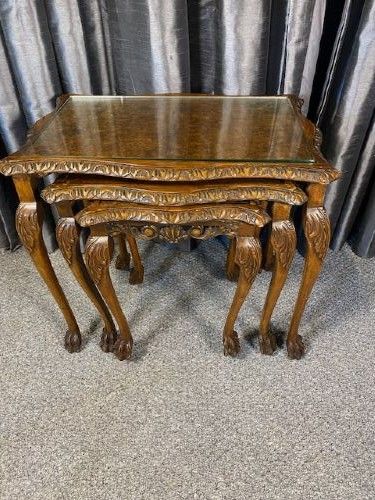
Construction techniques prioritized stability and smooth sliding action so that smaller tables fit precisely into the frame of the largest piece. Detail work ranged from brass inlays and hand-carved floral motifs to lacquer and painted Chinoiserie finishes on hardwood frames.
Listings feature mahogany, walnut, rosewood, satinwood, and oak alongside specialised styles including Chinoiserie and Art Deco.
Distinctions in Quality
Quality reveals itself in the choice of timber grain and the precision of the joinery that allows each table to slide smoothly without binding. Superior sets employ dense, well-figured veneers like burr walnut or rosewood and incorporate refined details such as boxwood inlay or fine brass work.
The integrity of the frame construction across all graduated sizes separates standard utility pieces from finer examples designed for formal reception rooms. Expert execution in decorative finishes, whether hand-carved faux bamboo or delicate floral painting, elevates the standing of an individual set.
Harry and Lou Epstein·Gordon Russell
The Nesting Occasional Tables Glossary
- Quartetto
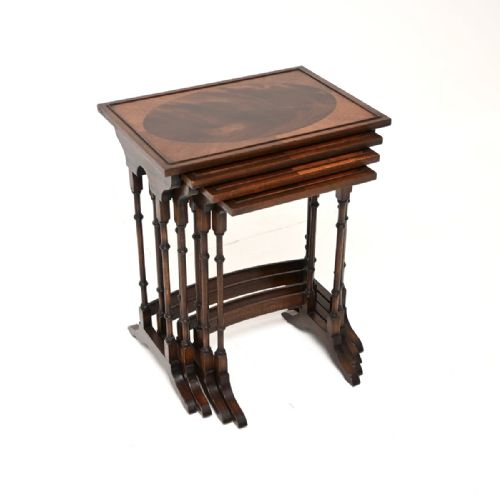
- A set of four nesting tables designed to slide progressively beneath the largest table. This nineteenth-century term originates from musical groupings.
- Cross-banding
- A decorative border technique where veneer strips run perpendicular to the grain of the main surface. This adds a neat framing effect to tabletop edges.
- Stringing
- A thin inlay of contrasting wood used to outline geometric panels on tabletops and legs. It provides delicate linear definition to Edwardian and Georgian furniture.
- Bird's-eye maple
- A figured timber exhibiting small dots resembling bird eyes caused by local depressions in the wood growth. Cabinetmakers utilised this highly decorative grain for striking Art Deco surfaces.
Nesting Occasional Tables: Frequently Asked Questions
What is a quartetto nest?
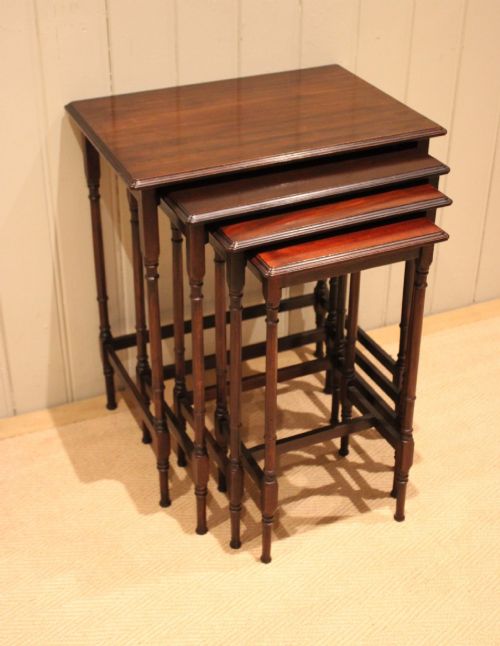
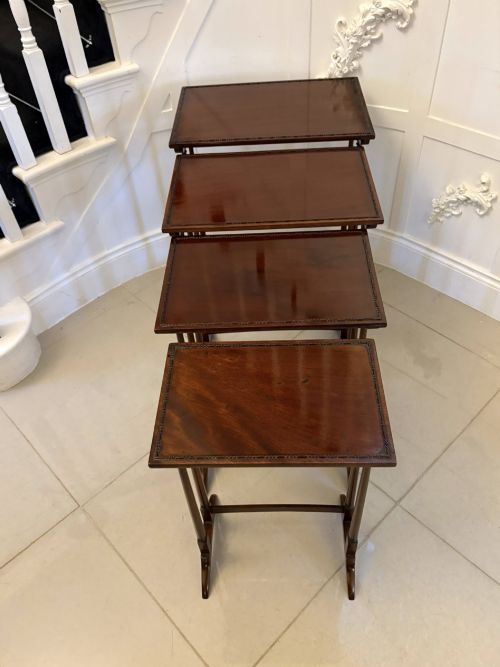
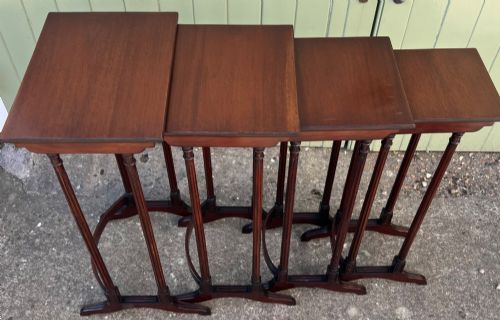
A quartetto nest specifically refers to a matching set of four tables built to graduate in size so they store as one unit.
Cabinetmakers popularized this configuration during the nineteenth century for drawing rooms where extra tea or writing surfaces were frequently required.
How were nesting tables used historically?
These tables served primarily as mobile surfaces for serving tea, holding books, or playing games like chess within domestic interiors.
Servants or hosts could easily separate the stack to place individual tables beside guests before sliding them back together to save floor space.
How do I identify an Edwardian set?
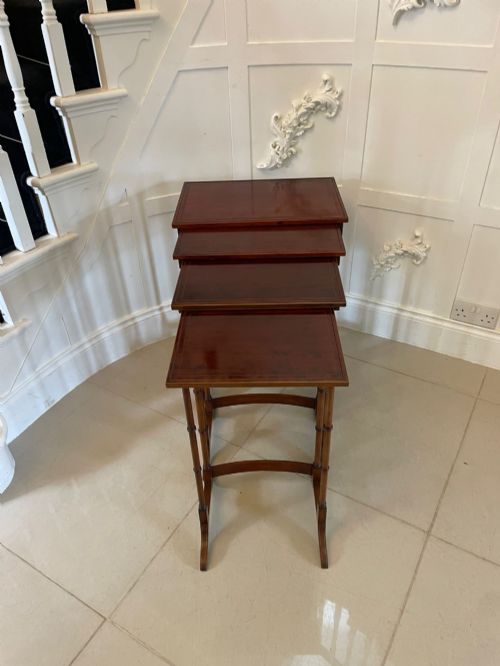
Edwardian sets frequently display lighter mahogany frames combined with delicate boxwood stringing or subtle marquetry inlay.
They often take the form of quartetto sets or circular five-table arrangements produced around the turn of the twentieth century.
Are all nesting tables antique?
The selection includes antique pieces originating from the Georgian, Victorian, and Edwardian eras alongside later twentieth-century Art Deco interpretations.
Each period brought distinct stylistic choices, shifting from rosewood and mahogany toward walnut, oak, and exotic maple.