


Chinese Carved End Tables
These Chinese carved end tables bring dense timber and intricate hand carving into a room, offering both practical surface space and centuries of regional design tradition.
Chinese Carved End Tables
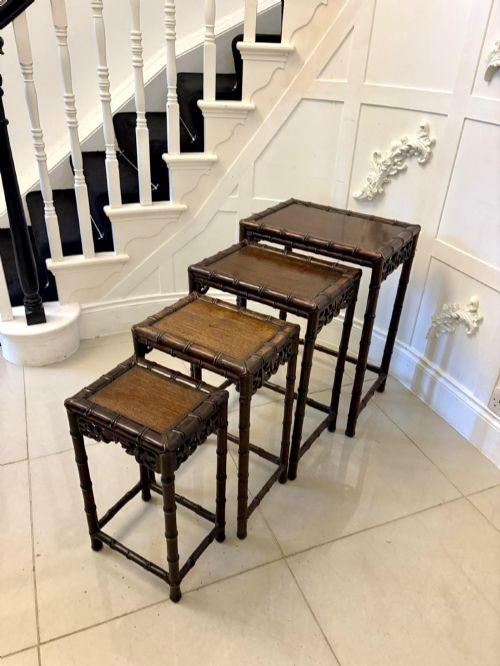
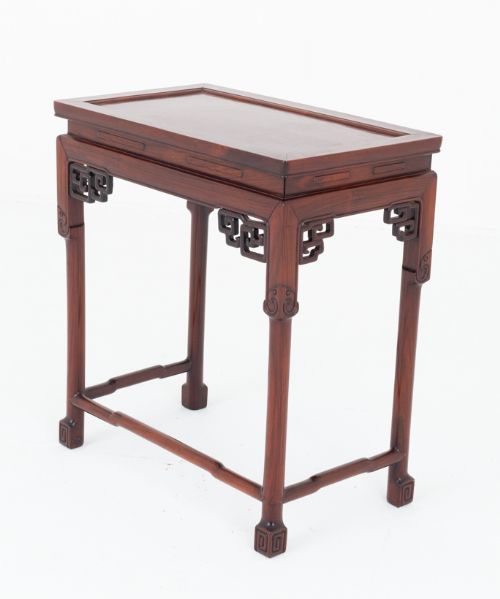
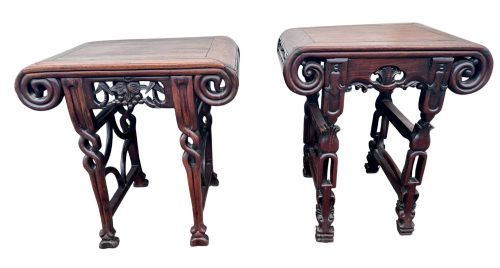
When you search for Chinese carved end tables, you encounter a variety of forms designed to serve practical roles beside seating or against walls. The selection spans compact nests of four tables, low Kang tables, octagonal occasional pieces, and sturdy side tables.
The pieces on this page emerge primarily from the nineteenth century and the early decades of the twentieth century. They reflect periods such as the late Qing Dynasty and Chinese Export traditions, providing solid timber construction tailored for both domestic use and international trade.
Materials and Construction
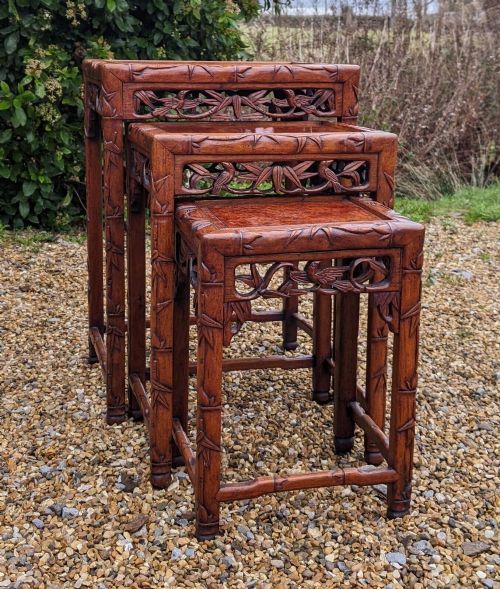
Cabinetmakers utilised dense hardwoods including rosewood, hongmu, huali, huanghuali, and elm to build these sturdy frames. These resilient timbers allowed artisans to execute deep relief carving without compromising the structural integrity of the legs and aprons.
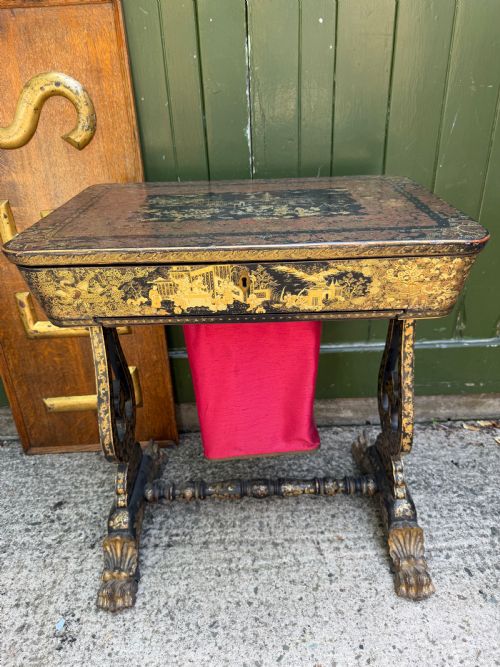
Surfaces frequently integrate inset panels of rouge marble or delicate lacquer finishes with gilded decoration. Joinery techniques prioritize mortise and tenon construction, allowing multi-tiered tables and nesting sets to fit together seamlessly.
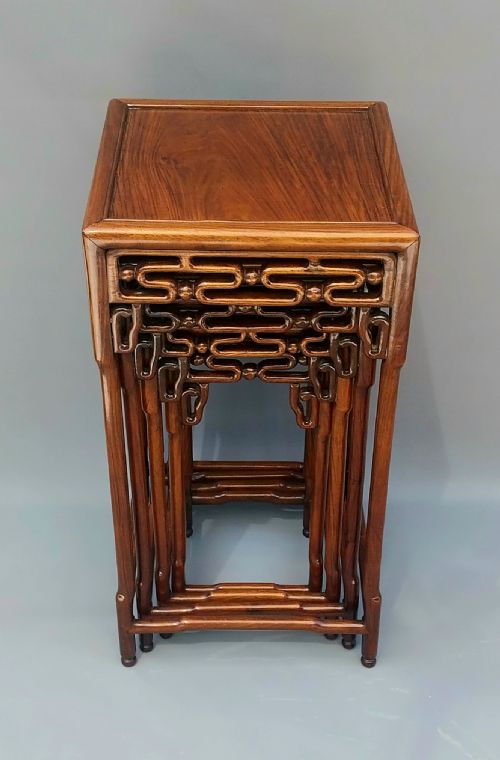
Nesting sets dominate the available forms, alongside low Kang tables, octagonal occasional stands, and plant supports.
Evaluating Quality and Detail
The distinction between standard examples and the finest pieces rests upon the crispness of the hand carving and the selection of the timber. Dense grain patterns in huanghuali or heavily figured rosewood elevate the visual impact of a side table or nest.
Proportion and stability determine the success of the form, particularly in nested sets or tall plant stands where slender legs must support substantial weight. Superior execution shows in the precision of the joints and the depth of the carved motifs across the aprons and edges.
The Chinese Carved End Tables Glossary
- Hongmu
- A dense, heavy tropical hardwood prized by traditional Chinese cabinetmakers for its rich dark colour and strength. It forms the primary structure of many nineteenth-century nesting and side tables.
- Kang Table
- A low table traditionally placed upon a heated brick platform for dining or writing. These low pieces function effectively as coffee tables in modern interiors.
- Quartetto
- A matched set of four graduated tables designed to slide neatly beneath one another. This form appeared frequently in nineteenth-century Chinese Export production.
- Jardiniere Stand
- A tall or low support built specifically to hold heavy ceramic plant pots. They often feature inset marble tops to protect the wood from moisture.
Chinese Carved End Tables: Frequently Asked Questions
How were nesting tables used?
These sets of four graduated tables were pulled out to serve tea or display objects when guests visited. When not in use, they slid together into a single compact stack to save floor space.
Cabinetmakers designed them so each smaller table fit precisely beneath the one above it. This allowed households to maintain flexible living areas without cluttering the room.
What is a Kang table?
A Kang table is a low piece originally designed to sit on a heated sleeping platform in traditional northern Chinese homes. People gathered around them for meals, tea, or writing.
In modern spaces, their low profile makes them suitable for use as coffee tables. They often feature distinct scroll ends and robust hardwood construction.
Why do some tables have marble tops?
Inset marble tops provided a cool, durable surface that resisted heat from hot teapots and prevented moisture damage from plants placed on jardiniere stands.
This technique also showcased the decorative contrast between the pale or veined stone and the dark, carved hardwood frame. The heavy stone added stability to taller plant stands and side tables.
How do I date these tables?
Dating relies on examining the timber density, the style of the carving, and the construction methods used in the frame. Nineteenth-century pieces often display heavier rosewood or hongmu timbers with traditional Qing Dynasty motifs.
Later pieces from the early twentieth century may show slight shifts in proportion or adopt Western-influenced occasional table formats. Comparing the joinery helps separate nineteenth-century production from later adaptations.