

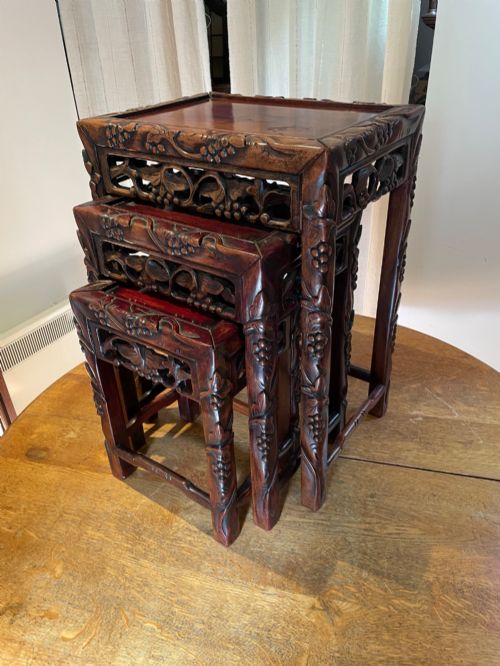
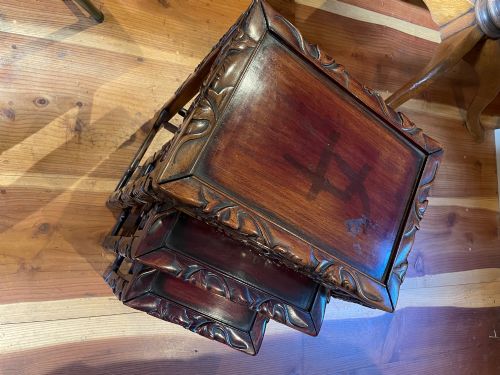

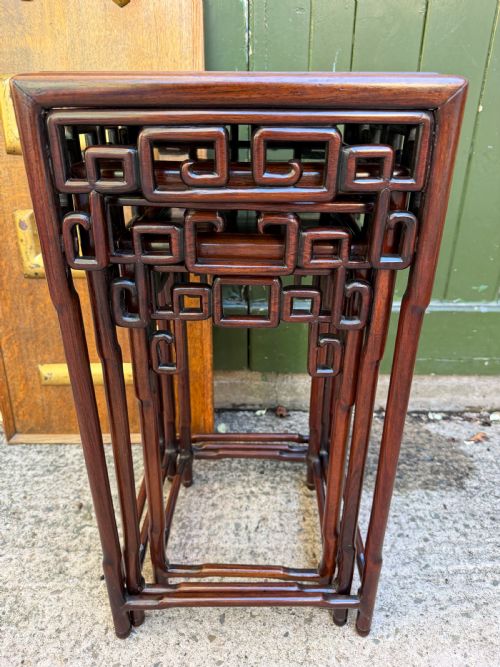
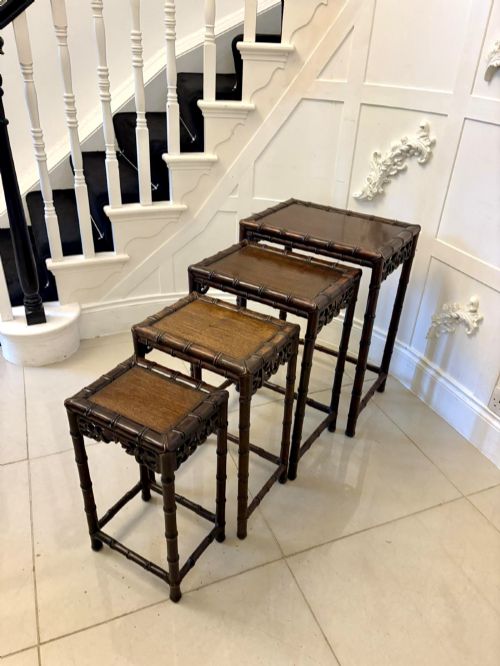


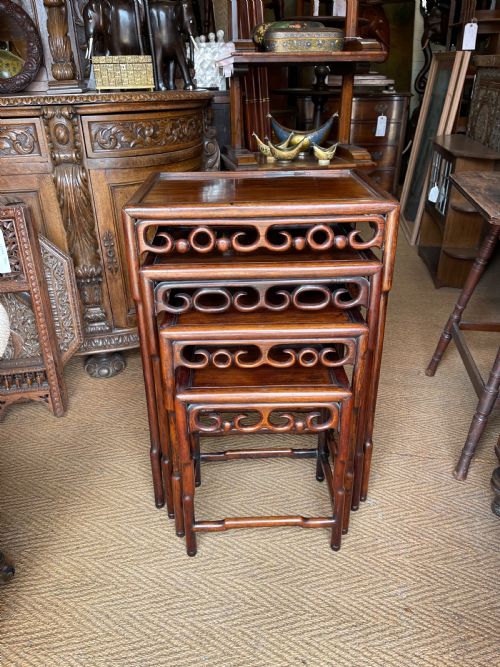


Carved Hardwood Nesting Tables
These carved hardwood nesting tables offer practical tiers of surfaces that slide neatly away when floor space matters.
Carved Hardwood Nesting Tables
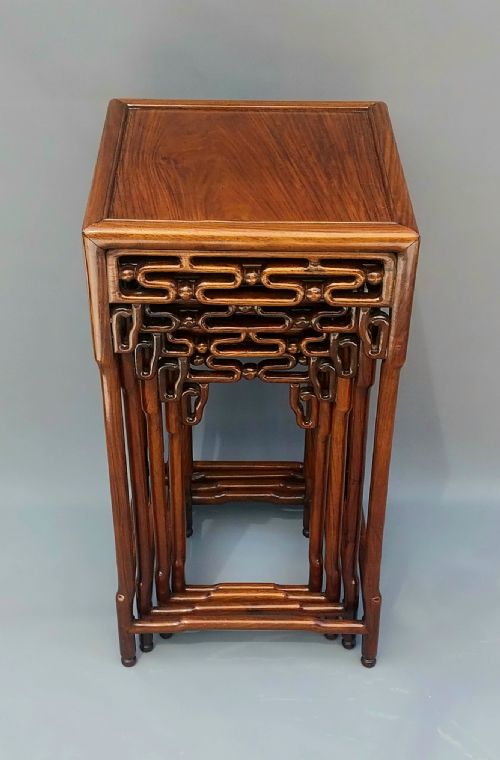
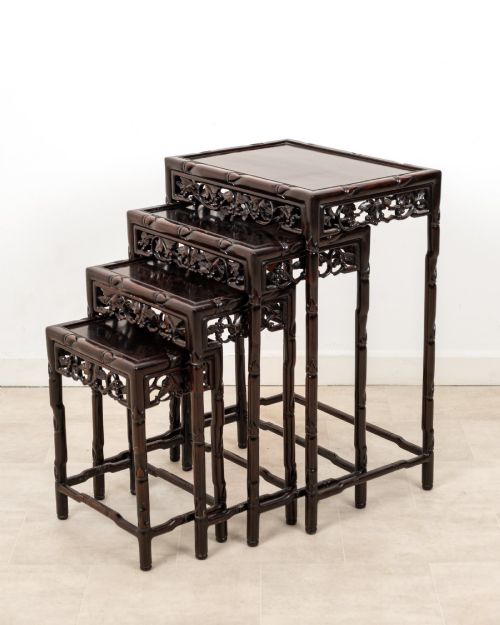
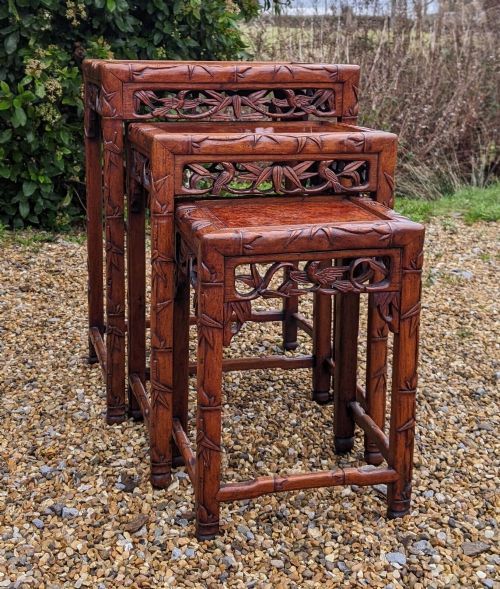
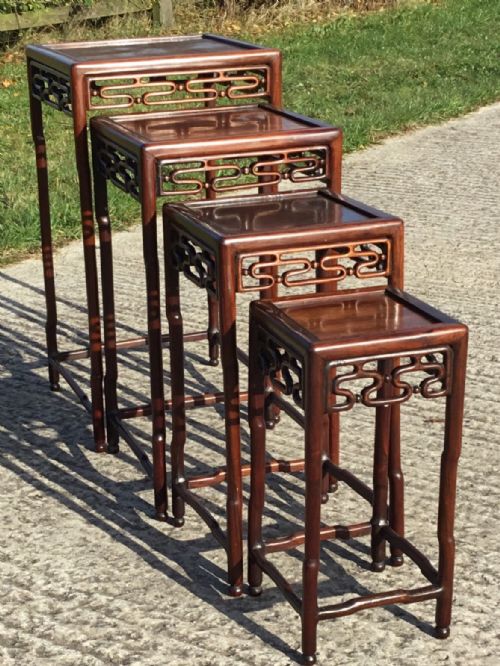
Carved hardwood nesting tables comprise sets of three or four graduated occasional tables designed to slide neatly beneath one another. When you search for carved hardwood nesting tables, you encounter sets spanning the nineteenth century through the early twentieth century, with Chinese Export and Qing Dynasty examples predominating alongside Anglo-Indian pieces.
The form typically appears as a nest of four tables, though sets of three also occur in the listings. These pieces function as side tables or coffee tables, serving rooms where flexible surface space is required without permanent clutter.
Origins heavily lean towards Chinese workshops of the late nineteenth and early twentieth centuries, alongside Victorian and Edwardian interpretations in the Anglo-Indian tradition. The pieces reflect cross-cultural design exchanges, merging traditional Eastern timber carving with Western domestic utility.
Materials and construction
Construction relies on dense tropical timbers such as hongmu, rosewood, huanghuali wood, and teak, occasionally accented with burrwood or glass inserts. These dense hardwoods provide the structural rigidity required for slender legs and interlocking frames.
Carving defines the decoration, utilising deep relief work depicting floral motifs, foliage, or figurative scenes along the friezes and edges. Joinery techniques ensure each smaller table slides smoothly into the frame of the one above it without binding.
Carved Hardwood Nesting Tables Retail Price Guide 2026
Typical asking prices for carved hardwood nesting tables among the pieces listed under this phrase on Sellingantiques today, from the lower quarter to the upper quarter. They describe what is for sale here now, not the wider market.
Listings feature sets primarily from the nineteenth century up to the 1930s, constructed in rosewood, hongmu, teak, and huanghuali wood.
Separating the ordinary from the exceptional
Quality rests primarily in the depth, crispness, and continuity of the hand carving across all tiers in the set. Finer examples display meticulous detail where even the hidden undersides and inner frames receive careful attention.
The choice of timber creates a distinct separation, with richly figured huanghuali or dense hongmu and rosewood commanding greater visual weight than plain teak or standard hardwood. The integrity of the graduated fit, ensuring each table slides effortlessly and sits level, marks superior workshop production.
The Carved Hardwood Nesting Tables Glossary
- Hongmu
- A traditional Chinese term for dense, heavy hardwoods, often translating to red wood. It encompasses several resilient timber species prized for furniture making.
- Quartetto
- A nineteenth-century term specifically denoting a set of four small tables designed to nest together. They frequently appeared in Victorian and Edwardian drawing rooms.
- Chinoiserie
- European decorative style reflecting Chinese artistic influences, popular during various historical periods. It often appears in British interpretations of Eastern forms.
- Graduated
- Describing a set of tables where each successive piece diminishes in height and width to fit beneath the larger one. This engineering allows four surfaces to occupy the footprint of one.
Carved Hardwood Nesting Tables: Frequently Asked Questions
How were nesting tables used historically?
These tables served drawing rooms and parlours where hosts needed extra surfaces for tea, writing, or holding decorative objects. Servants would deploy the individual tiers as guests required them.
Once the gathering concluded, the smaller tables slid back into the largest frame to clear the floor space. This versatility made them popular in Victorian and Edwardian formal interiors.
How do I care for hardwood nesting tables?
Keep these tables away from direct heat sources and strong sunlight to prevent the dense hardwood from splitting or the polished surface from fading. Regular dusting with a dry, soft cloth maintains the finish.
Avoid using silicone-based polishes or wet cloths on antique timber. Occasional application of a traditional beeswax feed helps preserve the natural grain and moisture of the wood.
Are these tables sturdy enough for daily use?
The dense tropical hardwoods used in these sets provide substantial weight and structural strength despite the slender legs. They handle normal domestic placement of lamps, cups, and books securely.
Care should be taken when sliding the tables in and out of the nest to avoid chipping the carved edges. Lifting rather than dragging the individual tiers preserves the joints over time.
How can I tell a Chinese export set from a British one?
Chinese export pieces typically utilise indigenous timbers like hongmu, huanghuali, or rosewood, combined with traditional mortise-and-tenon joinery and deep relief carving. The proportions and iconography often follow Eastern design traditions.
British interpretations, such as Anglo-Indian or Chinoiserie examples, frequently adapt these motifs onto teak or standard hardwoods using domestic cabinetmaking methods. Examining the timber species and construction details reveals the origin of the workshop.