
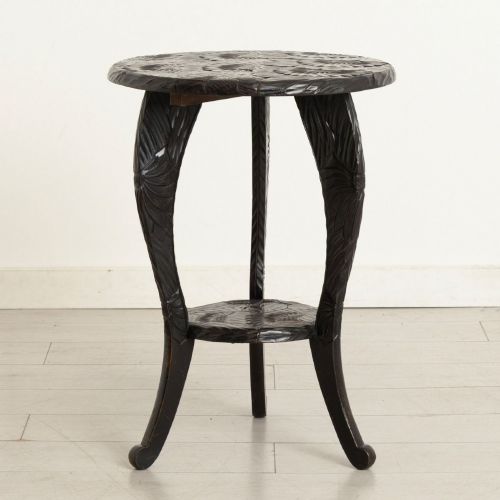
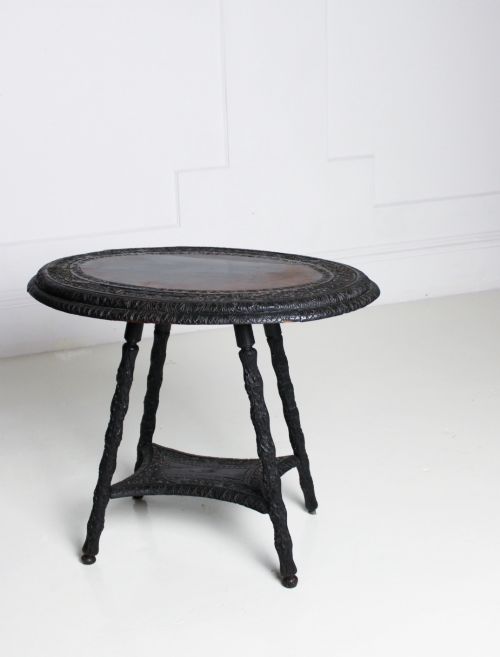


Hand Carved Coffee Table
When you search for hand carved coffee table, you uncover low tables, stools, and benches crafted from dense timbers with intricate relief work.
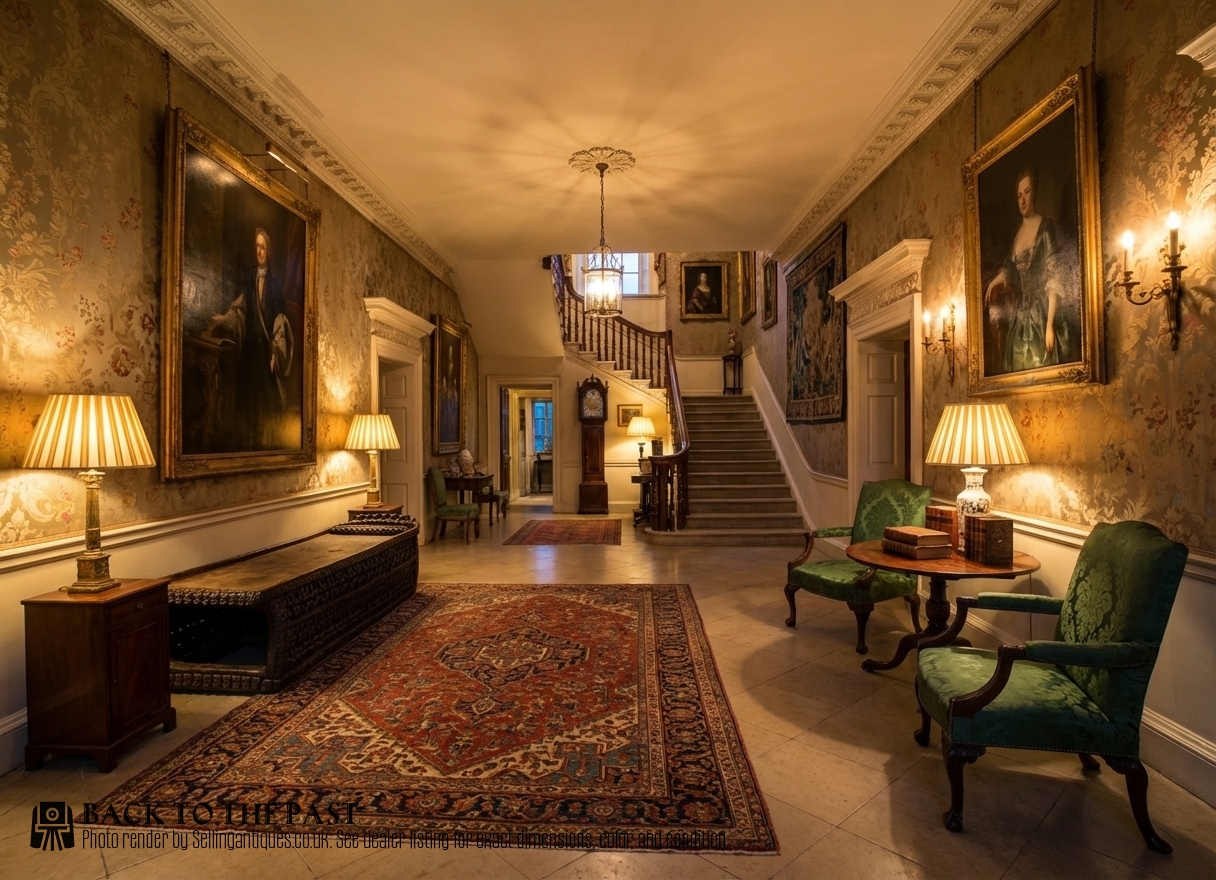
Hand Carved Coffee Table
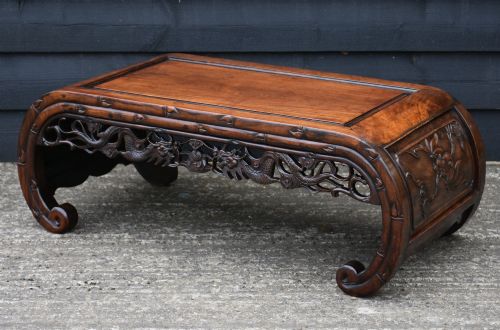
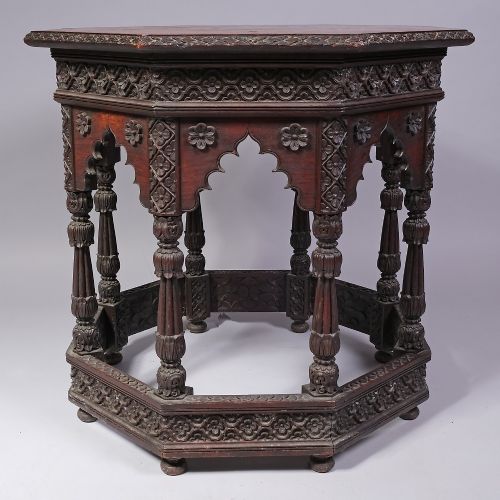
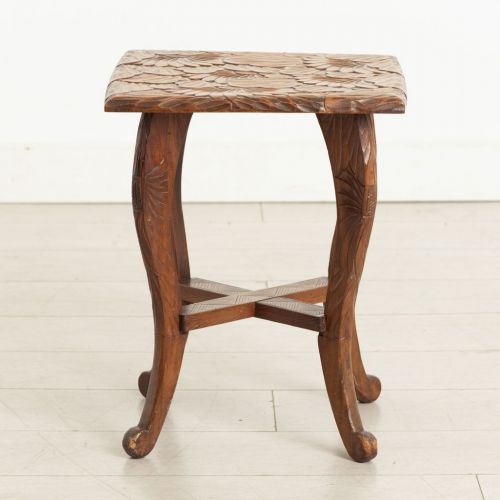
A hand carved coffee table takes many historical forms, ranging from nineteenth-century Anglo-Indian occasional tables to Chinese hardwood low tables and Victorian walnut stools. Buyers looking for this phrase meet pieces originally made as side tables, opium beds, and ceremonial furniture, adapted for modern living at a lower height.
The regional variety is substantial, encompassing Burmese teak pieces with elephant supports, Kashmiri walnut works, and Moroccan brass tray tables. These items frequently display distinct cultural motifs, such as dragons, elephants, and complex geometric or floral carving.
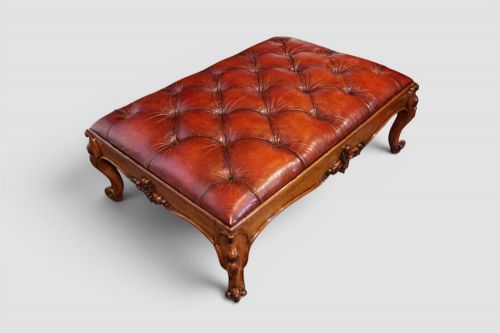
Victorian examples in walnut and rosewood sit alongside Asian export pieces, showing how diverse traditions of woodworking met European tastes for low-slung, decorative furniture. Such items function naturally in contemporary interiors as a focal point before a sofa.
Materials and construction
Maker's workshops relied on dense tropical hardwoods and native European timbers, including teak, rosewood, walnut, and general hardwood. These heavy woods provided a stable canvas for deep, chisel-cut relief work and pierced ornamentation.
Surface decoration frequently incorporated contrasting elements, such as bone inlay, hand-dyed red leather, copper tops, and ebonisation. Craftsmen combined traditional joinery with surface carving, sometimes supporting heavy tops with figural bases like elephants or camels.
Several pieces on offer stand quite literally on the shoulders of carved wooden elephants and camels.
Judging quality
Quality rests primarily on the depth and crispness of the carving, distinguishing sharp, hand-tooled relief from shallow or mechanised shaping. Superior examples display careful detailing in complex motifs, such as dragon scales or animal figures, without hesitation in the chisel work.
The choice of material and stability of construction also dictate worth, where dense timbers like rosewood and teak hold fine lines better than softer woods. Original surfaces, patinated leather inserts, and intact bone inlay contribute significantly to the integrity of a piece.
Liberty of London
The Hand Carved Coffee Table Glossary
- Anglo-Indian
- Furniture made in India during the British colonial period, often combining local carving traditions with European forms.
- Opium Table
- A low Chinese table traditionally used for reclining or smoking, now frequently utilised as a coffee table.
- Marquetry
- Inlay technique using pieces of wood veneer to form decorative patterns and pictures on a surface.
- Ebonised
- Wood finished with a dark stain or paint to imitate ebony, popular in nineteenth-century decorative items.
Hand Carved Coffee Table: Frequently Asked Questions
What is a hand carved coffee table?
A hand carved coffee table is typically an antique low table, stool, or adapted opium bed featuring intricate chisel work from regions like India, China, and Burma, or from Victorian Britain.
These pieces bring distinct regional styles and dense timber construction into a modern living space as functional furniture.
How do I style a carved table?
Pair these ornate surfaces with neutral seating to let the deep wood tones and figural carvings stand out without visual competition.
Keep items placed on top minimal to allow the craftsmanship of the timber and inlay to remain visible.
Are these tables sturdy enough daily?
Most pieces are built from dense hardwoods like teak, rosewood, and walnut, making them robust for regular use in a sitting room.
Care should be taken with delicate bone inlay or projecting carved elements when placing items on the surface.
How do I date a carved wooden table?
Dating relies on identifying regional styles, wood species, and construction methods characteristic of periods like the Victorian era or the early twentieth century.
Examine the tool marks, timber ageing, and whether the form originated as an altar, side table, or stool.