



Traditional Stacking Tables
Traditional stacking tables offer a clever space-saving design, sliding neatly together when not in use.
Traditional Stacking Tables
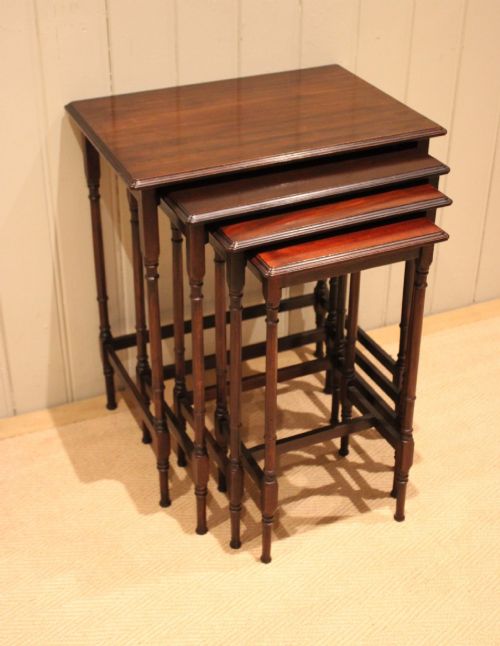
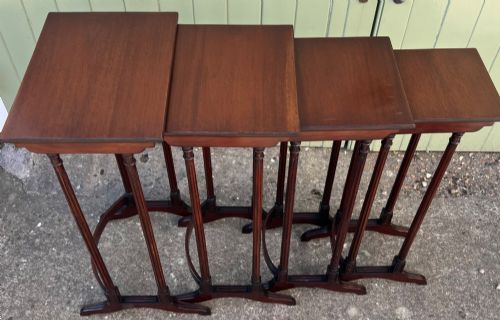
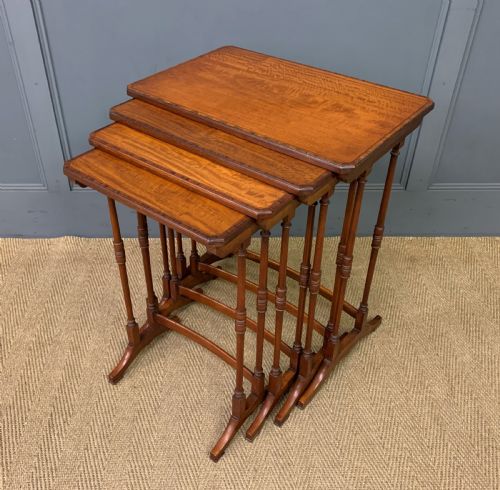
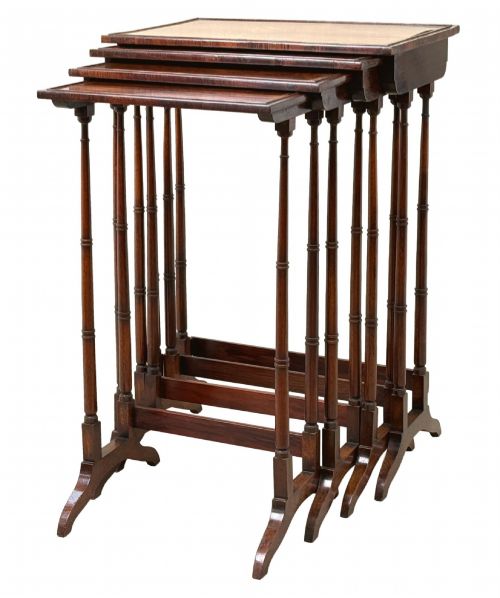
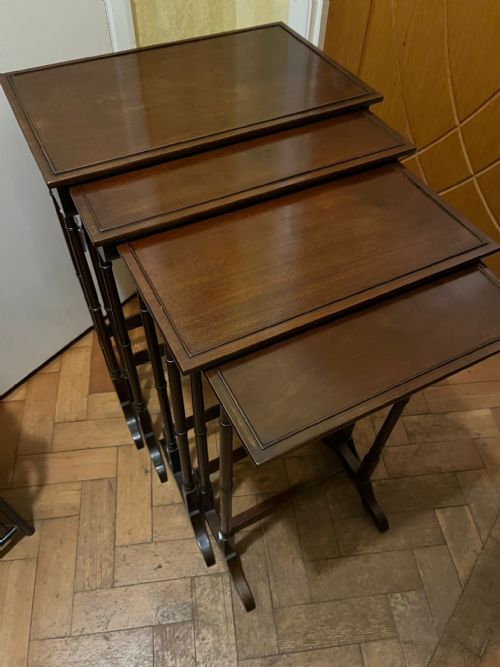
Traditional stacking tables provide multiple surfaces that nest inside one another, often referred to as nests or quartetto sets.
Buyers will encounter various configurations on this page, ranging from sets of three to four tables originating from the nineteenth and early twentieth centuries.
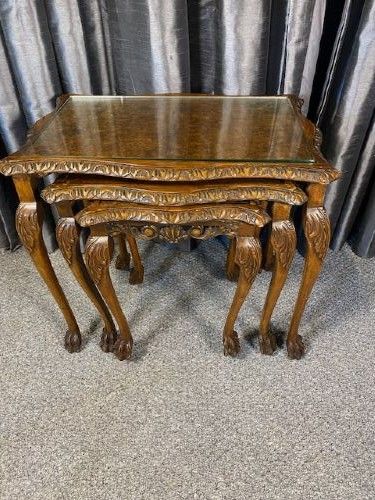
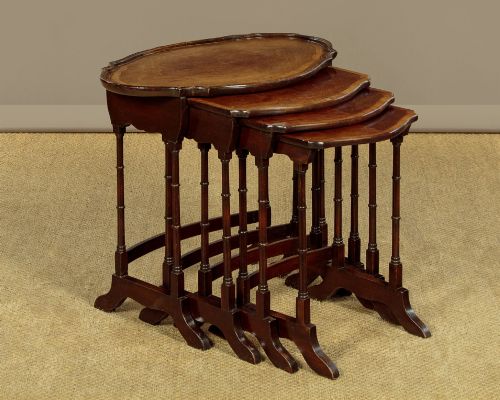
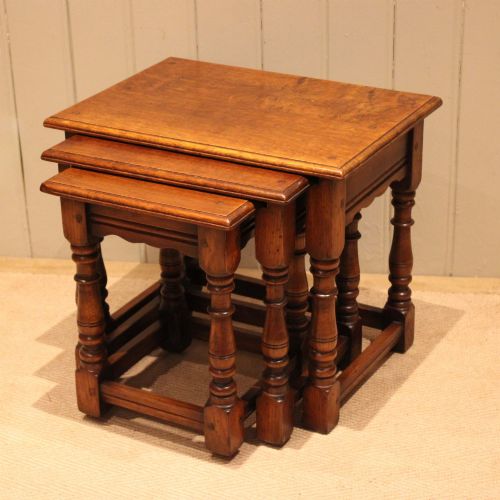
Common forms include rectangular, shaped top, and round coffee tables designed for everyday utility and compact storage.
Distinctions in Quality
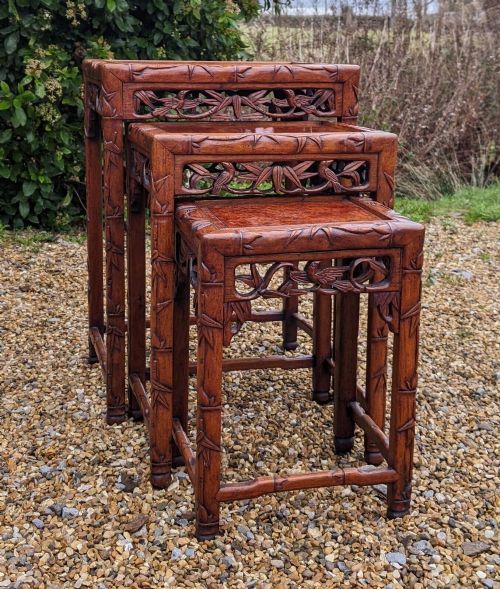
Quality rests upon the selection of timber, such as figured mahogany or exotic huanghuali, and the precision of the joinery.
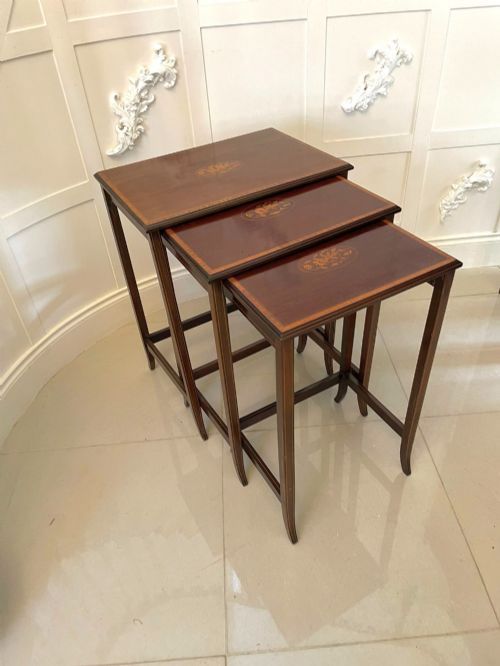
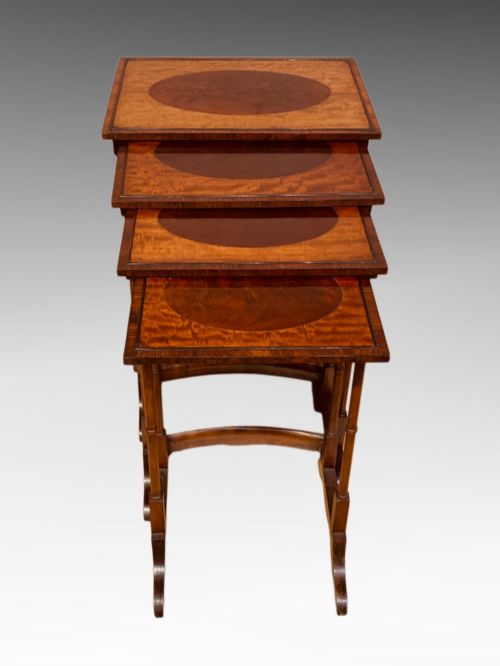
Sets featuring refined inlays or balanced proportions across all four graduating tables command greater attention.
One unexpected inclusion among the wooden furniture is a genuine antique leather book lamp.
The Traditional Stacking Tables Glossary
- Quartetto
- A set of four tables designed to stack inside each other. The term frequently appears in nineteenth-century listings.
- Nest of tables
- A group of graduated tables that slide together to occupy the footprint of the largest single table. They serve as versatile occasional furniture.
- Inlay
- A technique where contrasting woods or materials are set into the surface to create decorative patterns. Satinwood and other timbers often provide this contrast.
- Parquetry
- A geometric mosaic of wood pieces used for decorative tabletops. This technique appears on selected nineteenth-century examples.
- Figured wood
- Timber with a natural, attractive grain pattern, such as burr walnut. This grain adds visual depth to the surface.
Traditional Stacking Tables: Frequently Asked Questions
What are traditional stacking tables?
These pieces consist of graduating sets of tables that slide beneath one another to save floor space.
Originating largely in the nineteenth and early twentieth centuries, they provide flexible surfaces for tea or display.
How were nesting tables used?
Owners kept them stacked against a wall or beside a chair until guests arrived.
Individual tables could then be distributed around the room for drinks, books, or lamps before being nested again.
What woods were commonly used?
Cabinetmakers utilised a variety of timbers including mahogany, oak, walnut, and rosewood.
More ornate examples incorporate satinwood inlay, oriental hardwoods, or parquetry patterns.
How do I identify an Edwardian set?
Edwardian examples typically date from the early twentieth century and frequently showcase inlaid mahogany construction.
They often follow earlier Regency or Sheraton design traditions with lighter frames and delicate legs.