


Antique Wooden Nesting Tables
Antique wooden nesting tables offer a clever space-saving design, sliding neatly together when floor space matters and separating easily for tea or coffee.
Antique Wooden Nesting Tables
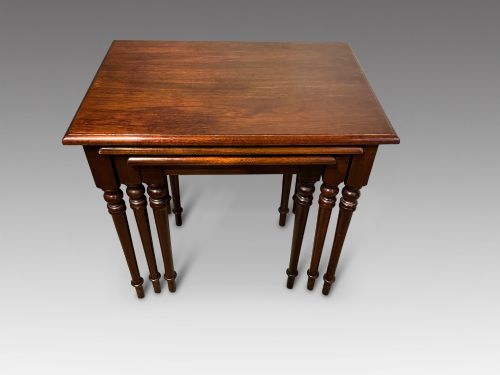
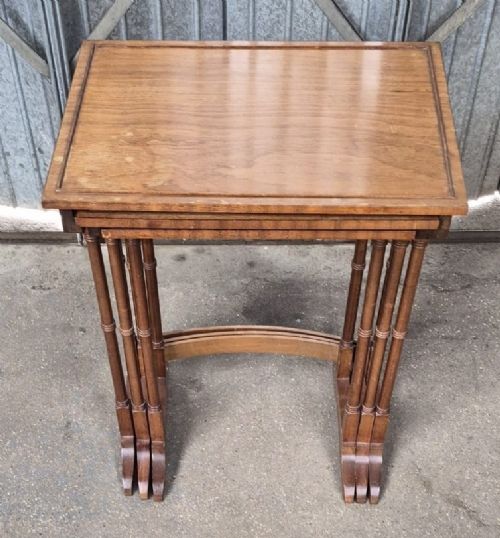
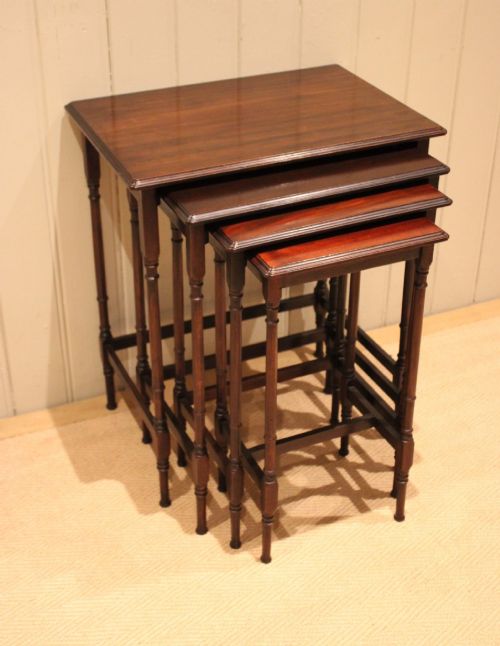
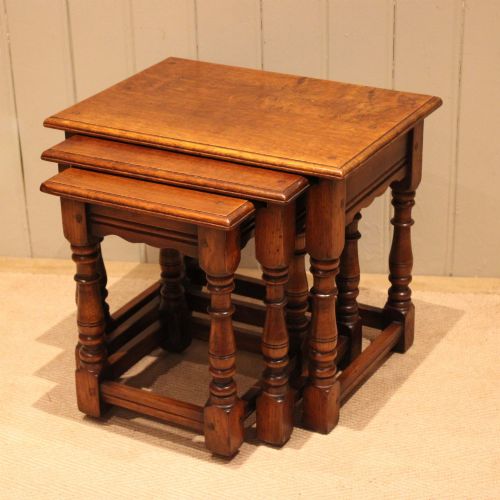
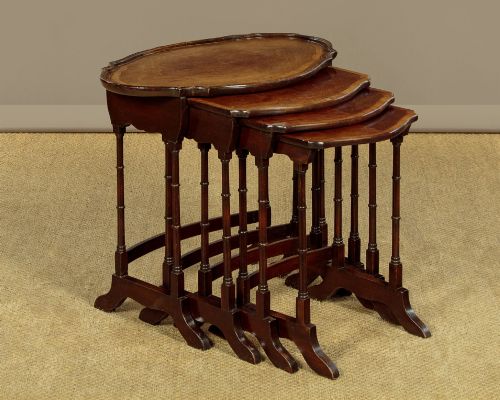
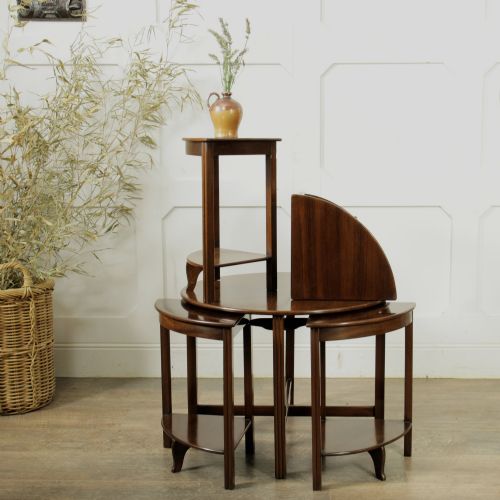
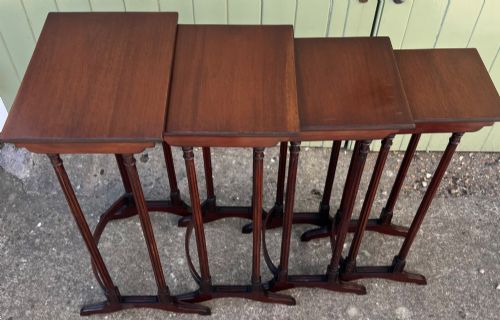
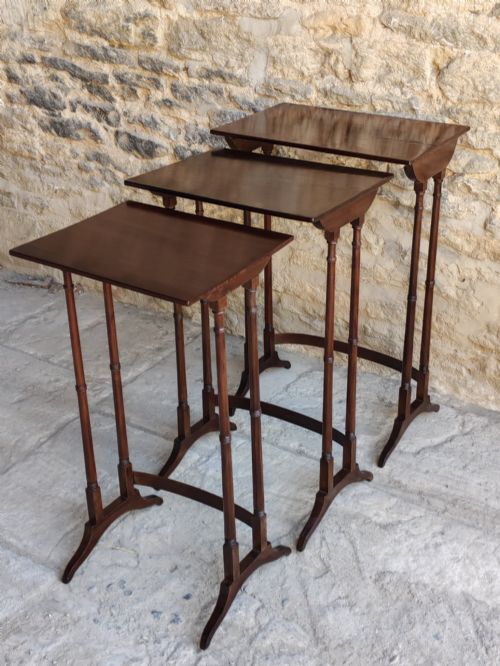
Antique wooden nesting tables comprise sets of graduating tables designed to fit one beneath another, saving floor space while remaining ready for instant use. When you search for antique wooden nesting tables, you encounter sets ranging from three to five pieces, with four-table quartetto sets appearing most frequently.
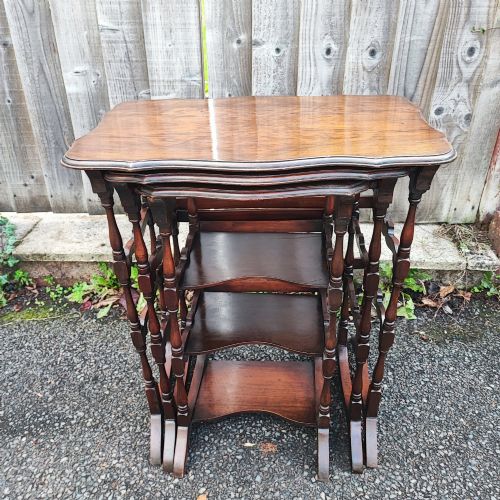
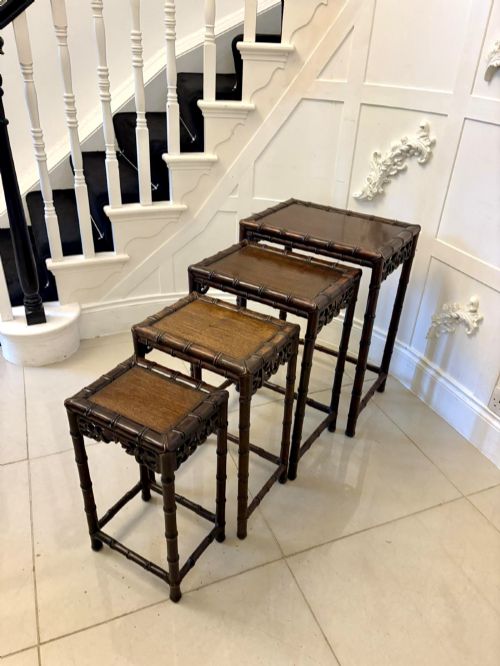
The pieces on this page span several centuries and styles, originating predominantly from the Victorian, Edwardian, and Georgian periods, alongside examples from the 1920s and 1930s. Forms vary from simple circular or rectangular coffee tables to serpentine tables and specialised oriental carved designs.
Makers and workshops of the nineteenth and early twentieth centuries produced these sets for versatile entertaining in drawing rooms and parlours. Today, collectors and homeowners prize them for their practical utility and craftsmanship, fitting easily beside sofas or armchairs.
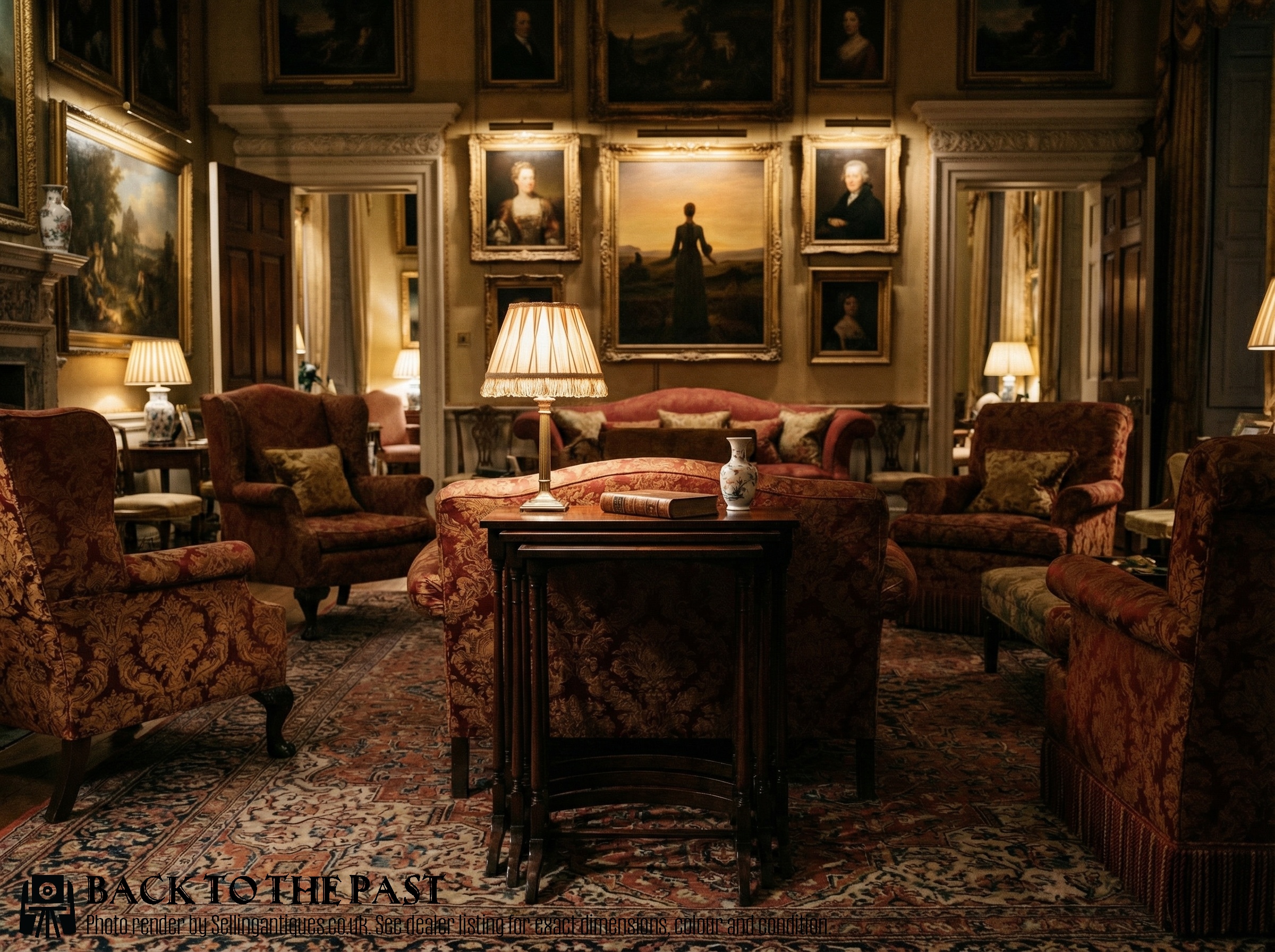
How they were made
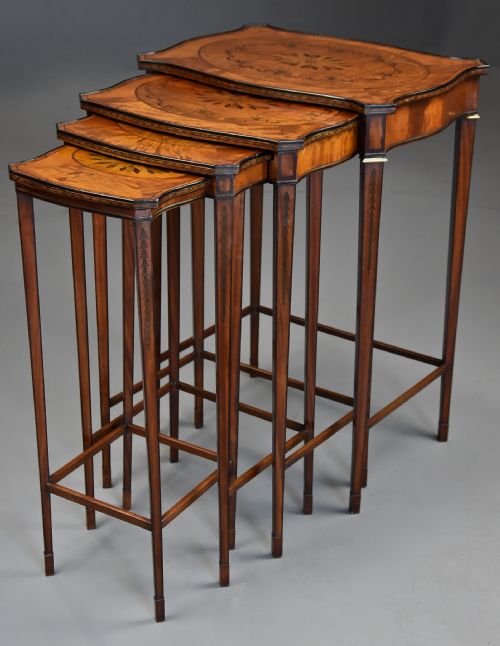
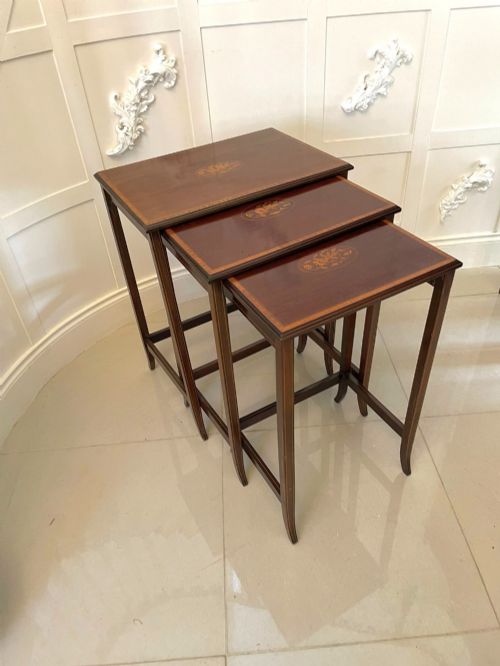
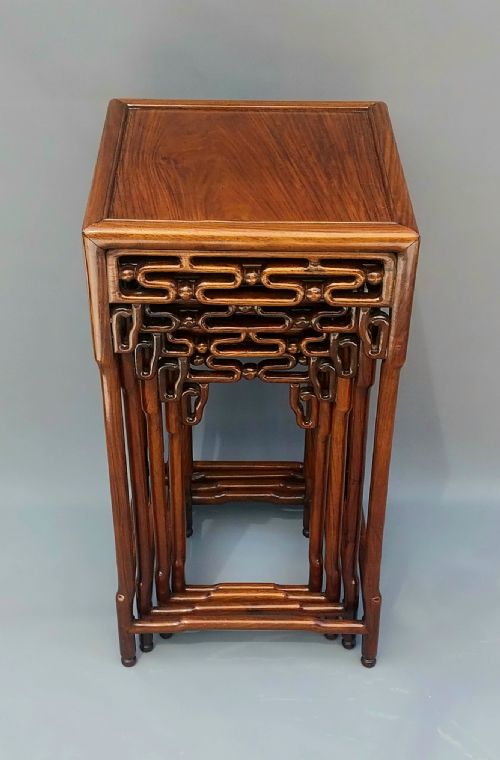
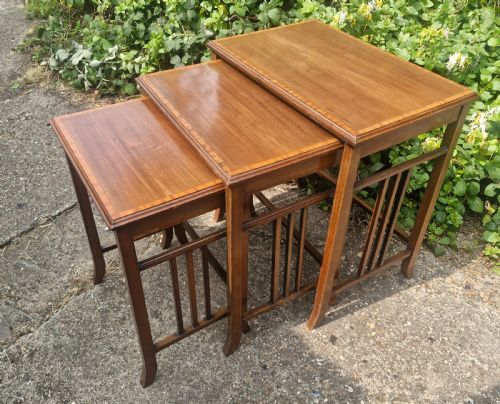
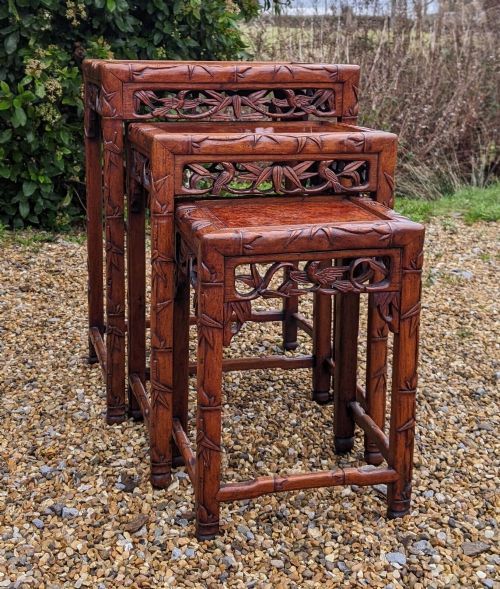
Cabinetmakers constructed these sets using solid timbers and carefully selected veneers, relying on mahogany as the primary wood alongside rosewood, walnut, satinwood, oak, and exotic hardwoods. Workshops enhanced these surfaces with contrasting boxwood stringing, intricate satinwood inlay, and carved details such as faux bamboo or oriental motifs.
Joinery techniques focused on stability and neat clearance between each tier, ensuring tables slid smoothly into one another without binding. Artisans also integrated specialist surfaces including embossed leather top inserts and yew veneer panels to elevate the visual appeal of the upper tiers.
Antique Wooden Nesting Tables Retail Price Guide 2026
Typical asking prices for wooden nesting tables among the pieces listed under this phrase on Sellingantiques today, from the lower quarter to the upper quarter. They describe what is for sale here now, not the wider market.
What varies in quality
Quality in these sets rests upon the selection of timber and the precision of the graduating frame sizes, which dictate how harmoniously the tables stack together. Superior examples display refined satinwood inlay, finely figured mahogany or burr walnut veneers, and balanced proportions that maintain stability across every tier.
Lesser examples utilise plain secondary timbers with minimal decorative detail and heavier, bulkier frames that lack the refined clearance of a true quartetto set. The distinction lies in the crispness of the cabinetwork and the subtlety of decorative flourishes like crossbanding and fine stringing.
Heal's
The Antique Wooden Nesting Tables Glossary
- Quartetto
- A set of four graduating tables designed to nest inside one another. This term appears frequently in nineteenth and early twentieth-century listings for nesting tables.
- Stringing
- A narrow strip of contrasting wood inlaid into the surface of furniture to create delicate geometric borders. Makers used boxwood stringing extensively on Edwardian satinwood and mahogany pieces.
- Veneer
- A thin slice of figured timber applied over a sounder secondary wood base to provide a decorative surface. Yew veneer tops and burr walnut finishes rely on this method.
- Serpentine
- A curved line of furniture styling that flows outward and inward in a gentle S-shape. Serpentine form tops appear on fine quality Edwardian satinwood sets.
Antique Wooden Nesting Tables: Frequently Asked Questions
What is a quartetto nest of tables?
A quartetto nest of tables is a set consisting specifically of four pieces that graduate in size to slide neatly together. This term was widely used by Victorian and Edwardian cabinetmakers.
Such sets offered homeowners multiple surface levels for entertaining while occupying the floor space of just one small table.
How were antique nesting tables used?
These tables served primarily in drawing rooms and sitting rooms for holding tea cups, books, or decorative objects. Servants or hosts could easily separate the tables around a room when guests arrived.
When not in use, the smaller tables slid sequentially beneath the largest top tier to clear the floor space.
How do I distinguish Edwardian sets from Victorian ones?
Edwardian sets often feature lighter satinwood finishes, delicate boxwood stringing, and slender turned or tapered legs in the Sheraton revival style. Victorian versions tend to utilise darker solid mahogany or rosewood with sturdier, heavier frames.
Examining the secondary woods and inlay styles helps clarify the period of manufacture.
Can I use antique nesting tables every day?
Yes, these tables were built for practical daily utility in period homes and continue to function effectively as side or coffee tables. Their clever stacking design makes them particularly useful in smaller modern living spaces.
Care should be taken with antique veneer surfaces by using coasters and avoiding excessive moisture.