



Qing Dynasty Nest Tables
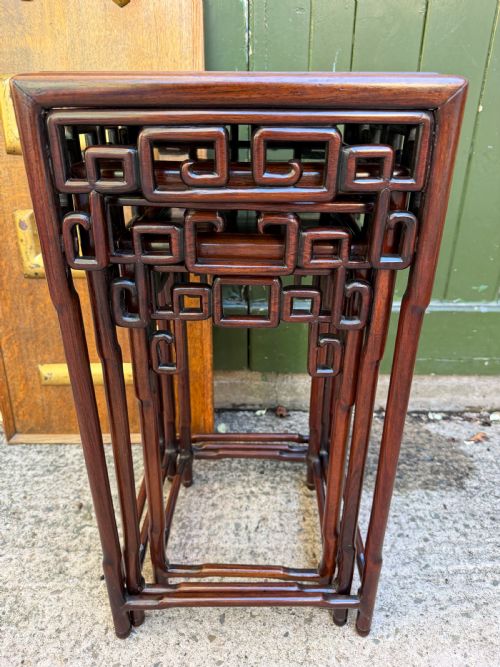
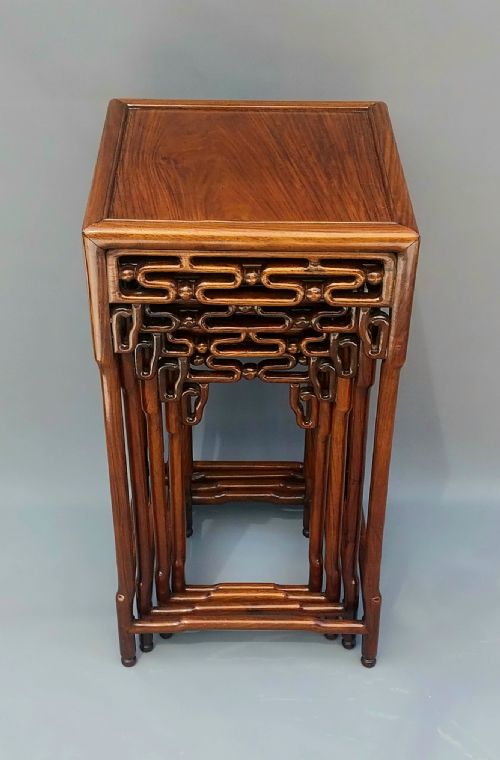
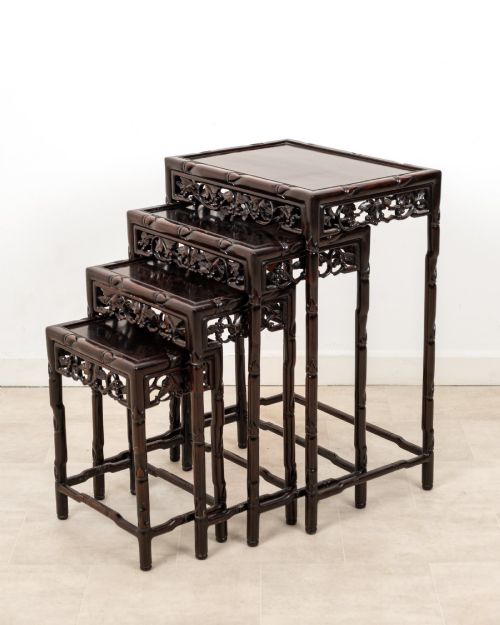
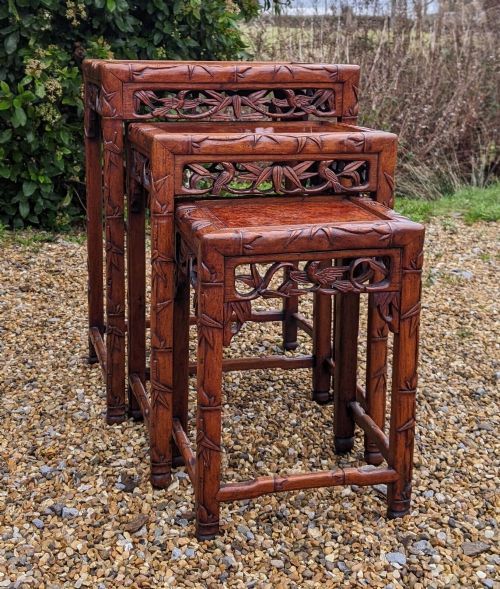
These qing dynasty nest tables are ingenious sets of graduated surfaces that slide neatly together when not in use.
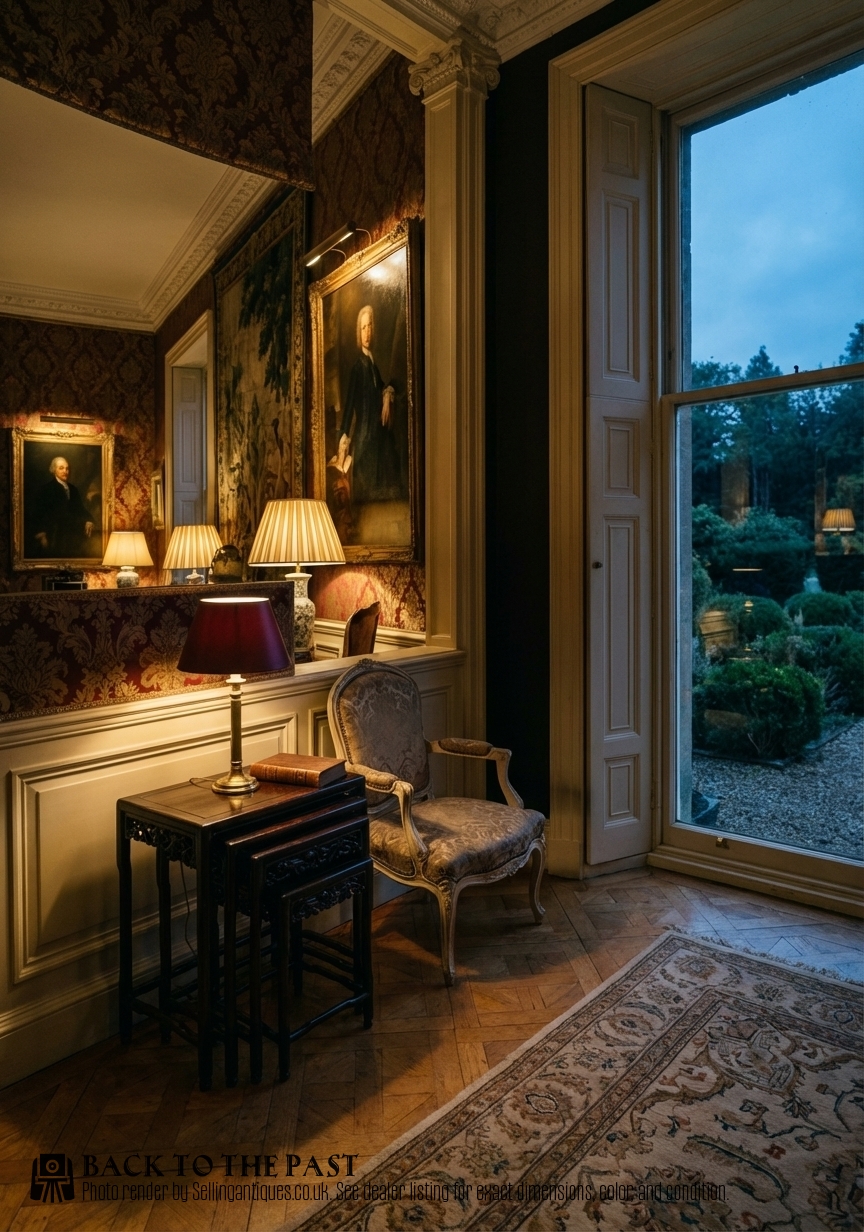
Qing Dynasty Nest Tables
When you search for qing dynasty nest tables, you encounter sets of three or four graduated tables designed to slide beneath one another to save space. The pieces on this page originate predominantly from the nineteenth century and the early twentieth century, spanning late Qing production through to Chinese export work.
The most common configurations are sets of four tables that descend in height and width, allowing the smaller tables to fit entirely under the largest top surface. These sets appear under descriptions including occasional tables, quartettos, and nesting tables, reflecting both traditional Chinese forms and western export terminology.
Makers utilised dense timbers to construct these graduated sets, ensuring each table possesses the structural integrity to support objects independently when pulled out. The form remains practical for modern rooms while carrying the distinct aesthetic of the Qing period.
What varies in quality
Quality separates through the selection of timber and the depth of the carved detail on the frames. Dense huanghuali and heavily figured rosewood or burrwood command attention for their visual grain patterns and substantial weight.
The precision of the graduation also defines the better examples, ensuring each table slides smoothly into its designated position without binding. Finer sets maintain structural tightness in the joints across all four pieces, whereas simpler versions show more straightforward construction.
Qing Dynasty Nest Tables Retail Price Guide 2026
Typical asking prices for qing dynasty nest tables among the pieces listed under this phrase on Sellingantiques today, from the lower quarter to the upper quarter. They describe what is for sale here now, not the wider market.
Listings feature timbers including rosewood, huanghuali wood, and burrwood alongside general hardwoods.
The Qing Dynasty Nest Tables Glossary
- Hongmu
- A traditional Chinese term for dense, dark hardwoods used in quality furniture production. It translates literally to red wood and encompasses several heavy timber species.
- Quartetto
- A nineteenth-century western term for a set of four pieces that fit together, frequently applied to nests of tables. It borrows from musical terminology for a group of four.
- Graduated
- Describing tables made in declining sizes so that smaller units fit beneath larger ones. This sizing enables compact storage while offering multiple surface areas when deployed.
- Burrwood
- Timber taken from a tree growth where the grain has grown in a deformed manner, resulting in complex swirling patterns. It is sliced into veneers or panels for decorative effect.
Qing Dynasty Nest Tables: Frequently Asked Questions
How were nest tables used in the Qing period?
These sets served as versatile surfaces for serving tea, holding scholar's objects, or displaying decorative items as needed within the home.
Because they could be stacked compactly, families moved individual tables out for guests and returned them to a single footprint afterwards.
How do I care for hardwood tables?
Keep the timber away from direct heat sources and sudden humidity shifts to prevent the dense wood from splitting.
Dust regularly with a soft cloth and avoid chemical polishes that can build up on the antique polished finish.
Are all these tables from the Qing Dynasty?
The listings span from the late nineteenth century into the Edwardian era, capturing both Qing production and Chinese export pieces made for western markets.
Stylistic elements and traditional carving methods connect these later pieces directly to Qing dynasty design traditions.
Why do some sets have three tables and others four?
Sets of four represent the standard quartetto configuration, while sets of three appear occasionally depending on the specific maker and intended export market.
Both variations follow the same graduated design principle to allow compact nesting.