


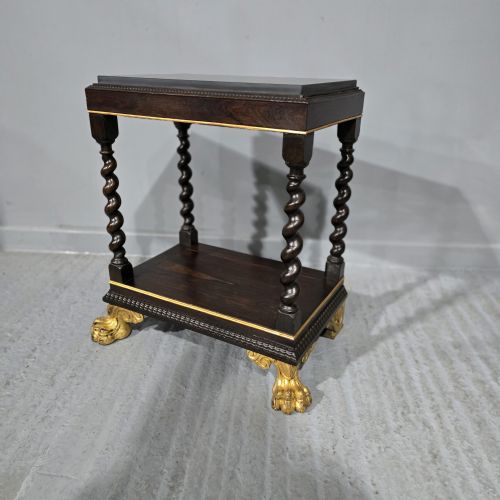


Carved Rosewood End Tables
Carved rosewood end tables bring dense timber, intricate hand-carving and practical proportions to a room, ranging from compact Chinese nests to British Regency designs.
Carved Rosewood End Tables
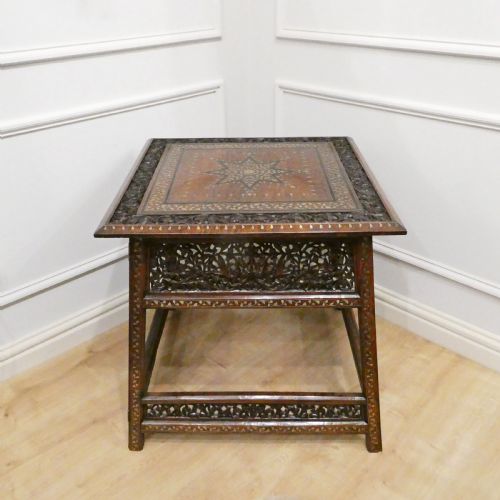
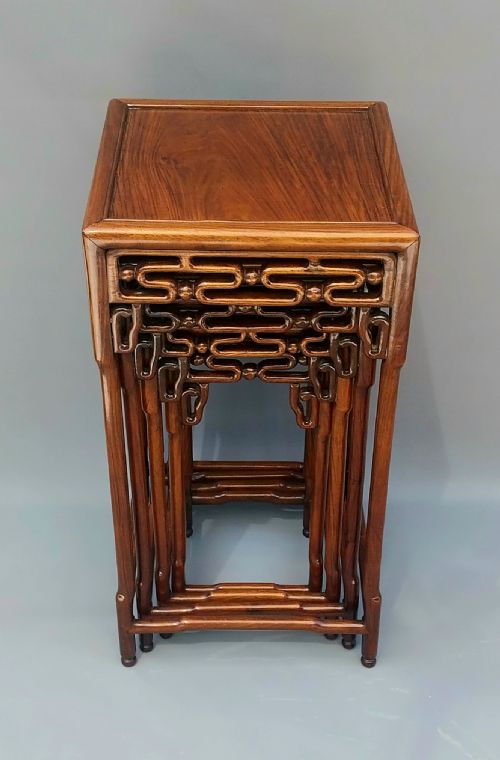
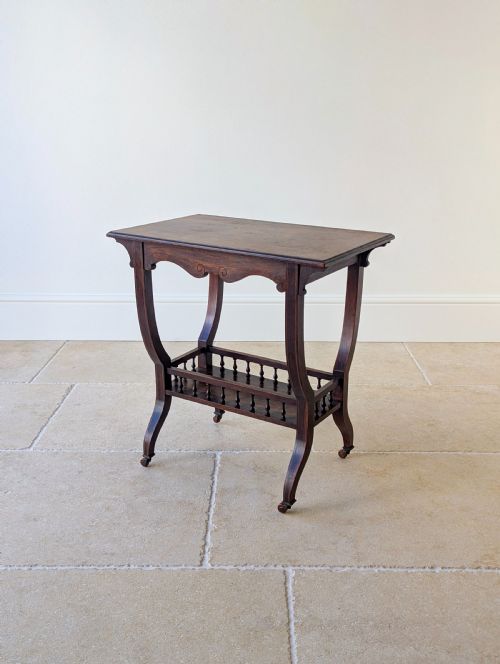
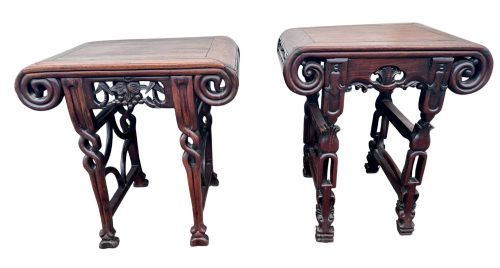
Carved rosewood end tables encompass a varied group of small occasional furniture pieces designed for utility and display beside seating or beds. When you browse carved rosewood end tables, you encounter forms that stretch from British Regency library tables and William IV stretcher pieces to Chinese Qing Dynasty nests of tables, scroll-end kang tables and Indian occasional tables.
How they were made
These tables rely on heavy tropical timbers such as rosewood, hongmu, huali and general Asian hardwood, valued for their natural weight, dark grain and durability. Workshops combined solid timber construction with specialised joinery to support intricate surface decoration without warping.
Craftsmen utilised hand-carving techniques to produce deep relief motifs including leaves, scrolls and animal figures like elephants and peacocks. Selected pieces integrate contrasting materials such as brass inlay, bone details, parquetry veneer or inset rouge marble tops.
What varies in quality
Quality in these tables rests upon the crispness and depth of the hand-carving and the selection of the timber grain. Pieces with sharply defined motifs, such as scroll-ends or leaf patterns, show superior craftsmanship compared to soft or shallow tooling.
Construction methods and material pairing dictate the tier of a piece, from solid rosewood frames and precise brass inlays to simpler hardwood carcasses. The integration of specialty inserts, such as heavy rouge marble tops or matched sets of four graduated tables, separates standard single pieces from exceptional works.
The Carved Rosewood End Tables Glossary
- Hongmu
- A traditional Chinese term for dense hardwoods, frequently translated as red wood, encompassing various heavy tropical species including rosewood. It forms durable furniture with rich natural colour.
- Kang table
- A low Chinese table traditionally used on a heated brick platform for sleeping, dining or drinking tea. Surviving examples function well as compact coffee or end tables.
- Quartetto
- A matched set of four graduated tables designed to slide neatly beneath one another. They appeared frequently in nineteenth-century Chinese export workshops.
- Stretcher table
- A table featuring horizontal wooden braces connecting the legs for added stability. These supports often carry decorative turnings or carved details.
- Parquetry veneer
- Thin geometric slices of wood laid onto a secondary timber base to create patterned surfaces. This technique displays decorative wood grains on table tops.
Carved Rosewood End Tables: Frequently Asked Questions
What is a quartetto table set?
A quartetto set consists of four graduated tables designed to stack beneath one another when not in use. They provide flexible surface space in compact rooms.
Craftsmen built these sets in nests, allowing each smaller table to slide smoothly under the next size up. They appear frequently in nineteenth-century Chinese export production.
What timber is hongmu?
Hongmu translates literally as red wood in Chinese and covers a category of dense, heavy tropical hardwoods used in fine furniture making. The material possesses a natural dark depth and remarkable weight.
Furniture constructed from hongmu resists heavy daily use and holds intricate hand-carved details exceptionally well. Over time, the timber develops a rich surface patina.
Where were Hoshiarpur tables made?
Hoshiarpur tables originated in the Punjab region of India, renowned for intricate woodwork and specialised decorative techniques. Artisans in this area produced distinctive occasional furniture for export.
These pieces feature dense surface ornamentation typically created through brass wire inlay and bone or shisham wood marquetry. Floral and geometric patterns cover every available surface.
What defines a William IV end table?
A William IV end table dates from the British Regency transition into the early Victorian era, characterised by robust classical proportions. These tables often feature scrolled pillar supports or heavy stretcher bases.
Makers utilised solid rosewood to showcase dramatic grain patterns and substantial pedestal structures. They served functional roles as library, centre or side pieces in grand nineteenth-century interiors.