

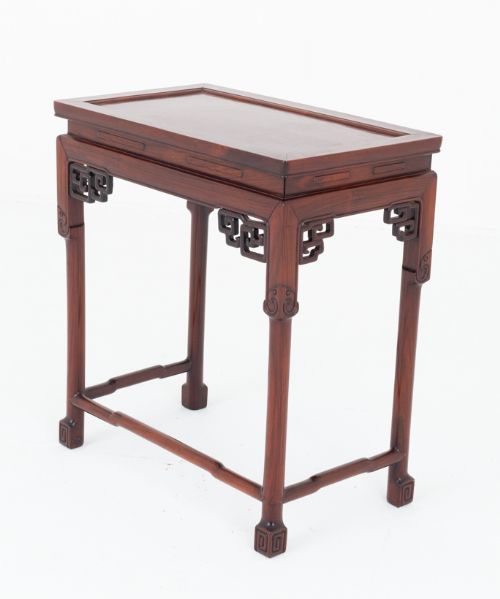

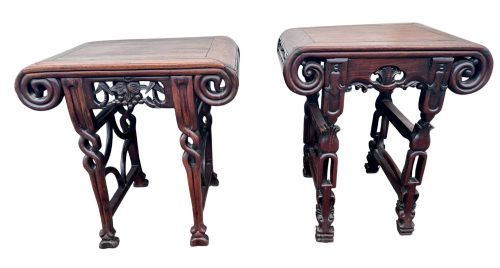


Oriental Wooden Display Tables
Oriental wooden display tables are versatile surfaces designed to elevate porcelain, plants and lamps, bringing exceptional carved detail and rich dense timber to domestic interiors.
Oriental Wooden Display Tables
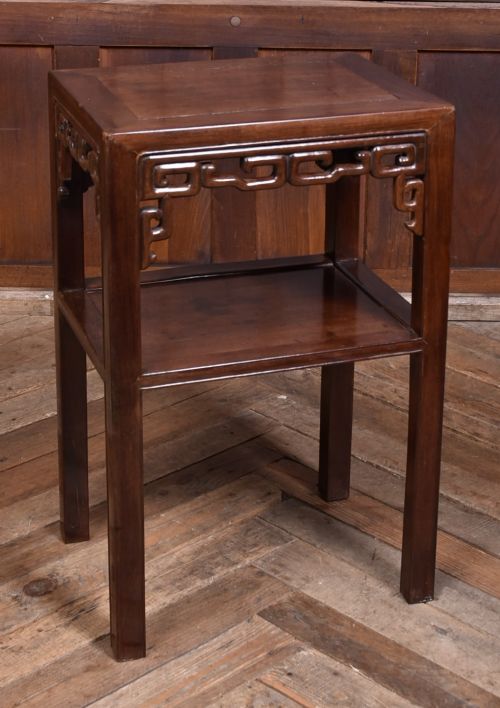
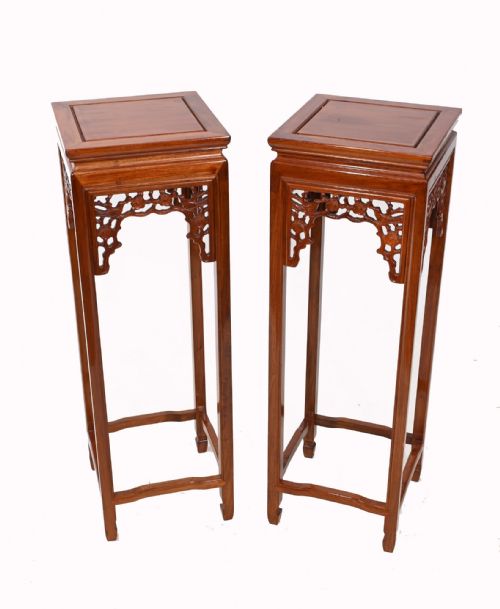
Oriental wooden display tables encompass compact plant stands, jardiniere supports, pedestal tables and occasional furniture originating primarily from nineteenth century and early twentieth century workshops. Buyers searching for oriental wooden display tables frequently encounter pieces intended to hold decorative vases, urns or table lamps rather than serving as dining or writing surfaces.
The selection ranges from low kang and opium tables to tall multi-tiered pedestals and side tables. Most examples reflect Chinese Qing dynasty traditions or Japanese Meiji period craftsmanship, alongside later interpretations made for European retailers such as Liberty of London.
The forms adapt easily to modern rooms as bedside tables, wine tables or small display surfaces. The majority of pieces date from the nineteenth century, with Victorian era imports and Arts and Crafts or Japonisme interpretations appearing regularly.
How they were made
Makers utilised dense Asian timbers including rosewood, hongmu, padouk and ebonised wood alongside native elm and amboyna. These heavy hardwoods provided the structural strength required for intricate hand carving and narrow pillar supports.
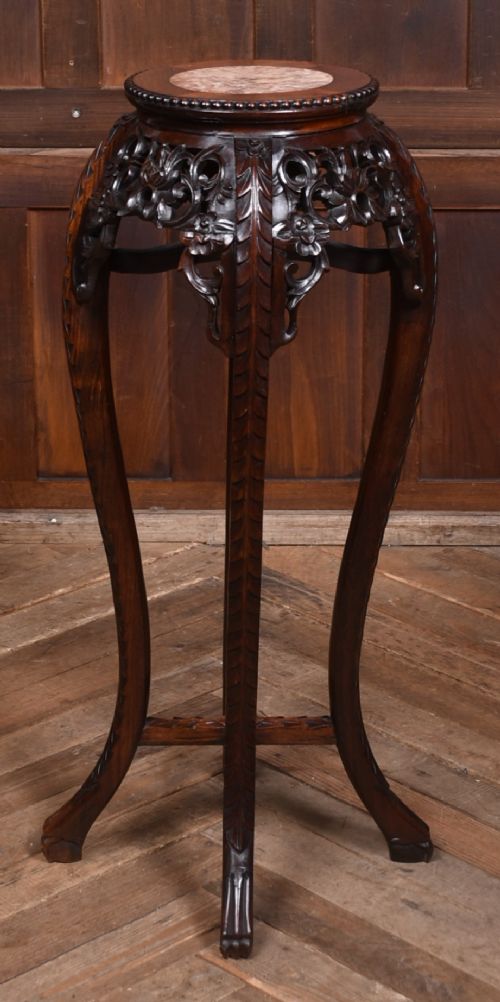
Many table surfaces incorporate inset panels of veined marble or rouge marble, fitted tightly into wooden frames to support heavy ceramic planters and vases. Lacquered finishes and painted details appear on select pedestal and plant stand forms.
Joinery techniques relied on precise interlocking joints that avoided metal fixings, allowing the dense timber to expand and contract naturally. Carved aprons, claw feet and pierced scrolling motifs were shaped entirely by hand using traditional chisels and gouges.
Several diminutive tables retain faint traces of nineteenth century candle wax tucked deep within their carved foliage.
What varies in quality
The crispness and depth of the hand carving dictate the standing of a piece, with superior examples showing undercut foliage, dragons or scrolling motifs executed with sharp definition. Shallower, softer carving indicates more utilitarian production.
The choice of primary timber creates a distinct division, as dense rosewood and heavy hongmu command greater appreciation than softer or ebonised substitute woods. The quality of any inset marble panel, specifically its figuring and how flush it sits within the wooden frame, further marks a superior table.
Structural integrity and the retention of original finish without excessive modern intervention separate standard items from finer examples. Balanced proportions and stable joints demonstrate superior workshop standards during the manufacturing process.
Gabriel Viardot·Liberty of London
The Oriental Wooden Display Tables Glossary
- Hongmu
- A dense, dark tropical hardwood favoured in Chinese furniture making for its strength and rich grain. It translates literally as red wood.
- Jardiniere stand
- A tall, slender table designed specifically to hold a ceramic flower pot or plant container. These stands often feature circular marble tops and cabriole legs.
- Kang table
- A low, domestic table traditionally used on a heated brick bed platform in northern China for resting tea or writing. They translate well today as low coffee or display tables.
- Padouk
- A heavy, durable reddish-brown hardwood utilised for fine Asian occasional tables and plant stands. It polishes to a deep natural sheen.
- Qing dynasty
- The final imperial dynasty of China, lasting from sixteen forty-four to nineteen twelve. Pieces from this era often display elaborate carved motifs and formal symmetry.
Oriental Wooden Display Tables: Frequently Asked Questions
What were oriental wooden display tables originally used for?
These tables were made to elevate decorative objects such as porcelain vases, bronze urns and heavy ceramic plant pots within traditional interiors. Raising these items protected them from damp floors and placed them at a better height for appreciation.
Over time, owners adapted them to hold table lamps, wine bottles or smoking accessories. Their compact footprints made them easy to position beside seating or in corners where larger furniture would not fit.
How do I tell Chinese export pieces from Japanese Meiji items?
Chinese export pieces frequently employ heavy hongmu or rosewood, incorporating deep relief carving of floral sprays, dragons and auspicious symbols. Inset marble tops and multi-tiered structures are common characteristics of these workshops.
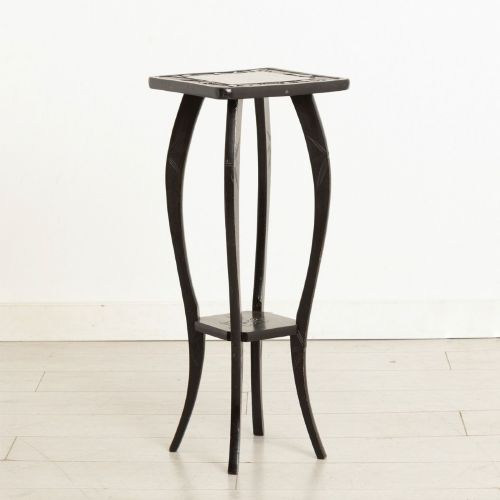
Japanese Meiji period examples often utilise ebonised elm or lighter woods with Japonisme influences, reflecting European trade aesthetics of the late nineteenth century. The carving style tends toward asymmetrical naturalism, featuring birds, bamboo and winding branches.
Are marble top tables suitable for everyday use?
The inset marble panels provide a cool, durable surface that handles plant moisture, hot cups and wine glasses far better than plain polished wood. This makes them practical for serving drinks or displaying damp foliage.
Care should be taken to wipe away standing water promptly to protect the surrounding wooden frame. The stone itself is resilient, though heavy impacts can chip the polished edges.