
Hardwood Oriental Tables
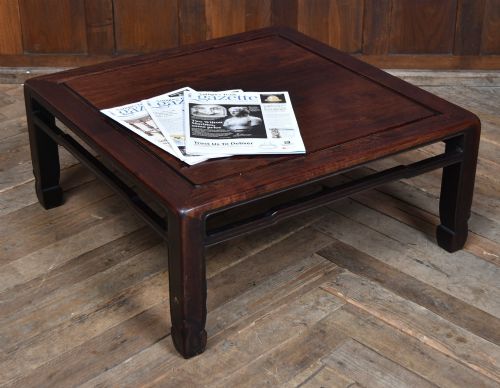
These hardwood oriental tables bring dense timbers and intricate carving into a room, offering practical surfaces shaped by distinct regional traditions.
Hardwood Oriental Tables
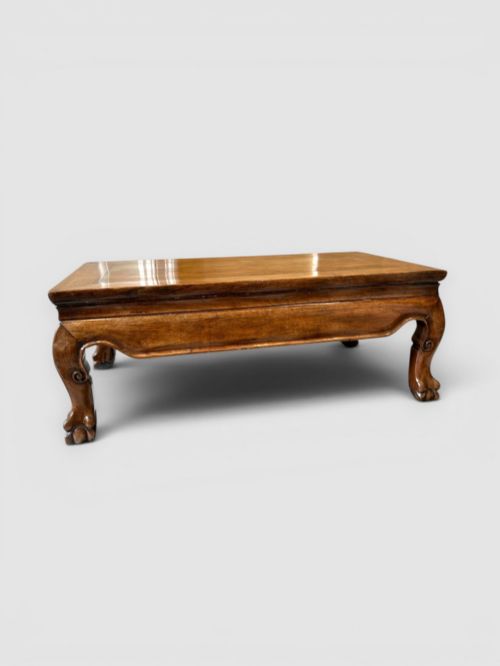
Hardwood oriental tables cover a range of low surfaces, plant stands, nests and occasional tables sourced from Chinese workshops, Anglo-Indian makers and broader Asian traditions. The pieces appearing most frequently on this page date from the nineteenth century through the early twentieth century, spanning late Qing Dynasty production and colonial export periods.
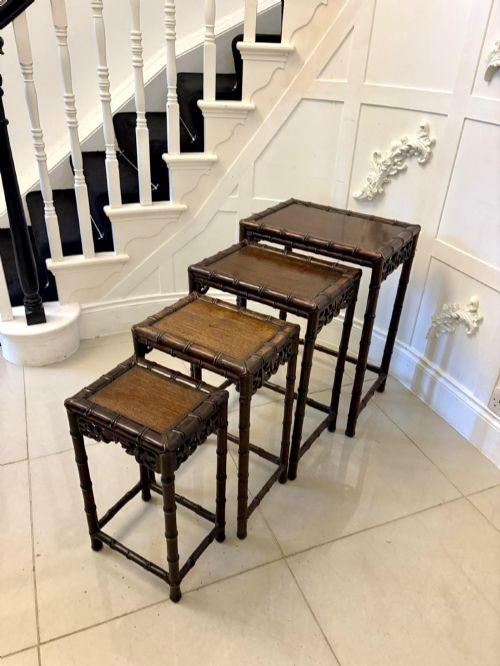
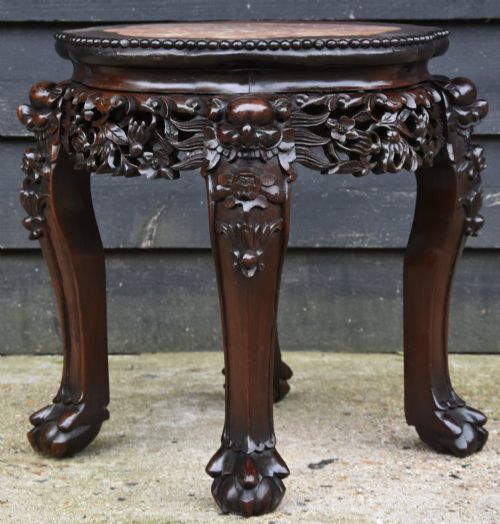
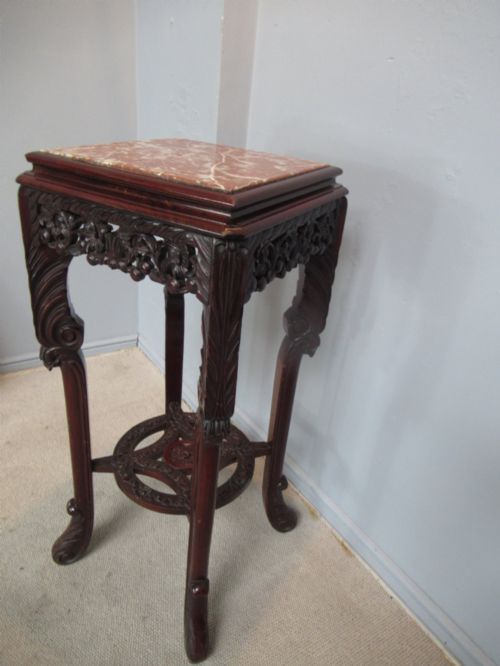
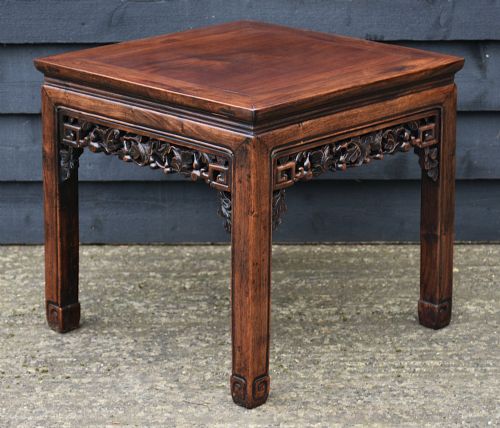
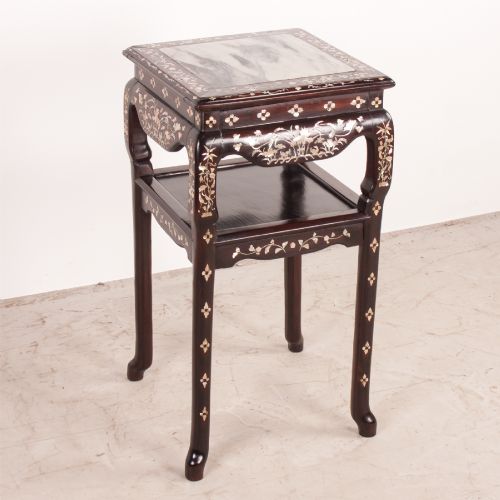
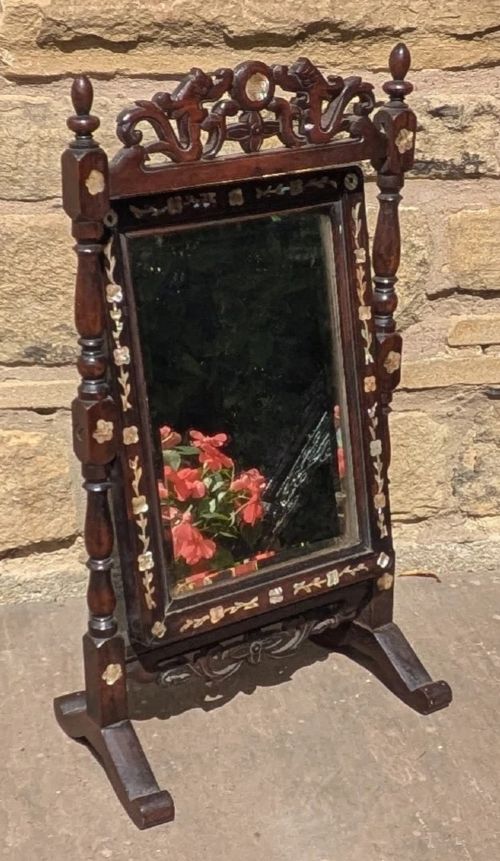
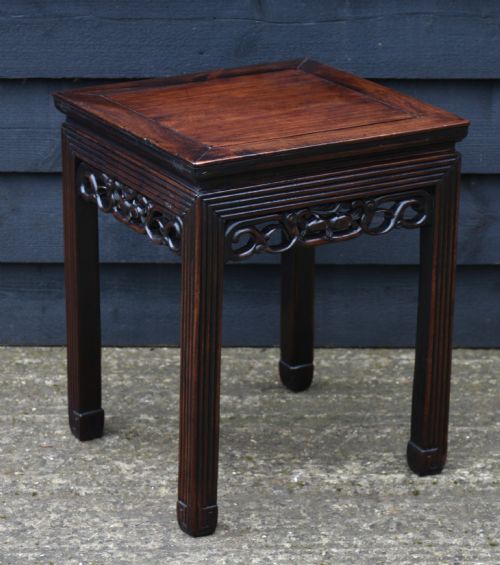
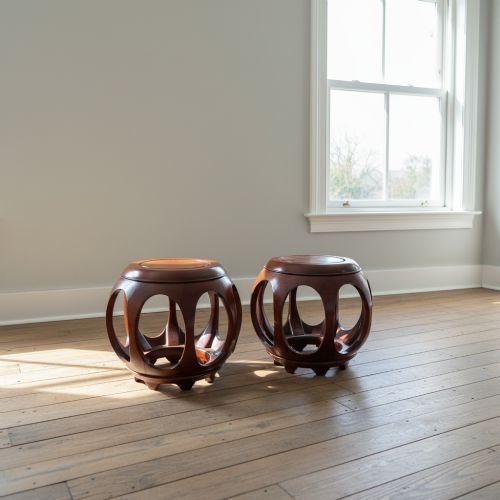
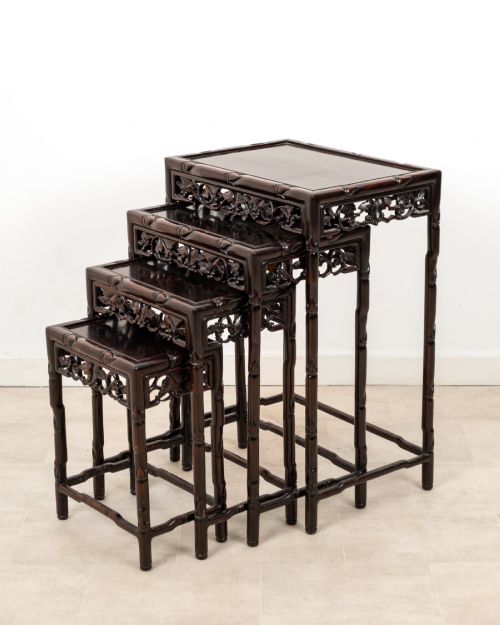
Forms vary considerably depending on their original domestic or ritual use, running from marble-inset pot stands and opium tables to graduated nests of four tables designed to slide together. Buyers encounter dense rosewood, hongmu and huanghuali framing carved panels, inlaid mother of pearl or central stone discs.
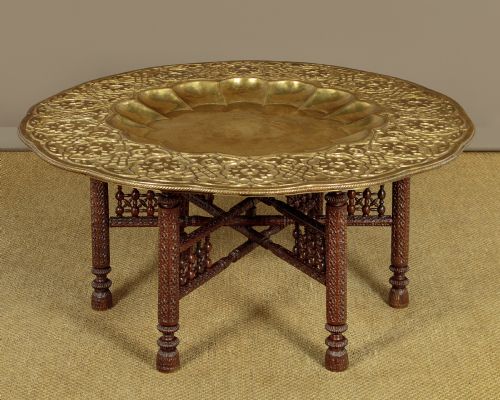
Regional styles dictate the silhouette, shifting from heavily carved Chinese traditional motifs and faux bamboo framing to bone-inlaid Anglo-Indian octagonal tables and Moorish geometric woodwork. Each piece reflects the material preferences and joinery techniques of its specific workshop origin.
How they were made
Construction relies on dense, heavy timbers like rosewood, padouk, elm and hongmu, chosen for their capacity to hold crisp, deep hand-carving without splitting. Workshops utilised traditional mortise and tenon joinery, allowing frames to expand and contract with seasonal humidity without relying on metal fasteners.
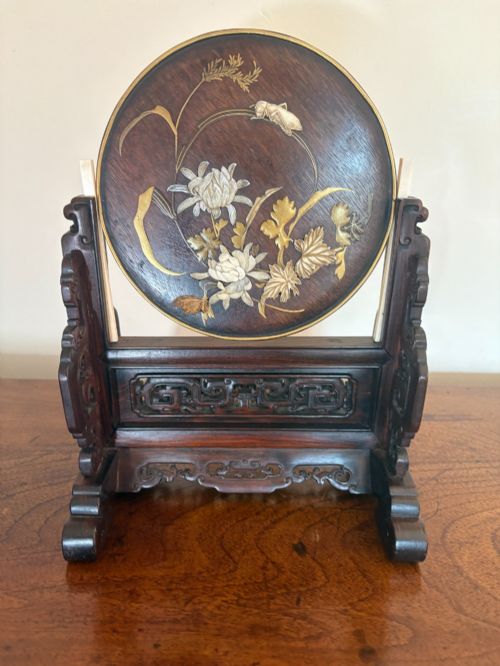
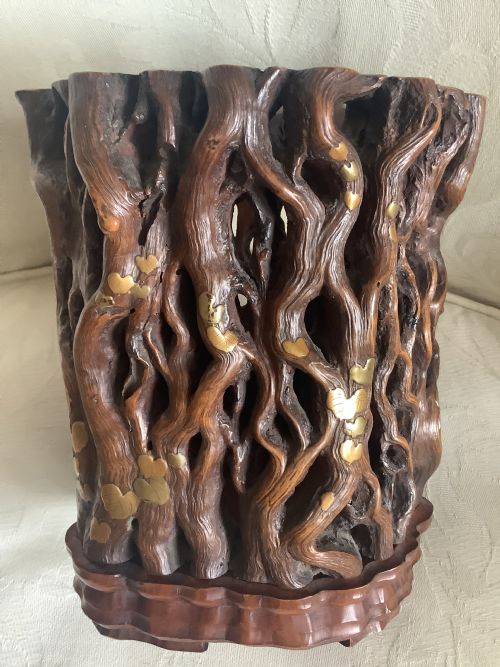
Surfaces often incorporate contrasting materials, setting white marble inserts, mother of pearl pieces, bone or brass into the hardwood fields. Artisans finished these timbers with clear transparent coats or natural polish to highlight the deep grain patterns and varied colour of the wood.
What varies in quality
Quality rests on the crispness of the hand-carving and the stability of the timber selection, distinguishing finely detailed scholar's pieces from standard export items. Inlaid elements such as mother of pearl or bone require precise fitting into recessed channels rather than surface adherence.
The integrity of the structural joinery and the preservation of original marble or burr wood panels determine the standing of an individual table. Finer examples retain deep, rich colour in the grain and tight joints that withstand regular movement.
Liberty & Co
The Hardwood Oriental Tables Glossary
- Hongmu
- A dense, dark tropical hardwood translating to red wood, commonly utilised in high-status Chinese furniture and altar tables. It provides a heavy, durable substrate for intricate relief carving.
- Huanghuali
- A prized Chinese fragrant hardwood known for its striking grain patterns and warm amber-to-honey coloration. It forms the material foundation of many desirable antique tables.
- Qing Dynasty
- The final imperial dynasty of China, spanning from sixteen forty-four to nineteen twelve, encompassing the production era for the majority of these carved hardwood tables and stands.
- Quartetto
- A term historically applied in trade contexts to a graduated set of four nesting tables designed to slide neatly beneath one another.
- Shibayama
- A Japanese decorative technique involving delicate inlay of materials like mother of pearl, ivory, bone and tortoiseshell into wood or lacquer bases.
Hardwood Oriental Tables: Frequently Asked Questions
How do I care for a hardwood table?
Keep these dense timber surfaces away from direct heat sources and sudden humidity shifts to prevent the wood from splitting around inlaid marble or mother of pearl panels. Dust regularly with a dry cloth and apply natural wax sparingly only when the finish appears dry.
Avoid commercial liquid polishes that can build up a cloudy residue within the deep recesses of hand-carved motifs. Proper placement ensures the joinery remains stable over decades of domestic use.
What were oriental plant stands used for?
These tall, narrow stands served as display platforms for heavy ceramic jardinières, bronze vessels or prized botanical specimens in traditional interiors. Their elevated surfaces brought plants closer to natural light while protecting delicate flooring from moisture.
Today they function equally well as occasional lamp tables or independent sculptural display pedestals in modern rooms. The sturdy marble or wood tops provide a stable platform for decorative objects.
How do I identify a Qing Dynasty table?
Look for traditional mortise and tenon joinery executed in dense regional hardwoods like rosewood or hongmu without modern metal screws. Carved motifs often incorporate classical Chinese symbolism, floral panels or geometric border patterns characteristic of nineteenth-century workshops.
Examining the underside and interior framing reveals hand-finished surfaces and natural wear patterns consistent with antique production methods. The presence of original marble inserts or mother of pearl inlay further supports period attribution.
Where do nests of tables originate?
Graduated nests of four tables gained popularity during the late nineteenth century to satisfy demand for flexible, space-saving furniture in both Asian and European homes. Individual tables slide neatly into one another, allowing multiple surfaces to occupy the footprint of a single small stand.
Export workshops produced these sets in various sizes using padouk, rosewood or carved faux bamboo frames to suit contemporary interior tastes. They provided versatile entertaining space for tea or small personal items.