



Asian Style Occasional Tables
Asian style occasional tables bring decorative timber and intricate carving into sitting rooms, offering versatile surfaces from nests to lamp tables.
Asian Style Occasional Tables
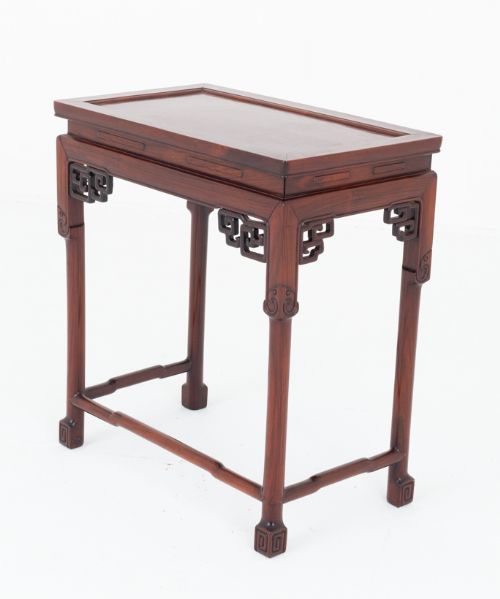
Asian style occasional tables comprise diverse forms designed for functional utility and decorative display in domestic interiors, ranging from single lamp and side tables to multi-tiered stands. Buyers searching for Asian style occasional tables encounter pieces designated across nineteenth-century and early twentieth-century periods, including Victorian-era pieces and specific years up to nineteen-twenty.
Stylistic descriptors span Chinese export, Chinese traditional, Qing style, provincial work, and Chinoiserie. These pieces adapt easily beside seating furniture, serving as convenient ledges for lamps, plants, or ornaments.
Materials and Craftsmanship
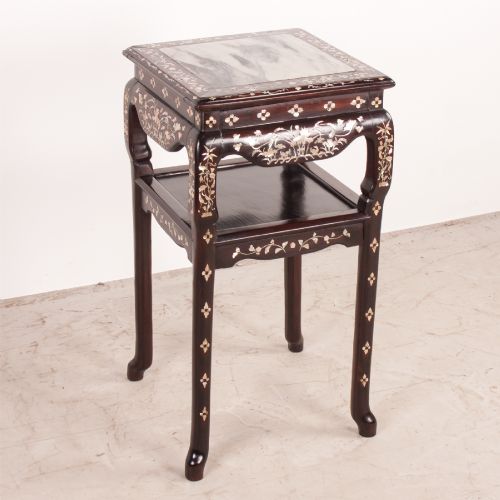
Makers utilised dense timbers including rosewood, huanghuali wood, amboyna, and general oriental hardwoods to build durable frames capable of supporting inlaid stone and heavy use. These woods provide substantial weight and stable foundations for intricate surface decoration.
Surfaces frequently showcase mother-of-pearl inlay or elaborate carving executed directly into the wood grain. Burrwood sections and marble inserts are integrated into tabletops to introduce textural contrast and varied colour.
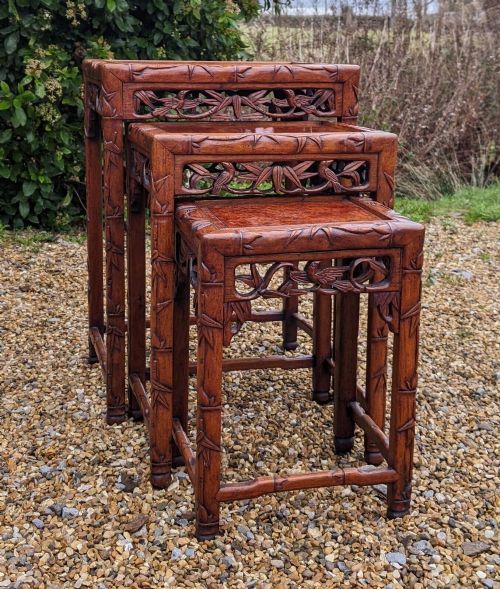
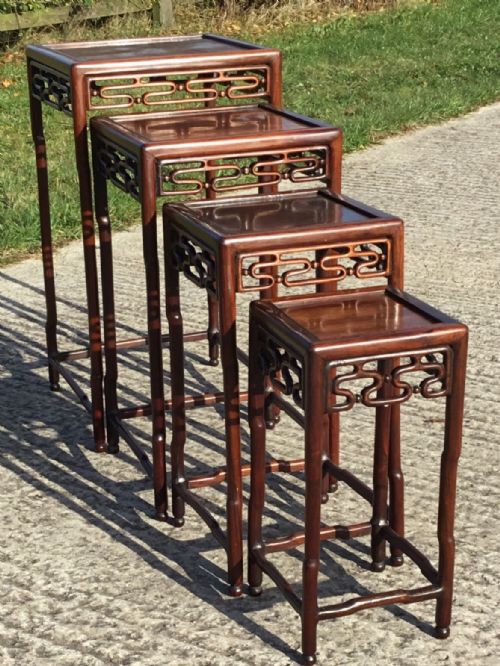
Nesting sets demand precise joinery so smaller tables slide neatly beneath the larger primary unit. Carved aprons and structural supports demonstrate traditional joinery techniques suited to the Victorian and early twentieth-century eras.
Listings feature items from the nineteenth century alongside pieces dated between eighteen-eighty and nineteen-twenty, encompassing Victorian-era production.
Judging Quality and Execution
Quality rests primarily on the selection of timber and the fidelity of the carved details or inlay work. Exceptional grain pattern, rich colour, and securely seated mother-of-pearl pieces elevate a table above standard production.
The integrity of nesting sets depends upon the proportional fit and smooth sliding action of each subordinate table. Solid marble inserts fitted flush to hardwood frames also distinguish superior examples from simpler constructed versions.
The Asian Style Occasional Tables Glossary
- Nest of tables
- A set of graduated tables designed to stack neatly within one another when not in use. They save floor space while providing multiple surfaces.
- Mother of pearl inlay
- Iridescent inner shell material set into carved recesses within the wood surface. It creates shimmering decorative patterns under changing light.
- Chinoiserie
- European decorative style reflecting Chinese artistic motifs and techniques. It appeared widely across furniture and decorative arts during the nineteenth and early twentieth centuries.
Asian Style Occasional Tables: Frequently Asked Questions
What is an occasional table?
An occasional table is a small, movable piece of furniture designed for specific, intermittent tasks in a room. Examples include lamp tables, side tables, and small display stands.
These pieces complement larger seating arrangements by holding books, drinks, or lighting without dominating the floor space.
How do nesting tables work?
Nesting tables consist of a series of graduated tables built in decreasing dimensions so each smaller unit slides underneath the next. This arrangement provides multiple usable surfaces that consolidate into the footprint of a single table.
They function well in compact rooms where surface area is needed temporarily during gatherings.
Where should I place an Asian style occasional table?
These tables fit easily beside sofas, armchairs, or against walls as lamp and plant stands. Their decorative carving and inlaid surfaces make them suitable as focal points in living areas.
Position them away from direct heat sources to protect natural wood finishes and inlaid materials.
How do I identify Chinese export furniture?
Chinese export furniture typically combines traditional Asian joinery and motifs with forms suited to Western domestic habits. Characteristics include specific timbers like rosewood or hardwood and decorative elements such as mother-of-pearl inlay.
These pieces date largely from the nineteenth and early twentieth centuries, reflecting international trade and design exchange.