



Hongmu Plant Stands
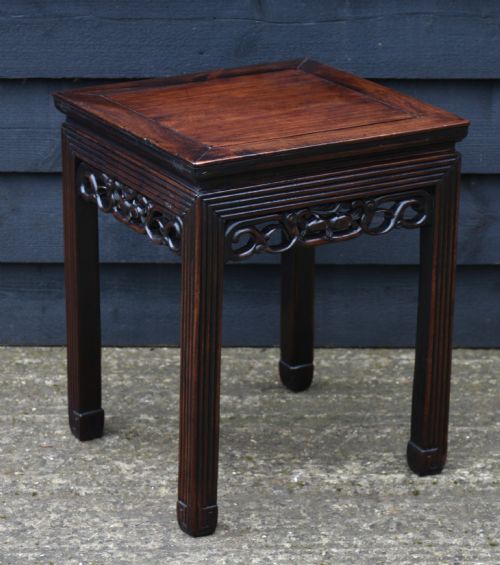
These hongmu plant stands are solid hardwood display pieces from the Qing Dynasty and later periods, prized for supporting urns and jardinieres.
Hongmu Plant Stands
When you search for hongmu plant stands, you encounter a specialised selection of carved wooden furniture designed for displaying plants, urns, and vases. The listings on this page span the nineteenth century and the early twentieth century, including the Victorian era and the Republic period. Most examples originate from China, reflecting traditional Chinese craftsmanship and export markets.
The primary forms you will meet here are individual plant stands and pedestals, alongside related shapes such as low jardinere stands, side tables, stools, and nests of tables. Pieces range from single low tables to tall pedestals and two-tier stands. You will also find rarer variants like tripod tables and barrel-form stands.
Makers and workshops produced these items to serve both functional and decorative roles in interiors. The forms align closely with Chinese Qing Dynasty styles, alongside Chinese export designs. Selecting a stand involves considering whether you require a surface for a heavy ceramic vessel or a smaller table for a display corner.
How they were made
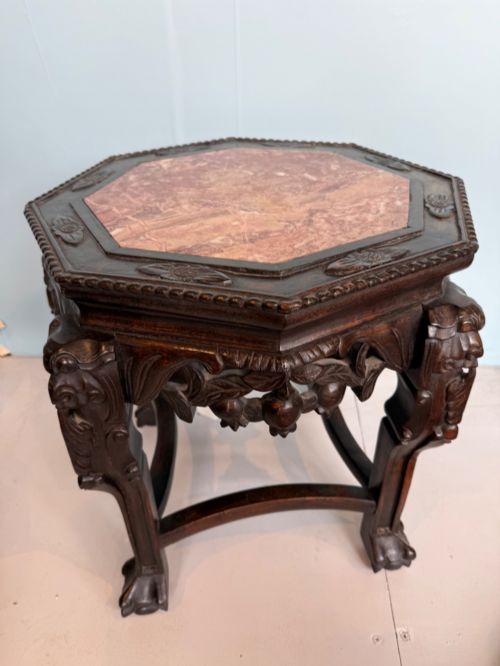
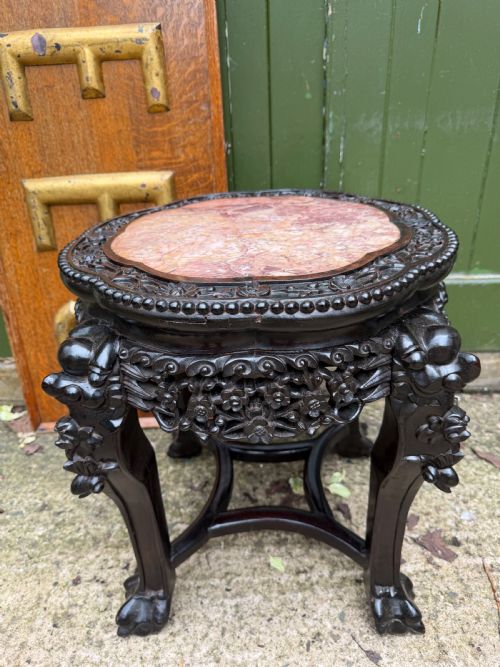
Makers constructed these stands using dense timber, primarily hongmu and rosewood, often combining the main structure with inset panels of variegated rouge marble. Workshops utilised traditional joinery methods to shape the hardwood frames, accommodating the weight of the stone tops without metal fasteners. Burrwood also appears in specific multi-table nests as contrasting veneer or panels.
Surface decoration frequently involves intricate carving executed directly into the hardwood, alongside mother-of-pearl inlay embedded into the timber grain. Certain examples incorporate bone details to accentuate the carved motifs. These techniques require skilled hand-working to achieve smooth transitions between the wood and the inlaid materials.
Listings feature pieces spanning the nineteenth century, the Victorian era, and nineteen-thirty, constructed from hardwood, rosewood, burrwood, and marble.
What varies in quality
The distinction between standard examples and superior pieces rests on the depth and crispness of the carved details across the hardwood frame. Stands featuring intricate, deeply undercut foliage or figural carvings demonstrate greater artisan skill than those with shallow surface incisions. The choice of timber grain and the uniformity of the hongmu or rosewood also influence the overall finish.
Quality further depends on the integration of secondary materials, such as the grain and colour consistency of the inset marble tops and the precision of mother-of-pearl inlay. Paired stands that maintain matching timber patterns and symmetrical carving display a higher degree of original workshop planning. Structural rigidity without excessive past repairs preserves the integrity of the piece.
The Hongmu Plant Stands Glossary
- Hongmu
- A traditional Chinese term denoting dense, dark hardwoods used in fine furniture manufacture. The wood exhibits a heavy weight and a rich natural grain.
- Jardinere
- A decorative container or stand intended for holding plants and flowers. These items often feature water-resistant stone or marble insets to handle damp pots.
- Qing Dynasty
- The final imperial dynasty of China, lasting from sixteen-forty-four to nineteen-one-two. Furniture from this era forms the basis of many traditional export designs.
- Rosewood
- A heavily grained, durable timber utilised in antique Chinese tables and stands. It provides a stable base for detailed carving.
- Rouge marble
- A deep red or variegated ornamental limestone used for tabletop inserts. It offers a cool, durable surface that contrasts with dark hardwood frames.
Hongmu Plant Stands: Frequently Asked Questions
What is hongmu wood?
Hongmu translates as red wood in Chinese, referring to a category of dense, durable tropical hardwoods used in traditional furniture. It provides the heavy structure and deep colour seen in classical stands.
The timber takes fine carved details well and ages to a dark, rich patina over centuries of handling.
How were plant stands used?
These pieces served to elevate heavy ceramic vessels, bronze urns, and potted plants off the floor. Raising the containers protected delicate flooring and placed decorative flora at eye level.
In period interiors, they occupied corners, hallways, and reception rooms as both functional supports and display surfaces.
Are marble tops original?
Most marble inserts found in these nineteenth-century stands are original to the pieces. The stone was slotted directly into the hardwood frame to provide a heat-resistant and water-resistant surface.
Variegated rouge marble and neutral stone slabs were selected by makers to complement the dark grain of the surrounding rosewood and hongmu.
How do I date a stand?
Dating relies on examining the construction methods, timber characteristics, and carving styles relative to historical periods like the Qing Dynasty or the late nineteenth century. Unsigned export pieces often date from the treaty port era through to the Republic period.
Wear patterns on the feet and the oxidation of the hardwood help confirm the age of the piece.