



Oriental Display Table
An oriental display table brings carved timber, marble inserts, and intricate Asian craftsmanship into domestic interiors.
Oriental Display Table
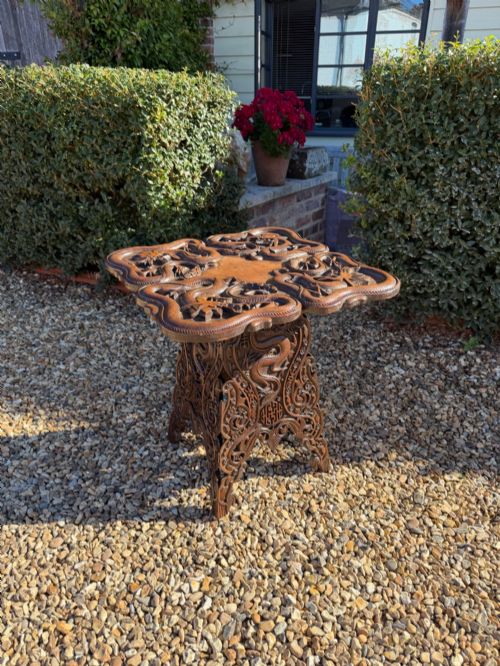
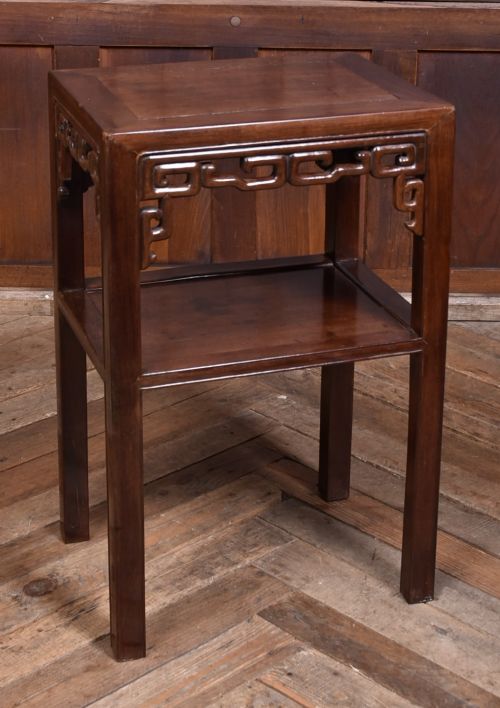
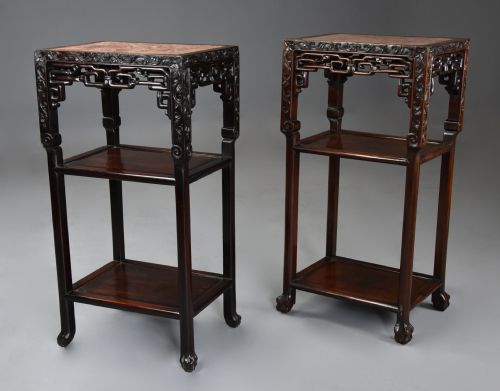
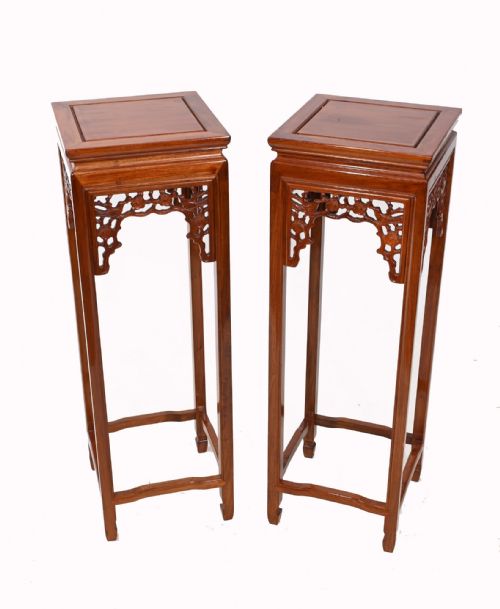
When you search for an oriental display table, you encounter a variety of forms including plant stands, jardiniere stands, side tables, and occasional tables originating from the nineteenth and early twentieth centuries. These pieces reflect Chinese Qing dynasty, Chinese export, and Japanese Meiji period influences, alongside British Aesthetic movement and Arts and Crafts interpretations.
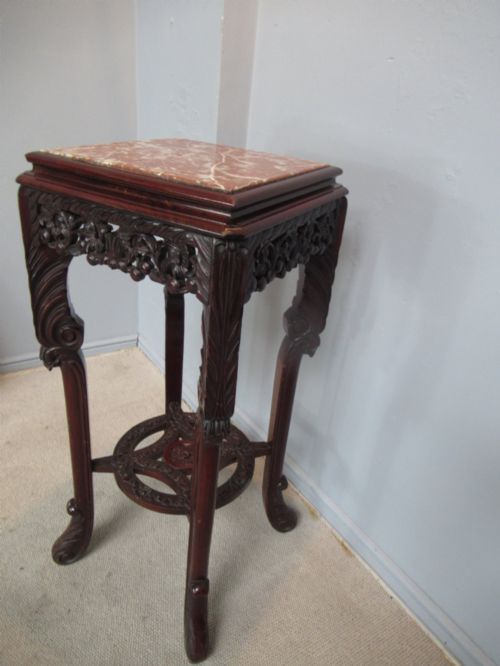
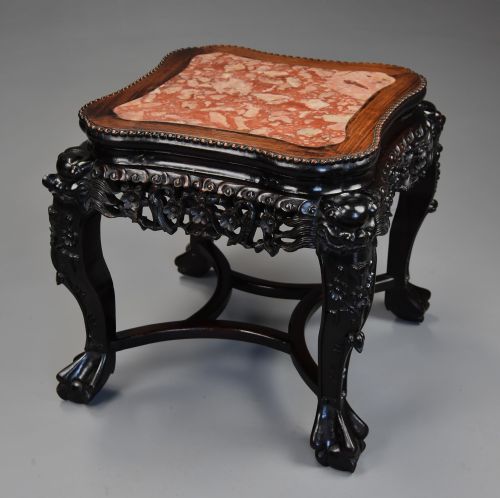
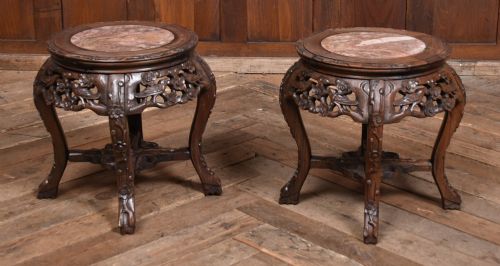
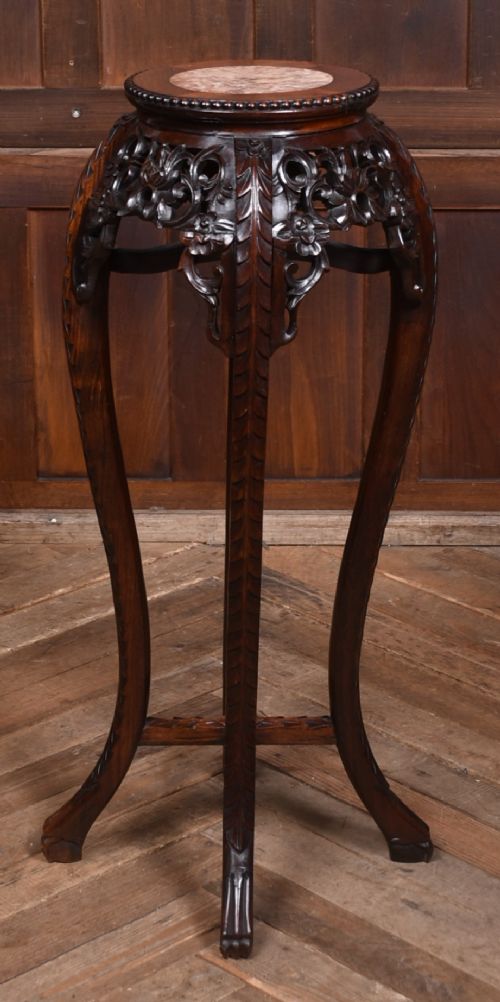
The version you are most likely to meet on this page is a carved hardwood pot stand or pedestal featuring an inset marble top, dating from the late nineteenth century. Such pieces served practical roles holding heavy planters, vases, or lamps while adding sculptural form to Victorian and Edwardian rooms.
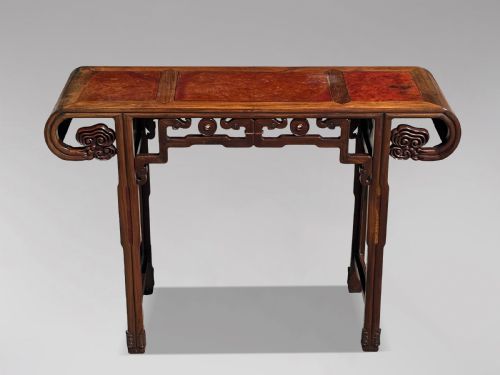
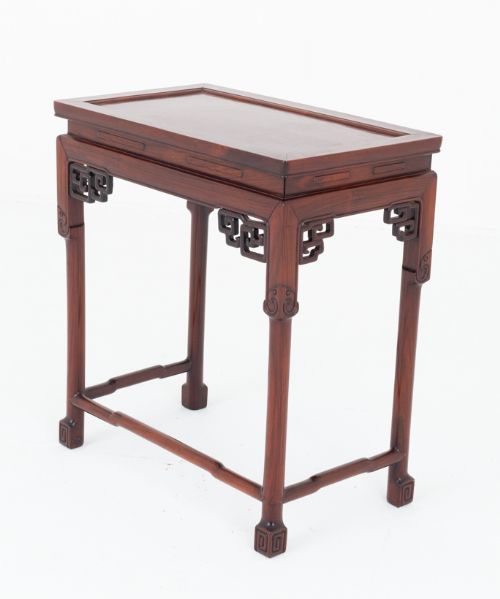
Altar tables and occasional tables round out the selection, bringing longer proportions and specialised uses to the category. These designs draw upon traditional Asian joinery adapted for Western collectors who favoured exotic woods and decorative surface inlays.
Materials and Construction
Construction relies heavily on dense exotic timbers such as hongmu, rosewood, padouk, and general hardwood, chosen for their ability to support heavy stone inserts. Cabinetmakers utilised precise joinery techniques to frame marble, porcelain, or lacquer panels within the timber tops without the need for modern adhesives.
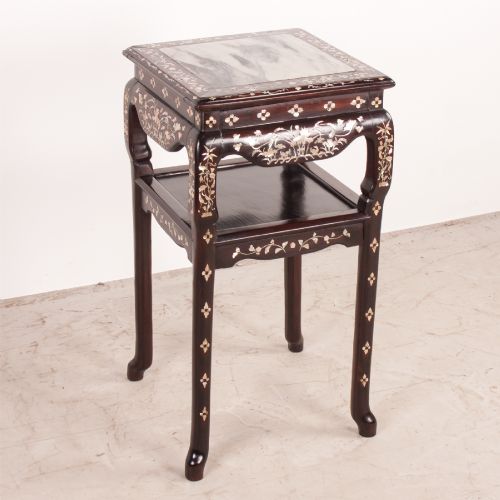
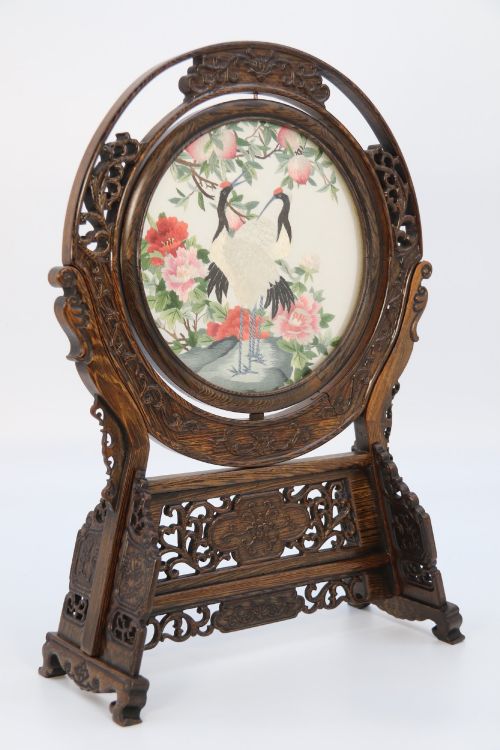
Surface decoration incorporates mother of pearl inlay, hand carving, and silk embroidery set behind glass on rotating frames. Bamboo and ebonised elm also appear, particularly in pieces produced under the influence of the Aesthetic movement and European retailers.
Rotating silk embroidery stands allowed Victorian owners to reverse their decorative panels whenever they tired of the view.
Evaluating Quality
Quality rests upon the crispness of the hand carving and the selection of materials, particularly the figuring of the hardwood and the absence of faults in the inset marble or porcelain panels. Superior examples display deep, undercut carving without mechanical shortcuts, alongside tightly fitted joints that remain stable across the structure.
The weight and density of the timber indicate the tier of production, with heavier rosewood and hongmu pieces sitting above lighter, secondary woods. Finer execution shows in the precision of mother of pearl inlay and the smoothness of the lacquered or polished finish.
Liberty of London·Gabriel Viardot
The Oriental Display Table Glossary
- Hongmu
- A dense tropical hardwood frequently used in Chinese furniture production. It possesses a dark reddish-brown hue and substantial weight.
- Jardiniere stand
- A tall pedestal or small table designed specifically to display a ceramic plant pot or flower bowl. These stands typically feature circular or multi-sided tops.
- Qing Dynasty
- The final imperial dynasty of China, spanning from sixteen forty-four to nineteen twelve. Many decorative arts reaching Western markets originate from its later decades.
- Meiji Period
- The era in Japanese history lasting from eighteen sixty-eight to nineteen twelve. Pieces from this time often combine traditional craftsmanship with motifs destined for export.
- Aesthetic Movement
- A nineteenth-century British cultural movement that promoted art for art's sake. It heavily influenced furniture design through the adoption of Japanese decorative principles.
Oriental Display Table: Frequently Asked Questions
What were oriental display tables used for?
These tables served primarily to elevate decorative objects such as porcelain vases, heavy planters, and table lamps within domestic reception rooms. Their sturdy construction accommodated weighty stone and ceramic vessels while introducing exotic decorative forms to European interiors.
Over time, smaller occasional variants found use beside seating for holding books or serving tea. Taller stands functioned mainly as sculptural pedestals to highlight specific works of art.
How do you distinguish Chinese from Japanese pieces?
Distinctions rest largely on timber choice, carving style, and decorative motifs. Chinese pieces frequently employ dense hardwoods like hongmu and rosewood with deep, formal floral carvings and marble inserts.
Japanese works from the Meiji period often utilise bamboo, ebonised elm, or lighter woods influenced by European Japonisme. Motif selection also guides identification, separating imperial Chinese symbolism from Japanese naturalistic themes.
Are marble tops original to these tables?
The marble or porcelain panels inset into the timber tops are period-correct and integral to the design. They provided a durable, water-resistant surface capable of supporting damp flower pots and heavy bronze ornaments.
Cabinetmakers rebated these stone inserts directly into the wooden framework during initial construction. Their presence is a standard characteristic of nineteenth-century plant and jardiniere stands.
How do you care for antique hardwood furniture?
Maintenance requires keeping timber away from direct heat sources and sudden humidity shifts that cause wood to split. Occasional dusting with a soft, dry cloth preserves the polished surface without the need for heavy chemical polishes.
Stone and marble inserts benefit from gentle wiping with a damp cloth followed by immediate drying. Avoid abrasive cleaners that might dull the natural finish of the stone or timber.