
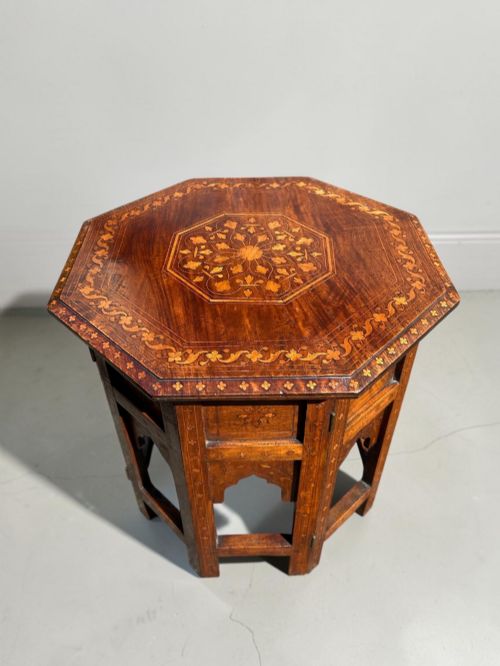
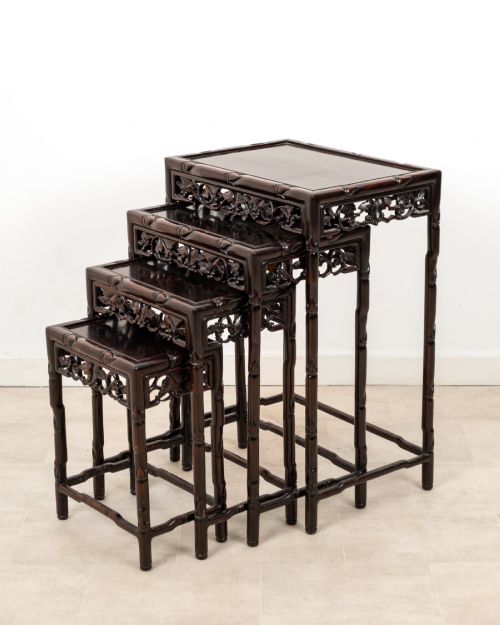
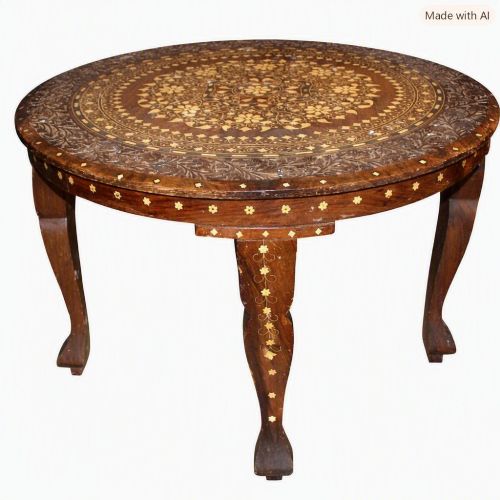
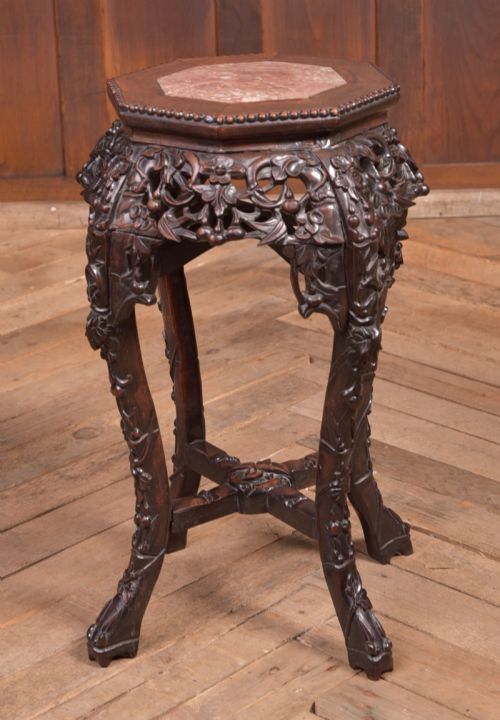
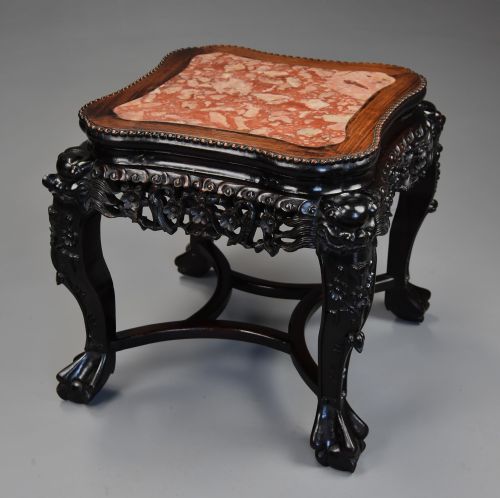
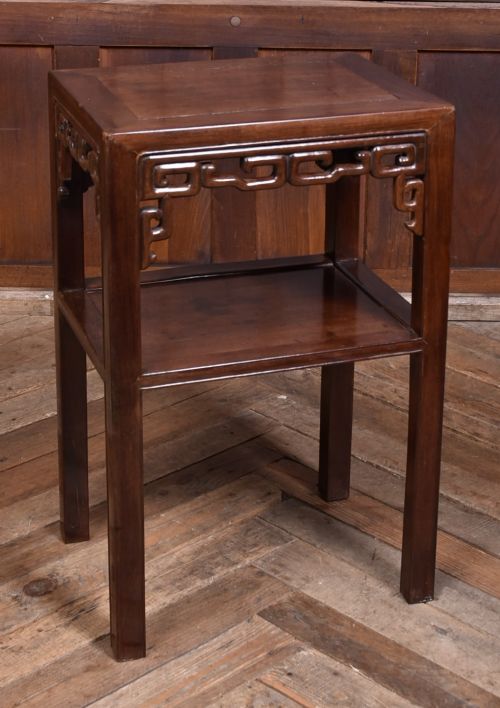
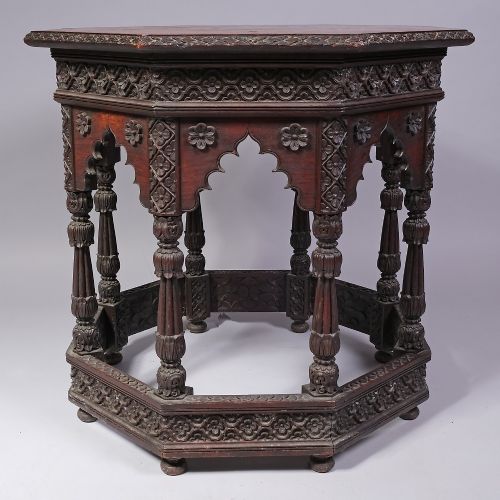
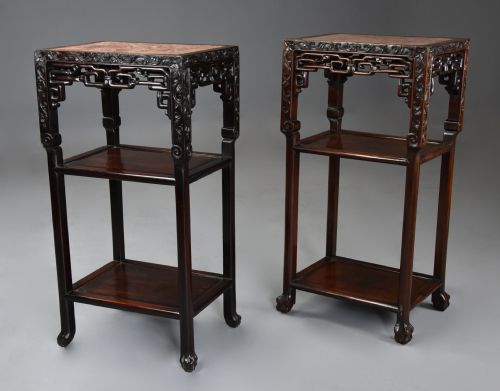
Carved Rosewood Plant Stand
These carved rosewood plant stand pieces bring solid weight and botanical display into a room, prized for their dense timber and intricate Oriental carving.
What these pieces are
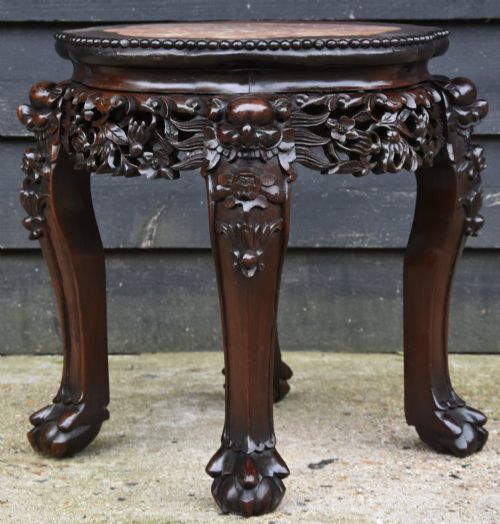
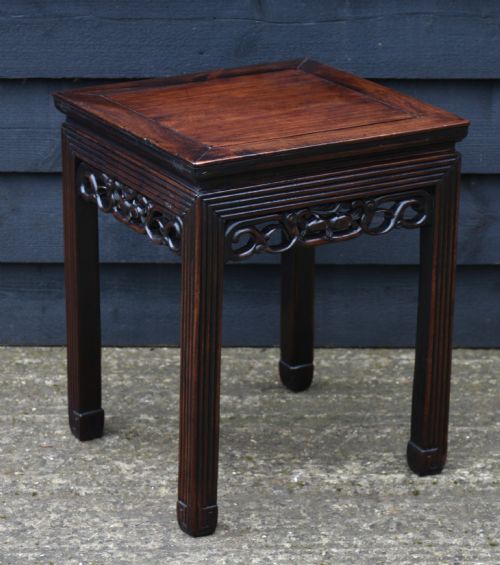
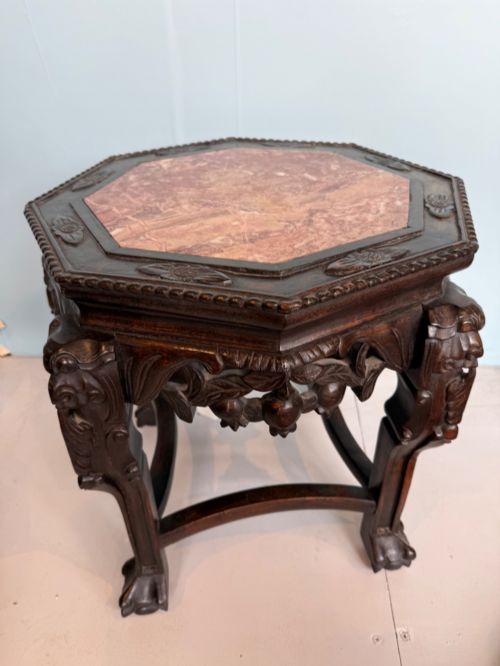
A carved rosewood plant stand brings a sturdy display surface for flora into domestic spaces, appearing across periods from early Victorian to the early twentieth century. These items double as occasional tables, side tables, and jardinere stands depending on their height and top configuration.
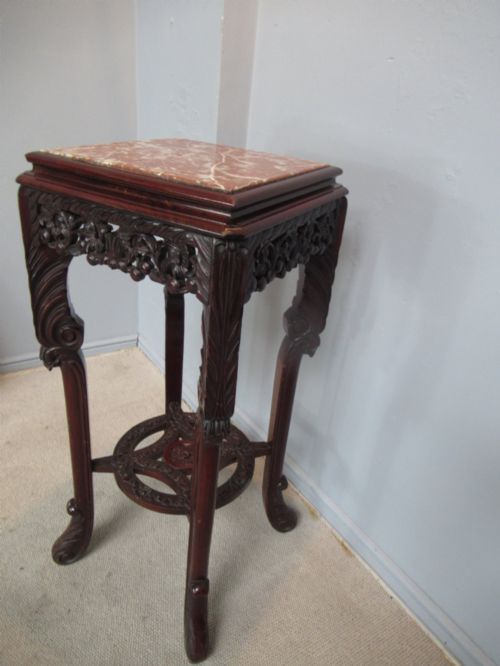
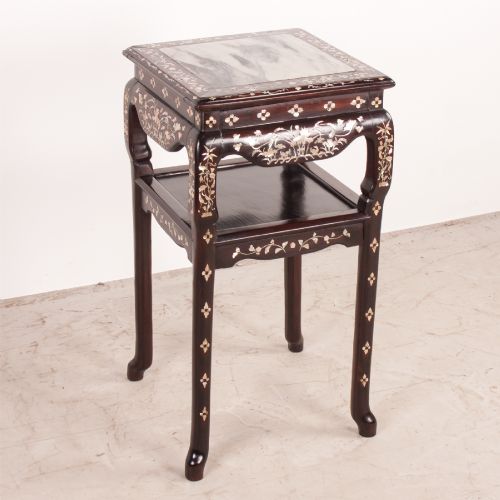
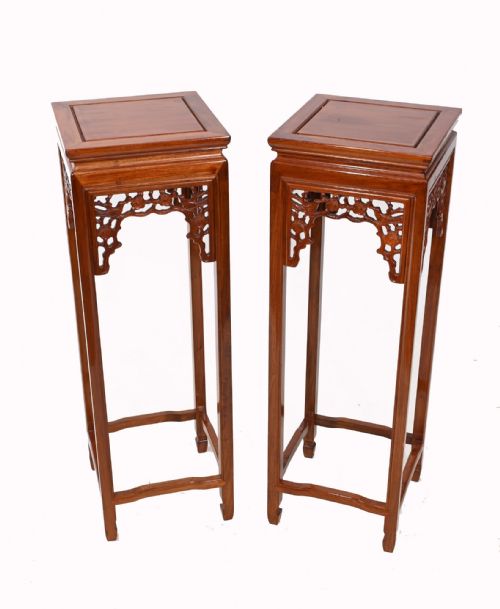
The evidence shows forms originating from Chinese export and Qing Dynasty traditions, alongside British Victorian interpretations. Rectangular forms and occasional tables sit alongside dedicated pot stands designed to elevate heavy greenery.
How they were made
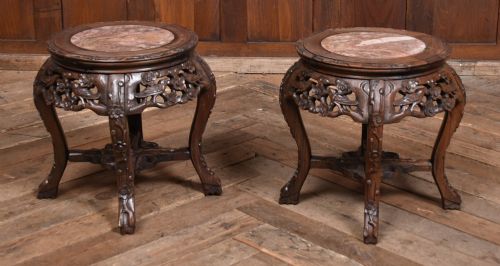
Construction relies heavily on dense hardwoods and specifically rosewood, often paired with inset marble tops. These natural materials provide the structural integrity required to support heavy ceramic pots and jardiniere vessels.
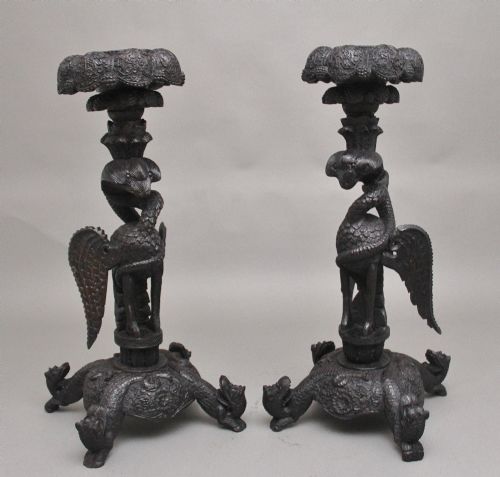
Carpenters utilised traditional joinery combined with deep manual carving. The surfaces feature intricate floral and Oriental motifs carved directly into the solid timber frame.
Retail Price Guide 2026
Typical UK retail prices for carved rosewood plant stand, calculated from the Sellingantiques database of over a million retail prices indexed since 2003. This retail price guide relies exclusively on Sellingantiques data; no external sources or auction records are used, so the figures do not describe the wider market.
A sturdy spot for your ferns to look important.
What varies in quality
Quality separates ordinary utility frames from superior examples through the depth and crispness of the carving. Superior pieces display deeply undercut botanical details that retain sharp relief rather than soft, shallow moulding.
The integration of the marble top influences the overall standard of the object. Tighter tolerances in the fit between the stone and the timber surround indicate superior craftsmanship during production.
The Carved Rosewood Plant Stand Glossary
- Rosewood
- A heavy, dense hardwood with a dark grain capable of taking a high polish. It forms the primary structural material for these stands.
- Jardinere Stand
- A tall piece of furniture specifically designed to hold a flower pot or plant container. These items elevate greenery to eye level.
- Qing Dynasty
- The final imperial dynasty of China, spanning from the seventeenth to the early twentieth century. This period heavily influenced the carved export styles seen here.
- Occasional Table
- A small, movable table used for specific, temporary purposes such as holding a lamp or plant. They offer flexible placement within a room.
Frequently Asked Questions
What is a carved rosewood plant stand used for?
These stands serve primarily to elevate potted plants, ferns, and jardiniere vessels off the floor.
They also function as small occasional tables or side surfaces for displaying decorative objects in a living space.
How do I identify a Qing Dynasty style stand?
Qing Dynasty style stands display traditional Chinese export motifs, heavy hardwood construction, and intricate manual carving.
They often incorporate inset marble tops and rectangular or multi-sided forms characteristic of the period.
Are these pieces made entirely of rosewood?
The listings record both rosewood and general hardwood materials utilised across the pieces.
Some examples also feature inset marble panels integrated directly into the timber tops.
How do I care for a rosewood plant stand?
Keep the dense hardwood surface clean using a dry or slightly damp cloth without harsh chemical polishes.
Protect the timber and any inset marble from moisture rings by using appropriate saucers beneath plant pots.