
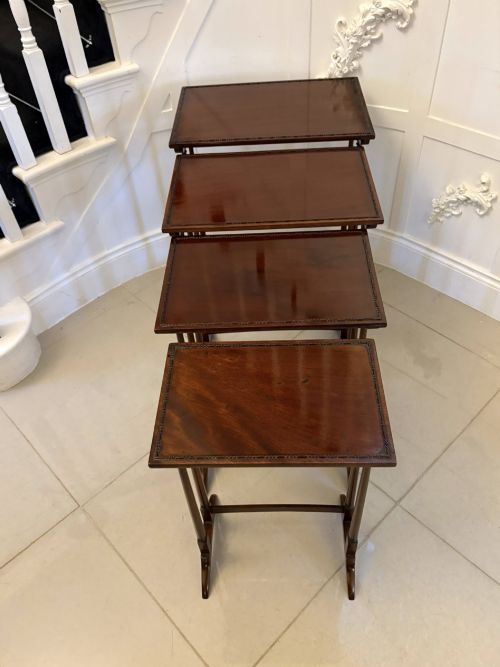
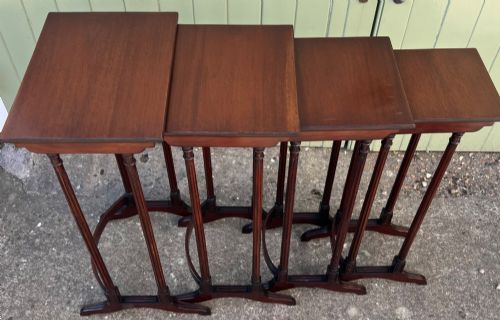
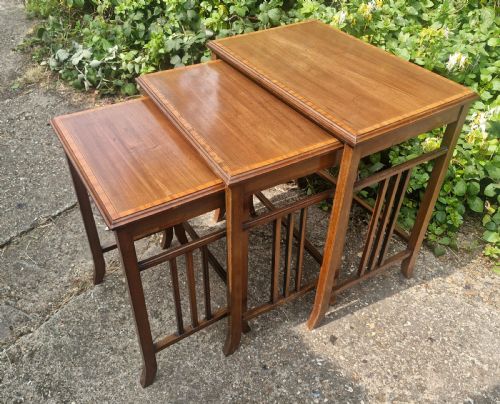
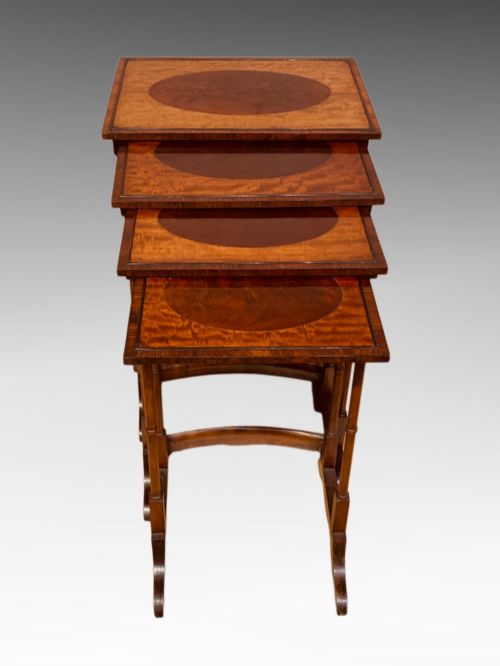

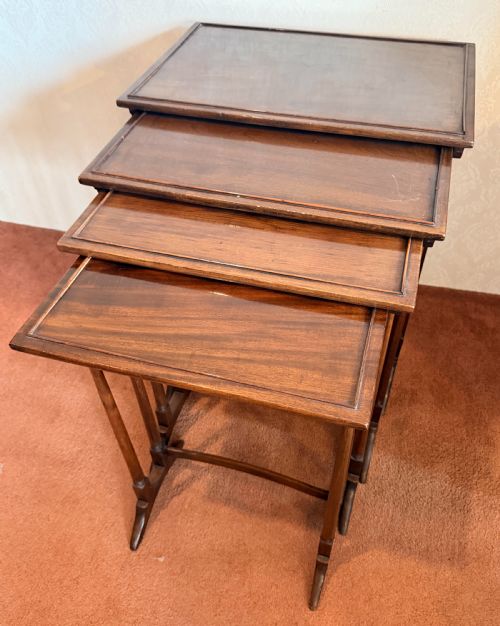


Edwardian Mahogany Nest of Tables
An edwardian mahogany nest of tables offers a clever stacking solution for compact spaces without sacrificing traditional cabinet-making.
Edwardian Mahogany Nest of Tables
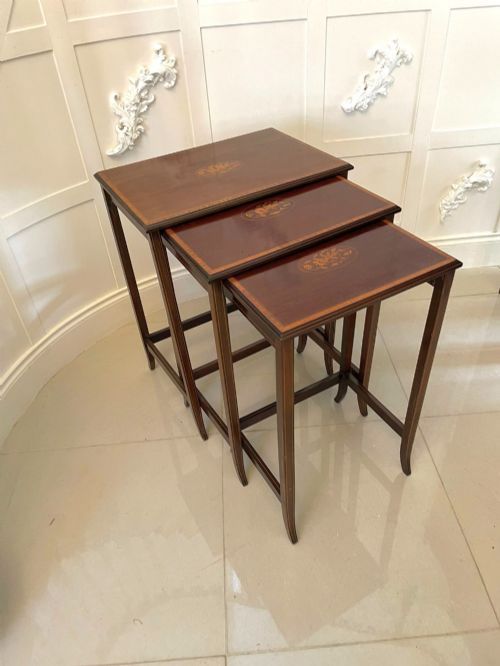
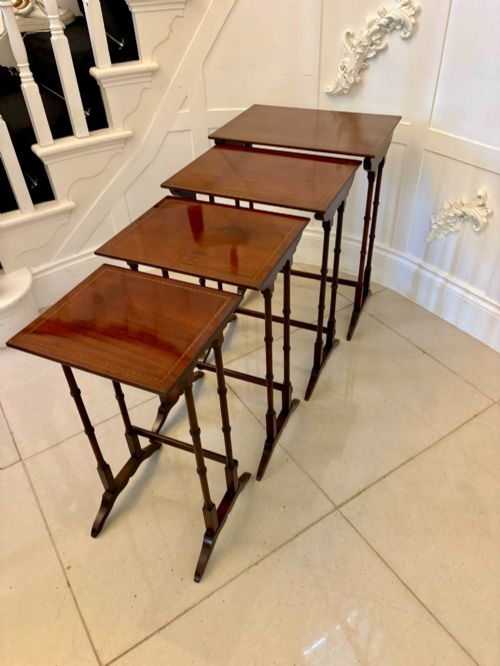
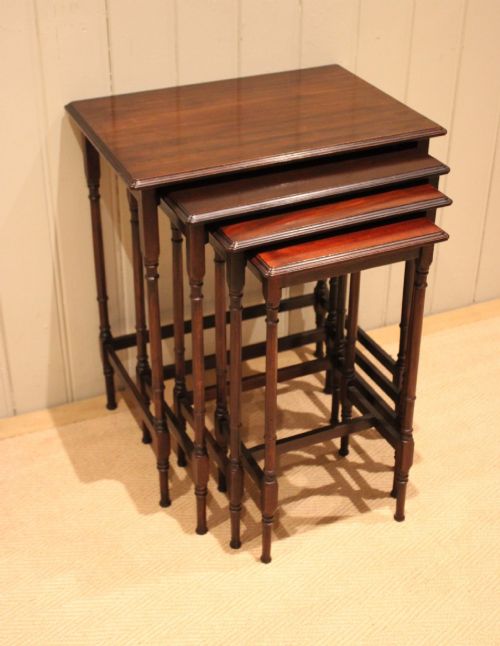
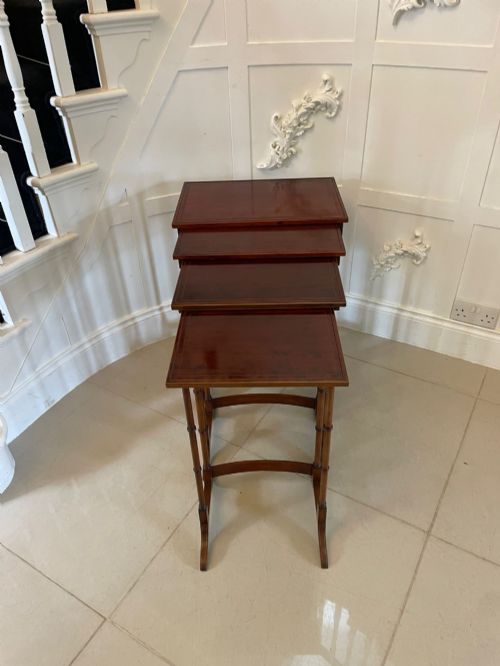
An edwardian mahogany nest of tables brings together a series of graduated occasional tables that slide neatly beneath one another when not in use. You will most frequently encounter sets of three or four stacking pieces, often referred to as quartetto tables, dating from the late nineteenth and early twentieth centuries.
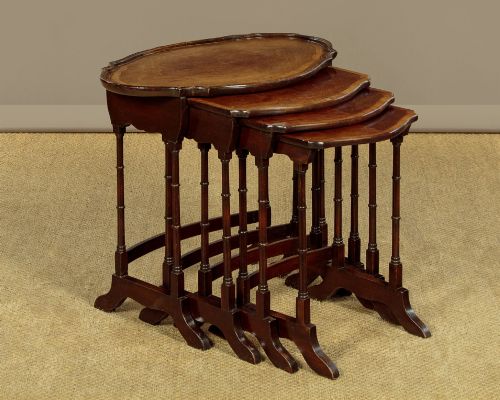
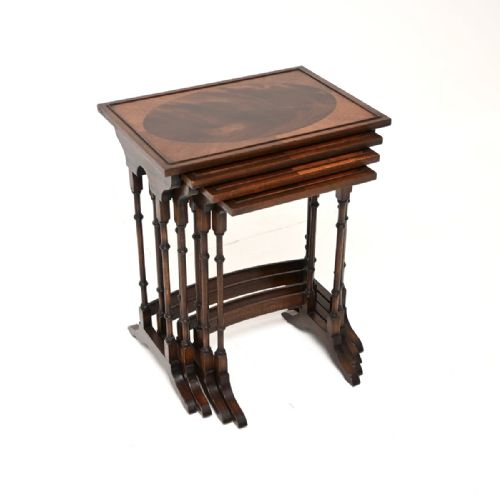
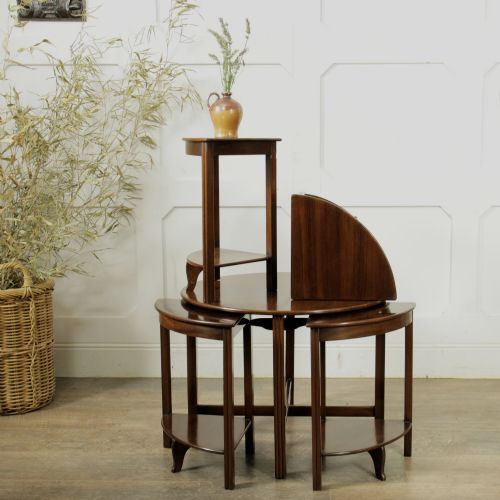
The form developed to serve afternoon tea or provide flexible surface space in drawing rooms and parlours. Makers constructed them in various shapes, including rectangular, circular, oval, and serpentine formats, allowing the smallest units to fit snugly inside the larger frames.
How they were made
Makers relied primarily on solid mahogany and mahogany veneers over secondary timbers, shaping the frames to maintain lightness and portability. Square tapered legs provide stability while keeping the individual tables visually slender as they step down in size.
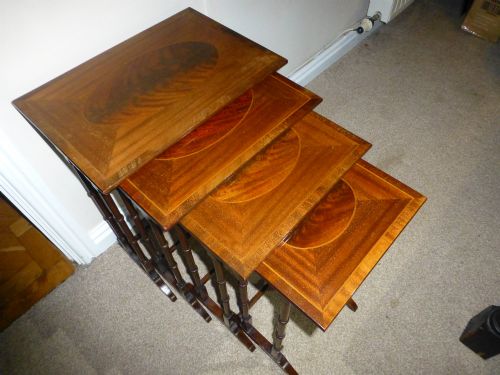
Decoration often includes contrasting satinwood and boxwood inlay, alongside delicate crossbanding around the table edges. Some examples incorporate specialised surfaces such as embossed leather tops or French brass inlay to elevate the visual appeal of the primary wood.
Some sets hide a fourth tiny table so well it takes guests ten minutes to realise the stack goes four deep.
What varies in quality
The refinement of the timber selection and the precision of the joinery set the better examples apart from standard workshop production. Superior sets display carefully matched grain patterns across the graduated surfaces and tightly fitted joints that allow each table to slide smoothly into place.
The intricacy of the decorative elements also dictates grade, with finely executed satinwood inlay and complex serpentine or oval contours representing more skilled craftsmanship than plain rectangular variants.
The Edwardian Mahogany Nest of Tables Glossary
- Quartetto
- A set of four nesting tables designed to graduate in size so they stack together under the largest top.
- Crossbanding
- A narrow strip of veneer applied to the edge of a table top with the grain running perpendicular to the main panel.
- Satinwood
- A durable, yellowish timber prized by cabinet-makers for contrasting inlay and stringing work.
- Boxwood
- A pale, dense wood frequently utilised for fine stringing lines and delicate floral inlay motifs.
Edwardian Mahogany Nest of Tables: Frequently Asked Questions
How are nesting tables meant to be arranged?
They are designed to sit stacked together in a corner or beside a sofa until extra surface area is needed. When entertaining, you simply pull out the individual tables to distribute around the room for drinks or books.
Because they descend in size, they occupy the floor space of only a single small table when stored. This clever gradation makes them particularly useful in smaller sitting rooms where permanent furniture clutter must be avoided.
What defines an edwardian piece?
Edwardian furniture typically dates from the reign of King Edward VII, spanning the early years of the twentieth century. These pieces often draw inspiration from earlier Georgian and Sheraton styles, featuring lighter proportions and delicate decorative details.
Makers of this era favoured bright mahogany surfaces enhanced by subtle satinwood or boxwood inlay. The overall aesthetic prioritizes elegance and practicality over the heavier, more imposing forms of the preceding Victorian period.
Can these tables support heavy items?
While sturdy enough for everyday domestic use such as holding cups, lamps, or books, they are built with slender frames. The smaller tables in the set possess particularly delicate legs that are not intended for heavy loads.
Treating them as occasional furniture ensures the joints remain secure over time. Their lightweight construction is an intentional feature designed to make moving them around the room effortless.
How do you distinguish a quartetto set?
A quartetto set specifically consists of four tables that nest sequentially into one another. You will notice each table drops incrementally in height and width to fit the nested formation.
This specific configuration was popular in upscale Edwardian drawing rooms. The term derives from musical quartets, reflecting the harmonious arrangement of the four stacked pieces.