




Stacked Wooden Tables
Stacked wooden tables offer clever versatility, fitting neatly together when floor space matters and separating easily for daily use.
Stacked Wooden Tables
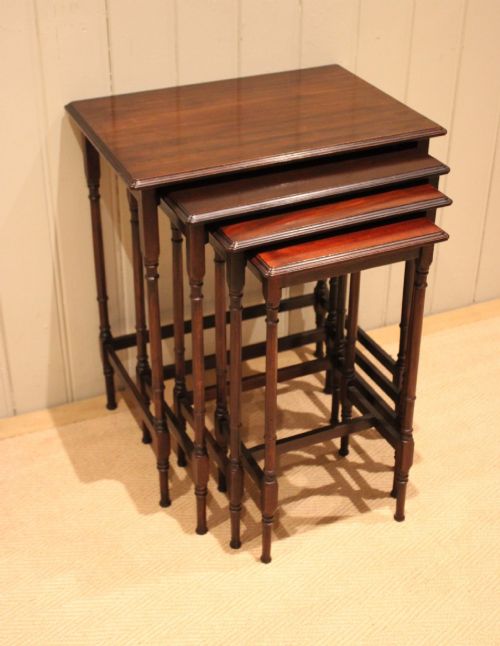
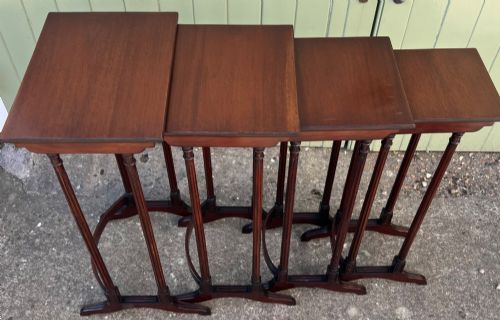
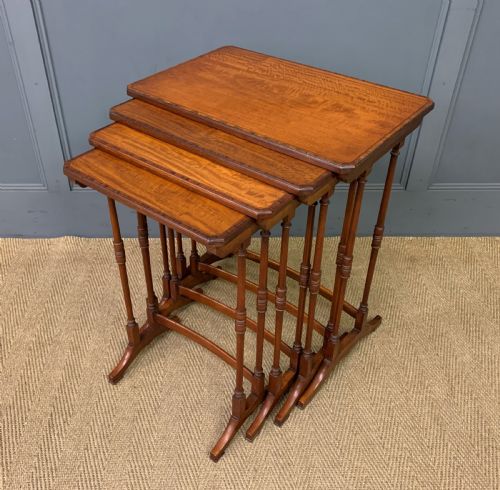
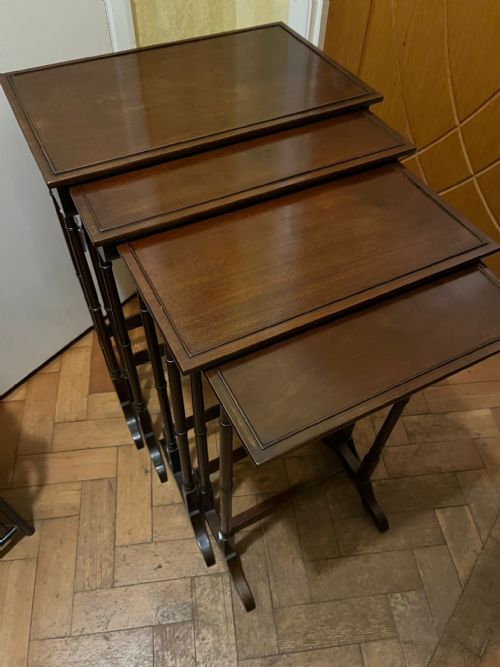
Stacked wooden tables, frequently identified in listings as nests of tables or quartetto sets, comprise multiple graduated tables designed to slide one beneath another.
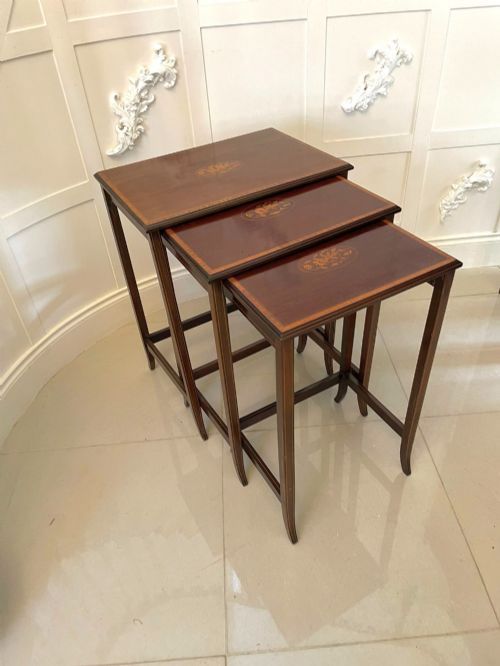
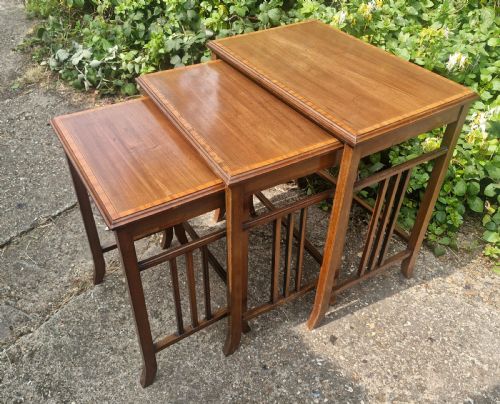
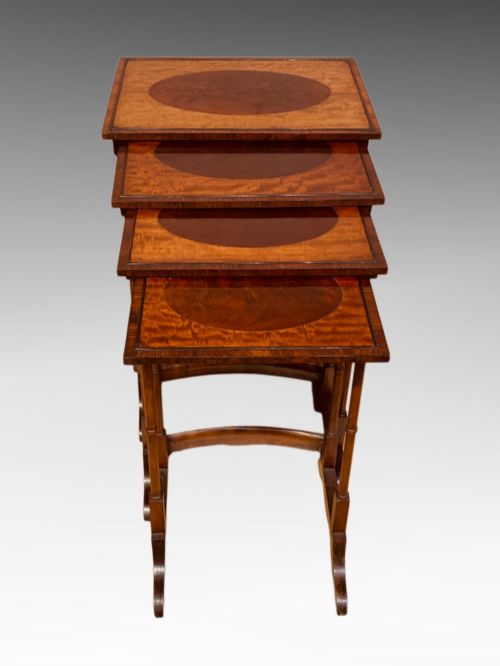
The version most commonly encountered on this page is the Edwardian or nineteenth-century mahogany nest of four, often featuring satinwood inlay.
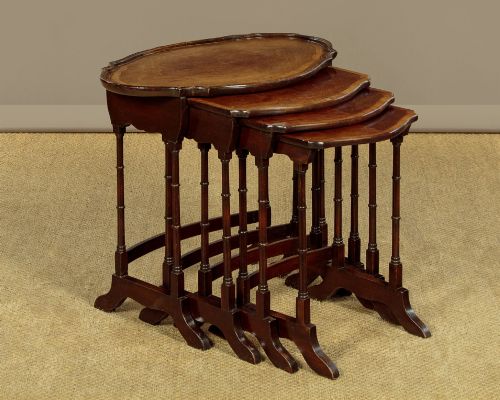
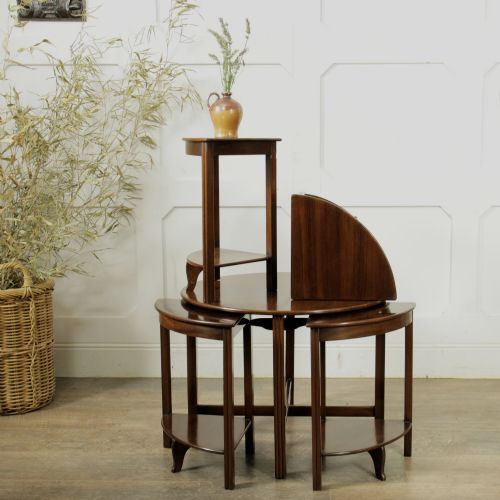
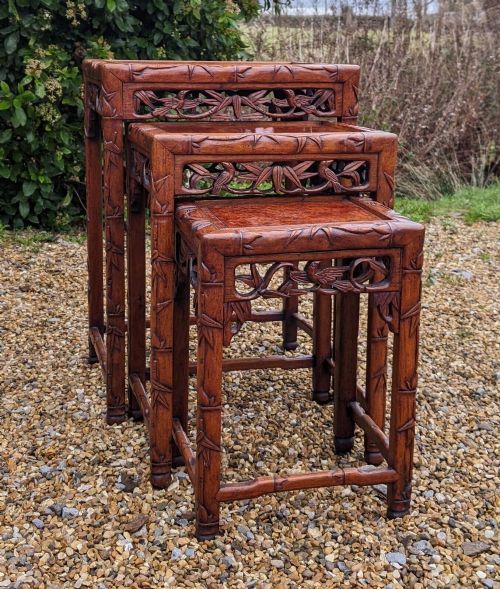
Beyond standard sets, buyers also discover circular top configurations, Chinese export hardwoods, and Art Deco rosewood designs.
Materials and construction
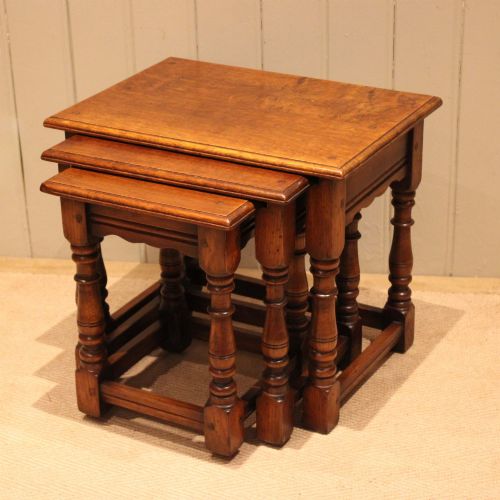
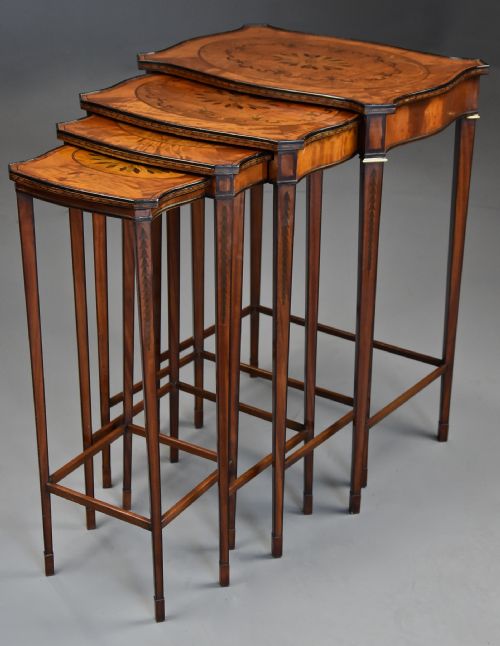
Craftsmen utilised timbers such as mahogany, walnut, oak, and satinwood, frequently applying contrasting veneers and delicate inlay work to the surfaces.
Quartersets, or quartetto tables, required precise carpentry so that smaller frames cleared the aprons and legs of the larger tables above them.
Listings span periods from the Victorian era through the Edwardian years and into Art Deco design, utilising mahogany, walnut, oak, and rosewood.
Distinctions in quality
Quality rests upon the crispness of the cabinetwork, the depth and figuring of the timber grain, and the restraint shown in any decorative inlay.
Superior examples maintain structural rigidity and smooth sliding action across all individual tiers without excessive looseness in the joints.
Heal's
The Stacked Wooden Tables Glossary
- Quartetto
- A set of four graduating tables designed to stack inside one another. This term appears frequently in nineteenth-century and Edwardian descriptions.
- Nest of tables
- A group of independent tables made to fit compactly together as a single unit. They serve as adaptable occasional furniture in principal rooms.
- Satinwood inlay
- Decorative woodwork utilising contrasting light-grained timber inserted into a darker primary surface. It defines much Edwardian and Sheraton revival output.
Stacked Wooden Tables: Frequently Asked Questions
What is a quartetto table set?
A quartetto set specifically designates a group of four graduated tables built to stack together in a cascading sequence.
Cabinetmakers produced these predominantly in mahogany during the nineteenth and early twentieth centuries for flexible entertaining.
How were stacked tables used historically?
These pieces functioned as flexible tea or occasional tables that servants deployed when guests arrived.
Once tea concluded, the smaller tiers returned to their stacked position against a wall to preserve floor space.
How do I date an Edwardian nest?
Edwardian nests typically display lighter mahogany timbers, often embellished with satinwood stringing or neoclassical Sheraton revival motifs.
Construction methods during this era favoured machine-assisted precision alongside traditional hand-finishing.
Can I use these tables separately?
Each table in a nest functions as a standalone surface for lamps, drinks, or books.
Their lightweight construction allows users to distribute them around a room as needed during gatherings.