



Asian Stacked Tables
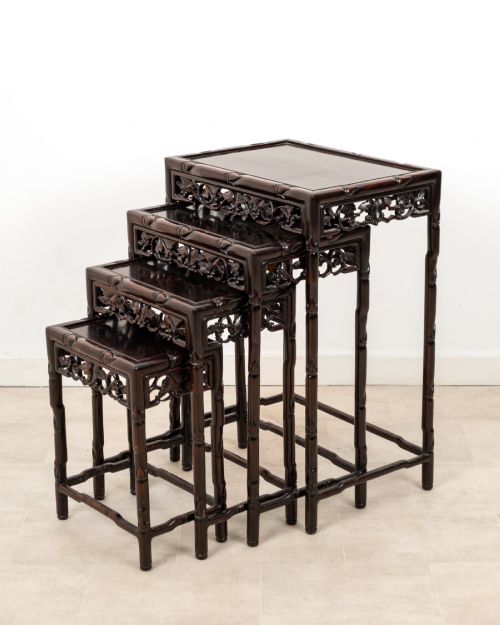
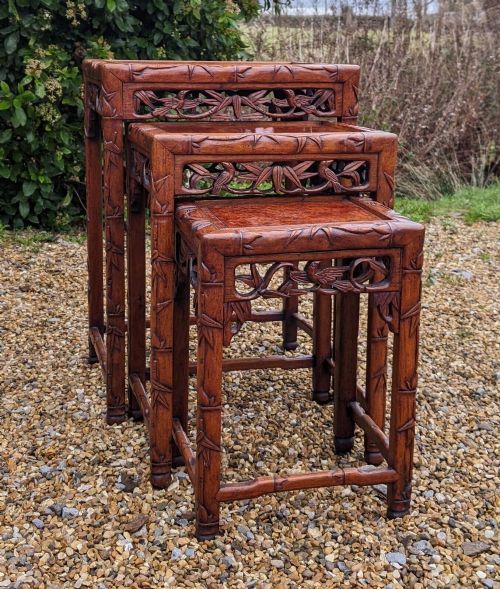
These asian stacked tables are tiered sets of graduated surfaces designed to slide neatly together, offering flexible display space with minimal footprint.
Asian Stacked Tables
When you search for asian stacked tables, you are looking at nests of tables originating from or inspired by Asian craftsmanship, most frequently coming as sets of four.
The versions you are most likely to meet on this page date from the nineteenth century up to the nineteen-twenties, appearing in forms such as coffee tables, side tables, and occasional tables.
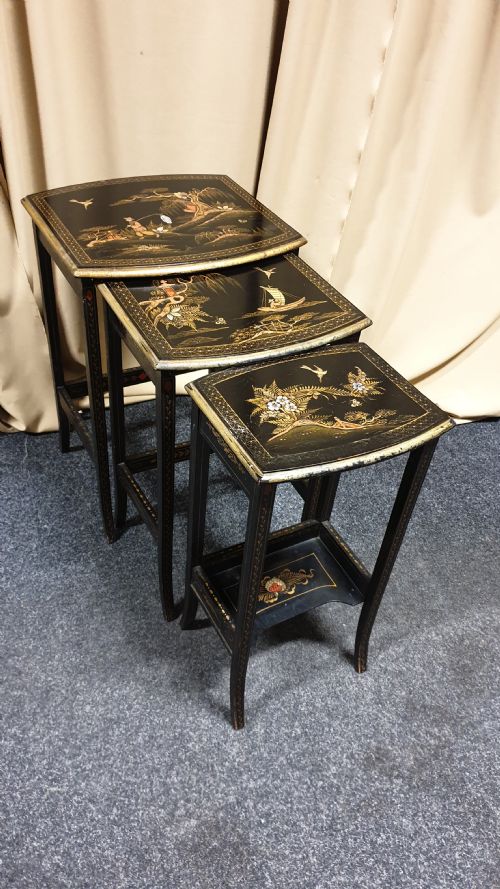
Many bear stylistic markers of the Qing Dynasty or Chinese Export traditions, whilst others reflect Chinoiserie or Anglo-Indian tastes of the period.
Materials and construction
These pieces are constructed from dense timbers such as hardwood, rosewood, teak, huanghuali wood, and hongmu, often selected for rich grain and colour.
Carved hardwood details feature prominently across the surfaces, alongside occasional examples incorporating lacquered wood or glass elements.
The construction relies on precise graduation so that each smaller table slides smoothly beneath the one above it.
Some sets arrive as a friendly quartet of four, ready to play musical chairs around your living room whenever company calls.
Judging quality
Quality rests in the selection of the timber, where dense grain and exceptional colour distinguish finer examples from standard production.
The depth and crispness of the carving separate superior tables from simpler execution, as does the precision of the joinery allowing the tables to nest flush.
The Asian Stacked Tables Glossary
- Nest of tables
- A set of graduated tables designed to slide one beneath another to save floor space when not in use. They typically comprise sets of three or four pieces.
- Hongmu
- A traditional Chinese term for dense hardwoods, literally translating to red wood. It describes heavy, dark timbers used in Qing Dynasty furniture.
- Chinoiserie
- European decorative style reflecting Chinese artistic influences. It appears on early twentieth-century tables adopting Asian motifs.
- Quartetto
- A set of four matching occasional tables designed to nest together. The term highlights the specific grouping into four graduated pieces.
Asian Stacked Tables: Frequently Asked Questions
What are asian stacked tables used for?
These tables provide versatile surface space in living areas and reception rooms. Individual tables can be pulled out to hold drinks or books and tucked away when floor space is needed.
Their graduated sizing allows multiple tables to occupy the footprint of just one piece. This makes them particularly useful in smaller rooms where flexibility matters.
How do I date these tables?
Dating relies on observing timber selection, carving styles, and structural characteristics recorded in the listings. Nineteenth-century examples often display deep carving in dense huanghuali or hongmu.
Pieces from the nineteen-tens and twenties tend to show different stylistic interpretations, including Chinoiserie or Anglo-Indian influences. Comparing the joinery and timber weight helps place pieces within this timeline.
Are these tables solid wood?
The listings record traditional timbers such as hardwood, rosewood, teak, and hongmu. These dense woods form the structural framework and visible surfaces of the tables.
Construction focuses on durable Asian hardwoods designed to withstand regular sliding and stacking. Variations in weight typically reflect the specific timber species used.
How do I style a nest of tables?
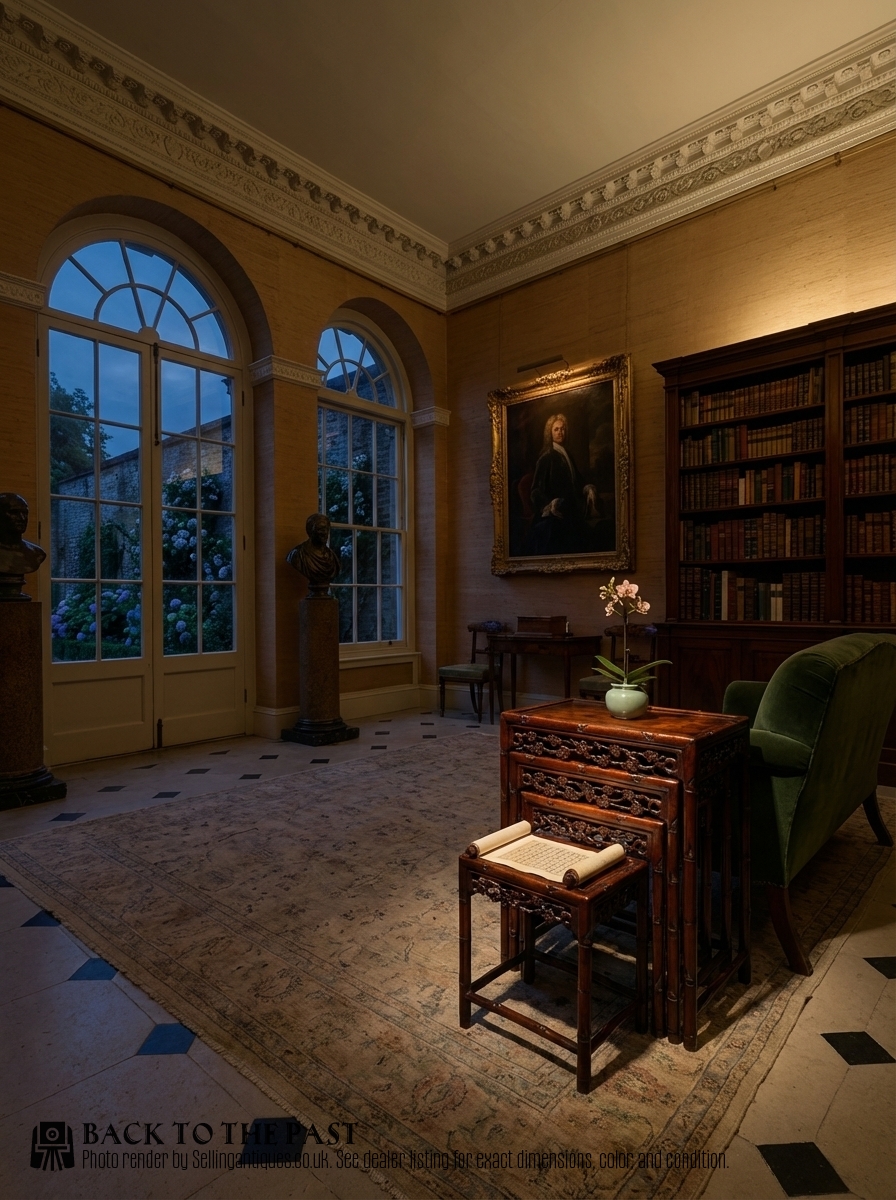
These tables work well either stacked together as a single side table or separated around a room to create visual consistency. Their graduated heights allow for layered displays of decorative objects.
Arranging them near seating provides functional surfaces that adapt to the room layout. Keeping the set together maintains the rhythm of the carved designs.