


Nested End Tables
Nested end tables offer a clever space-saving solution, sliding neatly together when floor space is at a premium and separating to serve guests.
Nested End Tables
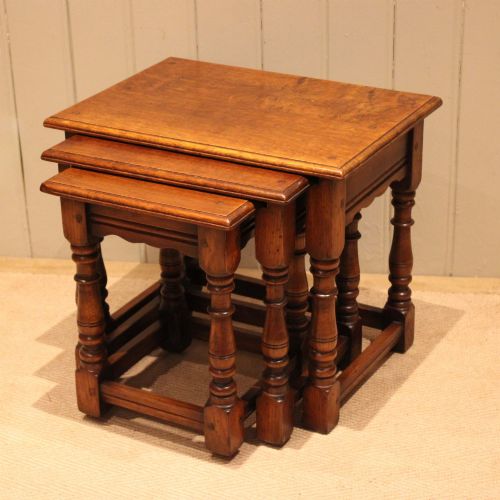
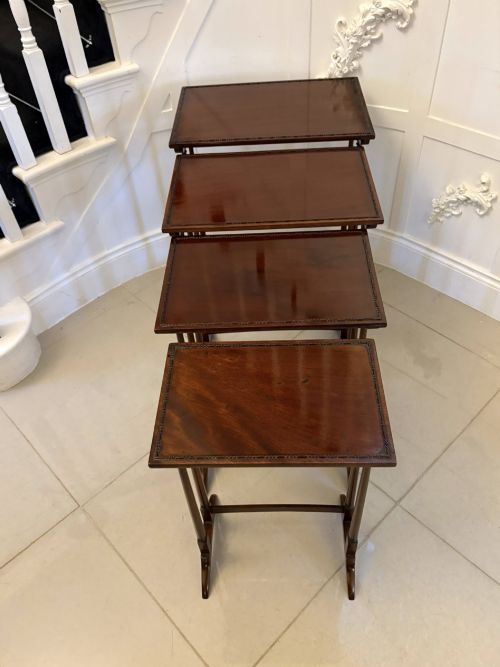
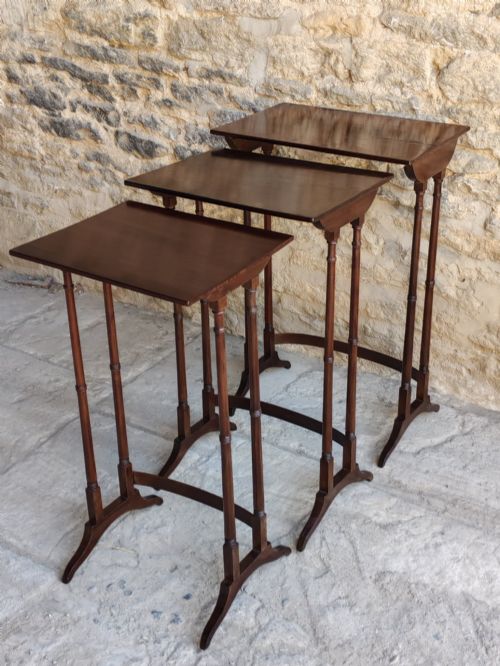
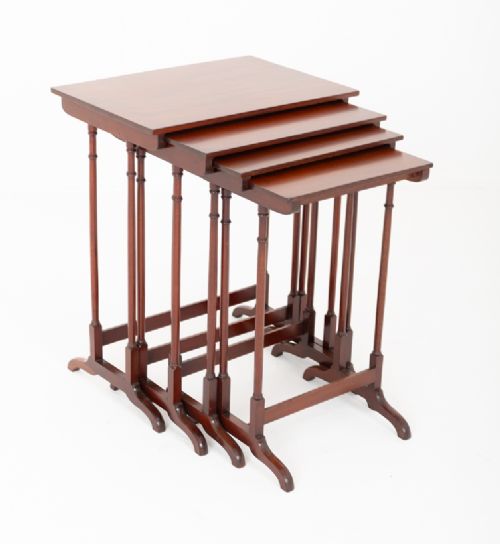
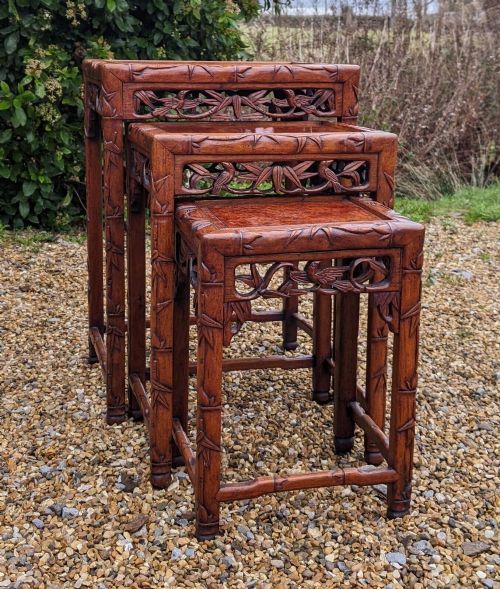
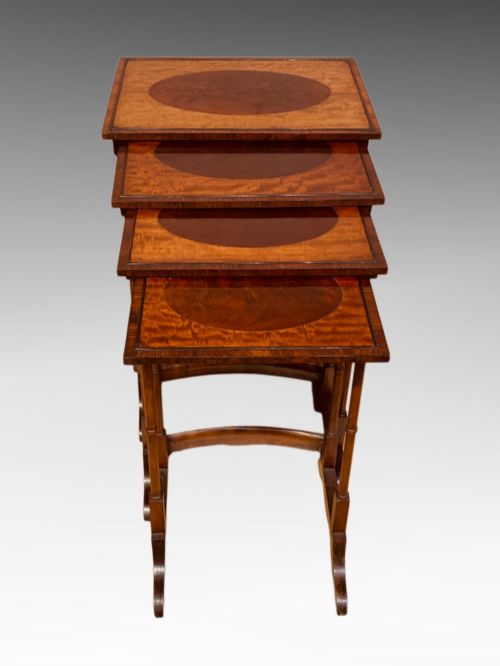
When you search for nested end tables, you encounter sets of graduated tables designed to slide one beneath another. The most common versions on this page are Edwardian and nineteenth-century mahogany sets, often formed of three or four individual pieces.
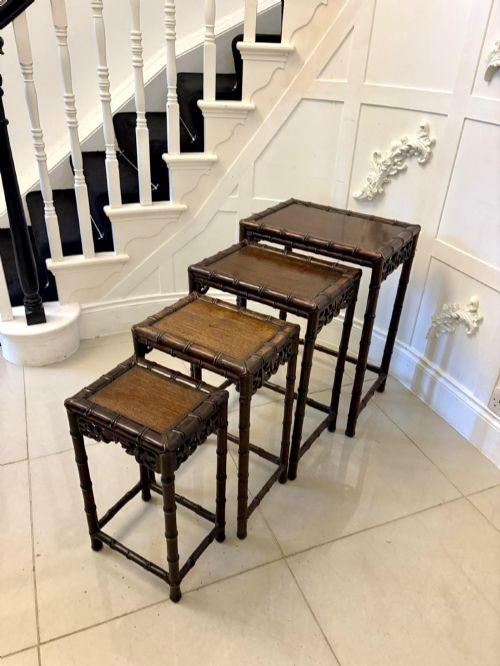
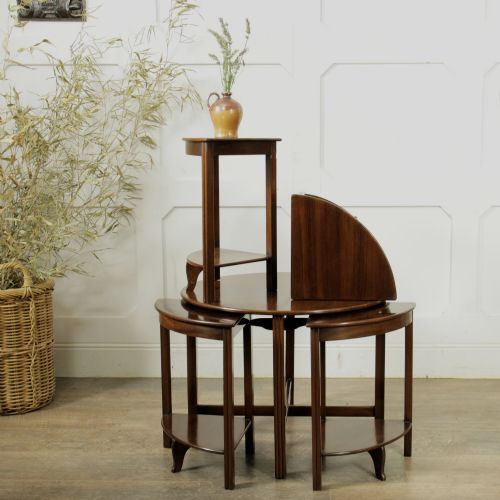
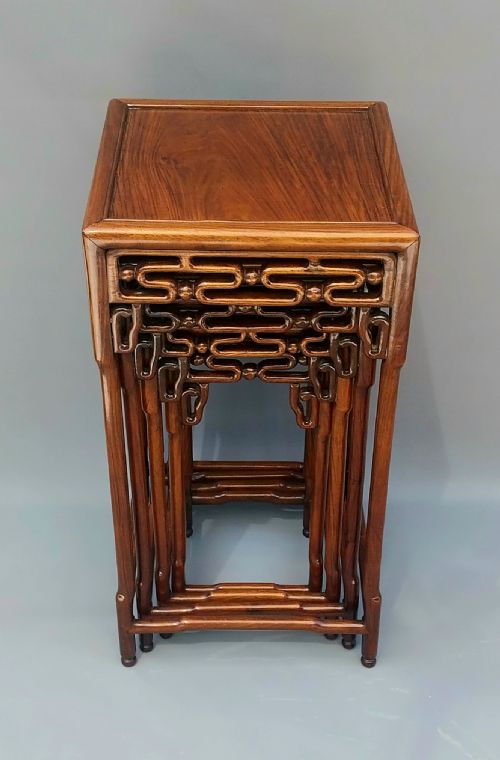
The selection ranges from simple Georgian and Victorian mahogany designs to ornate Chinese export rosewood and hardwood sets. Makers from different periods adapted the form into circular layouts, quartetto sets, and occasional coffee tables.
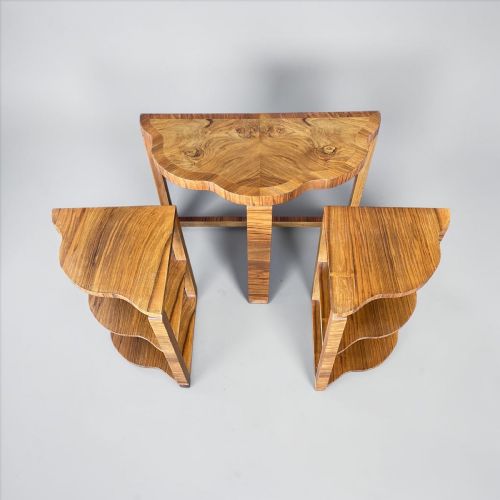
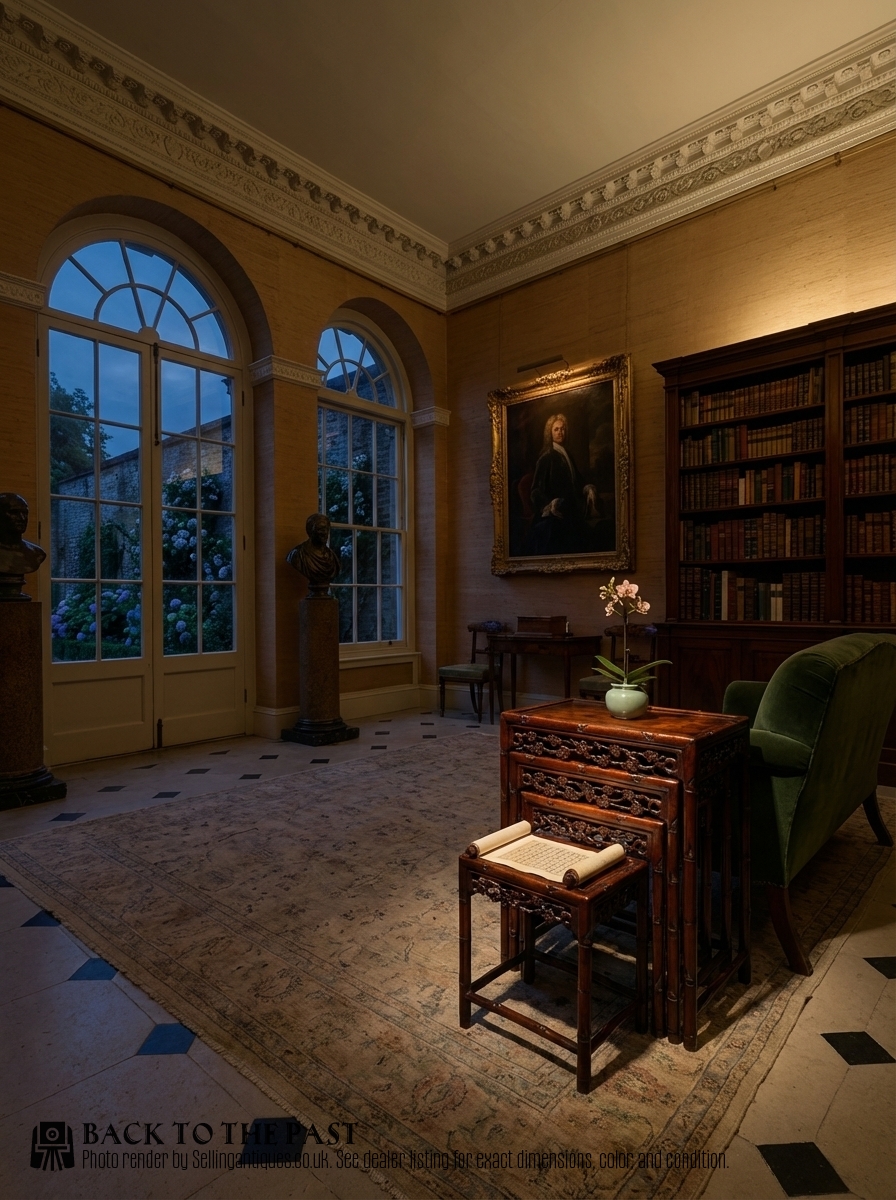
These tables serve primarily as flexible living room furniture, expanding the available surface area instantly without permanently cluttering the room. Sets emerge from various stylistic traditions, including Chinoiserie, Art Deco, and Jacobean Revival.
Materials and Construction Methods
Cabinetmakers constructed these tables using a variety of dense timbers, principally mahogany, walnut, rosewood, and exotic Chinese hardwoods like huanghuali and hongmu. These sturdy woods provided the necessary structural integrity for frames that endure repeated sliding and handling.
Surface decoration frequently involved intricate satinwood inlay, parquetry, embossed leather tops, or elaborate oriental carvings. Artisans shaped frames into faux bamboo or curved silhouettes, matching the aesthetic demands of Edwardian, Victorian, and Art Deco periods.
Listings feature woods spanning mahogany, walnut, rosewood, oak, satinwood, and boxwood.
Distinguishing Quality in Graduated Sets
The upper tier of quality displays superior timber selection, evident in deeply figured mahogany grain or richly polished rosewood. Superior sets maintain precise alignment when stacked, ensuring each smaller table slides smoothly into its designated slot without binding.
Crips execution of satinwood inlay or detailed hand-carved hardwood motifs separates finer examples from standard production pieces. The integrity of the original joints and the matching of grain patterns across the graduating sizes dictate the standing of a set.
The Nested End Tables Glossary
- Quartetto
- A set consisting specifically of four graduated tables designed to nest together. This term appears frequently in nineteenth-century and Edwardian British cataloguing.
- Hongmu
- A category of dense red-brown Chinese hardwoods utilised for traditional furniture. Artisans carved these heavy timbers extensively for export markets.
- Parquetry
- Geometric mosaic woodwork utilised for decorative table tops. Craftsmen arranged contrasting wood veneers in repeating patterns.
- Faux bamboo
- Turned and carved timber finished to resemble natural bamboo stalks. This decorative technique gained popularity during the nineteenth century.
Nested End Tables: Frequently Asked Questions
What are nested end tables?
Nested end tables are sets of graduated occasional tables engineered to fit completely underneath one another to conserve floor space. When separated, they provide multiple independent surfaces for drinks, books, or lamps.
Craftsmen designed these sets to remain stacked against a wall or beside a sofa until needed for entertaining guests.
How do I date a nest of tables?
Dating relies on identifying the primary timber, decorative inlay techniques, and overall stylistic characteristics of the period. Edwardian sets often feature delicate satinwood stringing on mahogany, while nineteenth-century Chinese examples utilise heavy carved hardwoods.
Examining the construction methods underneath the top tier further clarifies the likely decade of manufacture.
How were these tables used historically?
Historically, households utilised these flexible sets in drawing rooms and parlours for afternoon tea or card games. The tables expanded the usable surface area instantly and vanished away compactly when the gathering concluded.
Victorian and Edwardian hosts appreciated the versatility of deploying individual small tables across a room as needed.
How do I live with antique nesting tables?
Living with these tables involves placing them on stable flooring where the sliding action of the graduated tiers encounters minimal friction. Regular polishing maintains the finish of dense timbers like mahogany and rosewood against daily use.
Owners typically store the set fully nested to preserve floor space, pulling out individual tables only during social occasions.