





Regency Nesting Tables
Regency nesting tables are ingenious graduated sets designed to slide together, offering versatile surface space without crowding a room.
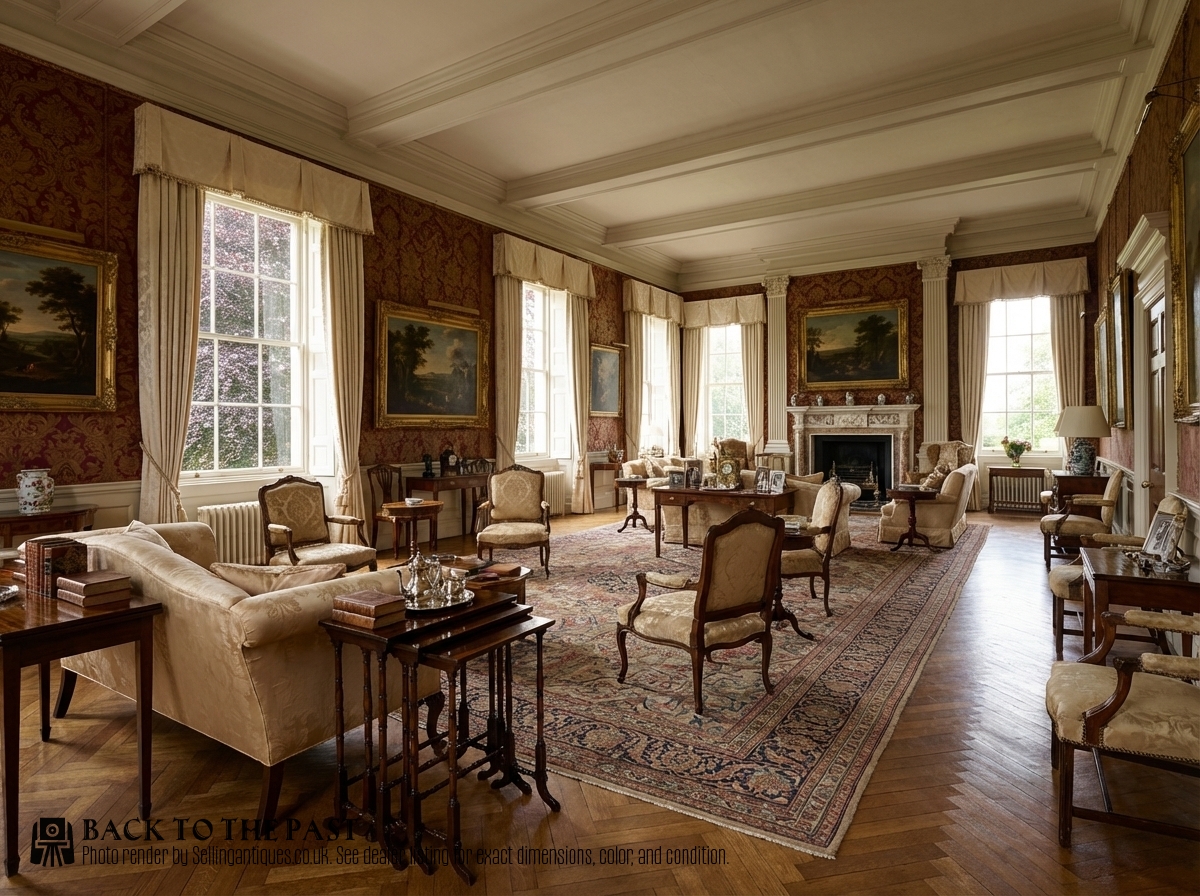
Regency Nesting Tables
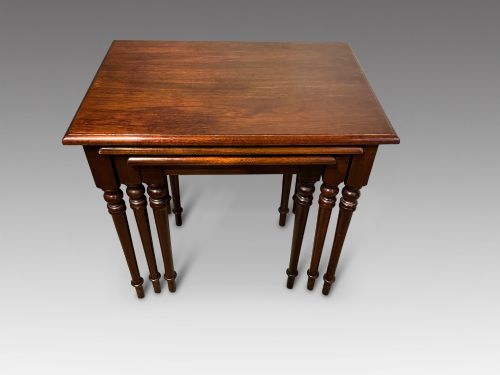
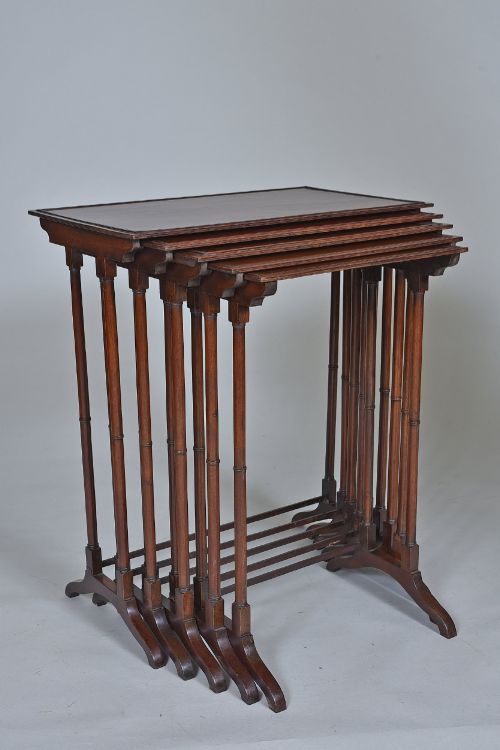
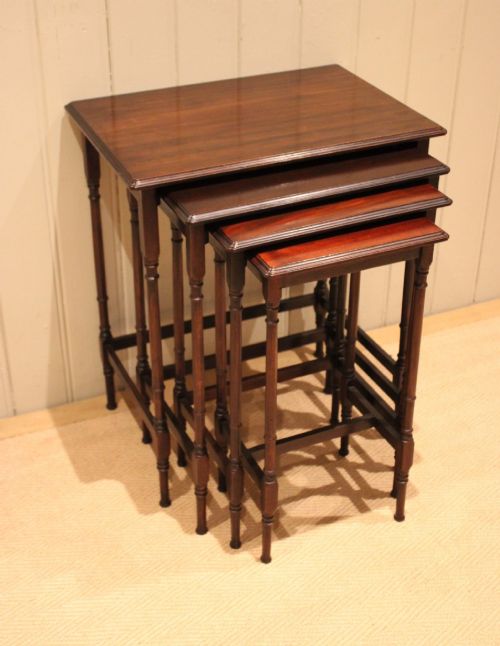
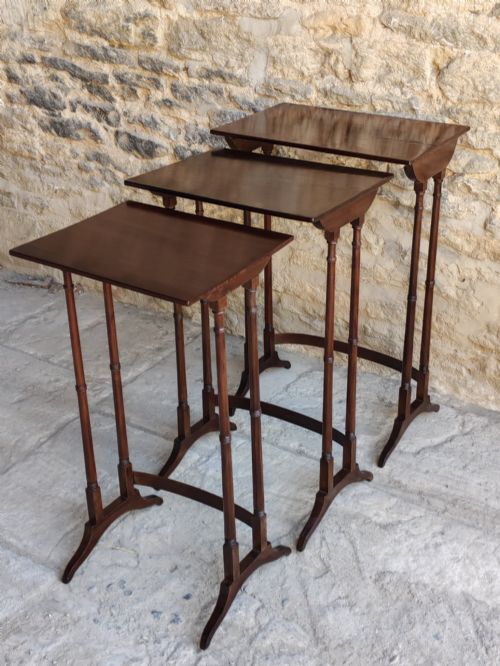
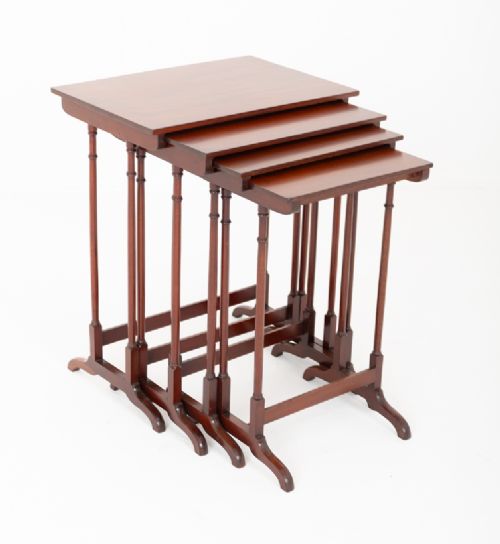
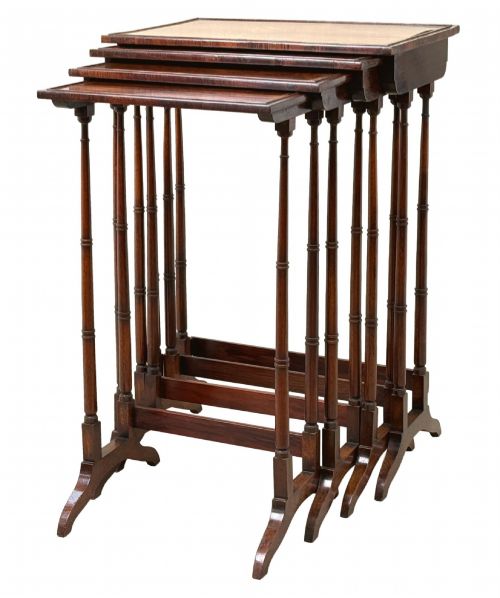
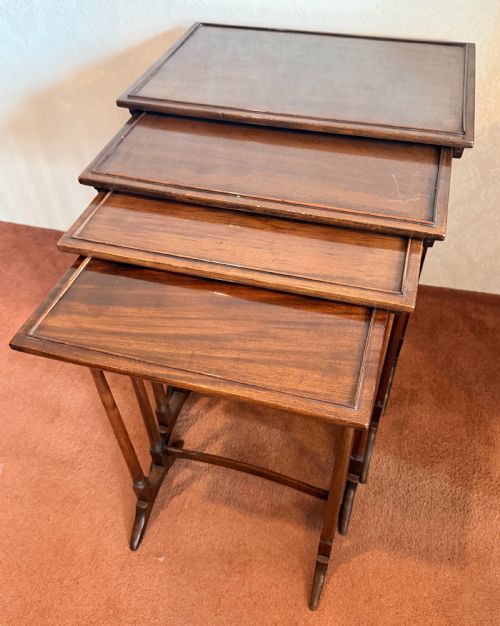
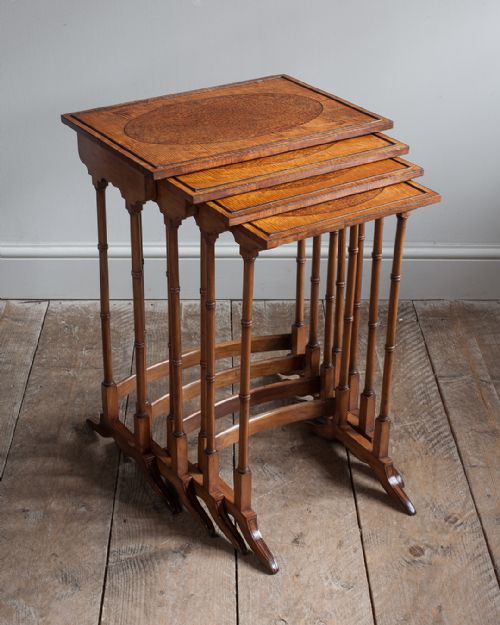
When you search for regency nesting tables, you encounter multiple graduated pieces designed to stack neatly within one another when not in use. These sets predominantly appear as quartettos comprising four tables, though examples of three are also present.
The materials and styles span the nineteenth century alongside later revivals from the Edwardian era and the nineteen-twenties. Alongside genuine Regency and Georgian origins, you will find Chinoiserie decorated lacquer and satinwood adaptations.
Occasional tables and coffee tables form the primary object types in this category. They serve flexible roles in period interiors, moving easily from beside a sofa to various corners of a room.
Materials and Construction
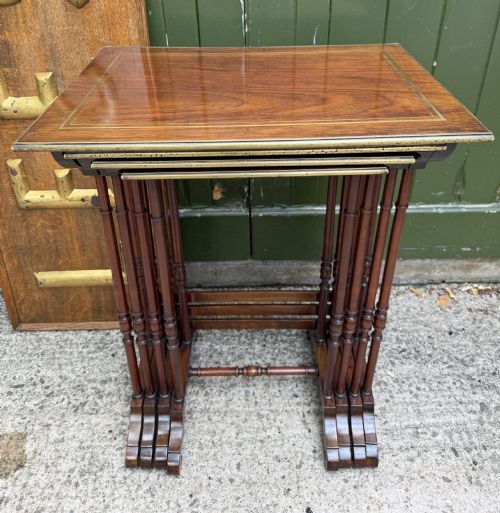
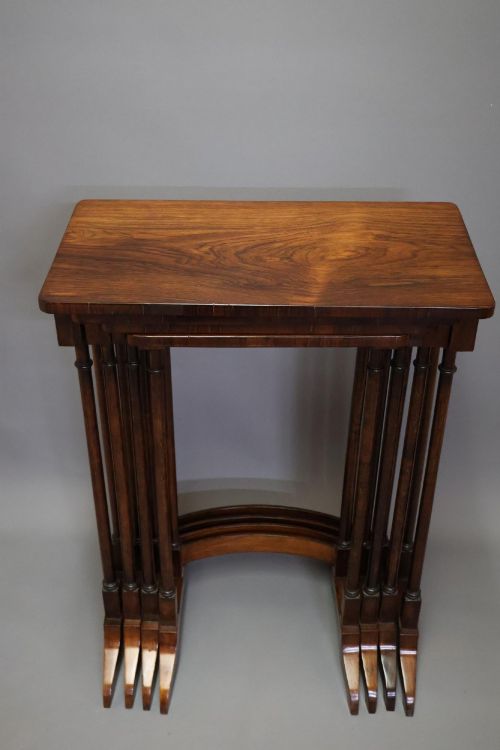
Makers utilised rich timbers such as mahogany and rosewood, frequently incorporating yew veneer tops or simulated faux rosewood finishes. Brass inlay and gold leaf gilding provide decorative contrast on select examples.
Chinoiserie pieces rely on black lacquer applied to wood, carrying intricate painted decoration typical of specific nineteenth-century tastes. Brass components also appear in trolley table constructions from later periods.
Regency Nesting Tables Retail Price Guide 2026
Typical asking prices for regency nesting tables among the pieces listed under this phrase on Sellingantiques today, from the lower quarter to the upper quarter. They describe what is for sale here now, not the wider market.
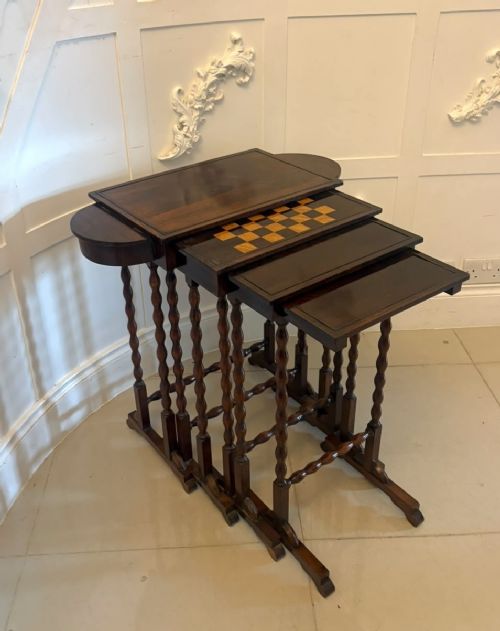
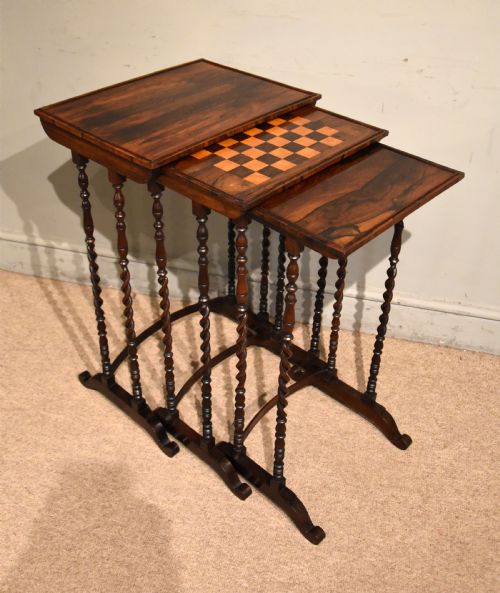
Some sets hide an integrated chess table within the top surface for sudden parlour matches.
Assessing Quality
The distinction between tiers of quality rests upon the selection of timber and the precision of the graduated framing. Superior sets display carefully matched grain patterns across all surfaces and tighter tolerances when the tables slide together.
Fine craftsmanship reveals itself in the delicacy of the turnings, the crispness of brass inlay, and the depth of lacquer decoration. Lesser examples show simpler construction methods and heavier proportions.
Gillows·Maison Baguès·W&C Wilkinson London
The Regency Nesting Tables Glossary
- Quartetto
- A set of four graduated occasional tables designed to fit one beneath another. This term originates from nineteenth-century furniture terminology.
- Chinoiserie
- European decorative style reflecting Chinese artistic influences, typically featuring painted lacquer scenes. It gained popularity during the Georgian and Regency periods.
- Satinwood
- A durable timber with a golden sheen and satin-like lustre used for fine veneer work. Cabinet makers favoured it for contrasting borders and decorative surfaces.
- Simulated rosewood
- A painted or stained finish mimicking the distinct grain of genuine rosewood. Makers used this technique on secondary timbers to achieve a uniform appearance.
Regency Nesting Tables: Frequently Asked Questions
What is a quartetto table?
A quartetto is a set of four graduated tables built to stack inside one another. They provide multiple surfaces while occupying the floor space of a single table.
Cabinet makers designed them for flexibility in nineteenth-century drawing rooms and parlours where space was at a premium.
How were nesting tables used historically?
These tables served primarily as occasional furniture for tea, writing, or holding decorative items. Servants could easily pull them apart when guests arrived and stack them away afterward.
Their lightweight construction made them portable enough to move around a country house or townhouse drawing room as needed.
How do I spot a true Regency set?
Genuine Regency pieces date from the early nineteenth century and typically feature rosewood or mahogany construction. Look for characteristic details like brass inlay, slender turned legs, and graduated proportions that allow smooth stacking.
Later revivals from the Edwardian period or nineteen-twenties often emulate these forms but use different construction markers.
Are Chinoiserie tables authentic to the Regency period?
Chinoiserie decoration spans multiple eras, appearing on both nineteenth-century lacquer sets and later nineteen-ten revivals. The style involves black lacquer surfaces adorned with detailed painted motifs.
Examining the underlying wood and lacquer ageing helps distinguish original nineteenth-century examples from twentieth-century interpretations.