

Inlaid Wooden Side Tables
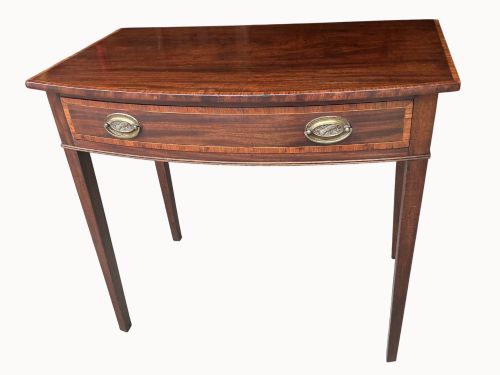
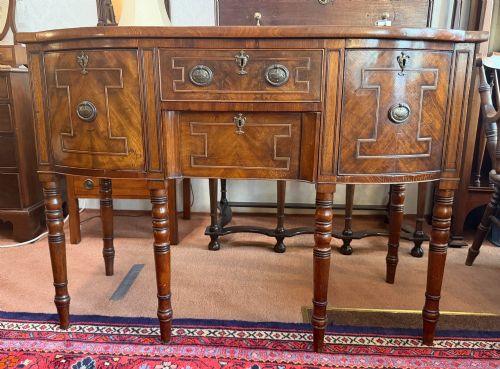
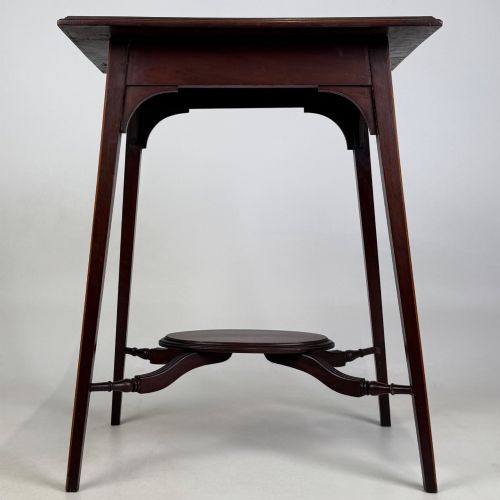
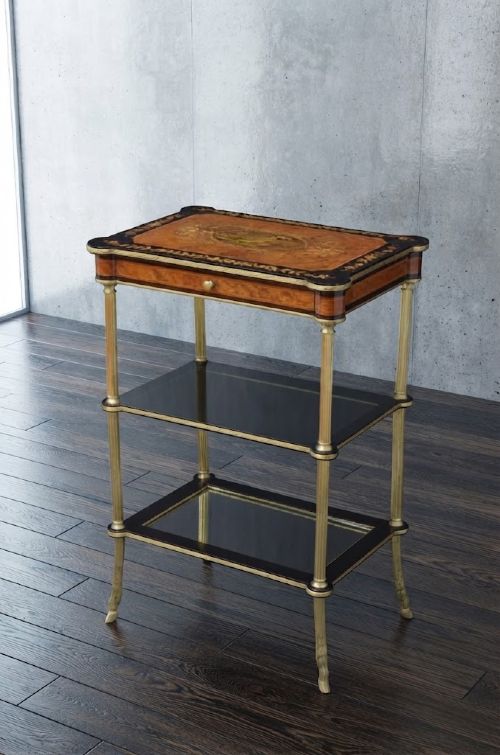
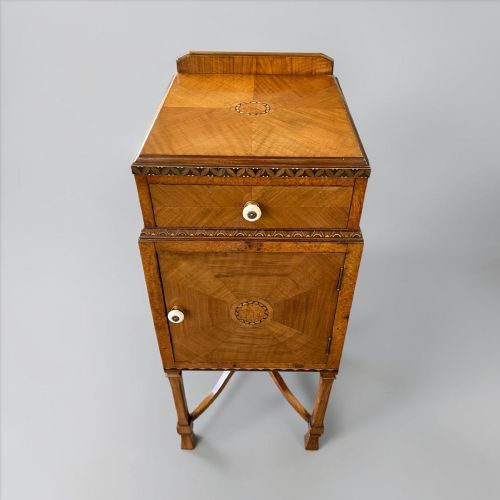
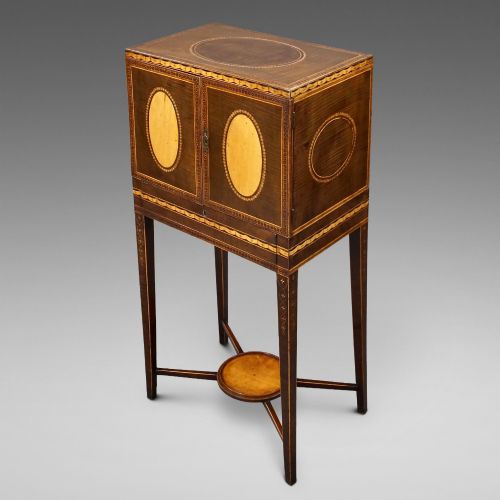
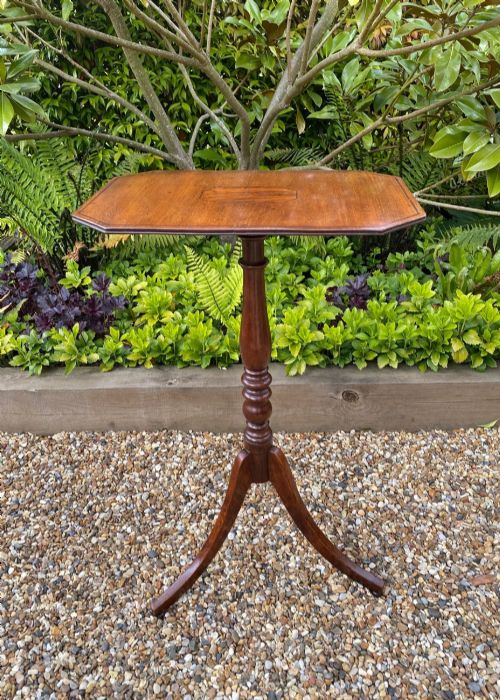
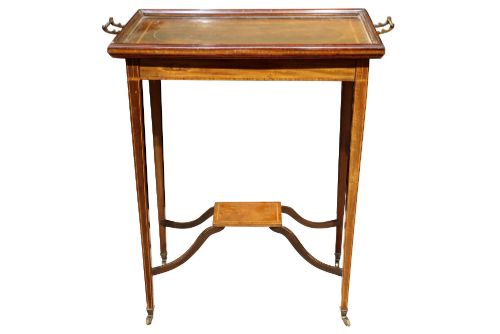
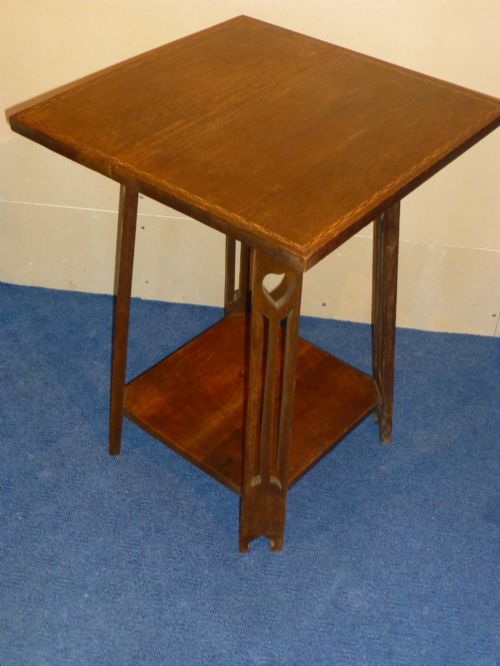
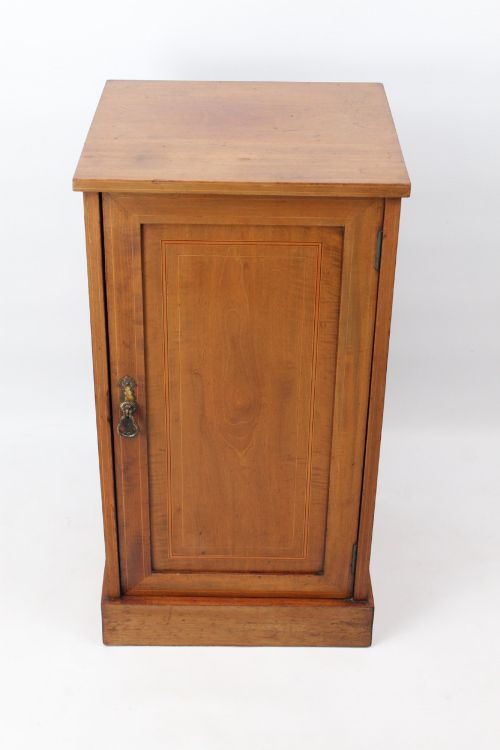
These inlaid wooden side tables bring together rich marquetry, figured veneers and compact forms to grace any room with historic character.
What inlaid wooden side tables are
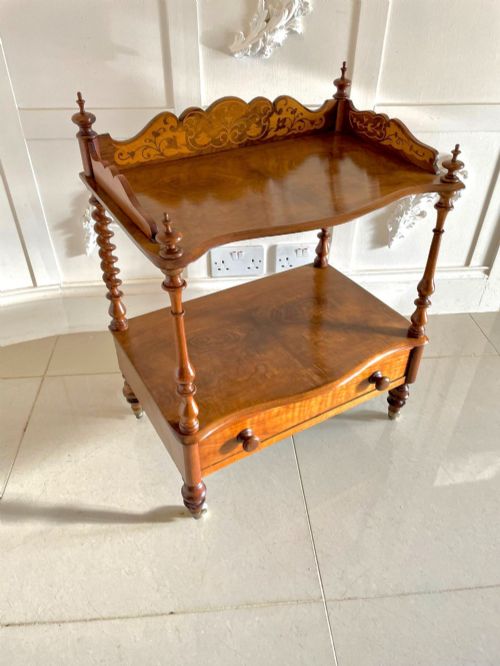
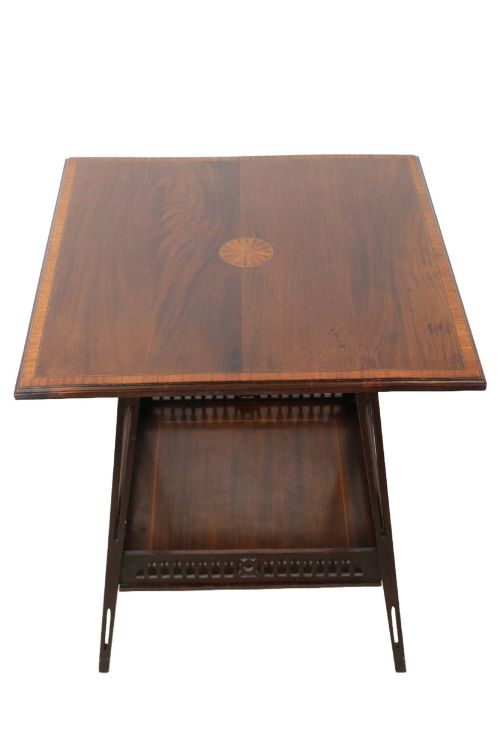
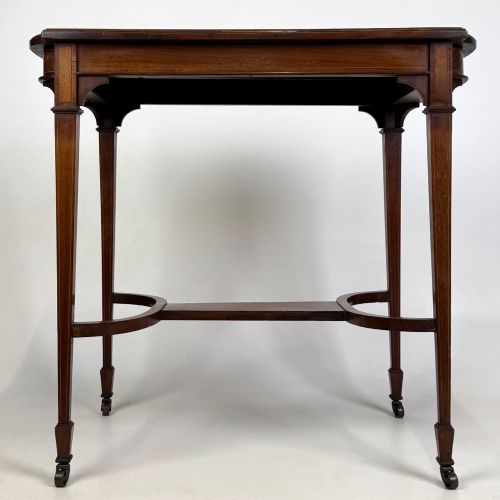
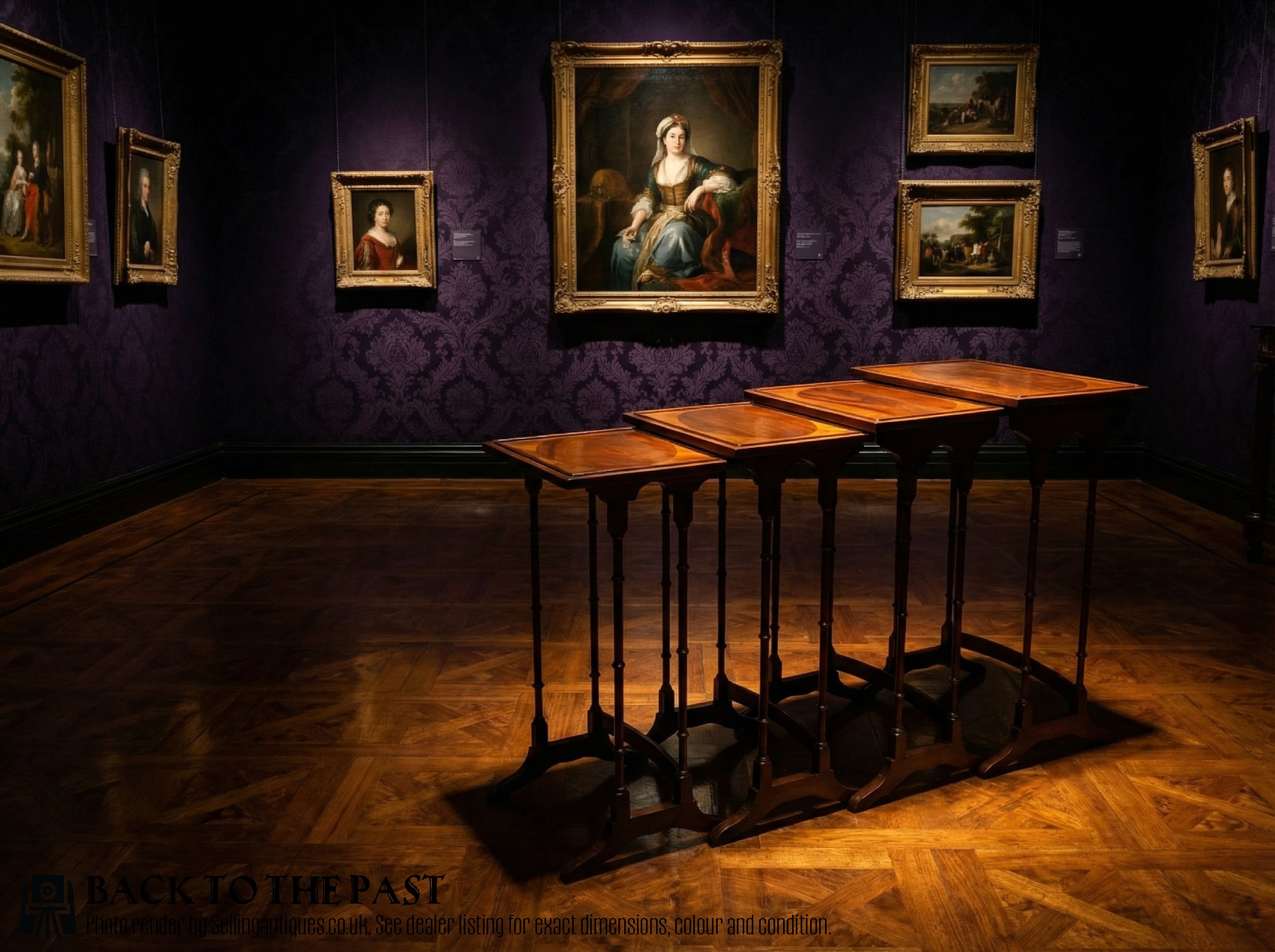
Inlaid wooden side tables encompass a variety of compact occasional furniture designed for everyday utility and decorative display. The pieces on this page span several distinct periods, including the Victorian era, the Edwardian period, and the 1920s and 1930s.
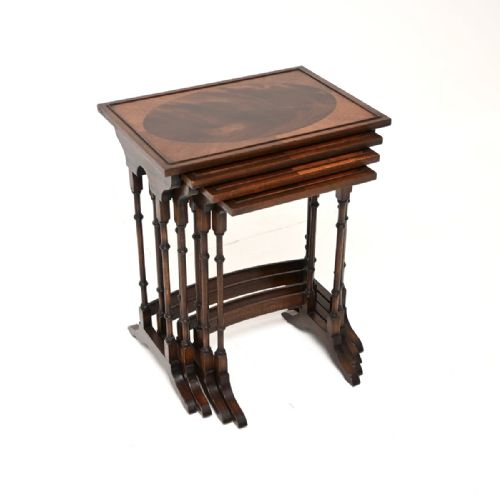
Buyers frequently encounter nested sets, such as quartetto nests of tables, alongside pairs of lamp tables, bedside cabinets, and étagères. Styles range from French Napoleon III and Louis XV to Regency-influenced designs and traditional British cabinet-making.
Origins vary between British workshops, such as Irish Killarney production, and continental French makers specialising in marquetry. These tables serve practical functions while introducing complex geometric or floral decorative schemes to an interior.

How they were made
Makers utilised a diverse palette of timber species, constructing solid carcases and frames in mahogany, walnut, oak, and fruitwood. These structures served as a stable base for decorative surface work.
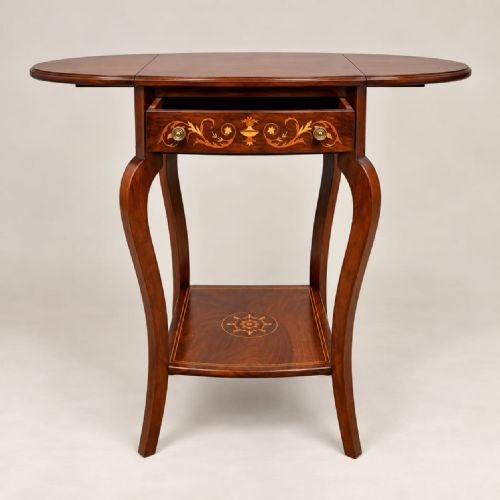
Craftsmen applied intricate veneers and inlays using satinwood, kingwood, and yew, often complemented by brass details. Marquetry techniques allowed artisans to compose pictorial or geometric motifs across the table tops.
Retail Price Guide 2026
Typical UK retail prices for inlaid wooden side tables, calculated from the Sellingantiques database of over a million retail prices indexed since 2003. This retail price guide relies exclusively on Sellingantiques data; no external sources or auction records are used, so the figures do not describe the wider market.
The documented periods span the Victorian era, the Edwardian years, nineteenth-century production, and the decades of nineteen-twenty and nineteen-thirty.
What varies in quality
The sophistication of the timber selection and the precision of the marquetry define the upper tiers of craftsmanship. Finer examples display complex contrasting grains in woods like kingwood and satinwood alongside meticulously fitted brass elements.
Structural integrity and the coherence of the period style further distinguish standard items from exceptional survivals. The balance between utilitarian strength and decorative refinement governs the overall character of each piece.
The Inlaid Wooden Side Tables Glossary
- Marquetry
- The art of applying pieces of veneer to a structure to form decorative patterns and pictures. This technique defines the visual appeal of many French and Irish pieces on this page.
- Veneer
- A thin layer of superior wood glued to a base timber of lesser quality to provide a decorative surface. Yew and satinwood are frequently utilised in this manner.
- Quartetto
- A nest of four tables designed to slide neatly beneath one another. This form offers space-saving versatility without sacrificing surface area.
- Étagère
- A French open piece of furniture with shelves for displaying small objects. These often incorporate fine marquetry inlay and brass mounts.
- Kingwood
- A dense, richly figured timber featuring dark violet-brown tones with lighter streaks. Cabinet-makers deploy it for high-status decorative surfaces.
Frequently Asked Questions
What is a quartetto nest of tables?
A quartetto nest consists of four graduated tables designed to stack inside one another. This configuration provides multiple surfaces that deploy easily when needed.
Craftsmen created these sets in mahogany and satinwood to combine practical utility with refined appearance.
How do I care for inlaid wooden surfaces?
Maintain these tables by keeping them away from direct sunlight and excessive moisture fluctuations. Regular dusting with a soft cloth preserves the polish.
Avoid abrasive cleaners that can damage delicate marquetry work and timber veneers.
Where were Killarney ware tables made?
Killarney ware originates from County Kerry in Ireland, noted for distinctive local timber marquetry. These pieces often feature native woods arranged in geometric or pictorial motifs.
They represent a specific regional tradition within nineteenth-century cabinet-making.
How do I distinguish Edwardian satinwood from later pieces?
Edwardian satinwood displays specific grain patterns and construction methods typical of the early twentieth century. The timber quality and joinery reflect the prevailing standards of the period.
Examining the underside and secondary timbers helps confirm the date of manufacture.