
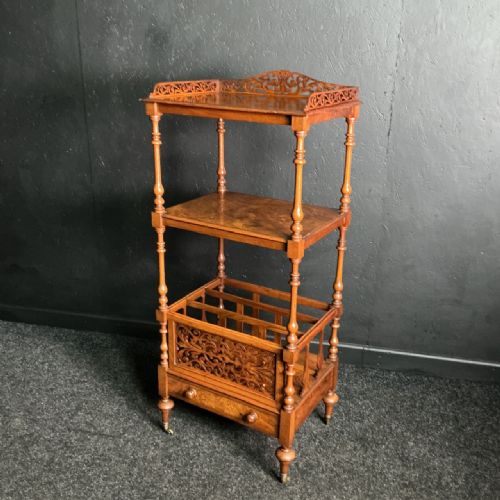
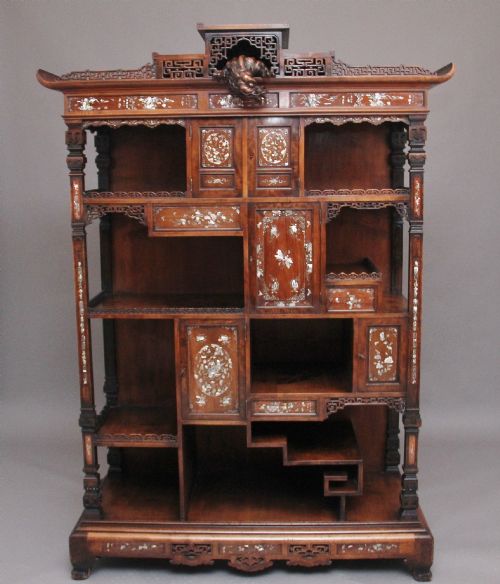
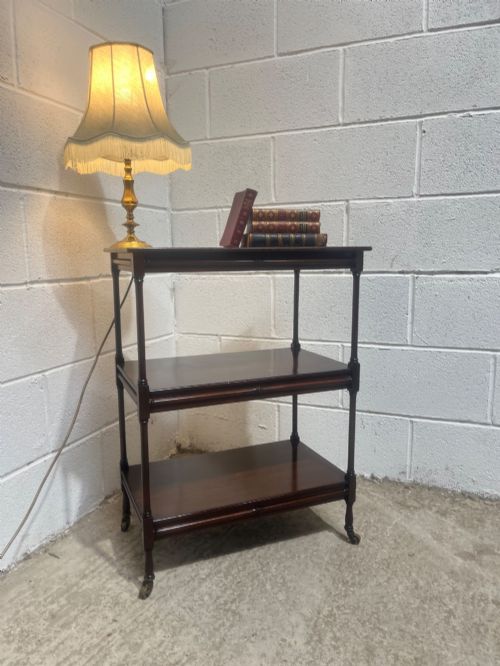
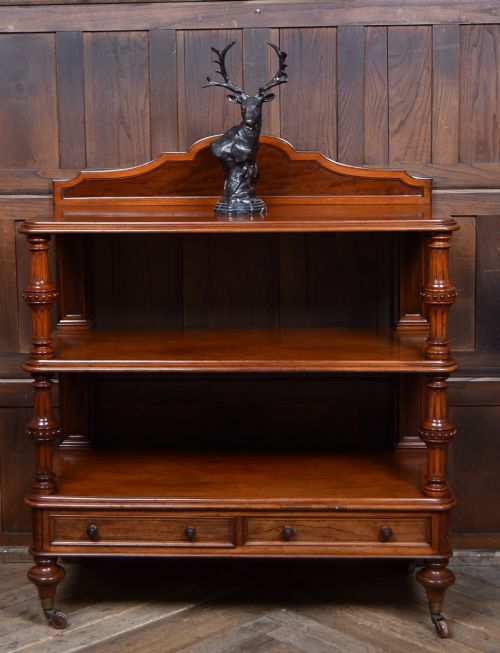
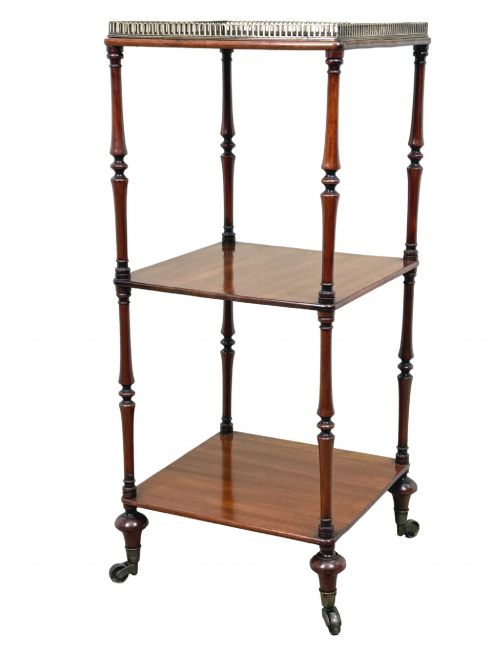


Nineteenth Century Etagere
A nineteenth century etagere brings tiered display space to a room, offering open shelving for small treasures and decorative objects.
What nineteenth century etagere pieces are
When you search for a nineteenth century etagere, you are looking at tiered display furniture designed to hold decorative objects and small collections. These pieces appear in forms such as side tables, occasional tables, corner whatnot stands, and distinct display stands. The items on this page span the Regency, William IV, and Victorian periods, alongside specific revivals like Louis XV Style and French Napoleon III.
The most common formats you will meet are multi-tiered whatnots and marquetry-inlaid étagères. You will encounter freestanding models as well as corner configurations designed to utilise awkward angles in a room. Some examples incorporate enclosed storage alongside open shelves, such as the Victorian marquetry whatnot jewellery cabinet.
Origins and styling reflect both English cabinet-making traditions and French influence. Pieces described as Louis XV style or French Napoleon III bring distinct continental curves and mounts to the category, while Regency and William IV items adhere to earlier British aesthetic standards. The walnut, rosewood, and ebonised woods used across these eras provide the structural foundation for the tiers.
How they were made
Makers built these pieces using timber frames finished with walnut, rosewood, satinwood, and ebonised wood. Wood veneer and burr walnut surfaces frequently feature marquetry inlay, adding decorative patterns across the top and tier surfaces. Brass and ormolu mounts appear on French-influenced pieces to accent the corners and edges.
Construction methods relied on vertical supports or turned columns holding horizontal tiers in place. Inlaid details required precise cutting of contrasting woods fitted directly into the primary surface veneers. Corner whatnots required specialised joinery to ensure the shelves fit flush against right-angled walls.
Retail Price Guide 2026
Typical UK retail prices for nineteenth century etagere, calculated from the Sellingantiques database of over a million retail prices indexed since 2003. This retail price guide relies exclusively on Sellingantiques data; no external sources or auction records are used, so the figures do not describe the wider market.
Object forms on this page include corner whatnot stands, side tables, and three-tier display units.
What varies in quality
The standard of marquetry inlay dictates much of the distinction across these pieces. Finer examples display intricate, tightly fitted wood veneers with varied grain patterns in burr walnut and satinwood, whereas simpler items rely on plain timber surfaces. The crispness of ormolu mounts and brass details also separates standard production from superior cabinet-making.
Structural integrity of the tiered shelves defines the practical tier of quality. Superior pieces maintain rigid vertical alignment across multiple tiers without wobble, relying on solid timber frames and stable corner joins rather than superficial fastenings.
The Nineteenth Century Etagere Glossary
- Etagere
- A piece of furniture consisting of a set of open shelves for displaying small objects or ornaments. These tiers allow items to be viewed from multiple angles.
- Whatnot
- A multi-shelved stand used for the storage and display of ornaments and knick-knacks. It shares a similar function with the etagere.
- Marquetry
- Decorative inlay work where pieces of wood veneer are fitted together to form geometric or floral designs. This technique decorates the surfaces of many nineteenth-century tiers.
- Ormolu
- Gilded bronze mounts applied to furniture for decorative effect. It appears frequently on French nineteenth-century pieces.
- Burr Walnut
- Wood taken from walnut tree growths that produces swirling, highly figured grain patterns. Cabinet-makers utilised this veneer on prominent surfaces.
Frequently Asked Questions
What is an etagere used for?
An etagere functions as an open display stand for small ornaments, ceramics, and personal collections. Its multiple tiers provide vertical storage without enclosing the objects behind doors.
Historically, these pieces sat in parlours and drawing rooms to showcase a household's decorative items. Today, they serve the same purpose in living spaces and hallways.
How do I tell a whatnot from an etagere?
Both terms describe multi-tiered display furniture, though historical usage often overlapped. Whatnots frequently appeared in British homes, while etagere often denotes French-influenced or revival pieces.
In practical terms, both offer open shelving arranged in ascending tiers. The distinction lies mainly in the decorative vocabulary and regional cabinet-making style.
Where should I place a corner whatnot?
A corner whatnot fits directly into the ninety-degree angle of a room. This placement utilises space that standard rectangular furniture leaves empty.
These pieces work well in smaller rooms or alcoves where a freestanding rectangular etagere would block foot traffic. They lift decorative displays off the floor while maintaining a compact footprint.
How do I identify a Victorian etagere?
Victorian etagere pieces often feature dark timbers like walnut and rosewood, frequently enhanced with marquetry inlay or ebonised details. They date from the nineteenth century and reflect the period's preference for ornate display.
Stylistic markers include turned supports, fretted galleries, and occasional multi-functional elements like integrated jewellery cabinets. Comparing the timber and inlay style helps separate them from earlier Regency examples.