
Nested Occasional Tables
These nested occasional tables offer clever multi-tiered surface space that slides neatly away when floor area matters.

Nested Occasional Tables
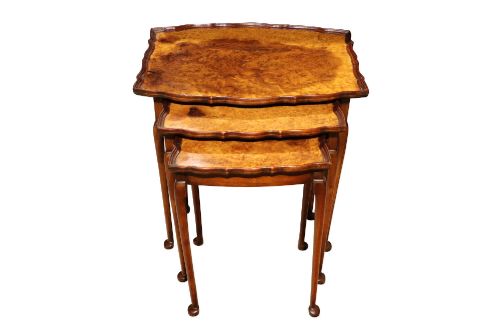
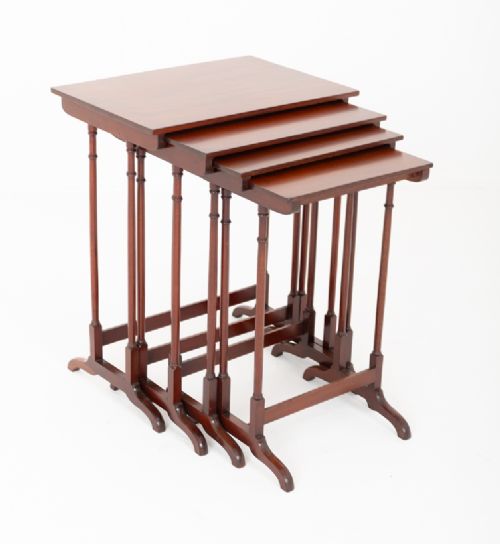
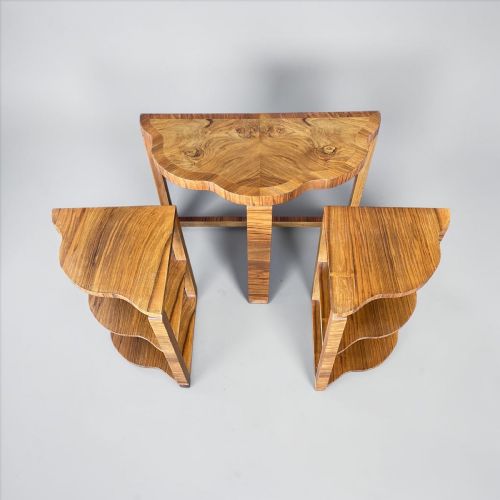
Nested occasional tables gather in graded sets of three, four, or five pieces that slide neatly beneath one another to save space. When you search for nested occasional tables, you encounter designs ranging from Georgian and Regency forms to Edwardian mahogany sets and Art Deco walnut pieces.
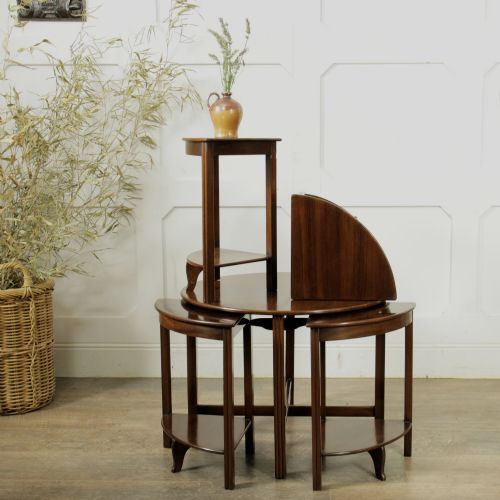
Sets appear in various formats, including quartetto groups of four tables, circular configurations, and specialised items such as integrated chess tables or coffee tables. Materials span native hardwoods like oak and mahogany alongside exotic veneers including rosewood, satinwood, and burr walnut.
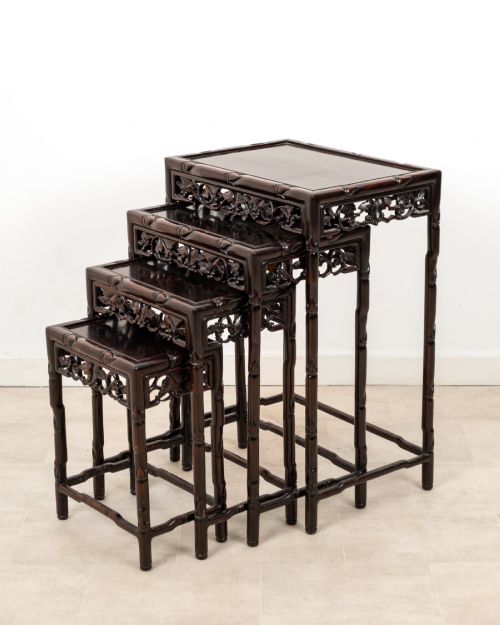
Origins stretch from nineteenth-century English workshops to French floral painted examples and Chinese hardwood or Chinoiserie decorated pieces. Each set provides practical movable surfaces that deploy rapidly for tea, writing, or display before returning to a single compact footprint.
How they were made
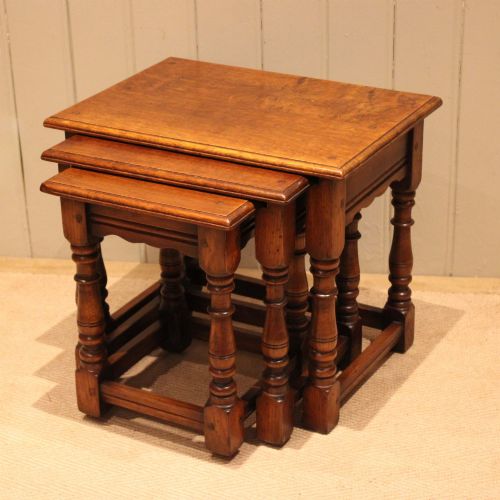
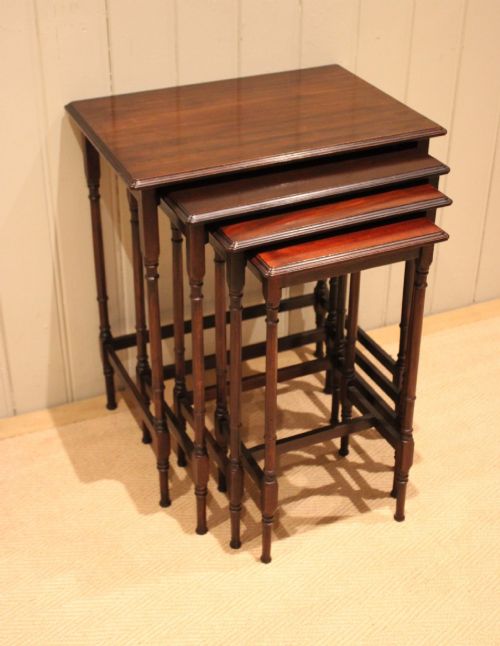
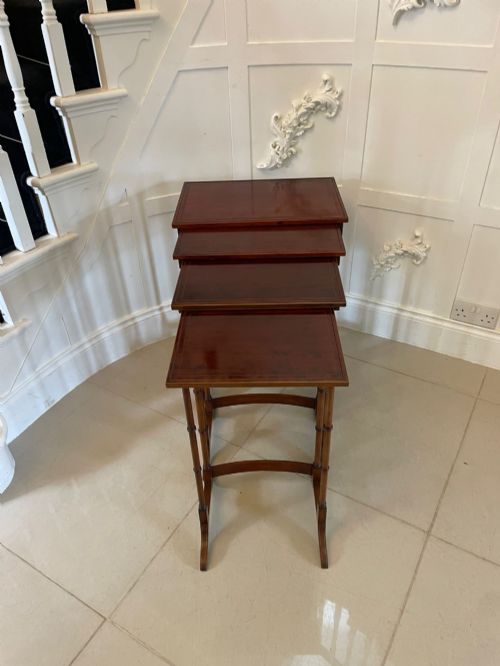
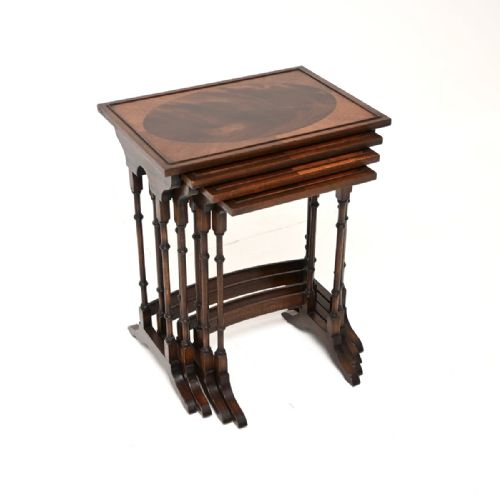
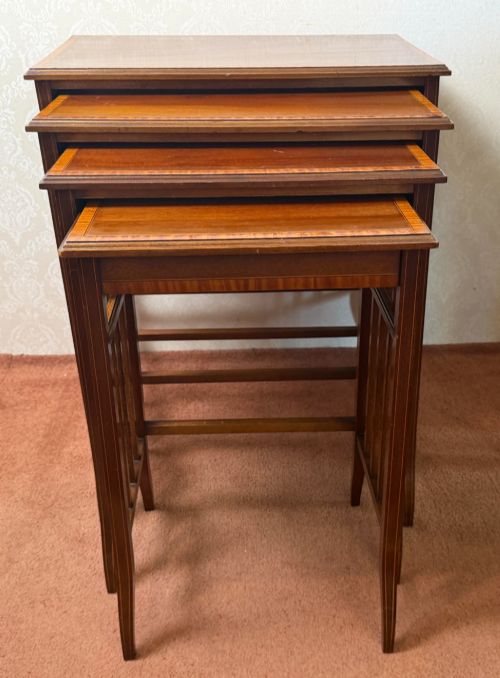
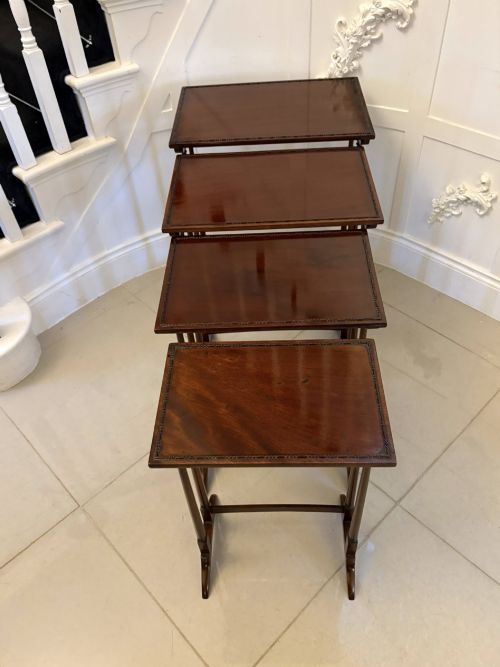
Cabinetmakers constructed these frames primarily from solid timbers like mahogany, oak, and rosewood, frequently applying decorative veneers such as burr walnut, satinwood, and birds-eye maple to the primary tops. Cross banding in contrasting woods and fine boxwood stringing define the edges of many Edwardian and nineteenth-century tops.
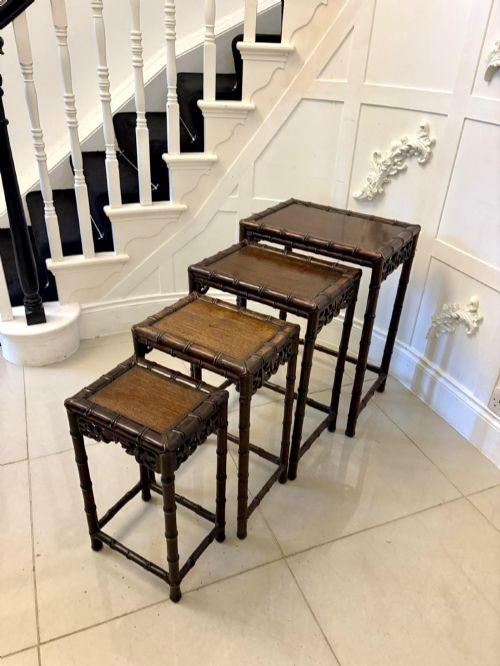
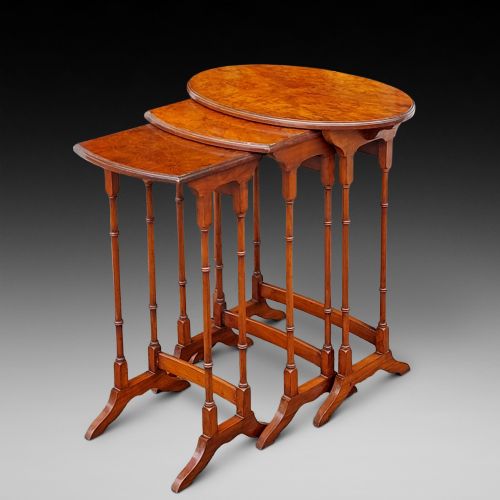
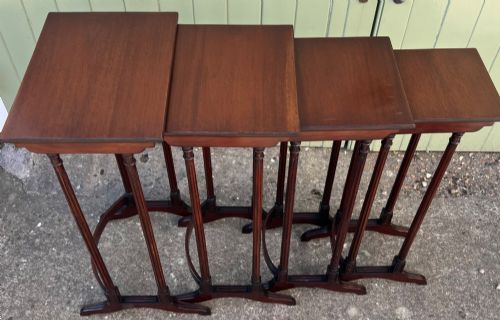
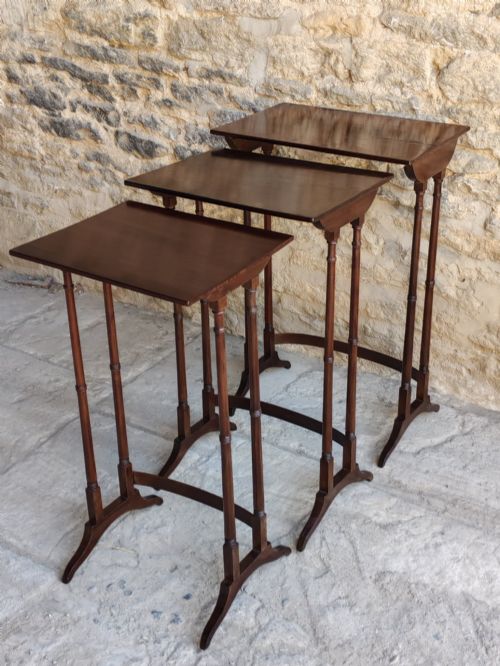
Structural finesse relies on slender supports, ranging from square tapered legs and faux bamboo turnings to brass-inlaid members and elaborate oriental carvings. Surface enrichment involves lacquer, Chinoiserie decoration, floral painting, and precise joinery that allows each graduated table to glide smoothly into the frame of the next.
Materials recorded across the inventory include mahogany, rosewood, satinwood, burr walnut, oak, and hardwood.
What varies in quality
Quality reveals itself in the selection of timber veneers and the precision of the graduated framing, where superior sets maintain tight tolerances so each table slides without binding. Finer examples display refined decorative elements such as intricate brass inlay, hand-painted Chinoiserie motifs, or rich rosewood grain rather than plain commercial hardwoods.
The integrity of the structural joints under repeated extraction determines durability, distinguishing robust workshop construction from loose, hurried assembly. Original finish condition and the coherence of matching sets elevate certain pieces far above standard utility items.
Harry and Lou Epstein
The Nested Occasional Tables Glossary
- Quartetto
- A matched set of four nesting tables designed to slide sequentially one beneath another. This term appears frequently in nineteenth-century Regency and Edwardian cataloguing.
- Cross banding
- A decorative border of veneer laid with the grain running perpendicular to the central panel. It frames the top surface on finer mahogany and satinwood tables.
- Chinoiserie
- European decorative style employing simulated Chinese motifs, often rendered in lacquer and raised gilding. It transforms occasional tables into striking decorative objects.
- Faux bamboo
- Turned and carved wood styled to imitate natural bamboo stalks. This technique gained popularity during the nineteenth century under oriental aesthetic influences.
- Stringing
- Very narrow inlay of a contrasting wood used to outline geometric shapes on table tops. Boxwood is frequently utilised for this linear detail.
Nested Occasional Tables: Frequently Asked Questions
What is a quartetto nest?
A quartetto nest consists specifically of four graduated occasional tables designed to slide together into a single compact unit.
Originating strongly in the Regency period, these four-tier sets provide exceptional flexibility for entertaining while occupying the floor space of just one small table.
How were nesting tables used?
These tables served as portable surfaces for afternoon tea, reading materials, writing, or needlework in Victorian and Edwardian drawing rooms.
Servants or hosts could easily separate the graduated tiers around a room as guests required extra places for cups or books.
How do I identify Regency pieces?
Regency nested tables typically feature dark exotic timbers such as rosewood, often embellished with brass inlay or fine turned supports.
Earlier nineteenth-century proportions tend to feel crisper and more architectural than later revival iterations.
Are Art Deco tables different?
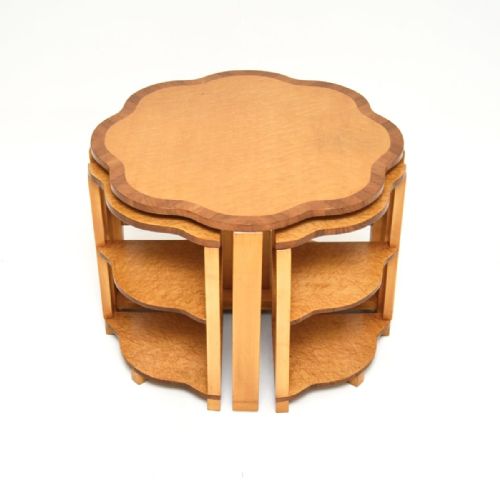
Art Deco examples favour striking veneers like birds-eye maple and burr walnut alongside clean, geometric silhouettes without traditional stringing.
These twentieth-century sets often function as low coffee tables rather than tall occasional tea stands.