




1930s Nesting Tables
These 1930s nesting tables offer clever multi-tiered space-saving design in striking Art Deco forms that suit modern interiors.
1930s Nesting Tables
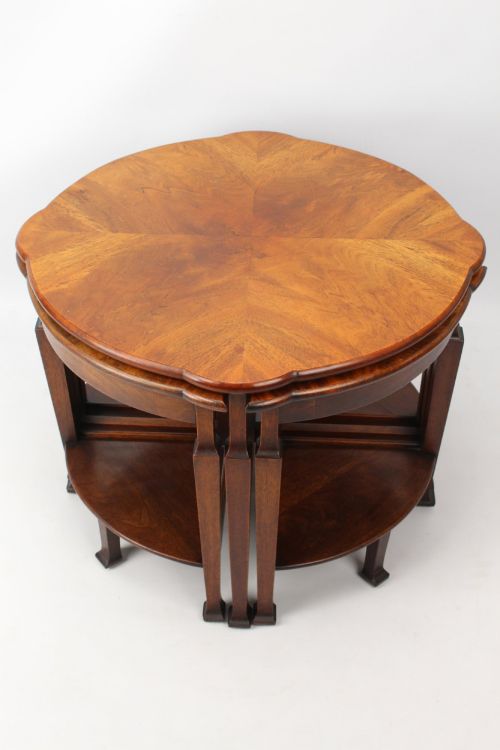
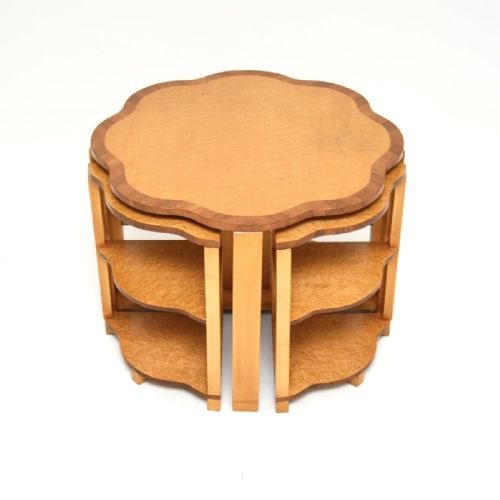
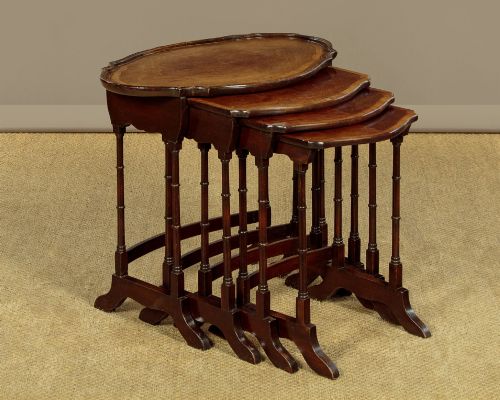
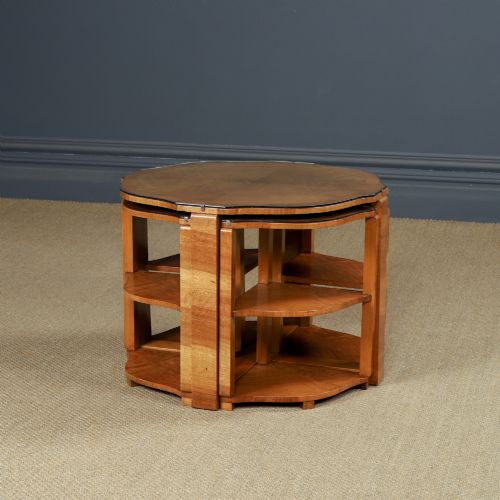
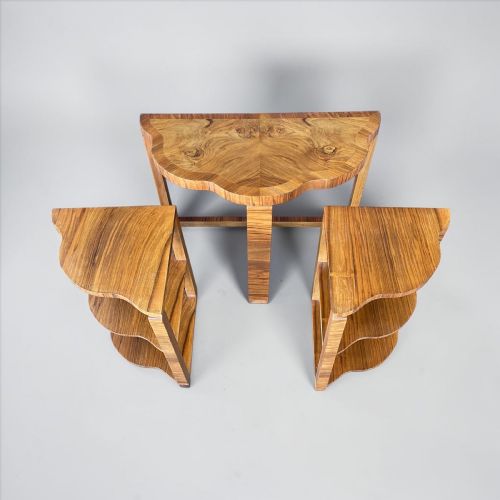
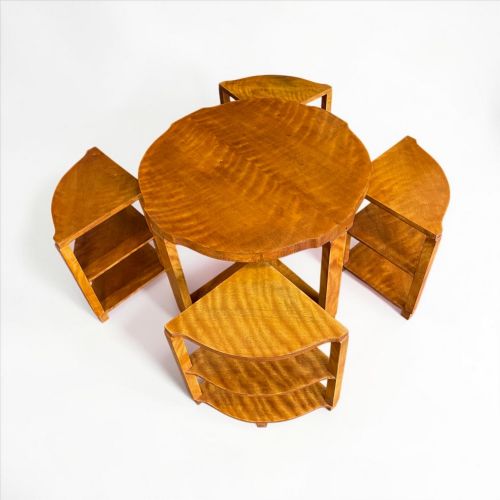
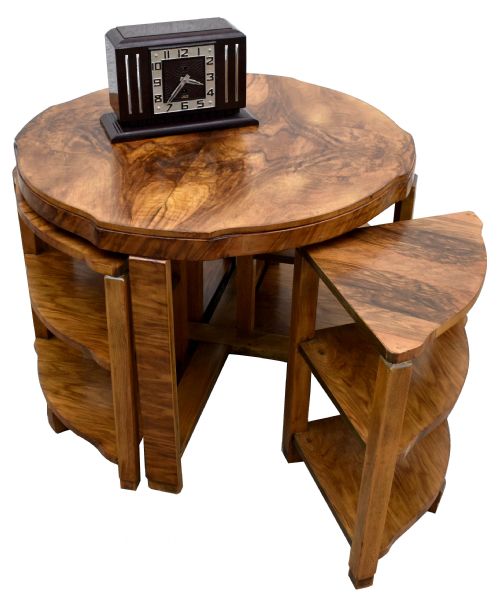
When you search for 1930s nesting tables, you encounter sets of graduated tables designed to slide neatly beneath one another when not in use. These pieces belong predominantly to the Art Deco style, reflecting the sleek, geometric sensibilities of the period.
The selections on this page typically comprise sets of three, four, or five tables, often including round or specialised configurations like the J Nest or Quintetto. English and French origins appear frequently among these listings, showcasing diverse regional interpretations of the form.
How they were made
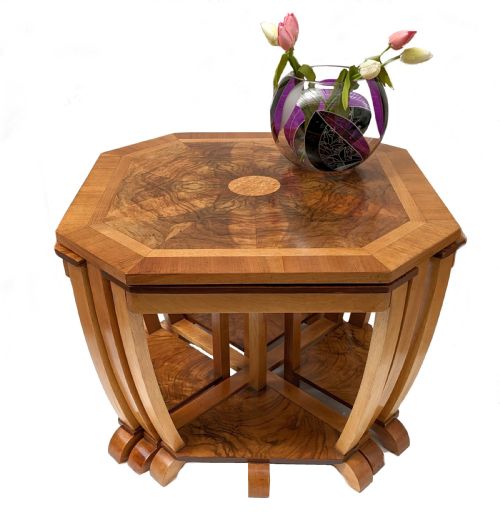
Cabinet makers of the period utilised rich hardwoods and decorative veneers to achieve striking visual grain patterns. Walnut, burr walnut, birds eye maple, satinwood veneer, figured wood, and Indian rosewood form the primary surfaces of these tables.
Techniques relied heavily on expertly applied veneers over solid timber carcasses to display elaborate figuring. Selected pieces also incorporate inset glass panels to create contrasting textures within the tiered surface arrangement.
1930s Nesting Tables Retail Price Guide 2026
Typical asking prices for 1930s nesting tables among the pieces listed under this phrase on Sellingantiques today, from the lower quarter to the upper quarter. They describe what is for sale here now, not the wider market.
Certain sets manage to stack five separate tables into the floor footprint of just one small side table.
What varies in quality
The distinction between standard production items and premier workshop pieces lies in the choice of exotic veneers and the precision of the joinery. Tables bearing documented attributions to notable firms generally exhibit superior timber selection and more complex geometric configurations.
The integrity of the nesting fit and the smoothness of the under-tier glide dictate the mechanical success of each set. Finer examples maintain structural crispness and balanced proportions across all subordinate tables without looseness in the frames.
Harry and Lou Epstein·The Hille Furniture Company·Heal's
The 1930s Nesting Tables Glossary
- Art Deco
- A design style characterised by streamlined shapes, geometric ornamentation, and modern industrial materials that dominated the interwar period. It influences the clean lines and striking silhouettes seen in these tables.
- Birds Eye Maple
- A figure in maple wood that resembles tiny swirling eyes, highly prized for decorative veneer work. This material creates a distinctive speckled pattern across table tops.
- Burr Walnut
- A specialised wood growth yielding intricate, swirling grain patterns used for high-end furniture surfacing. It provides a luxurious texture on prominent display surfaces.
- Veneer
- A thin layer of superior wood adhered to a base timber to give an appearance of solid luxury while maintaining stability. Skilled cabinet makers match these layers symmetrically.
- Quintetto
- A specific configuration denoting a set comprising five graduated tables designed to nest together. This form maximises surface utility within a minimal floor footprint.
1930s Nesting Tables: Frequently Asked Questions
How do I use a nest of five tables?
Each smaller table slides out from beneath the main surface to provide independent placement options around a room. They deploy easily for entertaining guests and stow away compactly afterward.
Arranging them together preserves floor space while keeping additional surfaces immediately accessible for drinks or books.
What materials are typical for these tables?
These pieces incorporate walnut, burr walnut, birds eye maple, and Indian rosewood, frequently applied as decorative veneers. Selected models also feature glass inserts.
Cabinet makers utilised these figured woods to create striking visual patterns across the tiered surfaces.
How do French and English styles differ?
English workshops often focused on robust walnut and rosewood constructions with restrained geometric forms. French pieces frequently display bolder veneer choices and experimental shapes.
Both origins adhere firmly to the overarching Art Deco aesthetic of the interwar decades.
Are these tables suitable for daily use?
Their sturdy construction and practical nesting design make them highly functional for contemporary living spaces. The tiered surfaces handle everyday placement demands effectively.
Proper care for polished veneer surfaces ensures they withstand regular handling without losing their decorative impact.