




Vintage Coffee Table Set
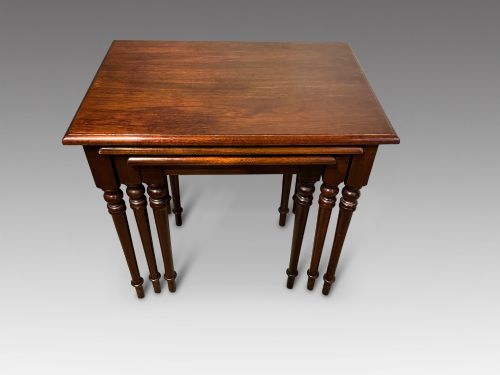
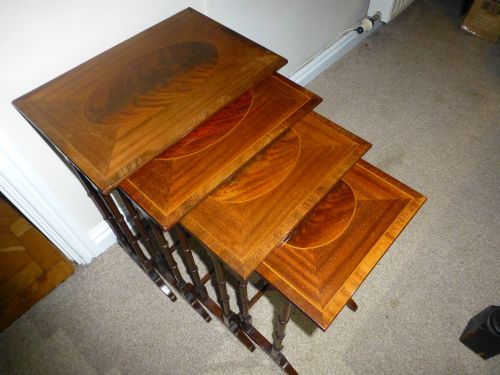
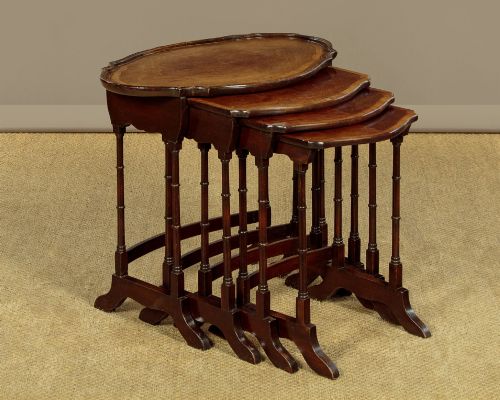
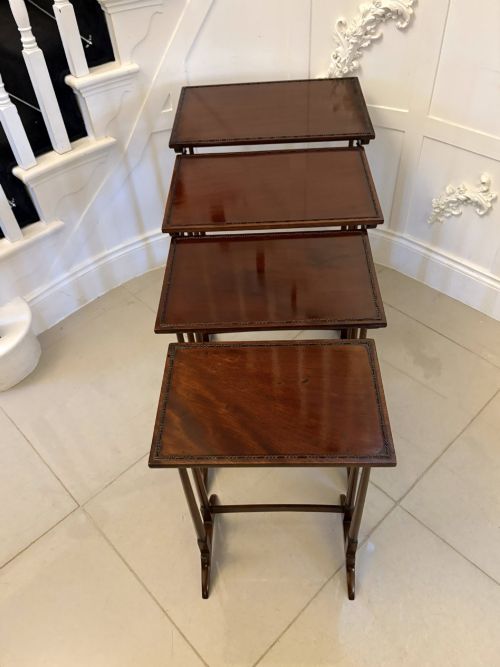
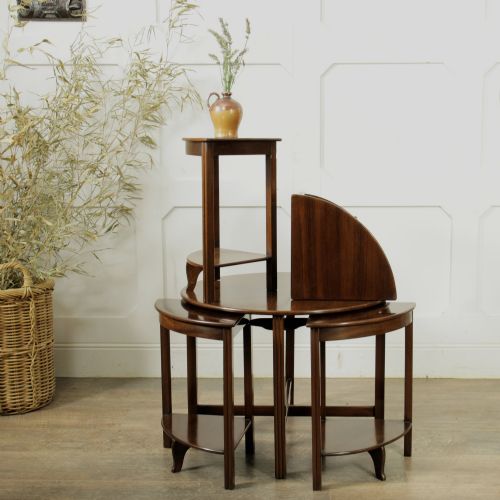
A vintage coffee table set offers coordinated surface space, most often seen here as nested tables in mahogany or walnut.
Vintage Coffee Table Set
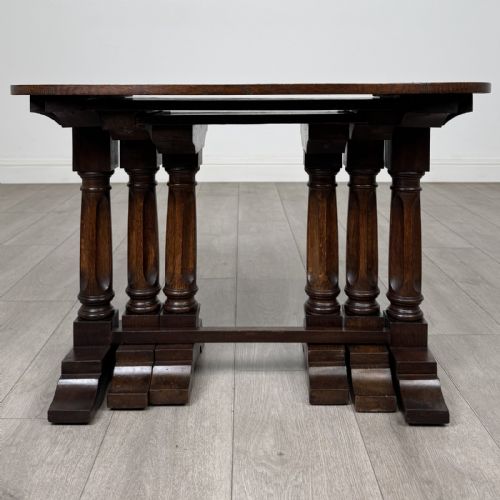
A vintage coffee table set primarily takes the form of nested tables, alongside occasional side tables and cafe sets. These pieces date from the nineteenth century through to the mid-twentieth century, spanning Edwardian, Victorian and Art Deco periods.
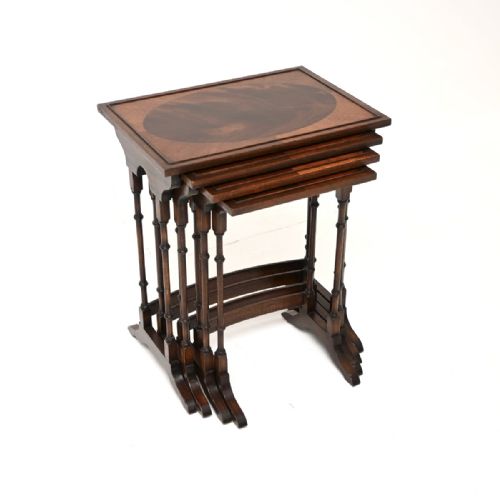
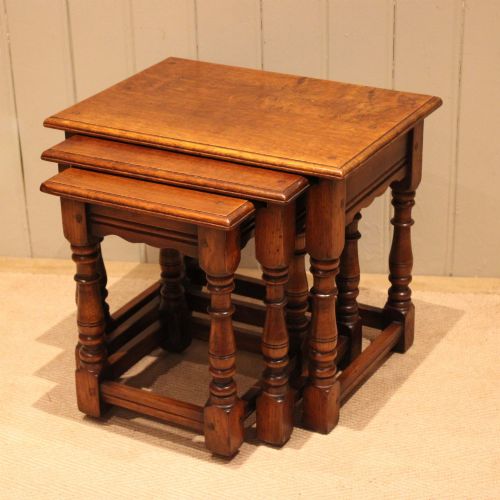
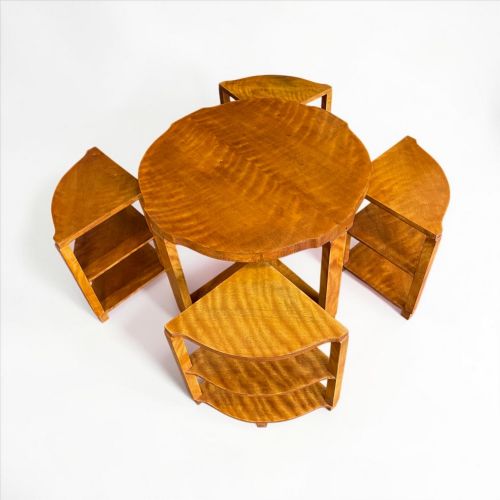
Buyers will most frequently encounter sets of three or four tables designed to tuck neatly beneath one another. Mahogany and walnut dominate the selection, often arranged in nests or quartetto configurations.
Origins range across English styles, French parquetry, Spanish mosaic and Oriental hardwoods. Sets also include occasional pairings like armchair and table combinations or foldable tables with tea services.
Materials and construction
Cabinet makers utilised solid hardwoods and veneers such as mahogany, walnut, oak, satinwood and teak to construct these sets. Timber selection determined both the weight and the grain pattern visible on the tabletop surfaces.
Decorative techniques recorded in the pieces include floral inlay, parquetry, brass detailing, hand carving and Chinoiserie decoration. Frames were built to support multiple tiered tables sliding together without friction.
Vintage Coffee Table Set Retail Price Guide 2026
Typical asking prices for vintage coffee table set among the pieces listed under this phrase on Sellingantiques today, from the lower quarter to the upper quarter. They describe what is for sale here now, not the wider market.
Listings feature nested tables spanning the nineteenth century, the Edwardian era and Art Deco periods, predominantly constructed from mahogany and walnut.
Assessing quality
Quality rests upon the selection of timber figures, such as burr walnut or figured mahogany, and the precision of inlaid satinwood or parquetry. Superior sets maintain structural stability across all tiers while keeping individual tables lightweight enough for daily movement.
The sophistication of decorative elements, from hand-carved elephants to Chinoiserie motifs, separates standard utility items from finer workshop productions. Maker attribution also elevates certain pieces, particularly signed Art Deco suites.
Harry and Lou Epstein·Heal's
The Vintage Coffee Table Set Glossary
- Quartetto
- A set of four tables designed to nest together. These matching pieces graduate in size so the smaller tables slide beneath the largest.
- Quintetto
- A set of five tables designed to nest inside one another. This format provides an extra tier of surface space compared to standard quartetto sets.
- Parquetry
- Geometric patterns formed by fitting small pieces of wood veneer together. This technique creates decorative surfaces on tabletops.
- Satinwood
- A durable hardwood with a natural golden sheen and satin-like lustre. Craftsmen utilise it for fine inlay work on mahogany furniture.
- Chinoiserie
- European decorative style reflecting Chinese artistic traditions. It often involves lacquered surfaces and painted motifs.
Vintage Coffee Table Set: Frequently Asked Questions
What is a vintage coffee table set?
A vintage coffee table set typically consists of multiple matching tables designed to coordinate within a living space. The selection heavily favours nests of tables that stack together when not in use.
These configurations allow owners to deploy extra surfaces for drinks or books and store them compactly afterwards. Materials range from traditional mahogany and walnut to exotic hardwoods and decorated finishes.
How were nested tables used?
Nested tables served households by providing flexible surface area during social gatherings. Servants or hosts could separate the tables around a room to hold tea services or writing materials.
Once the gathering ended, the smaller tables slid neatly back beneath the main table to save floor space. This practical design made them popular in Edwardian and Art Deco drawing rooms.
How do I identify an Art Deco set?
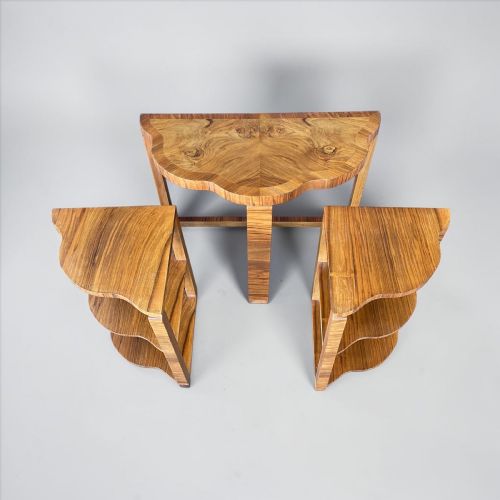
Art Deco sets emerge from the twentieth century, displaying streamlined forms, rich walnut veneers and occasional geometric carvings. Pieces from this era often include sets of three, four or five tables.
Some examples carry signatures from known workshops like Heal's or the Epstein brothers. Their clean lines distinguish them from earlier Victorian or heavily ornamented Edwardian styles.