





Golden Walnut Coffee Table
A golden walnut coffee table brings warmth and rich grain to a room, ranging from sleek Art Deco designs to Victorian revival pieces.
Golden Walnut Coffee Table
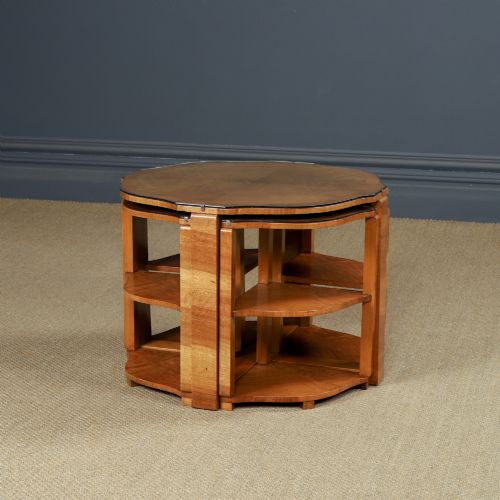
A golden walnut coffee table combines rich timber tones with practical low furniture forms, appearing most often in Art Deco and Victorian styles across this selection. These tables serve daily living rooms while showcasing natural wood figures.
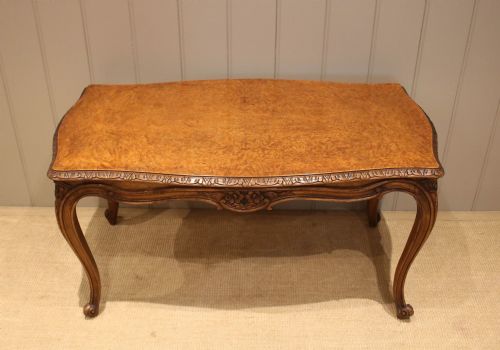
The pieces on this page span several decades from the Victorian era through the Edwardian period and into the nineteen thirties. Coffee tables, nests of tables, and occasional tables make up the forms available to buyers.
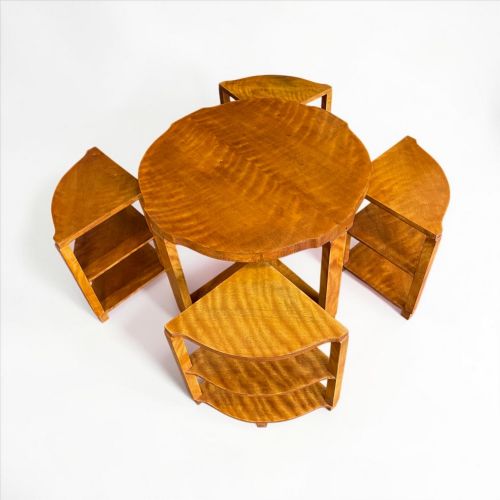
Art Deco examples from nineteen twenty and nineteen thirty dominate the selection alongside Victorian and Edwardian pieces. Buyers frequently encounter circular nests and low occasional tables in this timber.
How they were made
Cabinetmakers utilised walnut, burr walnut, and walnut veneer to achieve striking surface patterns across these tables. Figured wood, satinwood veneer, and burr maple often appear alongside wood inlay and glass components.
The construction relies on traditional timber selection where burr sections provide circular grain patterns. Makers applied veneers meticulously over solid wood frames to highlight natural variations in colour and tone.
Golden Walnut Coffee Table Retail Price Guide 2026
Typical asking prices for golden walnut coffee table among the pieces listed under this phrase on Sellingantiques today, from the lower quarter to the upper quarter. They describe what is for sale here now, not the wider market.
The selection includes both single low coffee tables and sets of five nesting tables.
What varies in quality
Quality rests upon the selection of the burr walnut veneer and the precision of any wood inlay. Superior pieces display harmonious grain matching across the top surfaces rather than random timber cuts.
The structural harmony between the form and the timber finish dictates the standing of each piece. Finer examples maintain crisp proportions whether built during the Victorian period or the nineteen thirties.
Harry and Lou Epstein
The Golden Walnut Coffee Table Glossary
- Burr walnut
- A prized timber harvested from tree growths that produces intricate, swirling grain patterns. It provides the decorative surfaces seen on many Art Deco and Victorian tables.
- Veneer
- A thin layer of choice wood applied over a stable base timber to display decorative grain. Satinwood veneer and walnut veneer appear frequently in these listings.
- Nest of tables
- A set of graduated tables designed to fit neatly beneath one another when not in use. Several Art Deco examples on this page take this multi-part form.
- Wood inlay
- Small pieces of contrasting timber fitted into the surface to create decorative patterns. Victorian makers often utilised this technique on table tops.
- Occasional table
- A small, movable table designed for light use around a sitting room. These range from Edwardian tea tables to low nineteen thirties designs.
Golden Walnut Coffee Table: Frequently Asked Questions
What periods do these tables come from?
The pieces span the Victorian era, the Edwardian period, and the nineteen twenties and nineteen thirties.
Art Deco designs from nineteen thirty make up a significant portion of the available selection.
How do I care for burr walnut?
Keep walnut furniture away from direct sunlight and excessive heat sources to protect the polished wood finish. Dust gently with a soft cloth and avoid chemical polishes.
Regular care preserves the depth of the grain and the integrity of the veneer.
Are nest of tables practical for daily use?
A nest of tables provides flexible surface space that can be expanded or tucked away as needed. They function well as side, wine, or lamp tables.
Art Deco sets of five offer multiple surfaces without occupying a large permanent footprint.
What is the difference between an occasional table and a coffee table?
Occasional tables historically stood higher for serving tea or holding decorative items. Coffee tables sit lower to the ground for modern living spaces.
Many pieces bridge these categories depending on their exact height and proportion.