




Traditional Nesting Tables
Traditional nesting tables deliver clever surface space when you need it and slide away neatly when you do not.
Traditional Nesting Tables
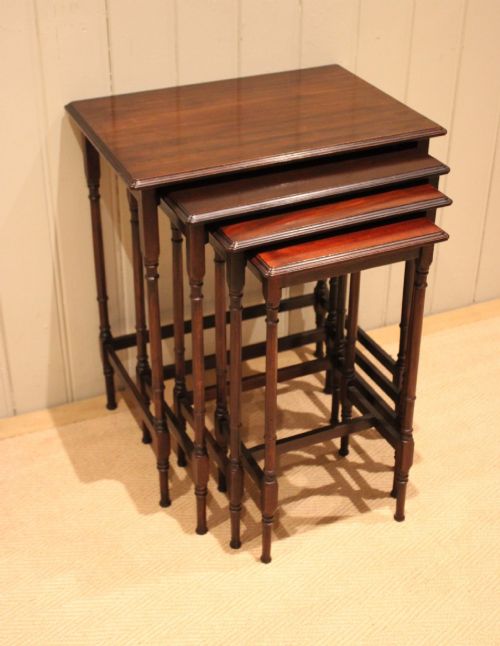
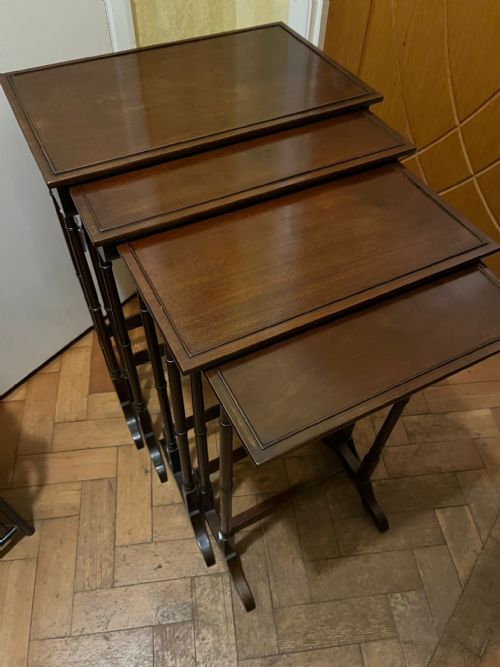
Traditional nesting tables provide a graduated set of smaller surfaces that store one beneath another to save space in a room. Buyers seeking traditional nesting tables encounter pieces ranging from sets of three or four tables to specialised forms.
The selections span periods from the Victorian era and Edwardian years through to the 1920s and 1930s. Styles stretch from English Country and Georgian Style to Chinese Export and Jacobean Revival.
Materials and construction
Cabinet makers utilised solid timbers alongside veneer surfaces, selecting mahogany, oak, walnut, rosewood, satinwood, and hardwood. These woods offered both structural strength for frequent stacking and fine grains suitable for polishing.
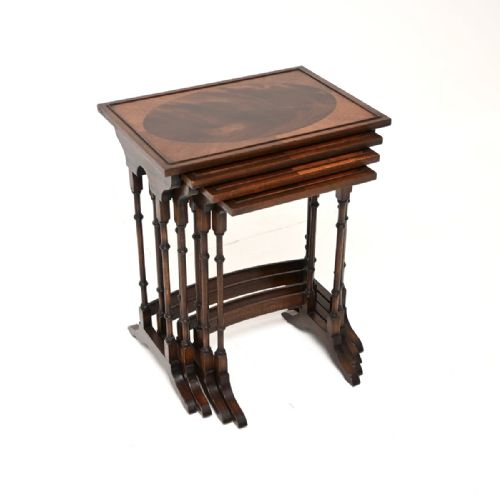
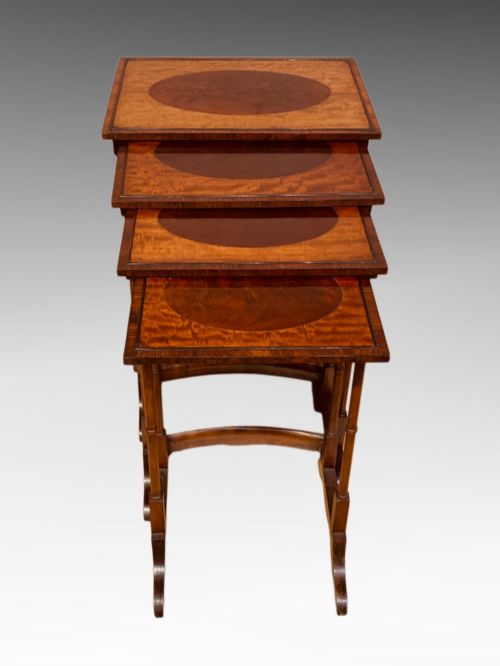
Detailing often included decorative inlay work, shaped tops, parquetry, and lacquer finishes. Regional workshops employed traditional joinery to ensure each smaller table glides smoothly into the frame of the next.
Current listings span the Victorian era, Edwardian period, and the 1920s to 1930s, constructed in mahogany, oak, walnut, rosewood, and satinwood.
Assessing craftsmanship
Quality rests in the crispness of the timber's grain, the precision of any inlay, and the structural integrity of the frame joints. Superior examples maintain stability across all individual tables without looseness in the legs.
The choice of material elevates a piece, with rosewood, satinwood, and figured mahogany marking out finer commissions. Material selection and restraint in decoration distinguish standard utility pieces from exceptional ones.
The Traditional Nesting Tables Glossary
- Quartetto
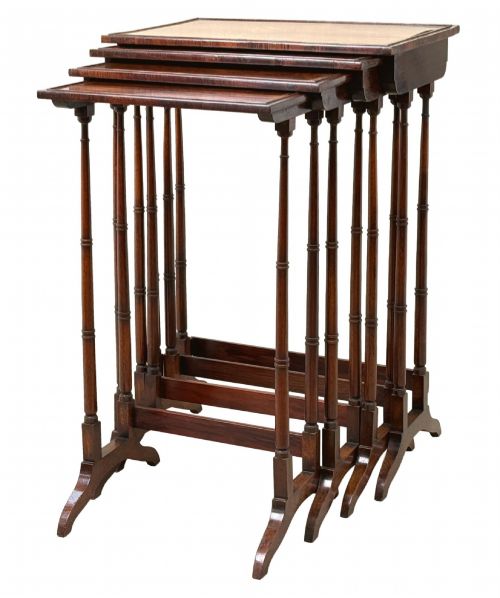
- A matched set of four occasional tables designed to nest together. The term appears frequently in nineteenth-century descriptions of nested tables.
- Hongmu
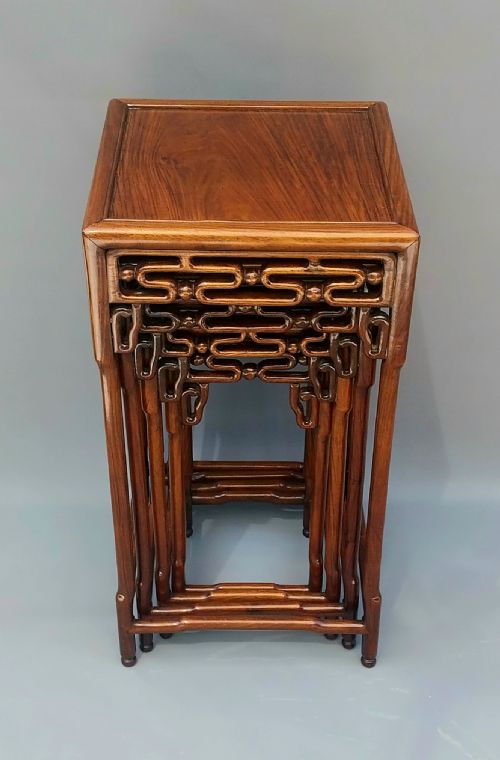
- A category of dense traditional Chinese hardwoods used for fine cabinet work. These timbers display deep natural colour and robust durability.
- Satinwood
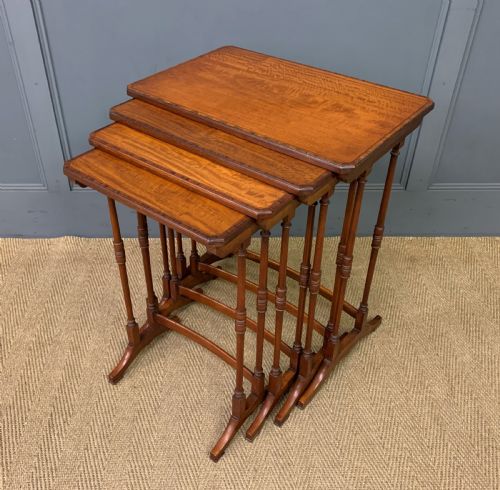
- A luminous timber native to India and Sri Lanka used for decorative veneers and stringing. Its pale golden tone contrasts sharply with darker woods like mahogany.
- Jacobean Revival
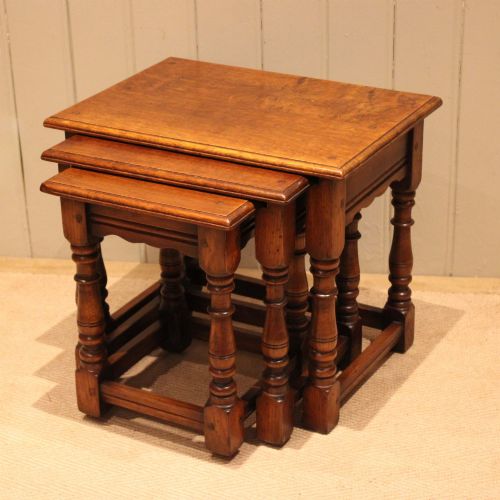
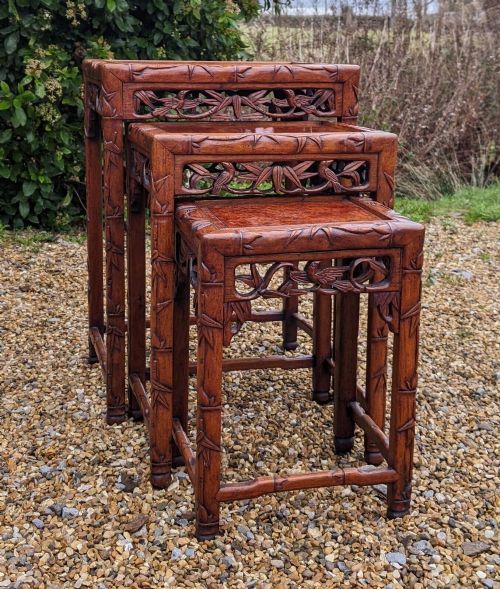
- A nineteenth and early twentieth-century style borrowing heavy turnings and dark oak from seventeenth-century motifs. This aesthetic appears in sturdy oak sets.
Traditional Nesting Tables: Frequently Asked Questions
What are traditional nesting tables used for?
These pieces function as flexible surfaces for drinks, books, or lamps that expand across a room when entertaining guests. They group together into a single footprint when floor space is required.
Their compact nature makes them practical additions beside armchairs or sofas in smaller sitting rooms.
How do I date a set of nesting tables?
Dating relies on identifying the prevailing timber choices, revival styles, and construction traits visible in the frame. Edwardian and Victorian pieces often show specific inlay patterns and leg turnings characteristic of their decades.
Comparing the secondary woods and finish methods helps narrow down whether a set originates from the nineteenth century or the 1920s.
How should I care for wood finishes?
Polished timber surfaces require regular dusting with a soft, dry cloth to prevent microscopic abrasion from settled particles. Avoiding direct sunlight and sustained moisture protects veneer and polish from fading or lifting.
Applying a quality wax polish occasionally nourishes the grain without building up heavy residues.