


Maple Art Deco Table
A maple art deco table brings striking grain patterns and clean geometric lines into a modern interior.
Maple Art Deco Table
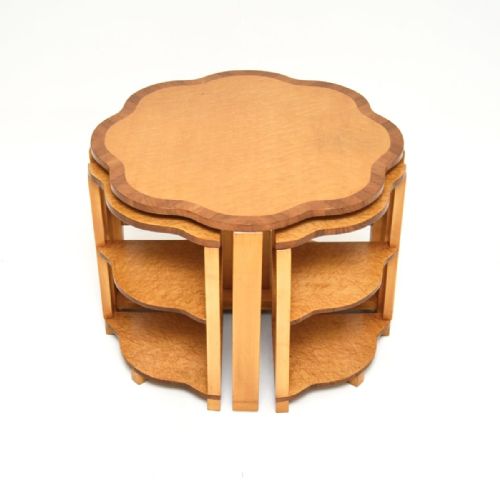
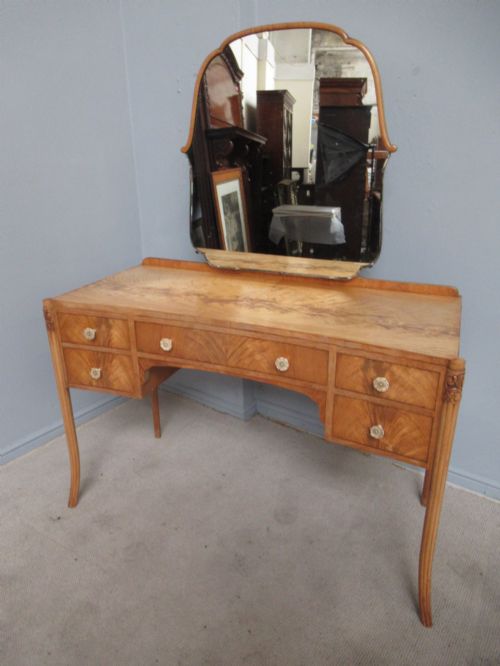
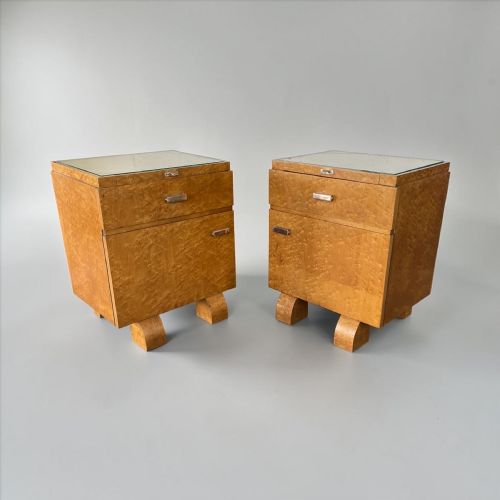
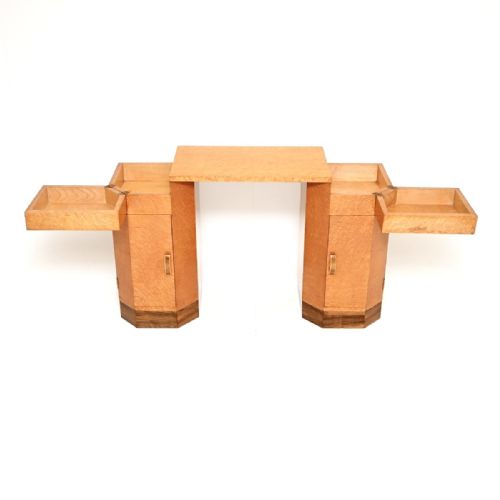
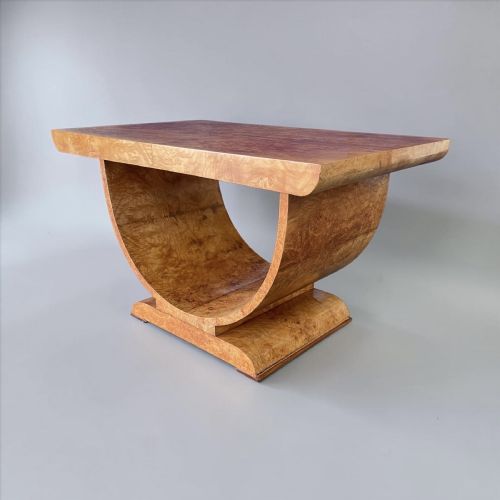
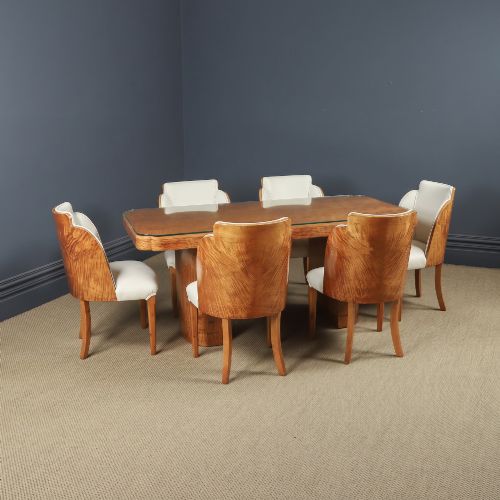
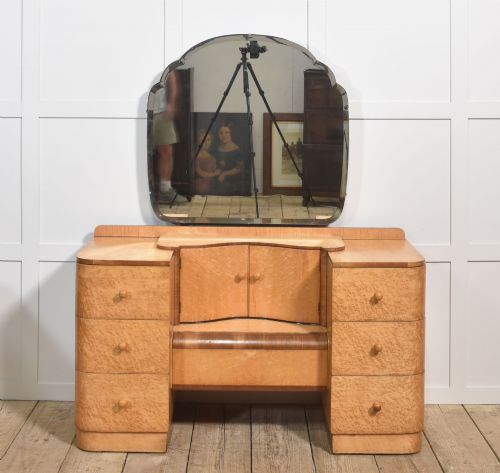
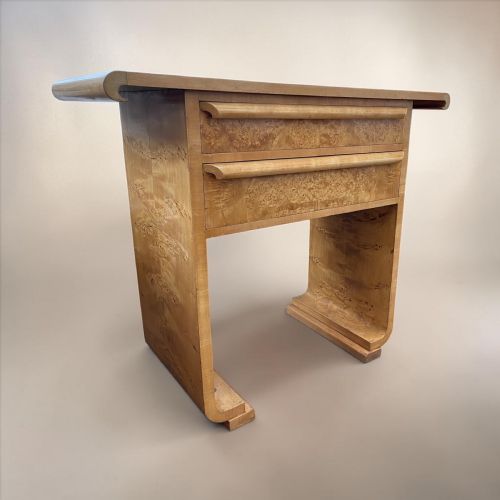
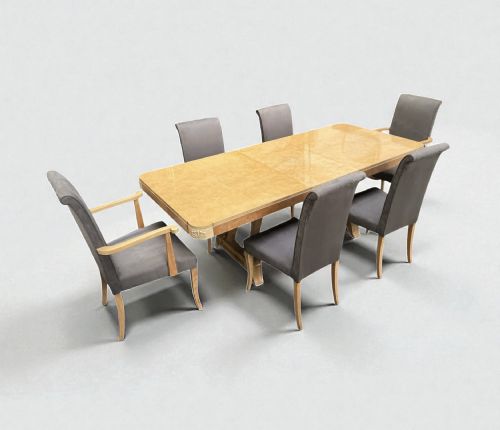
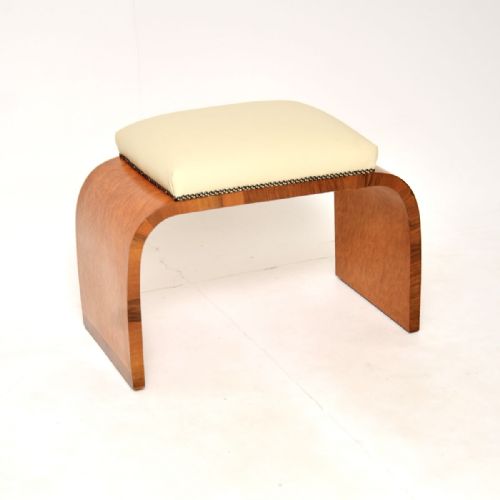
A maple art deco table encompasses various forms designed primarily during the interwar period, spanning coffee tables, dining suites, dressing tables, and bedside cabinets. Buyers searching for a maple art deco table will frequently encounter pieces utilising birds eye maple, burr maple, and blonde maple veneers.
The selection ranges from compact nesting tables and bedside cupboards to large ten-seater dining tables and console tables. Most items originate from the 1930s, though occasional examples date from the 1920s or incorporate Swedish Grace and modernist design influences.
Makers and retailers from the period, including Hille, Fortnum and Mason, Maples of London, and Harry and Lou Epstein, frequently utilised maple alongside contrasting timbers such as walnut, rosewood, and macassar ebony. These tables serve both functional roles in daily life and act as focal points within an interior scheme.
How they were made
Cabinet makers constructed these pieces using solid timber frames overlaid with carefully selected veneers of birds eye maple, burr maple, or plain maple. The natural figuring of the wood was emphasised through symmetrical book-matching across table tops and drawer fronts.
Construction frequently combined maple with secondary hardwoods like walnut, mahogany, and satinwood, occasionally accented with leather, glass tops, or ebonised details. Joinery techniques from the period supported geometric forms, curved U-bases, and tiered structures without relying on heavy ornamentation.
Some clever nesting tables stack up into five separate tiers, proving that interwar designers loved a geometric puzzle.
What varies in quality
The visual impact of a piece depends heavily on the grain selection of the maple veneer, with dense, highly figured birds eye or burr patterns commanding greater presence than plain stock. Mastery in book-matching ensures the natural figures mirror each other seamlessly across symmetrical surfaces.
Construction integrity distinguishes workshop-produced furniture from mass-market production, particularly in the stability of multi-tiered occasional tables and extending dining mechanisms. The integration of contrasting timbers, such as rosewood or macassar banding, reflects the ambition of the maker.
Fortnum and Mason·Hille Furniture Company·Harry and Lou Epstein·Maples of London
The Maple Art Deco Table Glossary
- Birds Eye Maple
- A figured form of maple timber featuring small, circular indentations resembling tiny eyes. This patterning occurs naturally in the wood and is highly prized for decorative veneer work.
- Book-Matching
- A veneer technique where adjacent slices from the timber flitch are opened like a book to mirror each other. This creates symmetrical patterns across large table tops.
- Nesting Tables
- A set of graduated tables designed to fit neatly beneath one another when not in use. They offer practical flexibility for entertaining and small spaces.
- U-Base
- A pedestal support shaped like the letter U, commonly found beneath twentieth-century dining and console tables. This form provides structural stability while maximising legroom.
Maple Art Deco Table: Frequently Asked Questions
How do I care for a maple surface?
Keep wooden surfaces away from direct sunlight and heat sources to prevent the veneer from drying out or fading over time. Dust regularly with a soft, dry cloth and avoid harsh chemical cleaners.
Use coasters and placemats beneath glasses and hot dishes to protect the polished finish from moisture rings and thermal shock. Occasional application of a suitable wax helps maintain the lustre of the timber.
Where were these tables used originally?
Dining tables and suites served formal dining rooms in townhouses and suburban homes during the interwar years. Smaller occasional tables, nests, and console pieces were placed in drawing rooms and hallways for daily convenience.
Bedside cabinets and dressing tables furnished private bedrooms, often matching larger suite wardrobes and bed frames. Many designs were tailored for contemporary urban apartments requiring multi-functional furniture.
How do I distinguish 1920s pieces from 1930s pieces?
Earlier 1920s designs often display transitional elements from preceding styles, alongside simpler geometric arrangements. Woods like walnut and mahogany appeared frequently alongside early experiments in blonde maple.
By the 1930s, designs embraced full modernist curves, waterfall edges, and dramatic birds eye or burr maple veneers. Suites often featured matching occasional pieces, drum-shaped bedside units, and architectural U-bases.
Can I mix these tables with modern decor?
The clean lines and pale blonde tones of maple furniture allow them to integrate smoothly into contemporary minimalist rooms. Their neutral yet distinctive grain patterns contrast effectively with plain walls and modern fabrics.
Pairing a statement coffee table or dining suite with modern seating highlights the sculptural qualities of twentieth-century design. The natural warmth of the timber softens stark architectural spaces without clashing.