




Vintage Dining Suite
A vintage dining suite brings together matching tables and chairs from periods spanning the early twentieth century, offering a complete room scheme.
Vintage Dining Suite
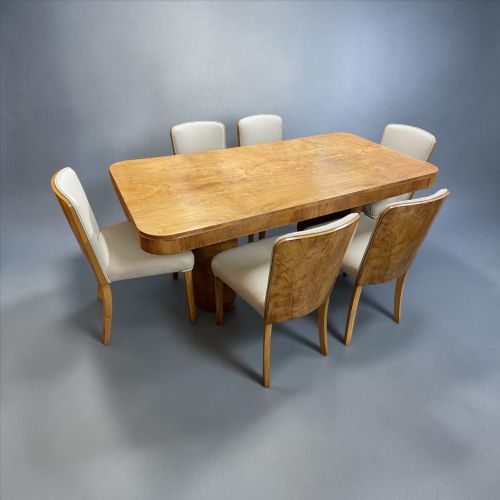
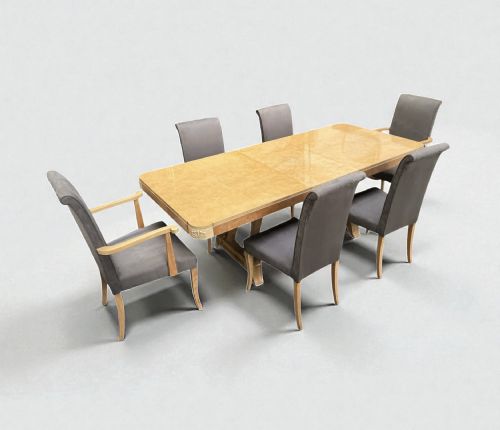
A vintage dining suite comprises matching tables and chairs designed to coordinate for formal dining spaces, frequently appearing in forms from the 1930s alongside Edwardian examples. These groupings bring together matching seating and tables, occasionally incorporating sideboards or side tables into the ensemble.
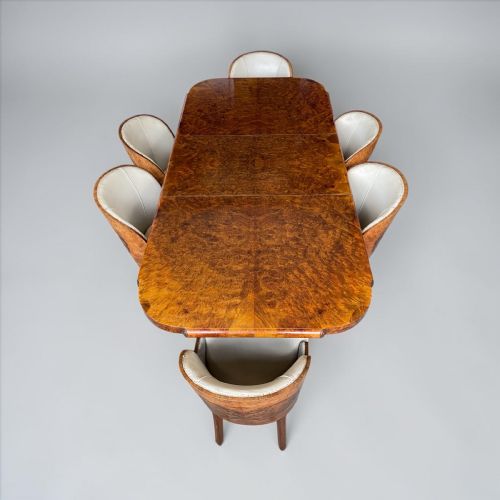
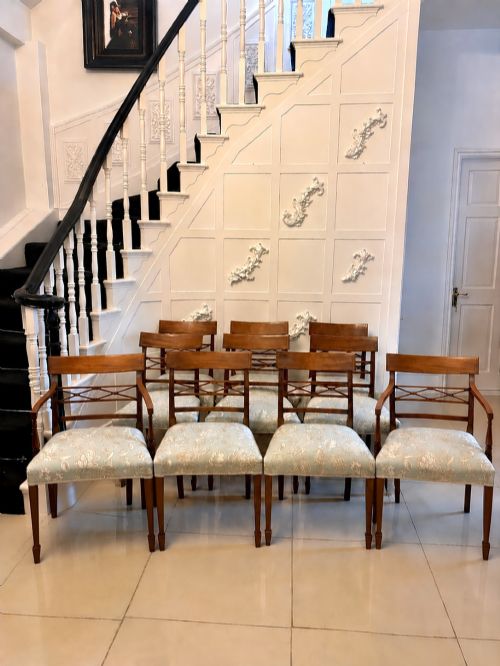
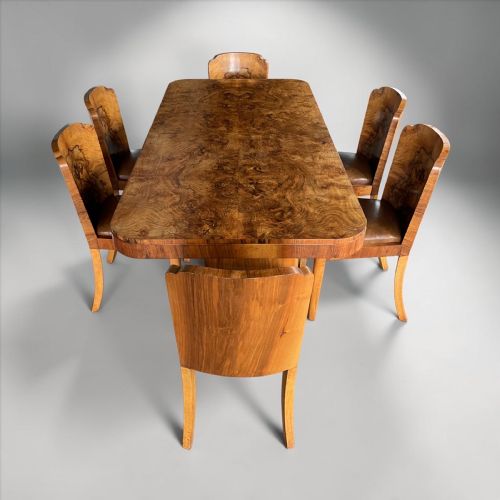
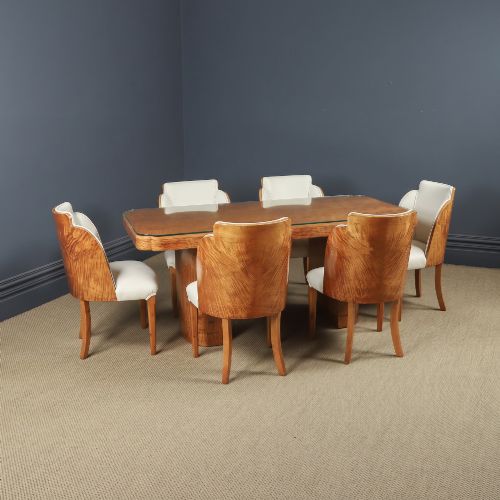
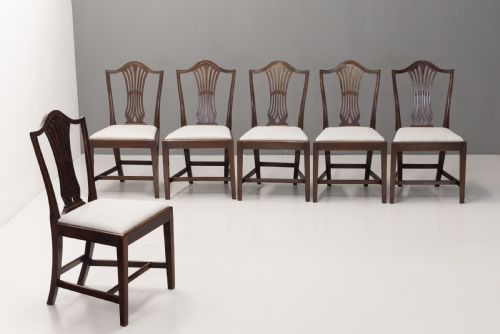
The most common configurations on this page pair a central dining table with six or eight matching chairs, often rendered in distinctive Art Deco designs. Buyers encounter complete matching rooms as well as revivalist interpretations spanning Jacobean, Hepplewhite, and Georgian styles.
How they were made
Cabinet makers utilised choice timber veneers such as burr walnut, bird's eye maple, satinwood, and mahogany over solid timber frames to achieve striking grain patterns on table tops and cabinet doors. These polished wood surfaces often contrast with upholstered seating elements finished in leather, fabric, or velvet.
Makers integrated decorative details including string inlay, brass hardware, and carved wooden motifs to define distinct historical revivals and modern modernist movements. Construction methods combined traditional joinery with the sleek geometric lines characteristic of twentieth-century production.
Vintage Dining Suite Retail Price Guide 2026
Typical asking prices for vintage dining suite among the pieces listed under this phrase on Sellingantiques today, from the lower quarter to the upper quarter. They describe what is for sale here now, not the wider market.
Listings span several decades, featuring Edwardian pieces alongside 1930s Art Deco suites in mahogany, walnut, and exotic veneers.
What varies in quality
The calibre of a suite rests upon the selection of timber veneers and the precision of matched grain patterns across large surfaces like table tops and sideboard doors. Suites produced by notable workshops exhibit superior cabinet work and more sophisticated integration of secondary timbers.
The integrity of the original upholstery, the crispness of carved details, and the survival of maker stamps or paper labels separate standard production from exceptional examples. Complete suites that retain their full complement of matching chairs display greater cohesion than assembled groups.
Maurice Adams·Harry and Lou Epstein·Hille·Shoolbred
The Vintage Dining Suite Glossary
- Art Deco
- A design style characterised by sleek geometric shapes, streamlined forms, and lavish materials that dominated the 1920s and 1930s. This aesthetic favours exotic veneers and polished dark woods.
- Burr Walnut
- A wood figure obtained from the burl growths of walnut trees, yielding intricate swirling grain patterns. Cabinet makers prized this material for veneering prominent surfaces.
- Carver Armchair
- A dining chair featuring integrated armrests, traditionally placed at the head of the table. These pieces match the standard side chairs in a dining set.
- Georgian Revival
- A design movement looking back to the classical proportions and mahogany construction of eighteenth-century England. Pieces in this style often incorporate Chippendale or Hepplewhite design motifs.
- String Inlay
- A delicate line of contrasting wood veneer inlaid into the surface of a furniture piece. This technique creates subtle geometric borders on tabletops and chair backs.
Vintage Dining Suite: Frequently Asked Questions
What pieces comprise a dining suite?
A dining suite typically pairs a central dining table with a set of matching chairs, most frequently six or eight. Some larger configurations also incorporate sideboards or side tables.
These collections provide a uniform aesthetic for the dining room by matching the timber and decorative style across all components.
How do I identify Art Deco suites?
Art Deco suites feature streamlined geometric forms, polished exotic wood veneers like burr walnut or bird's eye maple, and minimal ornamentation. Their lines emphasise horizontal or vertical symmetry.
These pieces date predominantly from the 1920s and 1930s, contrasting sharply with the heavier carved wood of earlier revival styles.
What timber was used for Edwardian suites?
Edwardian suites frequently employ mahogany and oak, often enhanced with string inlay or marquetry details. Cabinet makers also utilised walnut for formal dining furniture during this period.
These woods provide a sturdy foundation for both carved revival chairs and simpler inlaid salon seating.
How do revival styles differ from originals?
Revival styles such as Georgian or Jacobean copy the aesthetic hallmarks of earlier centuries while utilising the manufacturing techniques of their own era. An Edwardian piece in the Georgian style adapts eighteenth-century proportions for a later home.
Examining the construction methods and secondary timbers helps clarify the actual period of manufacture.