


Art Deco Dining Chairs
Art deco dining chairs define the period's interior style, combining striking geometric forms with rich timbers for daily dining.

Art Deco Dining Chairs
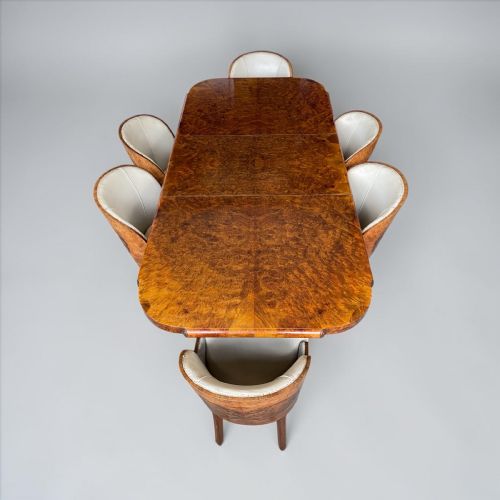
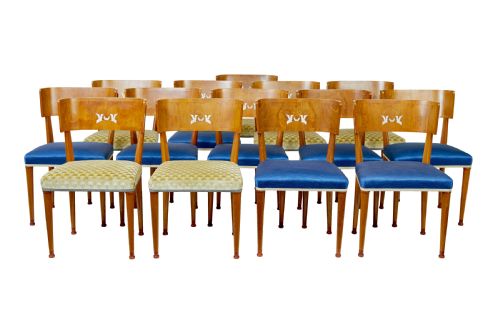
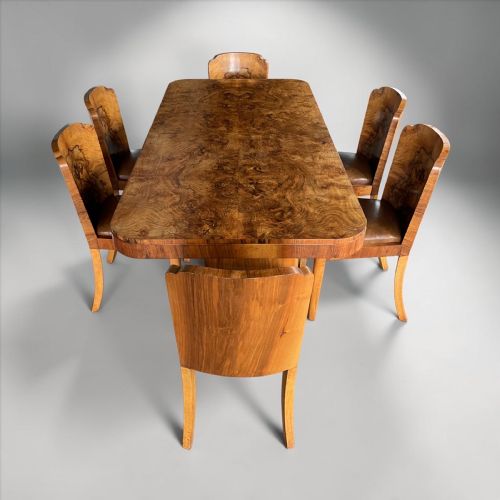
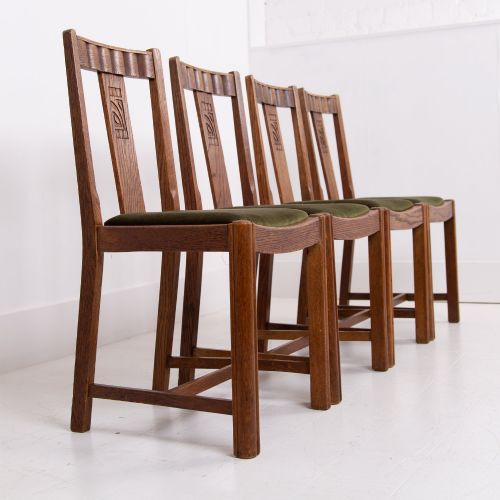
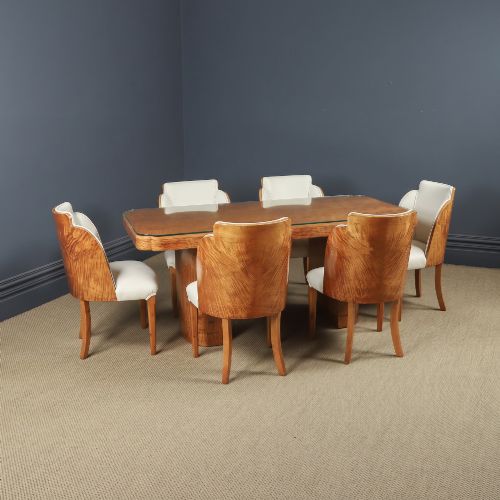
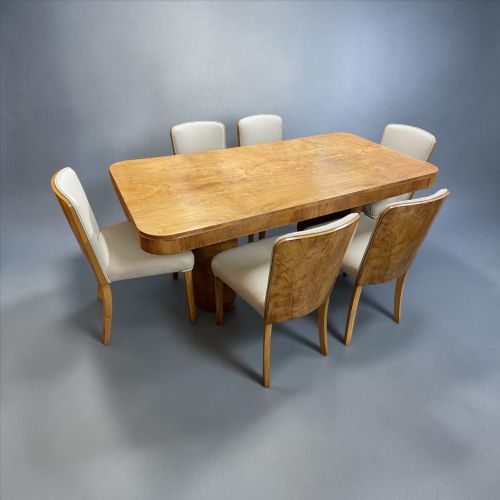
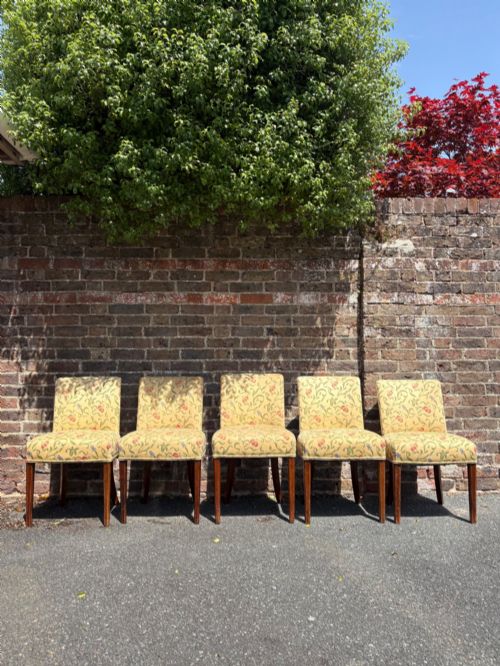
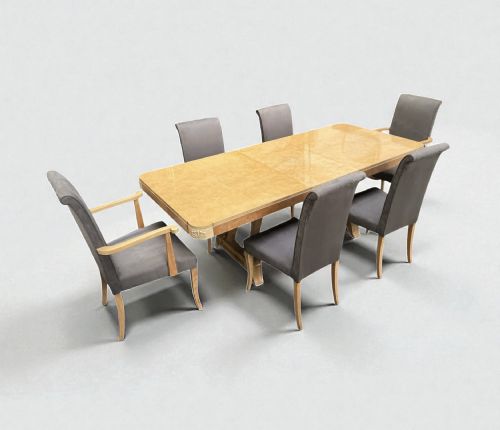
Art deco dining chairs represent a major focus of early twentieth-century furniture design, appearing frequently in sets ranging from four to eight pieces. The evidence shows these seating options emerged prominently around the nineteen thirties, often accompanying matching dining tables as part of comprehensive suites.
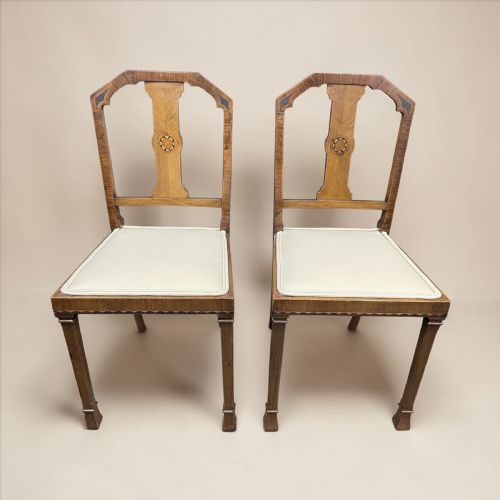
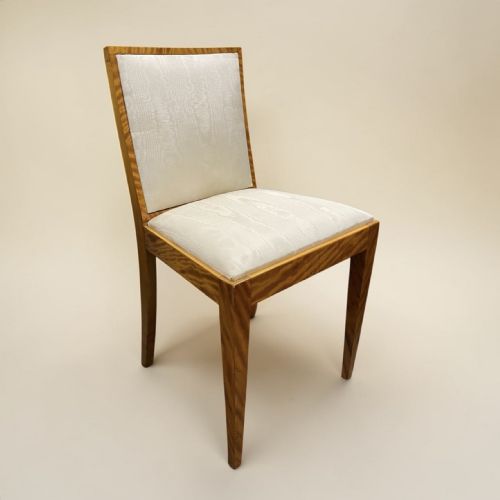
Buyers encounter various configurations, including standard side chairs and distinctive cloud back designs. Many examples derive from British and continental workshops, utilising traditional forms alongside progressive modern silhouettes.
Materials and construction methods
Craftsmen utilised richly figured veneers such as burr walnut, bird's eye maple, and satinwood over sturdy timber frames of oak or solid walnut. These decorative woods were selected for their dramatic grain patterns, which defined the visual character of the seating.
Upholstery played a central role in construction, incorporating durable leather, velvet, and woven fabrics fixed to sprung or padded seats. Frames frequently displayed curved profiles and integrated woodwork that required specialist cabinet-making techniques.
Art Deco Dining Chairs Retail Price Guide 2026
Typical asking prices for art deco dining chairs among the pieces listed under this phrase on Sellingantiques today, from the lower quarter to the upper quarter. They describe what is for sale here now, not the wider market.
Cast iron patio sets occasionally sneak into the seating lineup, proving that art deco applied to the garden too.
Factors of distinction
Quality separates standard production seating from pieces originating in notable maker workshops. The complexity of the veneer work, the integrity of the underlying frame construction, and the retention of original upholstery materials dictate the standing of individual sets.
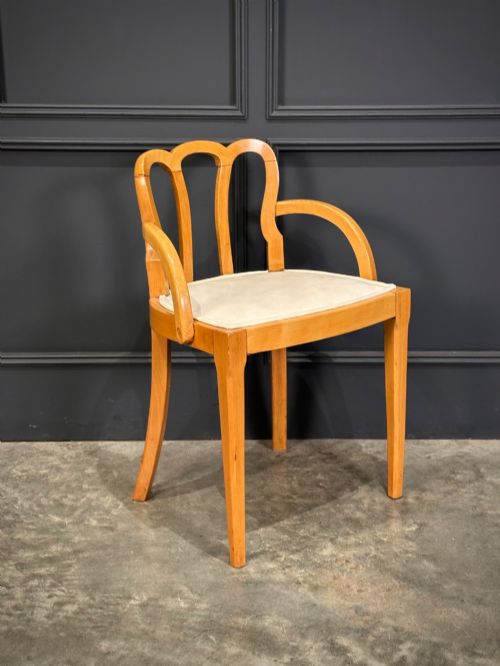
Proportion and execution of characteristic shapes, such as curved cloud backs or integrated arm supports, reveal the skill involved in the initial manufacture. Cohesive suites featuring matching tables demonstrate greater ambition than isolated single chairs.
Harry and Lou Epstein·Hille·Maurice Adams·Bath Cabinet Makers·G.Norman
The Art Deco Dining Chairs Glossary
- Cloud back
- A rounded, upholstered chair back reminiscent of a stylized cloud shape, popular in Epstein designs.
- Veneer
- A thin slice of figured timber, such as burr walnut or maple, applied over a stable base wood to create decorative surfaces.
- Klismos
- An ancient Greek chair form reinterpreted by twentieth-century designers with curved legs and a flared backrest.
- Suite
- A matching group of furniture comprising a dining table and a set of chairs, sometimes accompanied by sideboards.
- Side chair
- An upright chair without arms, designed primarily for use around a dining table.
Art Deco Dining Chairs: Frequently Asked Questions
How many art deco dining chairs do I need?
Sets typically comprise four, six, or eight chairs to match standard dining tables of the period. Selecting the right number depends on your available dining space and table length.
Larger configurations often accompany expansive dining suites that include matching sideboards or cabinets. Consider the proportions of your room when choosing between a compact set of four and an extensive suite.
Are art deco dining chairs comfortable for daily use?
Many examples feature padded or sprung seats upholstered in leather or velvet designed for extended sitting. The ergonomic curved backs provide substantial lumbar support during meals.
Original padding may vary in firmness depending on past restoration work. Assessing the underlying webbing and springs ensures the seating remains suitable for regular modern use.
How do I identify chairs by Epstein?
Epstein pieces frequently showcase dramatic burr walnut veneers combined with distinctive cloud back profiles. The craftsmanship reflects high-end London cabinet making from the interwar period.
While some bear stamps or labels, the combination of specific timber selection and curved joinery often points directly to the workshop.
What is the difference between walnut and burr walnut?
Standard walnut displays a straight, relatively uniform grain pattern derived from the heartwood of the tree. Burr walnut comes from tree growths that produce complex, swirling patterns.
Chairs utilising burr walnut veneers were positioned as luxury items due to the intricate cutting required. This figured wood defines the more elaborate seating options recorded in the evidence.