



1930s Dining Suite
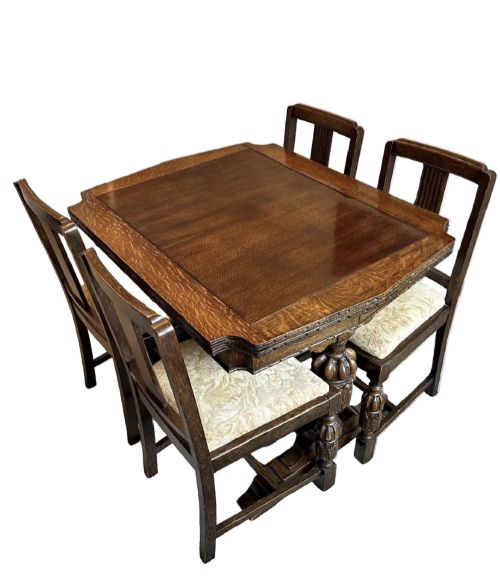
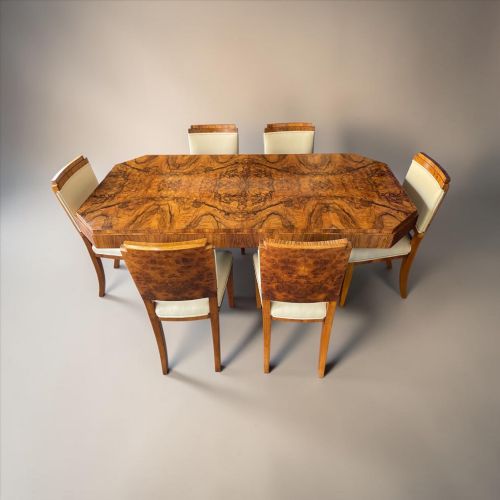
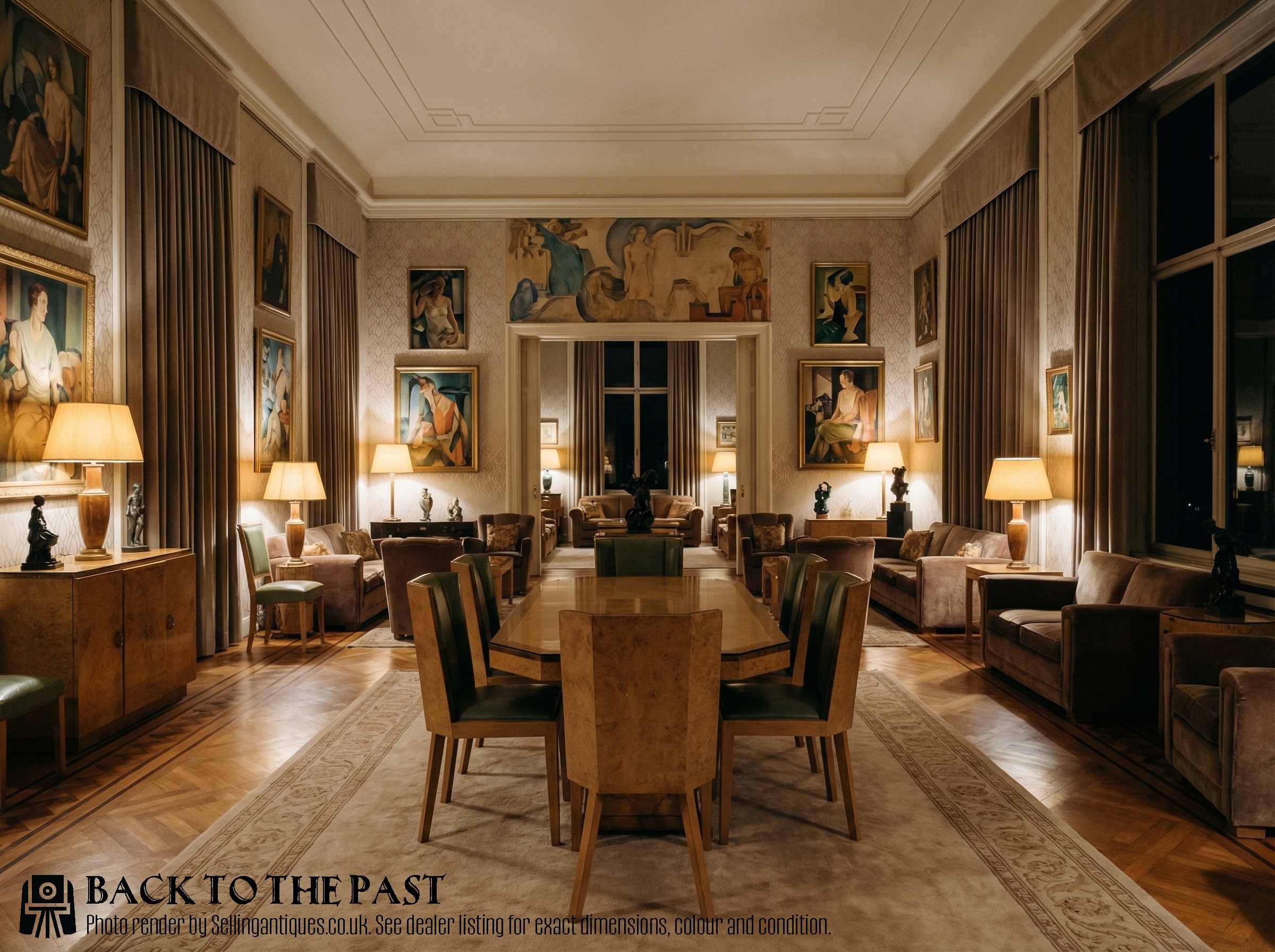
A 1930s dining suite brings structured glamour to a room through matching tables and chairs shaped by the Art Deco style.
1930s Dining Suite
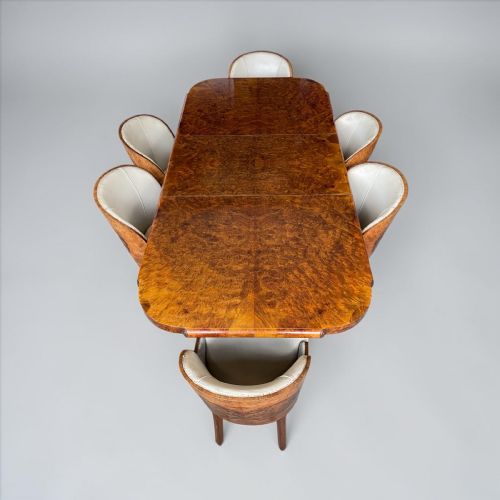
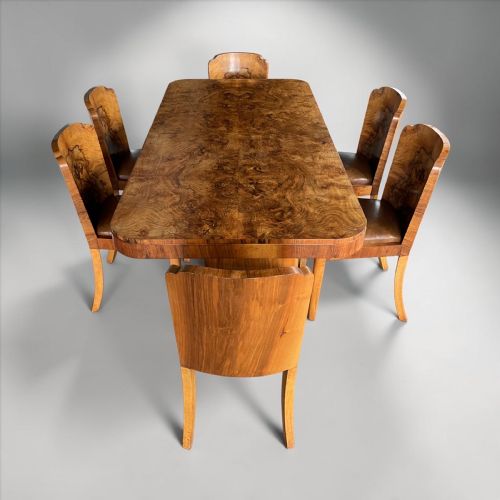
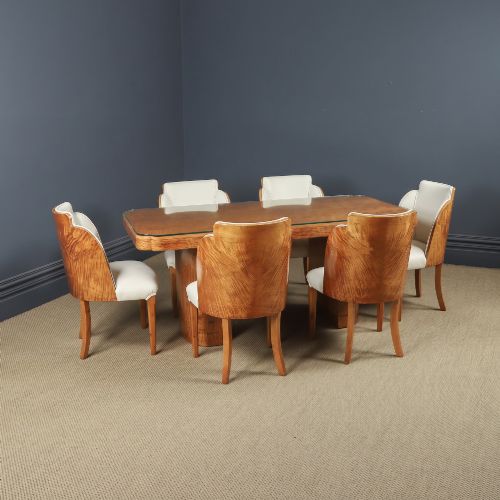
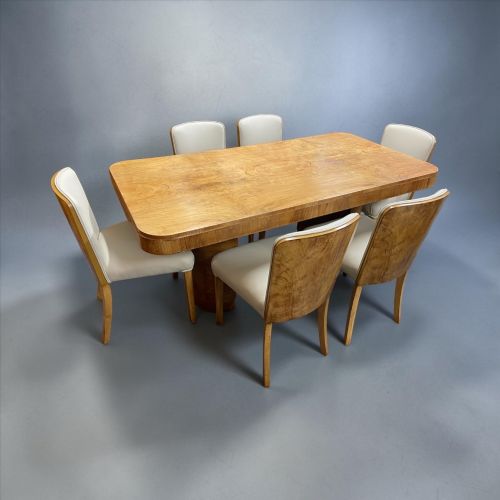
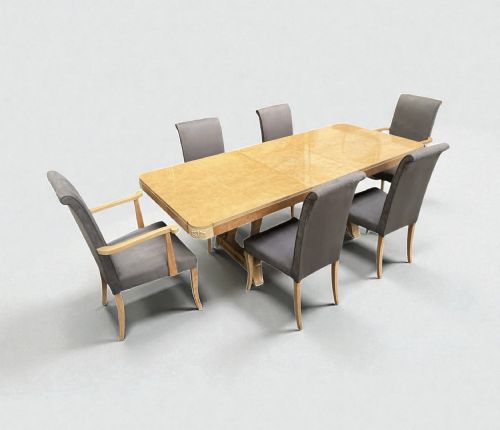
A 1930s dining suite consists of a matching dining table paired with seating, most frequently found as sets seating six people. These ensembles emerge predominantly from the Art Deco period, carrying the characteristic geometric lines and architectural presence of the era.
The configurations on offer range from standard six-seater groups to larger eight-seater and eleven-piece sets designed for more expansive rooms. While the majority of examples date to the nineteen-thirties, related pieces extend into the nineteen-twenties, nineteen-forties, and Edwardian periods.
Buyers encounter matching suites comprised of dining tables accompanied by leather or fabric upholstered dining chairs. The overarching aesthetic relies on coordinated timber tones and unified design motifs across every component of the setting.
Materials and construction methods
Makers constructed these dining suites utilising a rich selection of timbers, dominated by walnut, burr walnut, maple, bird's eye maple, satinwood, and timber, alongside exotic veneers such as calamander, macassar, and ebony. These figured woods provided striking natural patterns across large table tops and sideboard surfaces.
Seating within the suites incorporated functional upholstery materials, utilising leather and fabric to finish the dining chairs. Frames were built to match the timber vocabulary of the central table, creating a cohesive visual unit for the dining room.
1930s Dining Suite Retail Price Guide 2026
Typical asking prices for 1930s dining suite among the pieces listed under this phrase on Sellingantiques today, from the lower quarter to the upper quarter. They describe what is for sale here now, not the wider market.
Some dining suites require up to eleven separate pieces to complete the ensemble.
Distinctions in quality and execution
Attribution to documented makers and workshops elevates the standing of a suite. Pieces bearing stamps or specific design provenance demonstrate a higher level of workshop execution than unlabelled dining sets.
Maurice Adams·Harry and Lou Epstein·Hille
The 1930s Dining Suite Glossary
- Art Deco
- A design style characterised by sleek geometric shapes, streamlined forms, and modern industrial aesthetics. It dominated decorative arts throughout the nineteen-thirties.
- Burr Walnut
- A mottled timber grain obtained from walnut tree growths, prized for intricate patterns. Cabinetmakers utilised these veneers on major table and sideboard surfaces.
- Veneer
- A thin layer of superior wood glued to a base timber structure. This technique allowed makers to display dramatic grain patterns across large dining surfaces.
- Calamander
- A heavy, durable exotic wood featuring dark brown stripes. It appeared on high-end French dining furniture of the period.
1930s Dining Suite: Frequently Asked Questions
How many chairs usually come with these suites?
Most dining suites include six matching chairs alongside the central table. Larger configurations accommodating eight or eleven pieces also appear.
Buyers should verify the chair count matches the daily seating requirements of their household.
What woods were used in these dining suites?
Maker workshops utilised walnut, burr walnut, maple, bird's eye maple, satinwood, and timber. Exotic options like calamander, macassar, and ebony also surface on specific pieces.
These varied timbers define the distinct visual character of each individual dining set.
Are these suites strictly from the nineteen-thirties?
While the core of the selection dates to the nineteen-thirties, related dining suites span from the nineteen-twenties through to the nineteen-forties and Edwardian eras.
Art Deco styling bridges these adjacent periods to create cohesive dining room environments.
How do I care for vintage walnut and maple surfaces?
Polished timber surfaces require regular dusting with a soft, dry cloth to protect the delicate veneer finishes. Avoid placing these tables in direct sunlight or near heat sources to prevent timber splitting.
Maintaining stable room humidity preserves the condition of both the wood and the original upholstery.