

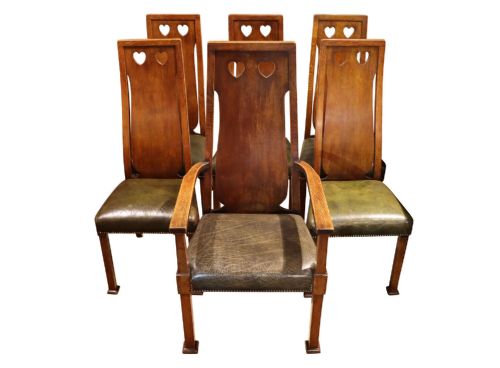
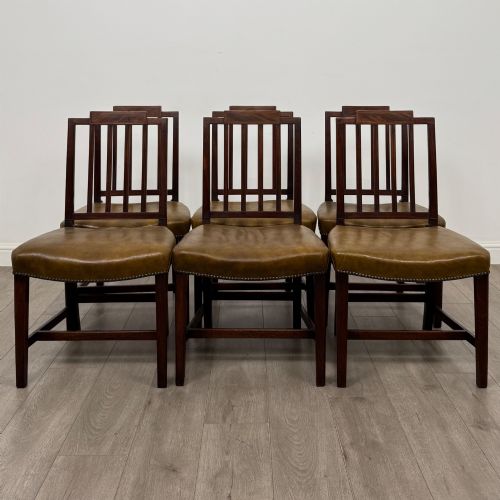
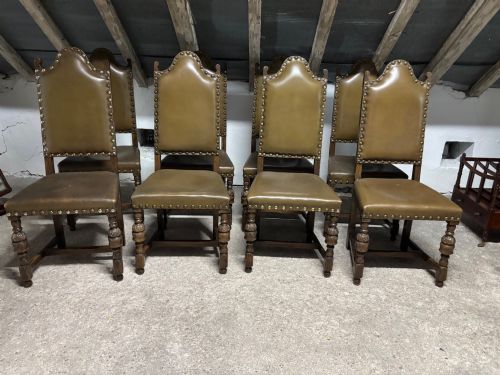
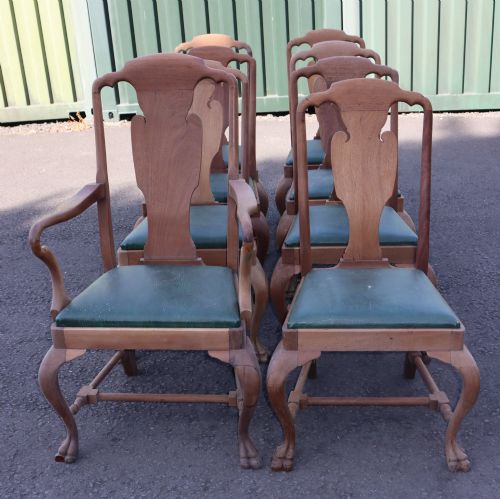


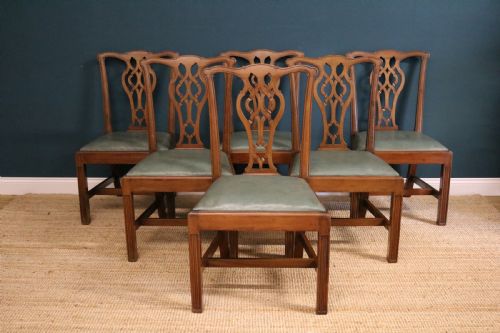


Green Leather Dining Chairs
Green leather dining chairs bring together rich hide upholstery and classic timber frames for any dining room.

Green Leather Dining Chairs
Green leather dining chairs cover multiple periods from the eighteenth century through the twentieth century, appearing in forms like single chairs, carvers, and larger dining suites. These seating options emerge primarily in mahogany and oak, reflecting the prevailing furniture tastes of their respective eras.
Buyers searching for green leather dining chairs commonly encounter sets originating from the Victorian and Edwardian periods, alongside Georgian pieces and later revivals. These items span styles from Chippendale and Queen Anne to Victorian Gothic Revival and Arts and Crafts.
The materials paired with the leather range from solid mahogany and oak to walnut, brass, and birds eye maple. Individual pieces include side chairs, armchairs, and sets numbering up to fourteen items.
Materials and Construction
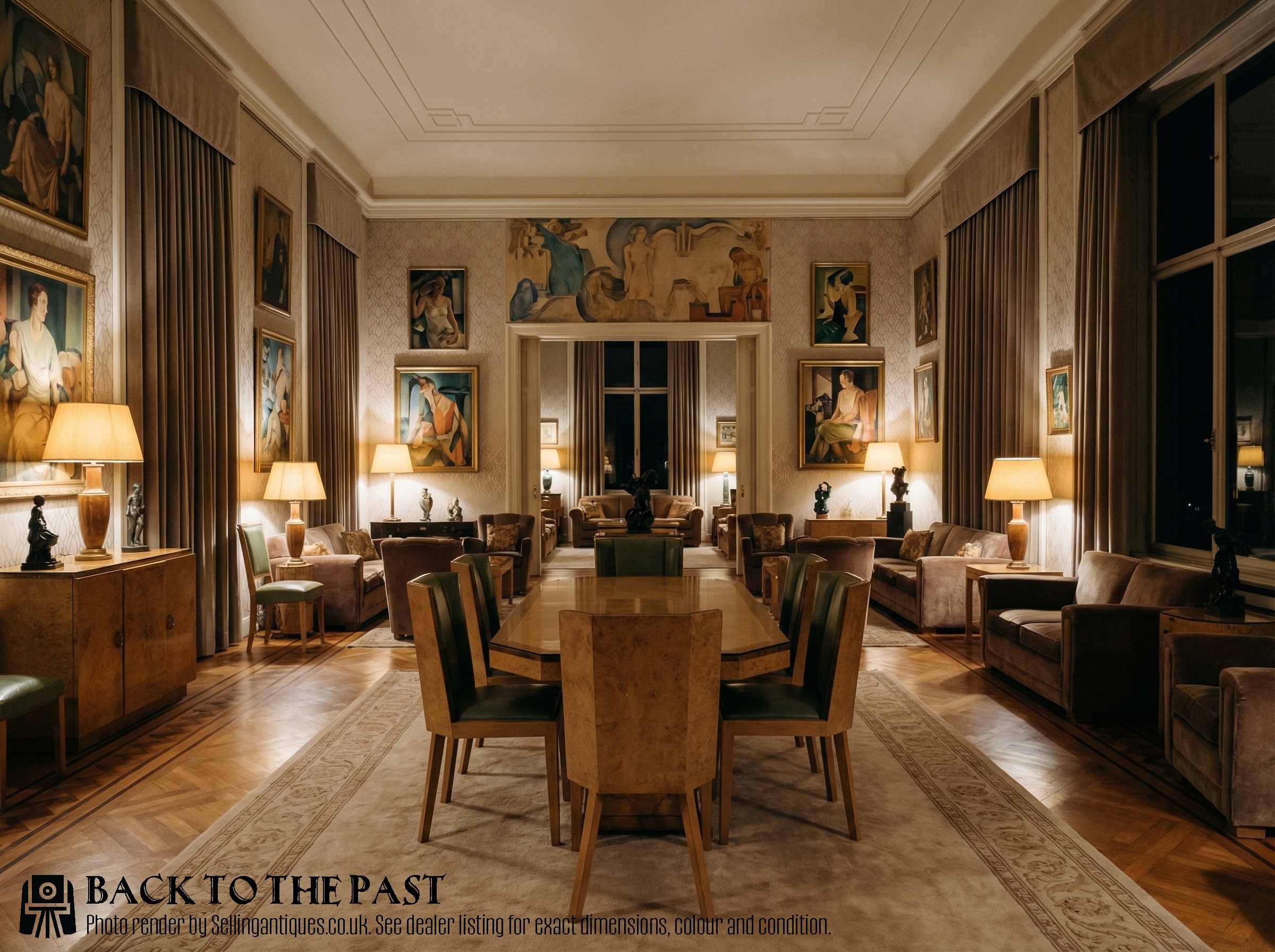
Makers built the frames of these chairs using hardwoods such as mahogany and oak, often shaping the timber through hand carving. Brass studs frequently secure the leather upholstery to the wooden seat bases.
Upholstery methods involve fitting leather or leatherette over padded frames, with some examples utilising hand-dyed green leather seats. Giltwood accents occasionally complement the mahogany structures on nineteenth-century pieces.
Green Leather Dining Chairs Retail Price Guide 2026
Typical asking prices for green leather dining chairs among the pieces listed under this phrase on Sellingantiques today, from the lower quarter to the upper quarter. They describe what is for sale here now, not the wider market.
Listings feature green leather dining chairs spanning the eighteenth, nineteenth, and twentieth centuries in mahogany, oak, and walnut.
Assessing Quality and Execution
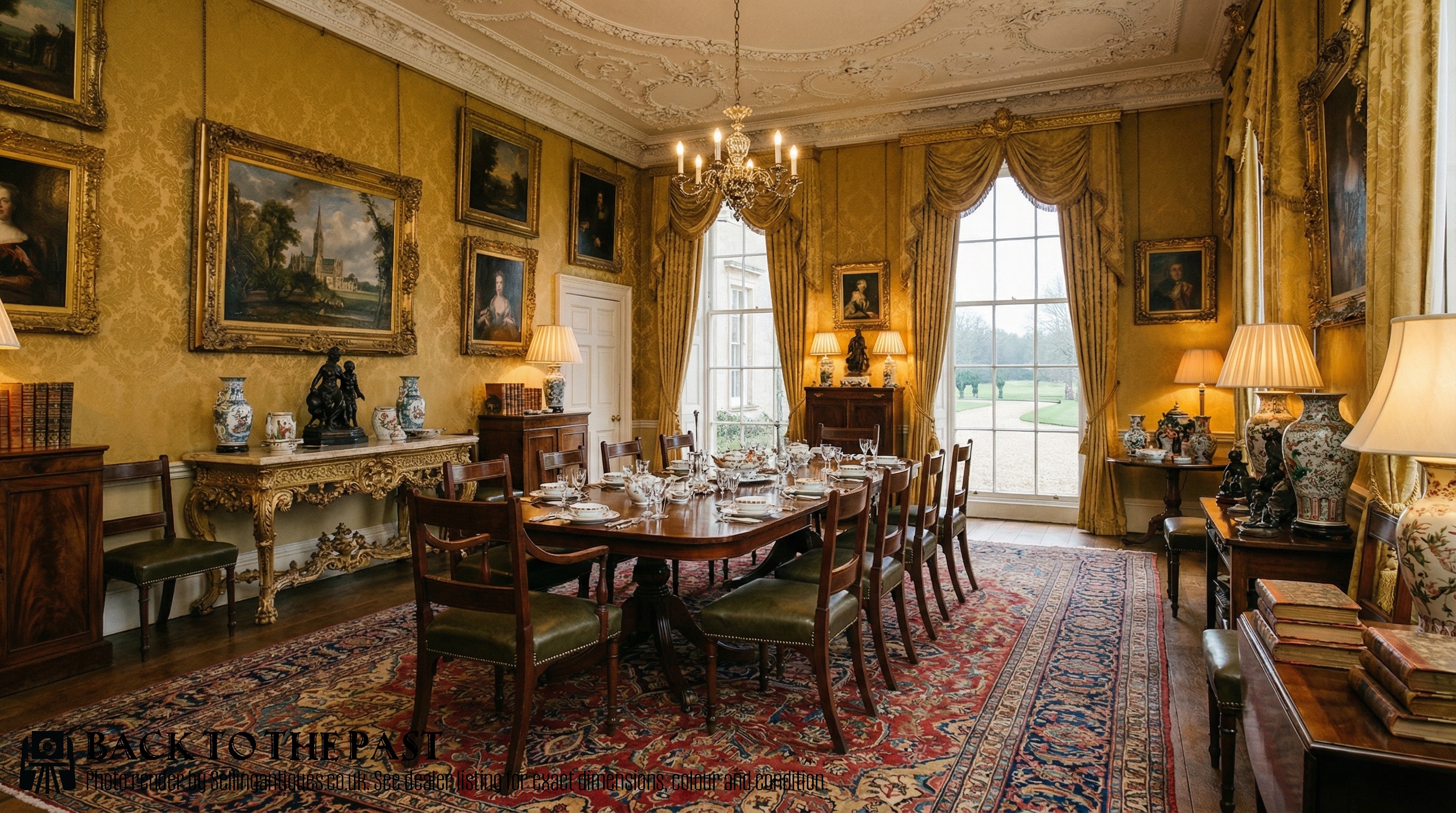
The standard of carving on the wooden frames distinguishes basic production from finer workshop output, particularly in revival styles where crisp detail matters. Timber selection also dictates overall grade, with dense mahogany and figured oak marking superior examples.
The preparation and finish of the leather upholstery influence the character of the seating, where hand-dyed hides offer greater depth than standard commercial alternatives. Consistency across large sets of chairs further elevates the standing of a group.
Gillows·Cooper and Holt·Jas Shoolbred
The Green Leather Dining Chairs Glossary
- Carver chair
- An armchair designed specifically for use at the head of a dining table. These pieces usually feature open arms that match the style of the accompanying side chairs.
- Side chair
- A chair built without arms, intended primarily for dining tables. These form the core component of most antique dining sets.
- Chippendale style
- A furniture design tradition originating in the eighteenth century and revived later. It is recognised by carved cabriole legs, claw and ball feet, and interlaced ribbon splats.
- Giltwood
- Timber treated with gold leaf or gold paint applied to the surface. This technique highlights carved decorative elements on formal chairs.
Green Leather Dining Chairs: Frequently Asked Questions
How do I care for antique leather seats?
Clean the surface gently using a soft, dry cloth to remove dust. Avoid harsh chemical cleaners that might dry out the hide over time.
Condition the leather periodically with a suitable specialist balm to maintain flexibility. Keep the chairs away from direct sunlight and heat sources to prevent cracking.
Can I mix different styles around a table?
Mixing carver chairs at the heads of the table with simpler side chairs along the sides creates a balanced arrangement. This approach mirrors historical dining practices.
Ensure the wood tones and overall heights remain reasonably consistent if you combine pieces from different periods. Similar timber species help unify varied chair designs.
What defines an Edwardian dining chair?
Edwardian dining chairs date from the period between nineteen hundred and nineteen ten. They frequently draw inspiration from earlier Georgian and Chippendale designs.
These pieces often combine oak or mahogany with upholstered leather seats. Construction methods from this era reflect mechanised improvements while retaining hand-finishing details.
Are large sets of antique chairs difficult to find?
Complete sets of twelve or fourteen chairs survive in smaller numbers because individual pieces were often separated or lost over generations. Finding matching groups from the eighteenth or nineteenth centuries requires patience.
Smaller sets of four, six, or eight chairs appear more frequently in the records. Matched sets of ten or more usually represent significant workshop output or later dining suites.