



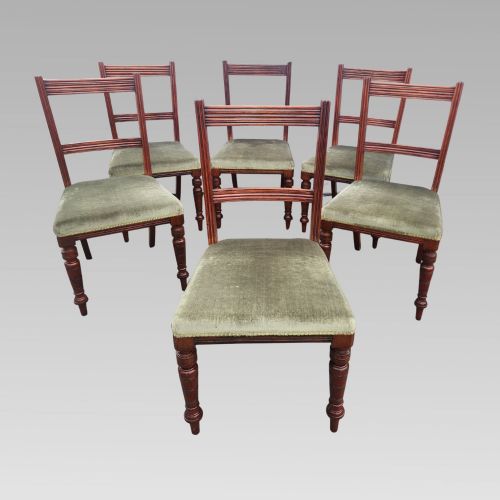

Antique Bar Back Chairs
Antique bar back chairs unite sturdy dining utility with sculptural crest rails, bringing classical proportion and warm timber to the table.
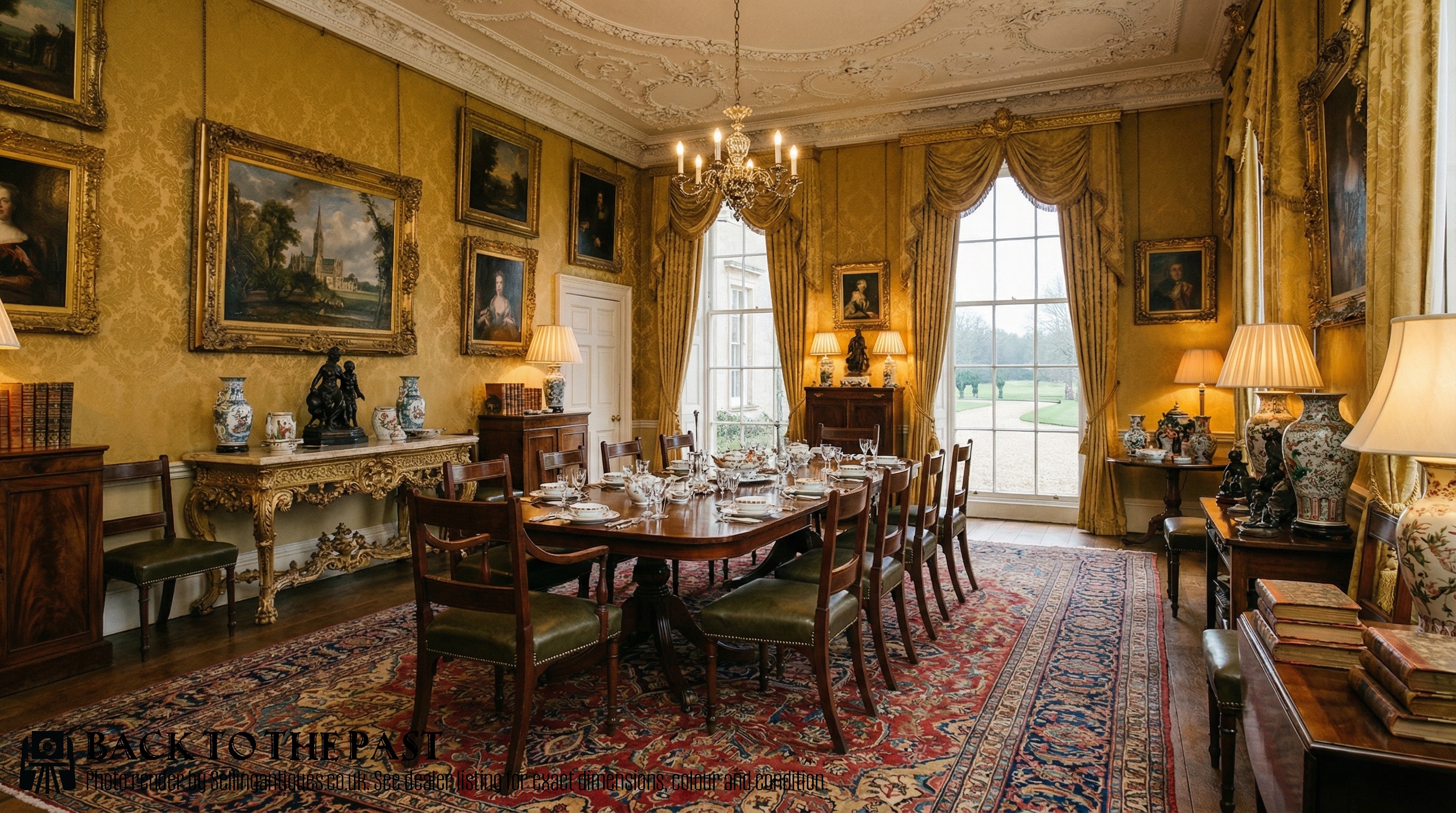
Antique Bar Back Chairs
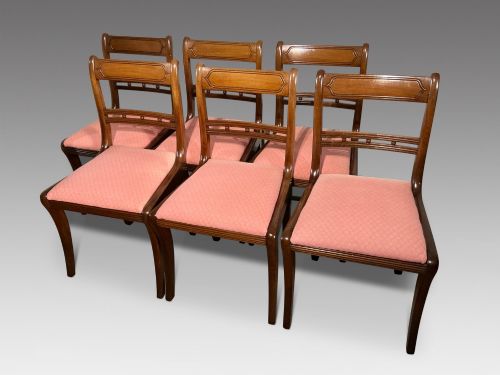
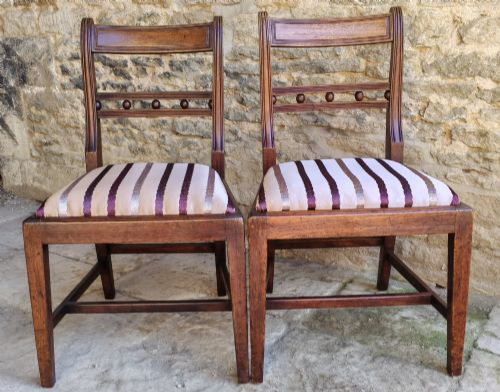
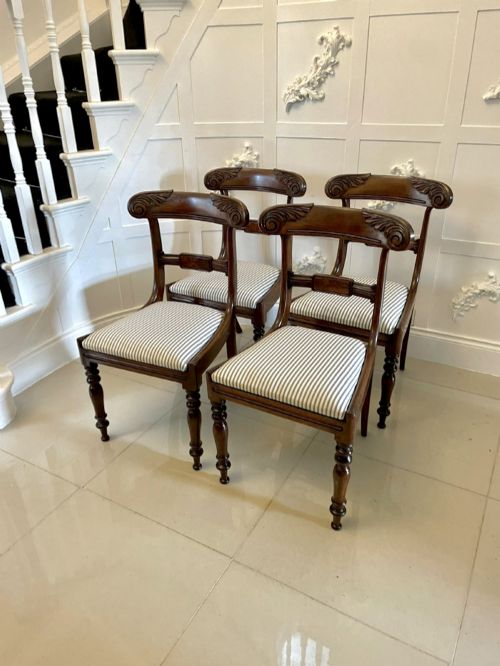
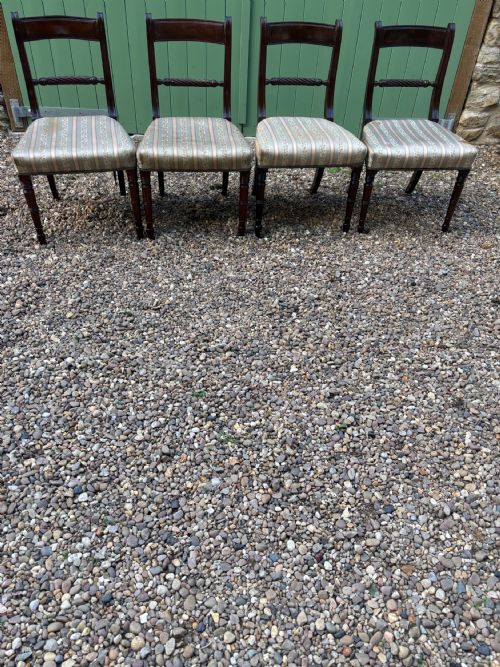
Antique bar back chairs are formal and rustic seating forms defined by a horizontal wooden crossbar or splat connecting the uprights of the frame. These chairs appear principally as dining sets, occasional carvers, and kitchen seating spanning the Georgian, Regency, William IV, and Victorian periods.
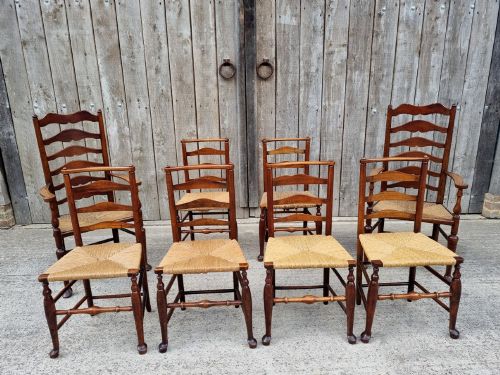
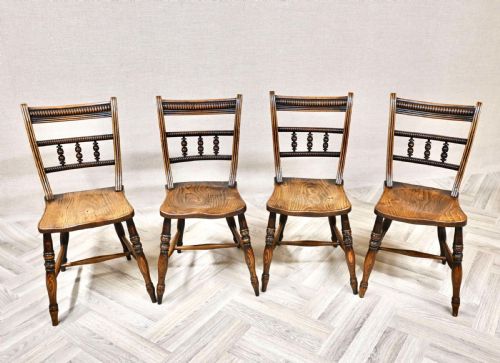
The profile originates in classical revival designs of the early nineteenth century, where cabinetmakers shaped the top rail to echo ancient Greek and Roman architecture. Alongside formal dining suites, country variations utilise local timbers like elm and beech to create durable kitchen and farmhouse seating.
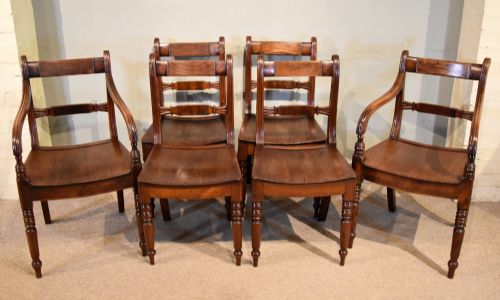
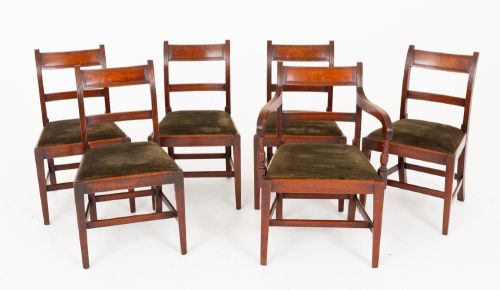
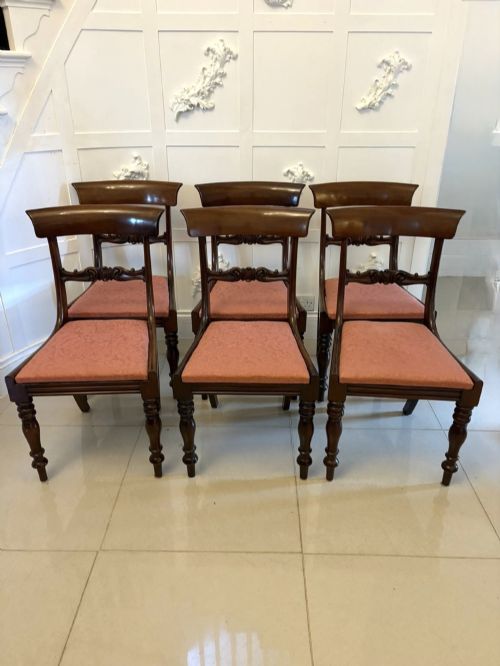
Buyers encounter matching sets of four, six, eight, or twelve alongside pairs and individual armchairs. Most examples utilise dense hardwoods shaped with curved crest rails designed to support the lower back during long meals.
Materials and Construction Methods
Makers relied heavily on figured mahogany and occasionally rosewood for formal dining chairs, contrasting the rich grain with polished finishes. Country variants deployed native timbers such as elm, ash, and beech, often shaped into sturdy Windsor frameworks.
Joinery combined pegged mortise and tenon joints with steam-bent timber to achieve the characteristic curved horizontal backrest without losing structural integrity. Drop-in seats and upholstered pads utilised horsehair stuffing secured beneath modern or period textiles, leather, and velvet.
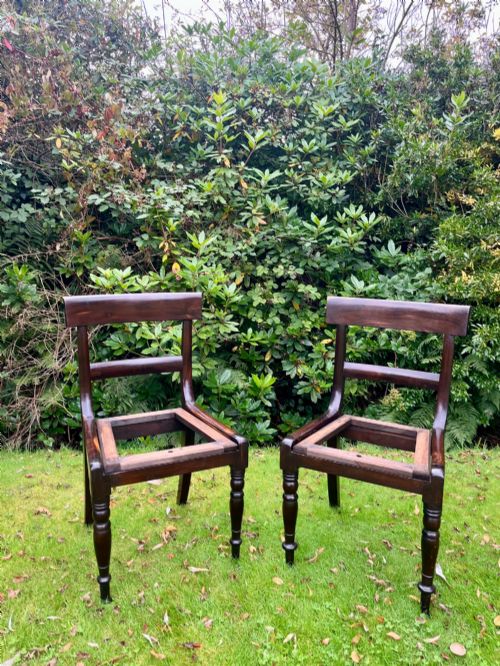
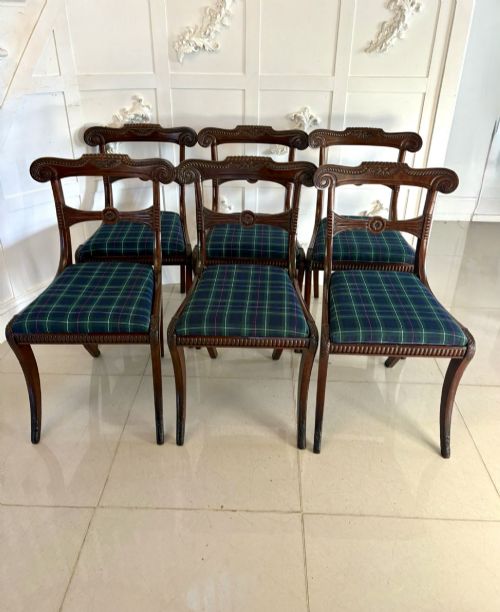
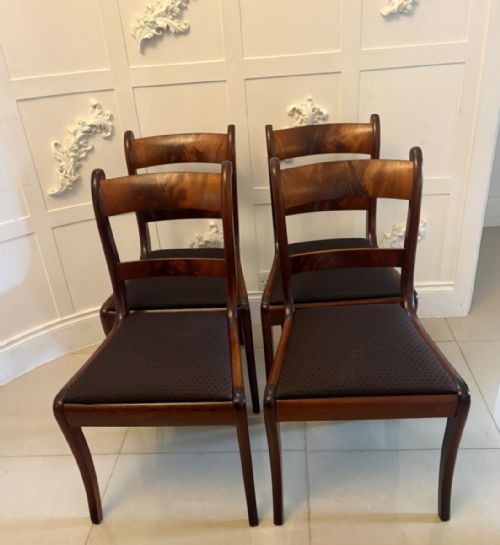
Decorative detailing on better pieces involved subtle brass inlay, ebony stringing, or carved scrolls along the crest rail and sabre legs. Turned front legs, reeded framing, and shaped splats demonstrate the transition from Georgian austerity to ornate Victorian revival tastes.
Antique Bar Back Chairs Retail Price Guide 2026
Typical asking prices for bar back chairs among the pieces listed under this phrase on Sellingantiques today, from the lower quarter to the upper quarter. They describe what is for sale here now, not the wider market.
Listings feature mahogany predominantly, alongside alternative examples in rosewood, elm, and ash spanning the Georgian to Victorian periods.
Evaluating Craftsmanship and Preservation
The standard of timber selection and carving depth marks the division between everyday utility seating and high-style metropolitan cabinet work. Superior sets display tightly figured grain matching across multiple chairs, whereas lesser examples rely on plainer stock with simpler turned supports.
Rigidity in the frame depends upon the tightness of the original joints and the preservation of the steam-bent back rail. Surviving examples retaining their original finish, unthinned timber legs, and minimal structural repairs command greater attention from collectors.
The Antique Bar Back Chairs Glossary
- Bar back
- A chair featuring a horizontal solid wood top rail resembling a bar that spans the upright stiles.
- Sabre leg
- A concave curved leg tapering toward the foot, heavily favored by Regency designers following classical models.
- Carver chair
- An armchair designed to match a set of dining chairs, typically positioned at the head of the table.
- Reeding
- Parallel convex moulding carved into timber legs or rails, creating a textured linear effect.
- Stile
- The vertical upright timber forming the outer edge of a chair back.
Antique Bar Back Chairs: Frequently Asked Questions
How do I date an antique bar back chair?
Dating relies on stylistic shifts in timber choice, leg shape, and crest rail profile. Earlier Georgian and Regency iterations favour mahogany with sabre or reeded legs, while later Victorian versions often introduce turned legs and softer woods.
Construction marks, such as hand-cut joinery and secondary timbers used in the seat frames, help confirm the era of manufacture alongside historical wear patterns.
Are these chairs comfortable for daily dining?
Most antique bar back chairs were designed with ergonomic curved top rails that support the lower back quite effectively during meals. The addition of upholstered drop-in pads provides adequate cushioning for regular use.
When evaluating comfort, consider seat height relative to modern dining tables, as nineteenth-century standards occasionally sat slightly lower than contemporary designs.
How should I maintain the upholstery and wood?
Regular dusting with a dry, soft cloth protects the polished mahogany or rosewood surfaces from moisture and abrasion. Feeding the timber occasionally with a quality wax preserves the depth of the grain without building up heavy residues.
Upholstered drop-in pads benefit from gentle vacuuming and professional cleaning when covered in delicate velvet, leather, or antique textiles.
Can I mix these chairs with a modern table?
The clean architectural lines of mahogany and rosewood bar back chairs pair naturally with minimalist glass, stone, or contemporary wooden tables. Their understated classical proportions prevent them from overwhelming modern interior spaces.
Matching the wood tone of the chair legs to existing furniture helps anchor the seating visually within a contemporary room scheme.