


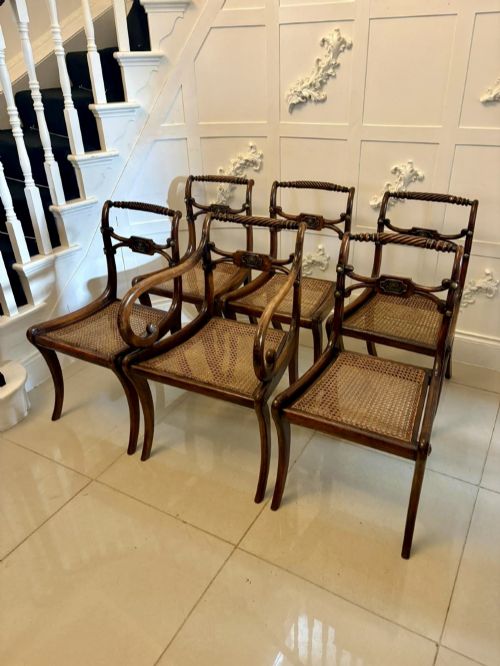
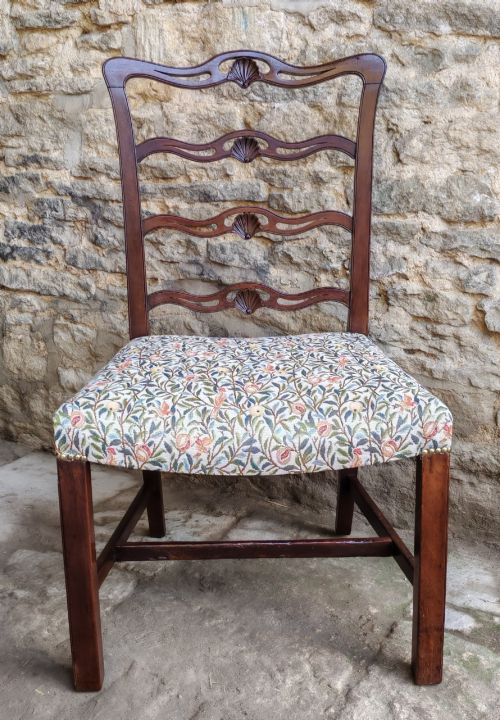
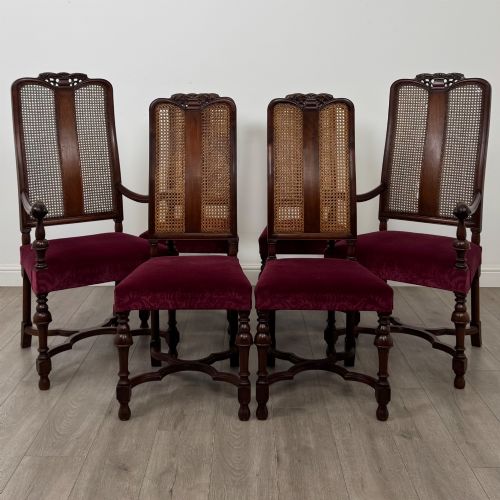
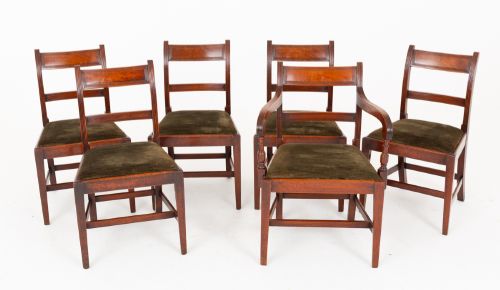
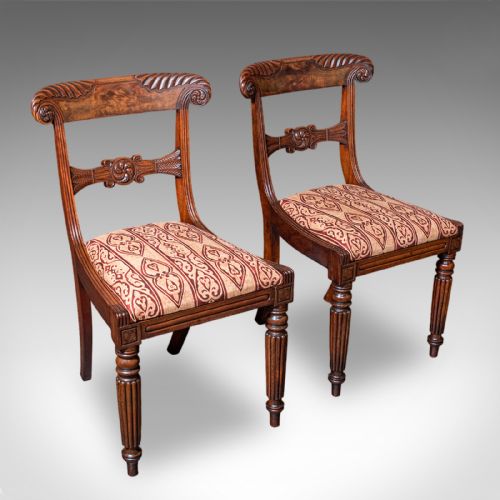
Traditional Mahogany Dining Seating
Traditional mahogany dining seating brings solid wood construction and period character to the table.
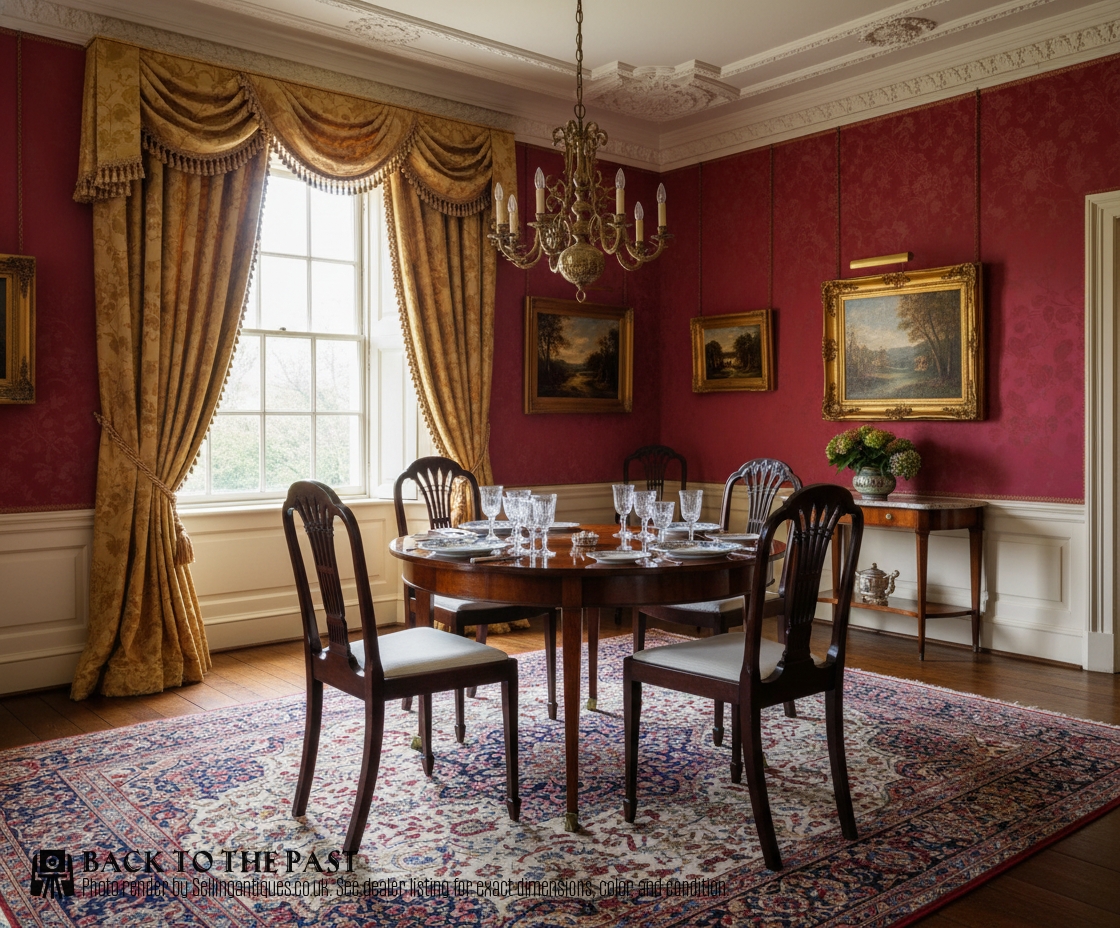
What traditional mahogany dining seating is
Traditional mahogany dining seating comprises sets of chairs produced across the Georgian, Regency, Victorian, and later revival periods. These pieces serve functional dining roles while displaying distinct historical design characteristics.
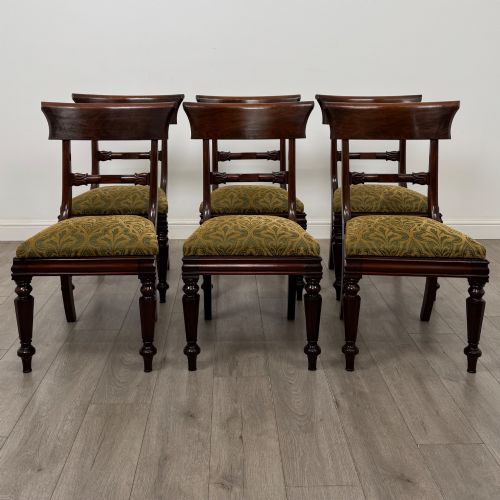
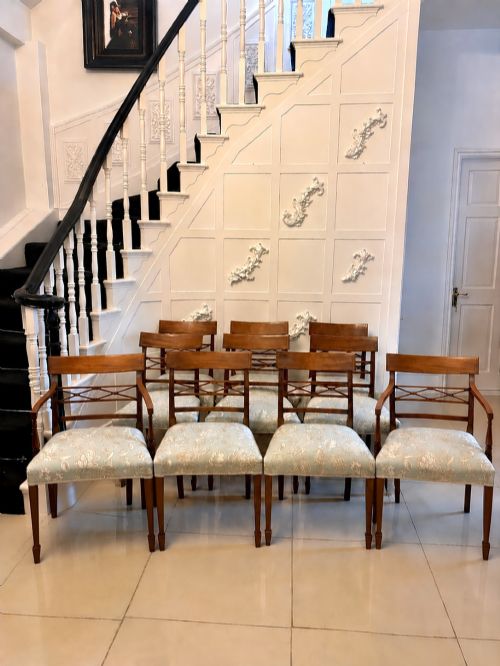
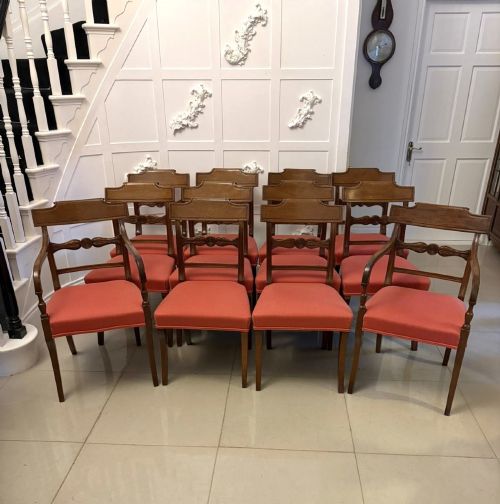
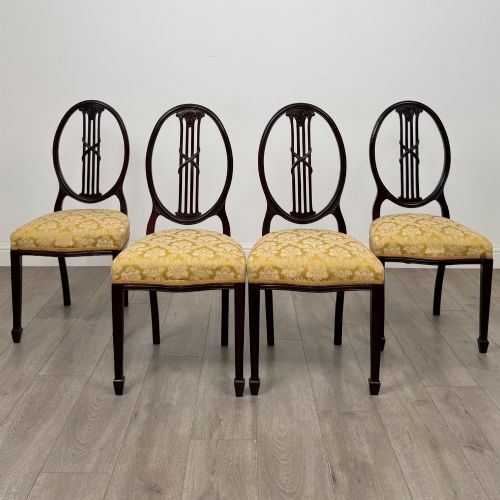
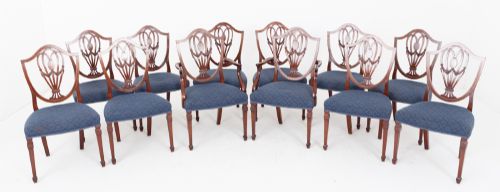
Sets appearing here range in size from four to ten chairs, often shaped by regional British cabinet-making traditions such as Scottish or English workshops. Common forms span barback configurations, carved frames, and specific revival styles.
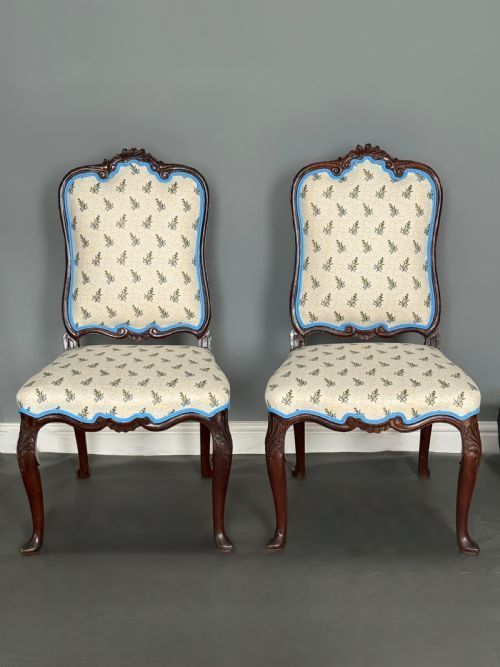
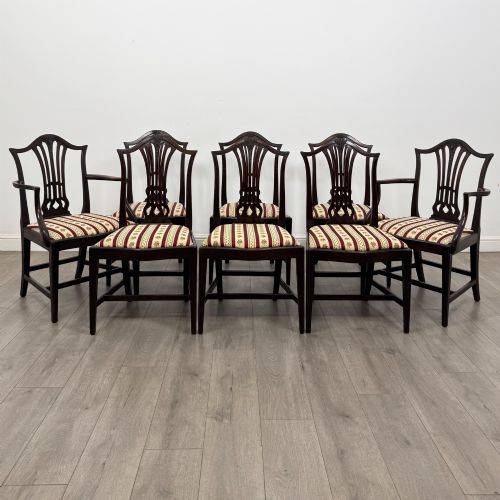
Makers drew on established aesthetic movements including Chippendale and Hepplewhite approaches alongside William IV interpretations. The selection leans heavily into nineteenth-century production alongside eighteenth-century Georgian influences.
How they were made
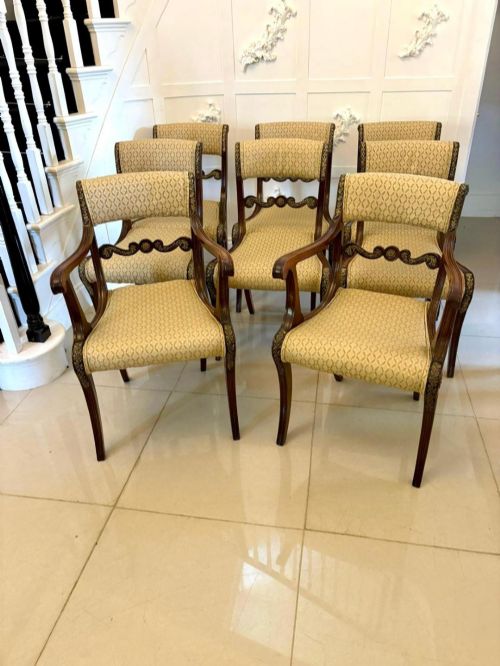
Construction relies upon solid mahogany timber, selected for its grain and durability, frequently augmented with decorative wood inlay. Workshops integrated supportive elements through traditional joinery methods suited to heavy daily use.
Upholstery materials recorded across the listings include fabric, leather, and velvet applied to seat pads. Additional detailing incorporates brass fixtures where appropriate to the specific period style.
Retail Price Guide 2026
Typical UK retail prices for traditional mahogany dining seating, calculated from the Sellingantiques database of over a million retail prices indexed since 2003. This retail price guide relies exclusively on Sellingantiques data; no external sources or auction records are used, so the figures do not describe the wider market.
Scottish makers contributed grand Georgian mahogany seating alongside their English counterparts.
What varies in quality
Quality differences emerge through the crispness of carved wooden details and the overall integrity of the mahogany frame construction. Sets that retain uniform proportions and matching grain patterns across every chair command greater appreciation.
The sophistication of the historical revival style influences the character of each set, distinguishing standard production from finer cabinet-maker output. Condition of the underlying timber and the execution of upholstery work further define the standard.
The Traditional Mahogany Dining Seating Glossary
- Mahogany
- A durable tropical hardwood prized for its rich reddish-brown colour and fine grain. It forms the primary structural material for these dining sets.
- Barback
- A chair design featuring a horizontal transverse wooden rail across the upper backrest. This form is particularly prominent in nineteenth-century English seating.
- Chippendale Style
- An aesthetic inspired by eighteenth-century cabinet-maker Thomas Chippendale. It typically incorporates intricate carved elements and graceful curvilinear forms.
- Hepplewhite Revival
- A later interpretation of George Hepplewhite's light, elegant eighteenth-century furniture designs. Pieces often feature characteristic shield-shaped backrests.
Frequently Asked Questions
How many chairs come in a set?
Sets on this page typically range from four up to ten matching dining chairs.
Buyers often find larger groupings suited to formal dining spaces, while smaller sets accommodate intimate rooms.
What periods do these chairs represent?
The listings span from Georgian and Regency eras through the nineteenth century and into early twentieth-century revivals.
Each period brings distinct stylistic nuances in carving, backrest geometry, and wood finishing.
What woods and materials are used?
Primary construction relies on solid mahogany, sometimes enhanced with decorative wood inlay and brass accents.
Seat pads feature varied upholstery materials including fabric, leather, and velvet.
How do I identify a revival style?
Revival pieces replicate earlier eighteenth-century aesthetics like Chippendale or Hepplewhite during later Victorian or Edwardian production periods.
These chairs combine historical design vocabulary with the manufacturing techniques of their actual creation date.