


Reeded Leg Dining Chairs
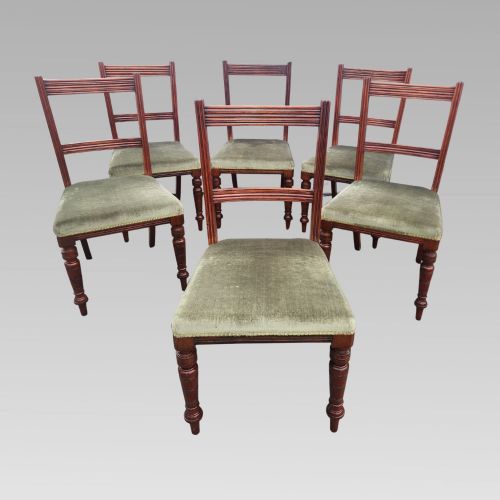
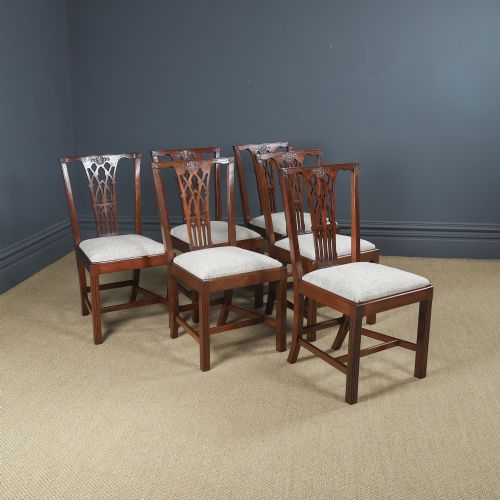
Reeded leg dining chairs bring classical elegance to the table, uniting solid mahogany frames with finely turned linear detail.
Reeded Leg Dining Chairs
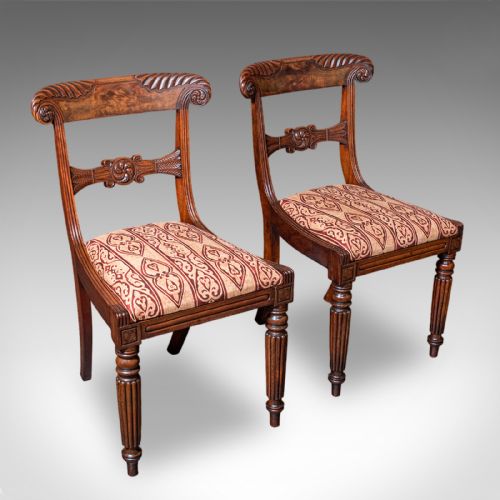
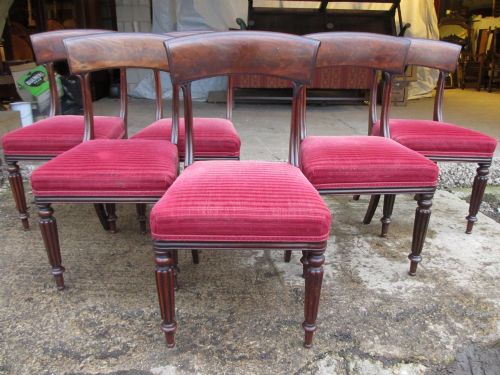
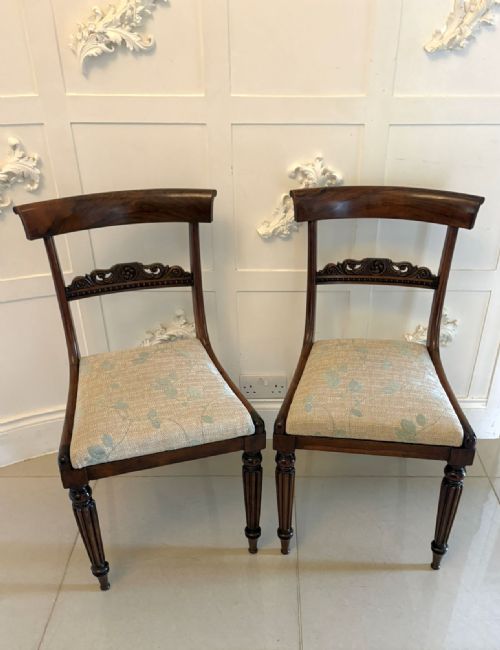
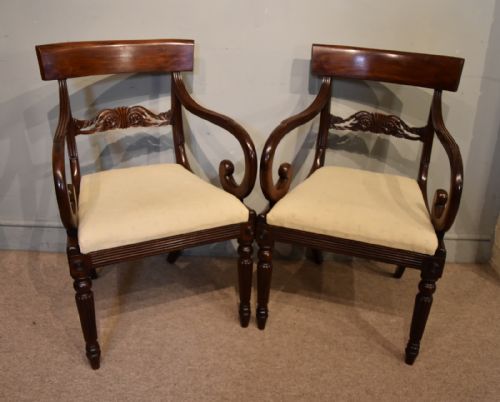
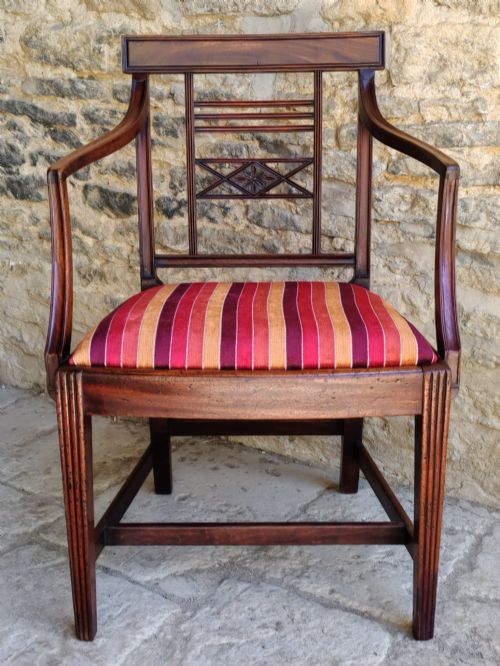
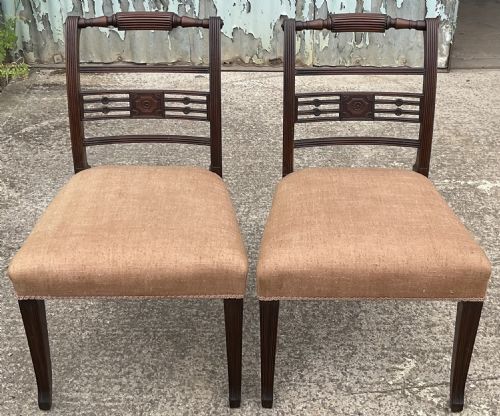
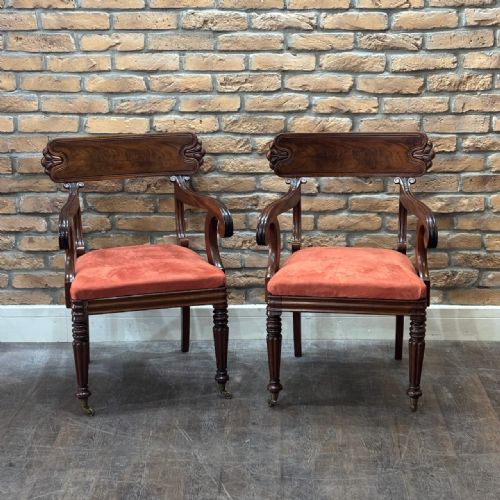
Reeded leg dining chairs are seating pieces defined by parallel concave grooves carved directly into the wooden supports. When you search for reeded leg dining chairs, you encounter forms ranging from single side chairs to extensive matching sets.
The majority of pieces seen here date from the Regency, Georgian, and William IV periods, constructed primarily as dining chairs, carvers, and armchairs. These items stem from the late eighteenth century through the nineteenth century, alongside later revival interpretations.
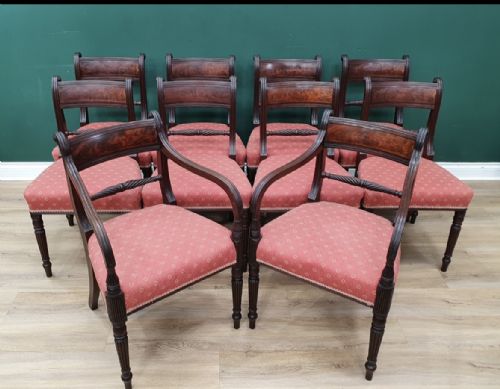
Sets frequently appear in multiples of four or six, occasionally accompanied by armchairs to form a complete suite for the dining room. Individual pairs and single pieces also emerge, spanning side chairs and reception seating.
How They Were Made
Cabinetmakers constructed these frames largely from solid mahogany and rosewood, sometimes utilising Cuban mahogany for greater density and richer grain depth. Seats utilised fabric, leather, velvet, and needlepoint upholstery, secured over drop-in frames or stuffed foundations.
Makers shaped the characteristic reeding on the forelegs using specialised scratch stocks and moulding planes to cut uniform parallel hollows. Brass details occasionally reinforced footings or structural joints on select Regency and William IV examples.
Reeded Leg Dining Chairs Retail Price Guide 2026
Typical asking prices for reeded leg dining chairs among the pieces listed under this phrase on Sellingantiques today, from the lower quarter to the upper quarter. They describe what is for sale here now, not the wider market.
Listings span the Georgian, Regency, William IV, and Victorian periods, alongside later twentieth-century revivals.
What Varies in Quality
Quality separates through the crispness of the carved reeding and the integrity of the timber selection. Sharp, evenly spaced grooves reflect superior workshop execution compared to shallow or softened tool marks.
The architectural cohesion of the frame, from the joinery of the bar backs to the stability of the legs, distinguishes standard production from exceptional cabinet work. Original surface patination and matching timber grains across an entire set elevate the standing of the pieces.
Gillows·W W Peirce
The Reeded Leg Dining Chairs Glossary
- Reeding
- Parallel convex mouldings carved into wood, forming a textured surface that reverses fluting. This technique frequently appears on the forelegs of Regency and Georgian seating.
- Carver
- An armchair designed with open sides to accommodate the wider garments of a host at the head of a dining table. These frames often match the smaller side chairs in a set.
- Bar back
- A chair back featuring a horizontal transverse wooden rail, often curved or carved, connecting the stiles. This form is common in Regency dining chairs.
- Drop-in seat
- A removable upholstered frame that drops into a rebate inside the seat rails. This construction method allows for straightforward reupholstery without dismantling the main chair structure.
Reeded Leg Dining Chairs: Frequently Asked Questions
How do I spot original reeded legs?
Original reeding shows crisp, hand-cut hollows with slight irregularities characteristic of early woodworking tools. Machine-made copies often display overly uniform depths and sterile finishes.
Examine the junction where the leg meets the seat rail to understand the construction period and assess whether components remain original to the frame.
Can I mix armchairs with side chairs?
Historical dining sets frequently combined a pair of carver armchairs with several single side chairs for the heads of the table. Matching timber and reeded leg details tie differing seat forms together.
Ensure the seat heights align correctly across both types to maintain comfort and visual harmony around your dining arrangement.
What wood types should I expect?
Mahogany forms the vast majority of these listings, varying from rich brown Georgian stock to dense Cuban varieties and later nineteenth-century timber. Rosewood also appears among select Regency side chairs and carvers.
Beech surfaces occasionally on Edwardian or revival interpretations, finished to simulate darker woods.
How do I care for leather upholstery?
Leather seats require regular dusting with a dry cloth and occasional treatment with appropriate conservation balms to prevent drying. Avoid placing antique leather under direct sunlight or near heat sources.
Studded borders need gentle cleaning around the brass or iron nails to protect the surrounding hide from abrasive accumulation.