
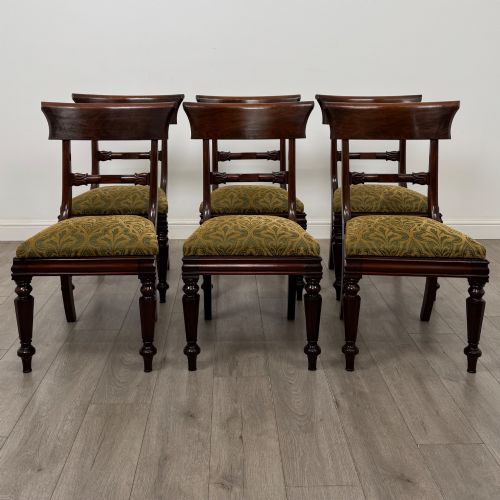
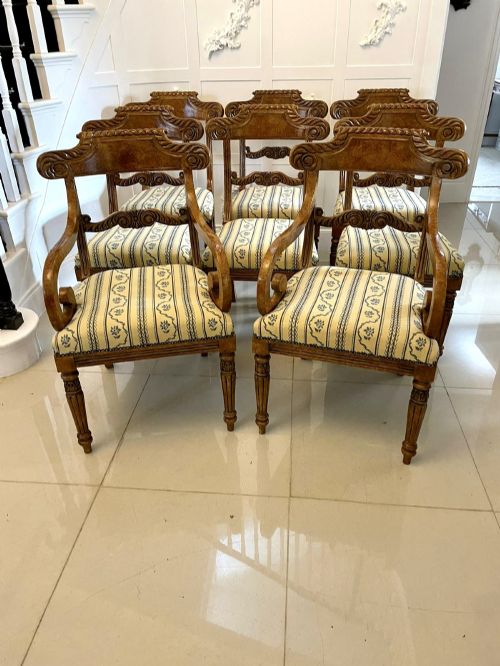
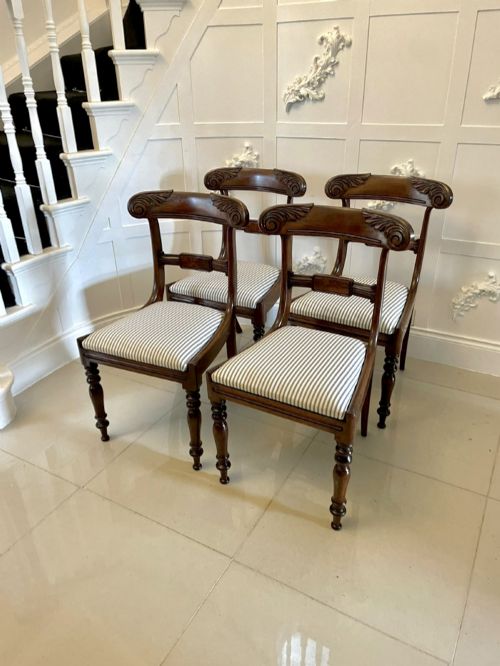
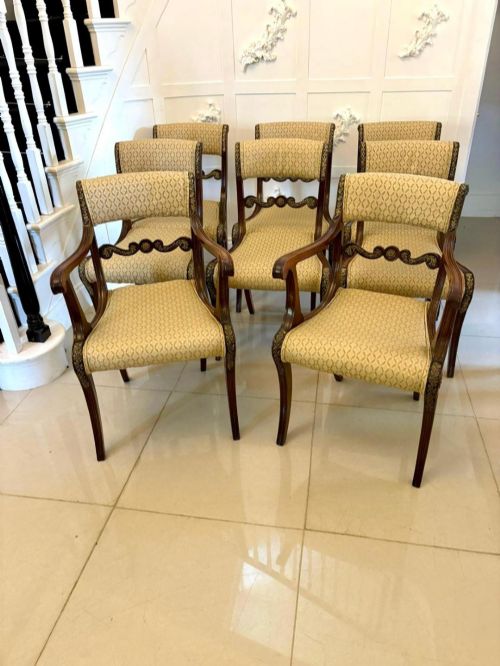


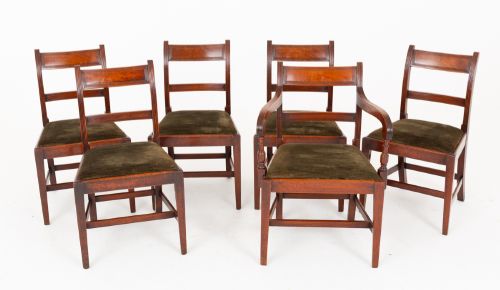
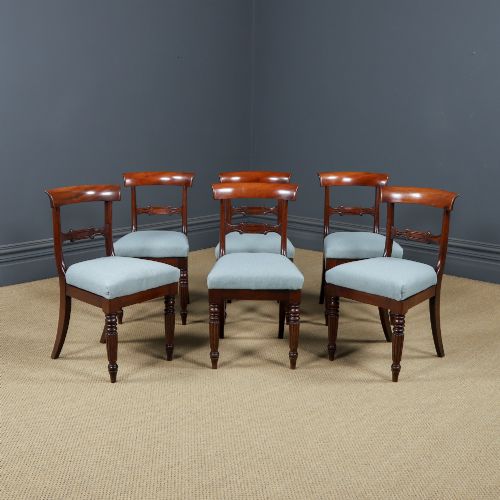
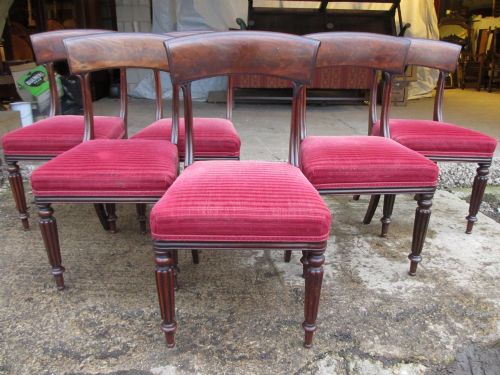
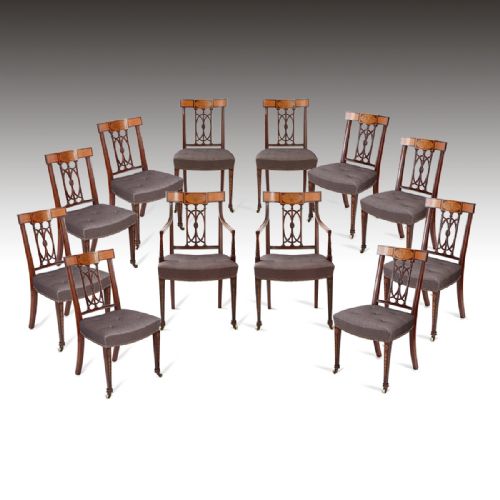
Regency Dining Chairs Set
A regency dining chairs set brings neoclassical symmetry and rich timber into a room, offering both seating and architectural presence.
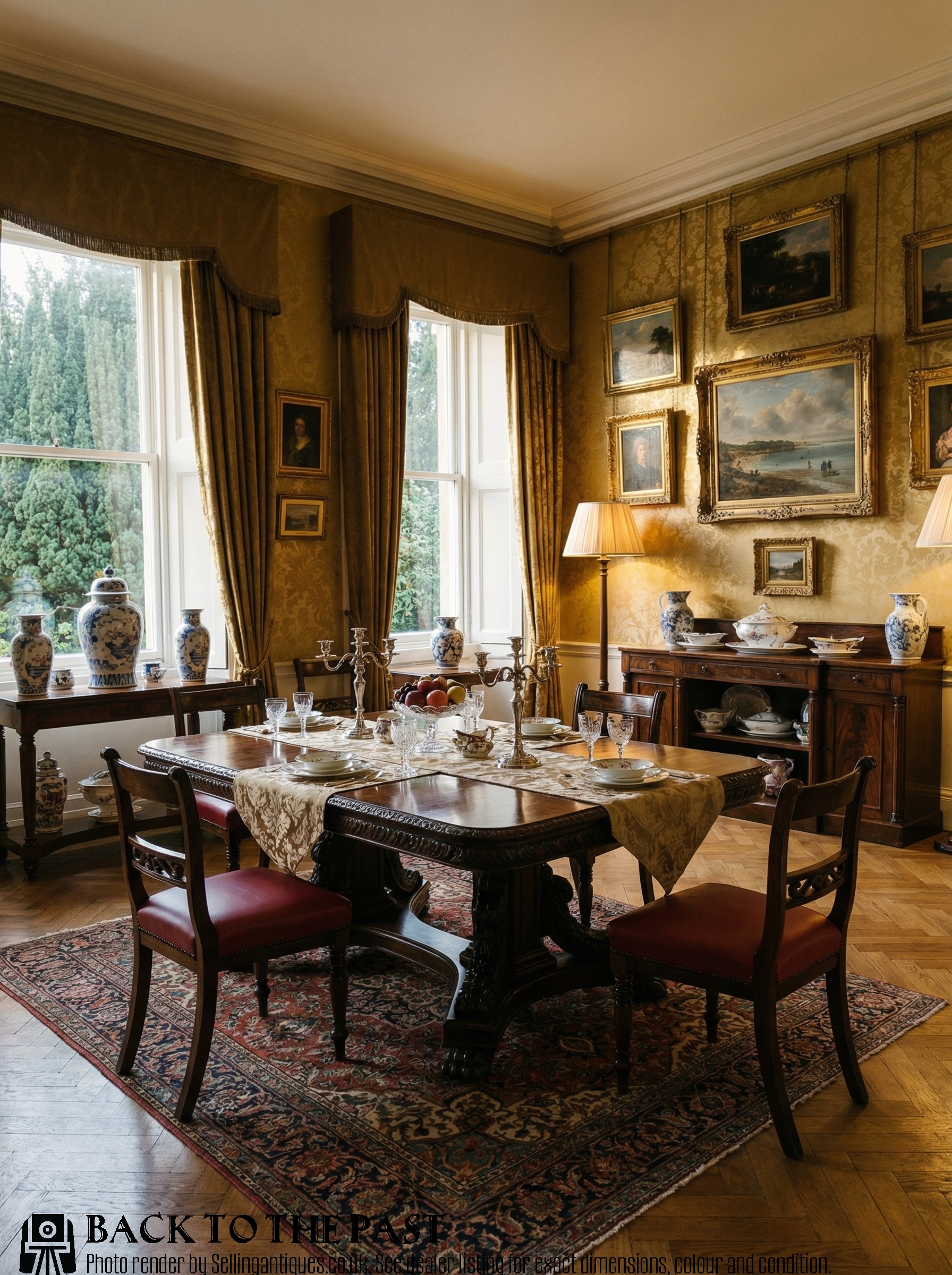
Identifying regency dining chairs set
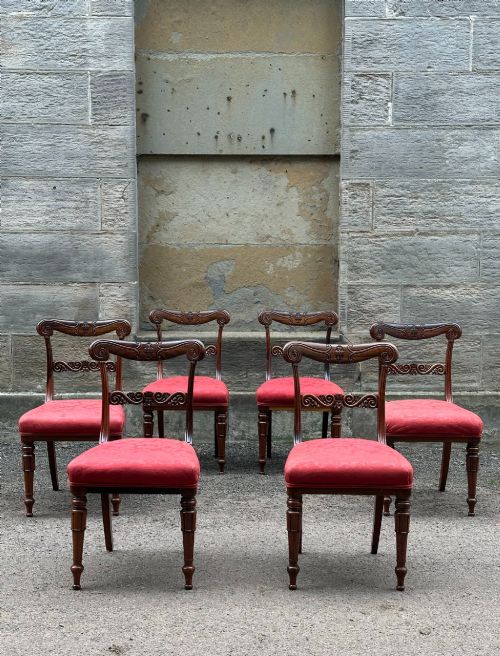
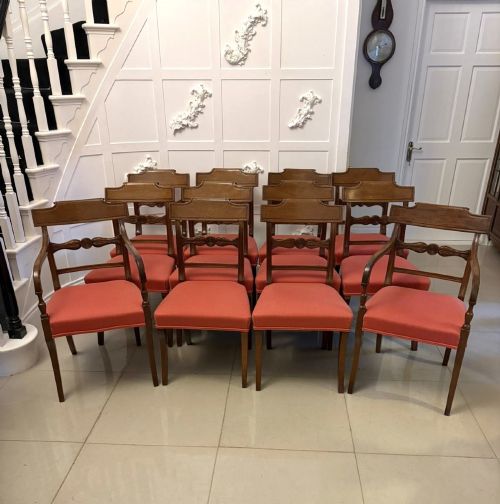
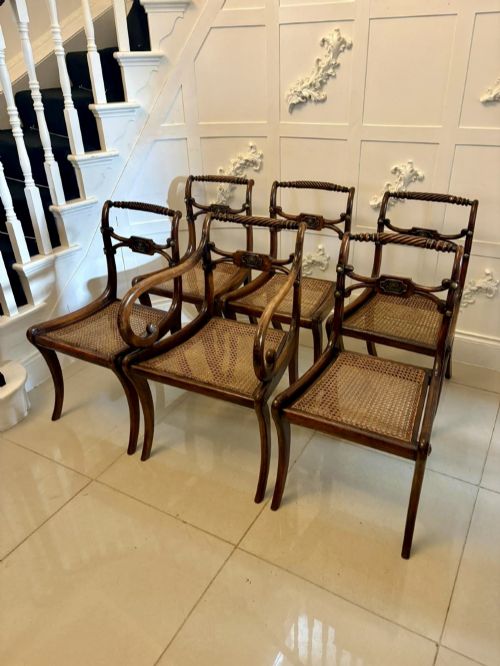
A regency dining chairs set consists of matching seating designed during the early nineteenth century, dominated by styles from the Regency and George III periods. These groupings typically comprise four to twelve pieces, often including carver armchairs alongside single side chairs.
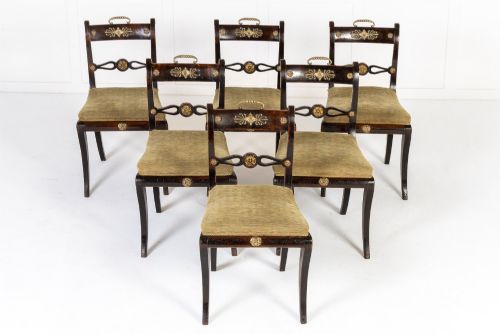
Mahogany remains the primary timber encountered in these sets, complemented by notable examples executed in rosewood, beech, elm, and satin birch. The designs frequently incorporate classic neoclassical motifs, including bar backs, rope-twist rails, and carved scroll arms.
Most entries span from around eighteen hundred through the eighteen-thirties, covering the late Regency and transitional William IV eras. Sets range from modest four-piece configurations to substantial gatherings of ten or twelve seats.
Materials and construction
Cabinetmakers constructed these frames predominantly from dense hardwoods like Cuban mahogany and rosewood, alongside more utilitarian timbers such as beech and elm. Selected woods display deep natural grain patterns enhanced through traditional polishing methods.
Upholstered elements utilise period textiles, needlepoint, leather, and various contemporary fabrics secured over traditional webbing and stuffing. Brass detailing appears structurally or decoratively across specific frames, while turned and reeded legs demonstrate precision lathe work.
Retail Price Guide 2026
Typical UK retail prices for regency dining chairs set, calculated from the Sellingantiques database of over a million retail prices indexed since 2003. This retail price guide relies exclusively on Sellingantiques data; no external sources or auction records are used, so the figures do not describe the wider market.
Five distinct dealers currently offer matching seating designed to make nineteenth-century dining tables look properly inhabited.
Distinctions in craftsmanship
Superior sets separate themselves through the selection of finely figured timbers and the crispness of carved details such as rope-twists and bar backs. Maker attribution, as seen in documented workshops like Gillows, elevates the standing of a suite.
The integrity of the frame construction, uniformity across larger sets of eight or ten, and the retention of original timber surfaces rather than heavy restoration dictate the upper tier of quality.
Gillows
The Regency Dining Chairs Set Glossary
- Carver
- An armchair designed to sit at the head of a dining table, featuring integrated armrests. These pieces typically accompany larger sets of single chairs.
- Bar back
- A horizontal wooden slat forming the upper rail of a chair back, often carved or reeded. This element defines many Regency seating designs.
- Reeded
- Decorated with parallel convex moulding that resembles bundled reeds. This technique appears frequently on the legs and framing of the period.
- Rope-twist
- A carved decorative pattern imitating twisted rope along the top rail or splat. It is a signature motif of fine Regency seating.
- Satin Birch
- A pale, highly figured hardwood utilised in select Regency and William IV furniture. Its blonde tone provides a distinct contrast to darker mahogany suites.
Frequently Asked Questions
How many chairs come in a set?
Sets typically range from four to twelve pieces, with six and eight being particularly common configurations for dining spaces.
Larger groupings often include a pair of carver armchairs to place at the head and foot of the table alongside the single side chairs.
Are carver chairs included?
Many larger suites incorporate two armchairs alongside six or eight single chairs to complete the dining arrangement.
Smaller sets of four typically consist entirely of side chairs without arms.
What timber was used most?
Mahogany, including dense Cuban varieties, forms the foundation of the vast majority of surviving dining suites from this era.
Rosewood also appears frequently in finer groupings, while beech and elm serve in simpler or more regional frames.
How do I date these chairs?
Stylistic markers such as reeded legs, bar backs, and specific neoclassical motifs help assign pieces to the early nineteenth century.
Transition periods into William IV bring heavier proportions and altered carving styles that distinguish seats from the strict Regency years.