


Gillows Dining Chairs
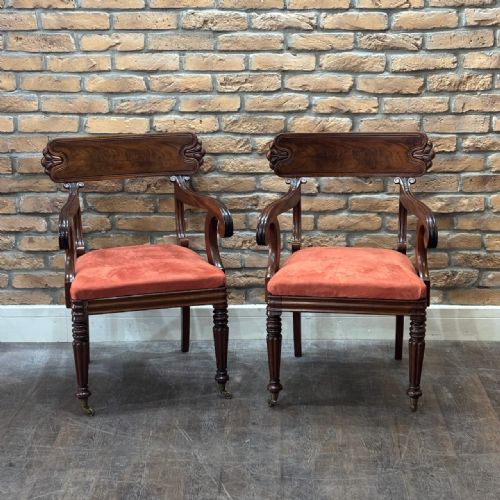
Gillows dining chairs are robustly constructed British antiques prized for their enduring joinery and refined Regency or Georgian forms.
Defining Gillows dining chairs
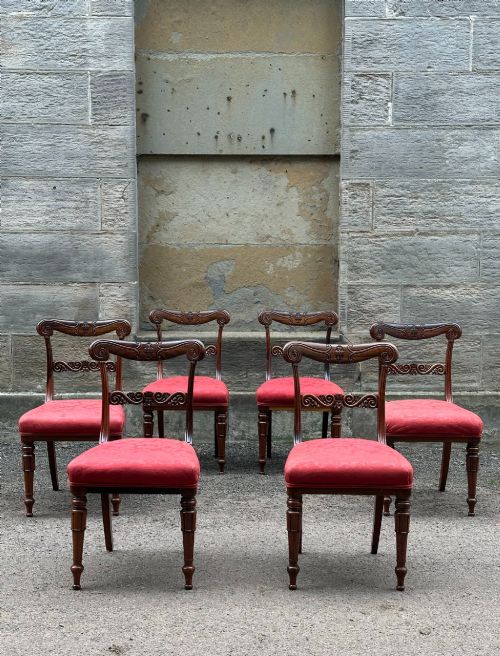
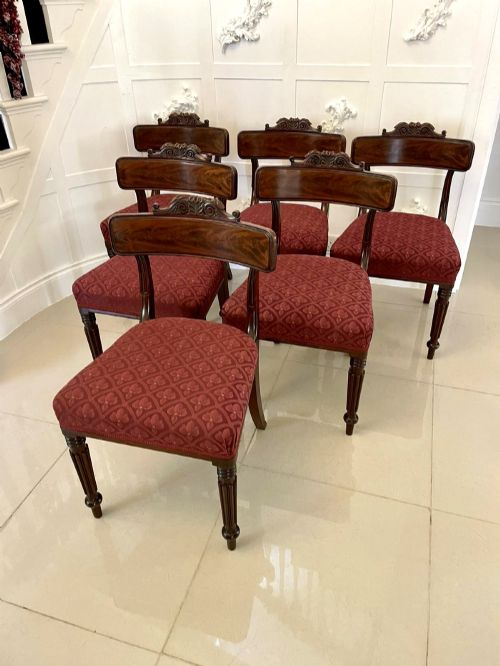
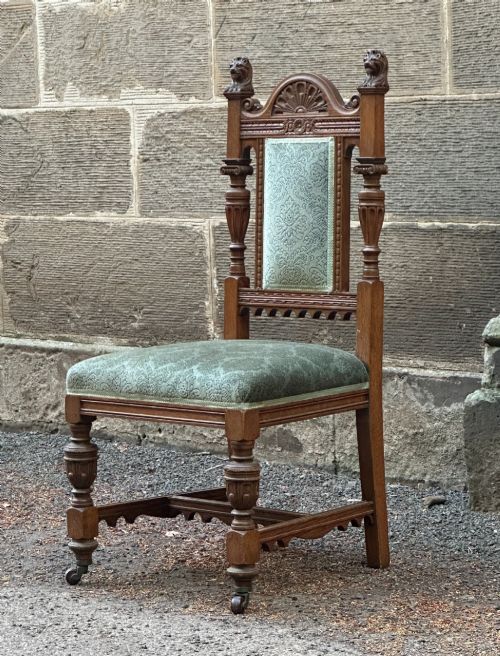
When you search for gillows dining chairs, you encounter seating originating from the celebrated Lancaster and London workshops. These pieces span George III, Regency, William IV, and Victorian periods, reflecting shifting domestic tastes. The most frequent encounters on this page are sets of mahogany or rosewood dining chairs dating to the early nineteenth century.
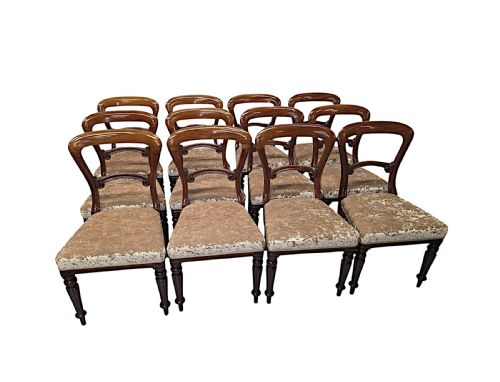
The construction typically follows strict classicism, featuring reeded or fluted legs and disciplined proportions. Sets often appear in numbers ranging from four up to twelve pieces, designed for substantial dining tables of the period. While some bear explicit attribution, others carry stylistic hallmarks associated with the firm's output.
Materials and construction
Cabinetmakers utilised dense timbers such as mahogany, rosewood, oak, and occasionally beech or simulated rosewood. Caning, leather, and upholstery fabrics formed the seating surfaces, secured with brass fixings where appropriate. Selected pieces incorporate delicate inlay work to enhance the primary wood grain.
Joinery relied on traditional mortise and tenon methods, ensuring structural longevity through decades of daily use. Turning and carving produced decorative elements like reeded legs and carved crest rails. Simulated finishes allowed alternative woods to mimic exotic rosewood when demand outstripped supply.
Retail Price Guide 2026
Typical UK retail prices for gillows dining chairs, calculated from the Sellingantiques database of over a million retail prices indexed since 2003. This retail price guide relies exclusively on Sellingantiques data; no external sources or auction records are used, so the figures do not describe the wider market.
Current listings feature Cuban mahogany, rosewood, and cane alongside oak and leather across Regency and Victorian periods.
Judging the standard
The distinction between ordinary and exceptional examples rests upon the crispness of the timber carving and the integrity of the original frame. Superior sets display meticulous attention to detail in the turning of reeded legs and the selection of well-figured mahogany or rosewood veneers. Lesser examples exhibit heavier proportions or replacement components that diminish the visual harmony of a set.
Completeness dictates the standing of a collection, with larger unbroken sets commanding greater consideration from discerning buyers. The depth of colour and patination developed across centuries of polish also separate a standard production chair from an exemplary workshop piece.
Gillows·Waring and Gillows·Gillows of Lancaster
The Gillows Dining Chairs Glossary
- Reeded
- A decorative moulding comprising parallel convex strips resembling inverted fluting. This technique frequently appears on the front legs of Regency seating.
- Attributed to
- A designation used when stylistic evidence strongly connects a piece to a specific maker without documentary proof. It points towards workshop characteristics rather than a signed label.
- Simulated rosewood
- A painted or stained finish applied to a secondary timber to imitate the rich dark grain of genuine rosewood. It was a popular cost-effective alternative during the nineteenth century.
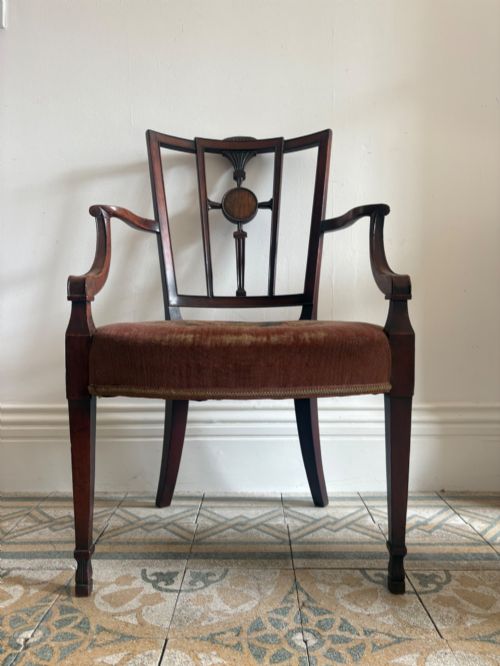
- Carver
- An armchair designed to sit at the head of a dining table, traditionally accompanying a set of smaller single chairs. These often share matching design motifs with the rest of the dining suite.
Frequently Asked Questions
How many chairs come in a typical set?
Sets commonly comprise four, six, eight, or twelve matching chairs to accommodate standard dining room arrangements.
Larger configurations of ten or twelve pieces occur less frequently and generally require careful assembly to ensure uniformity across the group.
How do I spot Gillows attribution?
Attribution relies upon identifying distinctive workshop traits such as reeded legs, specific joinery methods, and proportions associated with Lancaster production.
Stamped signatures or paper labels remain scarce, meaning stylistic comparison with documented pieces provides the primary method of identification.
What woods were used for these chairs?
Cabinetmakers predominantly selected mahogany, rosewood, and oak for their structural strength and rich grain patterns.
Beech and other native hardwoods served as secondary timbers or formed the basis for simulated rosewood finishes.
Are these chairs suitable for daily use?
The robust mortise and tenon joinery ensures these antiques withstand regular sitting when structurally sound.
Careful maintenance of leather, cane, and upholstered seats preserves their functionality in a modern dining environment.