


Regency Period Side Chairs
Regency period side chairs bring crisp neoclassical lines and rich timber tones to a room, offering both seating and architectural presence.
Regency Period Side Chairs
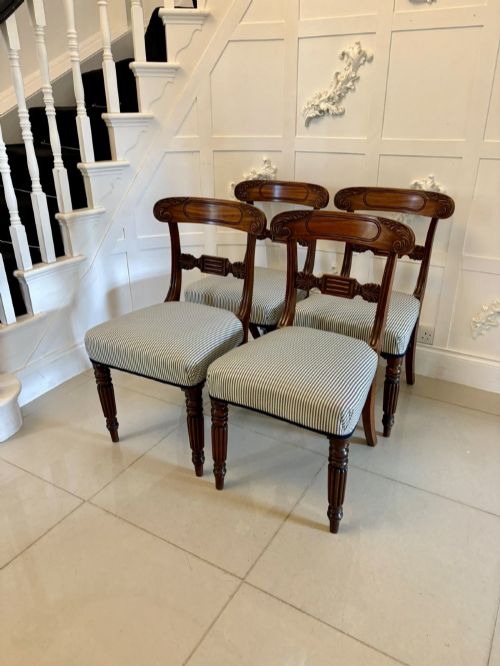
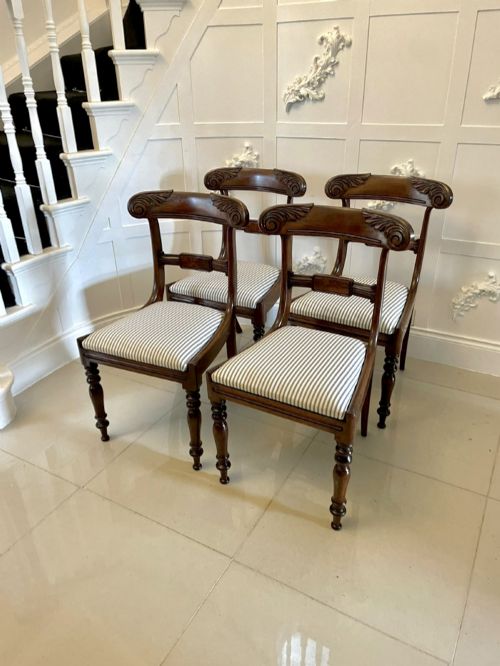
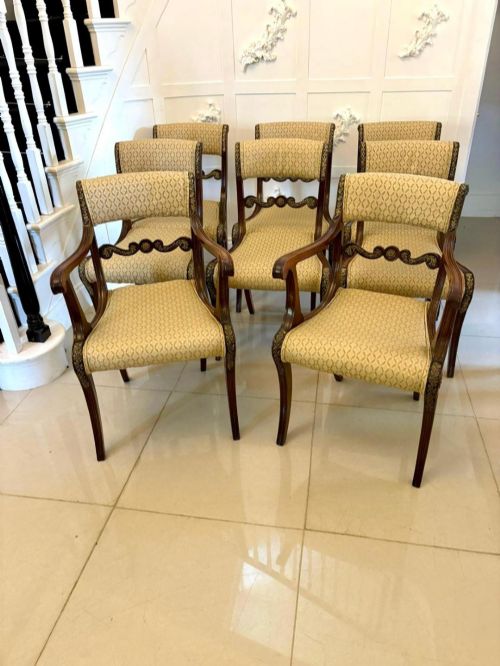
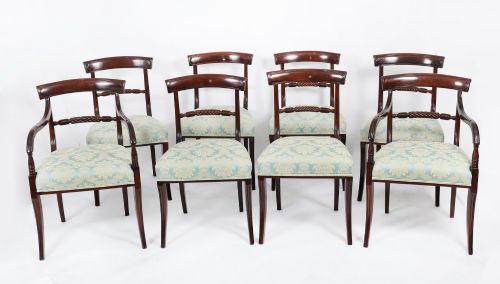
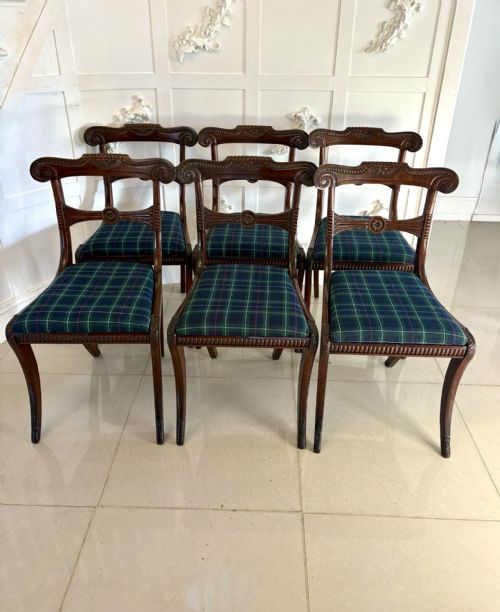
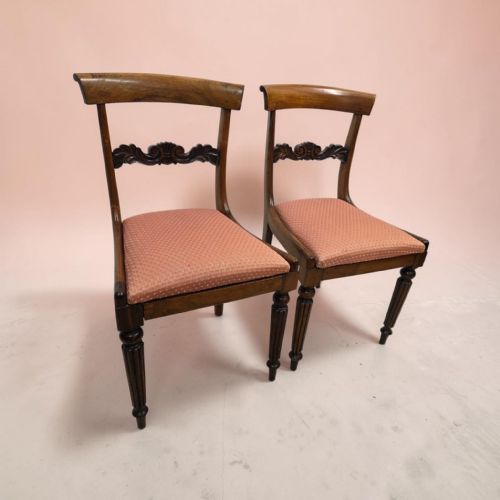
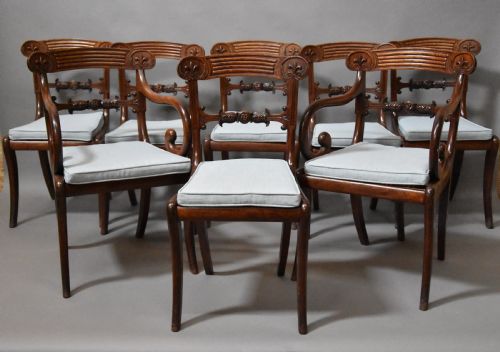
Regency period side chairs are formal seating forms dating primarily from the early nineteenth century, encompassing styles from the Regency, George IV, and William IV eras. Buyers searching this phrase will find single chairs, pairs, and matched sets ranging from four to twelve pieces, frequently accompanied by carvers or armchairs.
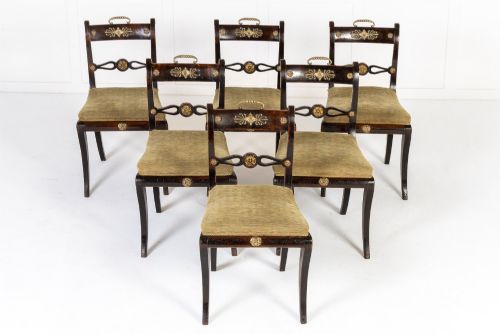
The primary forms on this page include dining chairs and occasional chairs, appearing alongside related styles such as Georgian, Victorian, Edwardian, and Regency Revival. Woods span solid mahogany and rosewood, alongside simulated rosewood, ebonised finishes, and decorated faux bird's eye maple.
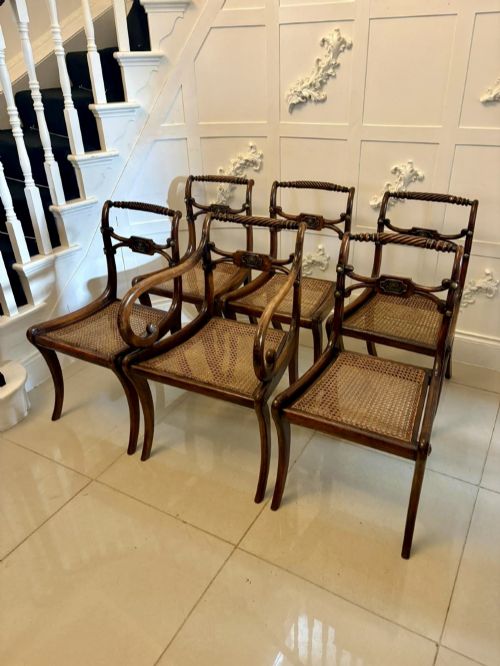
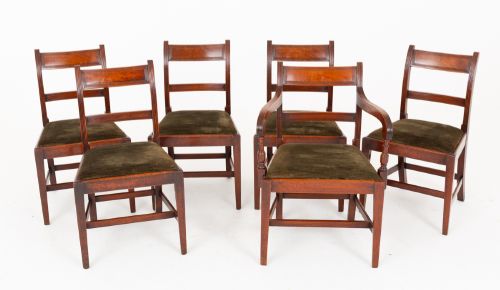
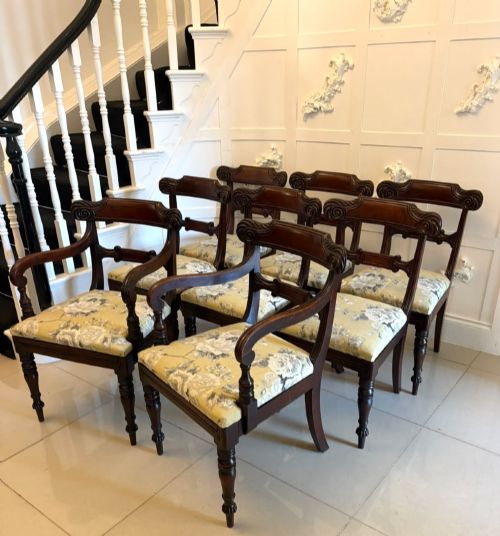
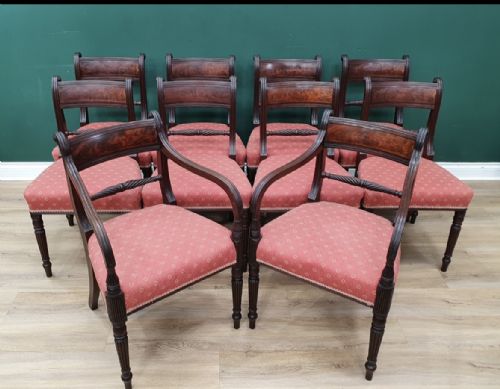
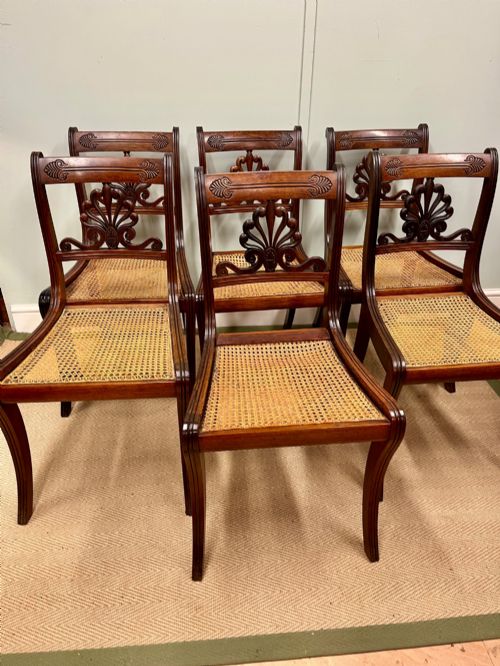
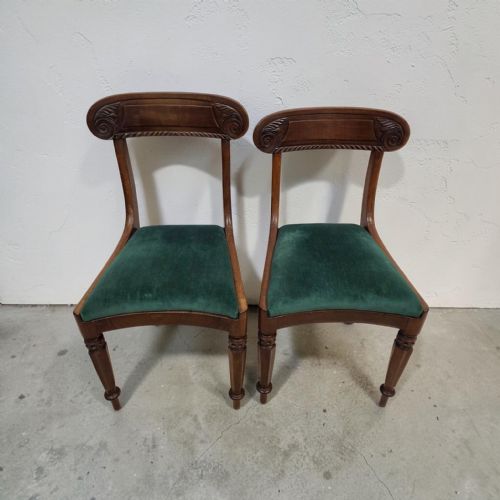
Many examples feature bar backs, shield backs, or sabre legs, occasionally incorporating cane seats or upholstery in fabric and green velvet. Pieces originate from English, Scottish, and Irish workshops, reflecting the classical Grecian inspiration of the period.
How they were made
Makers utilised dense timbers such as mahogany and rosewood, often turning to ebonisation or simulated rosewood finishes to mimic exotic woods. Construction relied on traditional joinery techniques, supporting carved details, marquetry inlay, and gilt highlights.
Seating portions frequently integrated cane work or drop-in pads prepared for upholstery in fabric, velvet, and various textile coverings. Brass mounts and brass details provided structural or decorative accents on sabre legs and frames.
Regency Period Side Chairs Retail Price Guide 2026
Typical asking prices for regency period side chairs among the pieces listed under this phrase on Sellingantiques today, from the lower quarter to the upper quarter. They describe what is for sale here now, not the wider market.
Several sets include an uneven count of carvers and singles, proving that nineteenth-century dinner hosts had unpredictable guest lists.
What varies in quality
The distinction between ordinary and superior pieces rests on the crispness of carved detail, the selection of figured timber grain, and the harmony of the set. Matching sets of six, eight, or ten command greater attention than assembled groups.
Original surfaces, intact cane seats, and sophisticated classical proportions elevate certain examples above standard utilitarian seating of the nineteenth century.
The Regency Period Side Chairs Glossary
- Sabre leg
- A curved, outwardly tapering leg resembling a cavalry sabre, common on Regency chairs. This form draws directly from ancient Greek klismos furniture.
- Bar back
- A chair back featuring a horizontal crossbar or slats connecting the stiles. These often display carved central tablets or reeding.
- Carver
- An armchair designed to match a set of dining chairs, typically placed at the head of a table. They share the stylistic vocabulary of the smaller side chairs.
- Cane
- Woven rattan material utilised for chair seats and backs. It offers lightweight resilience and visual transparency.
- Ebonised
- Wood finished to resemble ebony through staining or painting. This technique appears on formal neoclassical seating to create high contrast.
Regency Period Side Chairs: Frequently Asked Questions
How do I identify a Regency side chair?
Regency side chairs are identified by their classical neoclassical lines, sabre legs, and architectural forms rooted in the early nineteenth century. They often feature mahogany or rosewood timbers and stylistic nods to ancient Greek design.
Look for distinctive elements such as bar backs, reeding, and brass accents that separate them from heavier Victorian furniture or earlier Georgian designs.
Can I use these chairs for daily dining?
These chairs were originally built for formal dining rooms and remain entirely suitable for regular use when structurally sound. Their sturdy mahogany and rosewood frames handle daily seating well.
Care should be taken with antique cane seats or delicate upholstery fabrics, ensuring weight limits and usage match the fragility of the specific piece.
What is the difference between a side chair and a carver?
A side chair is a smaller, armless seat designed to tuck neatly around a dining table. A carver is an armchair sharing the same design style intended for the ends of the table.
Sets often combine multiple side chairs with a pair of matching carvers to create a cohesive dining arrangement.
How do I care for rosewood and mahogany finishes?
Maintain timber surfaces by keeping them away from direct sunlight and sudden temperature shifts, which can dry out the wood. Dust gently with a dry, soft cloth.
Avoid modern chemical polishes and silicone sprays, opting instead for traditional wax applied sparingly to preserve the natural lustre of the grain.