
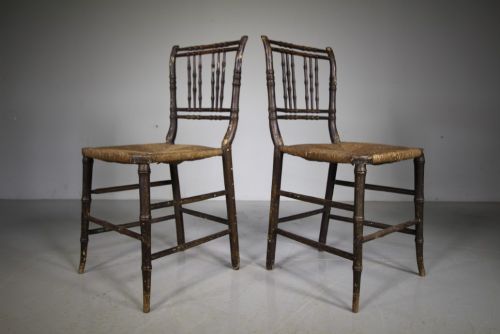
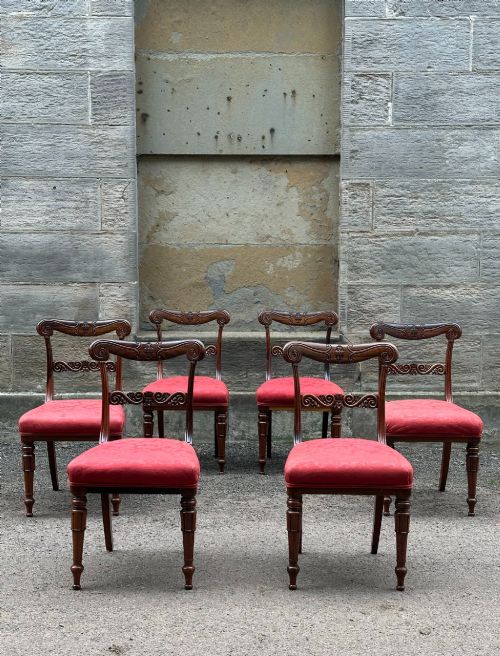

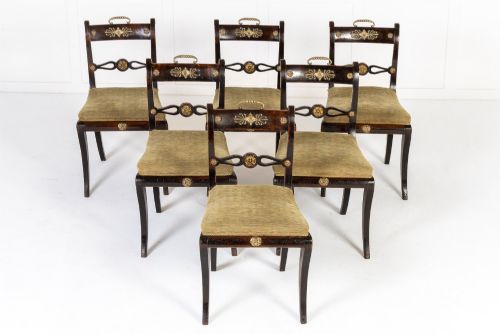
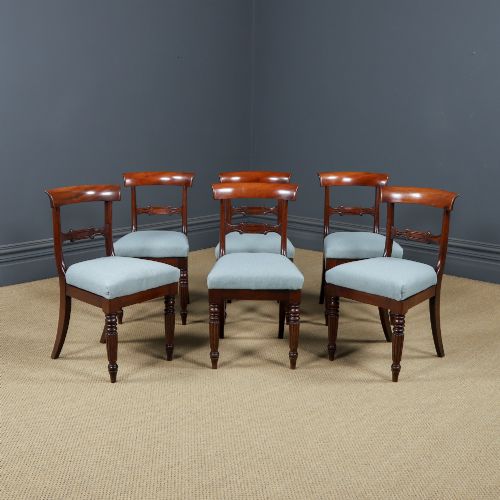
English Regency Dining Chairs
English regency dining chairs bring architectural line and rich timber to the table, combining structural discipline with seating comfort.
Forms and periods
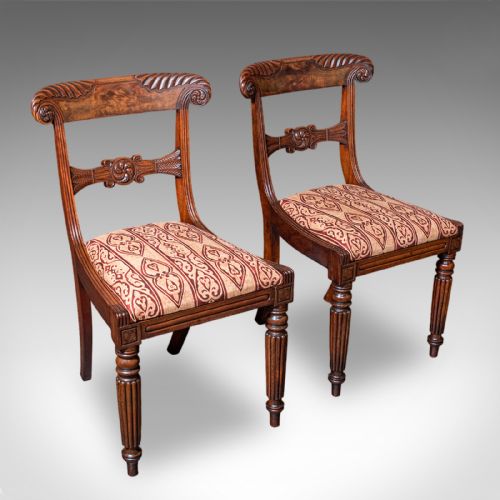
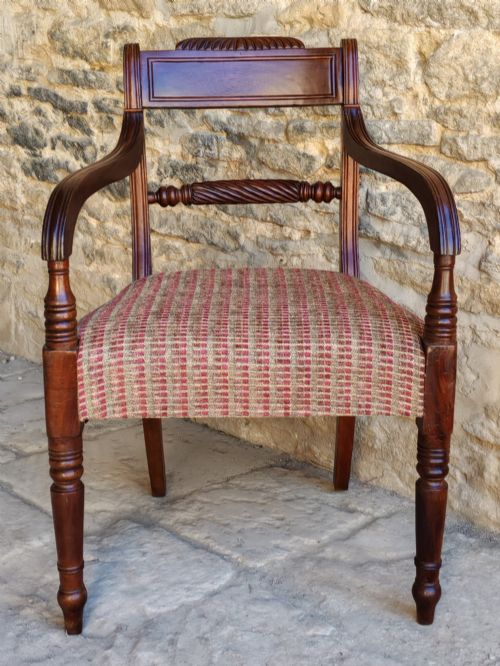
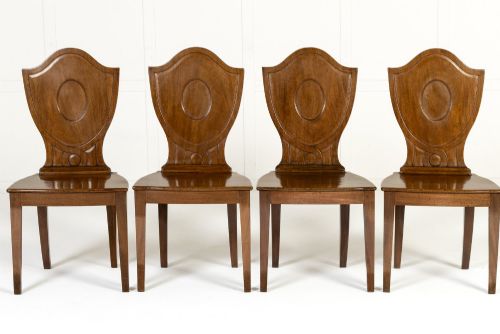
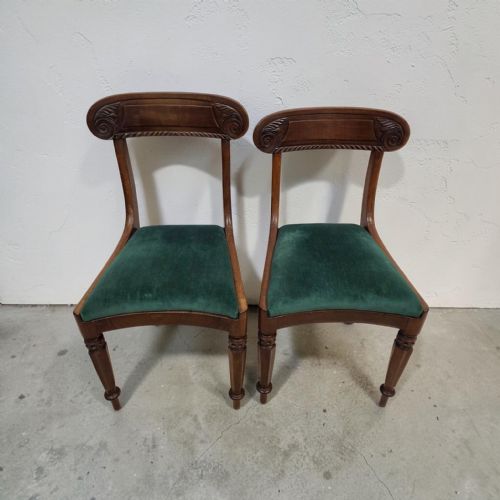
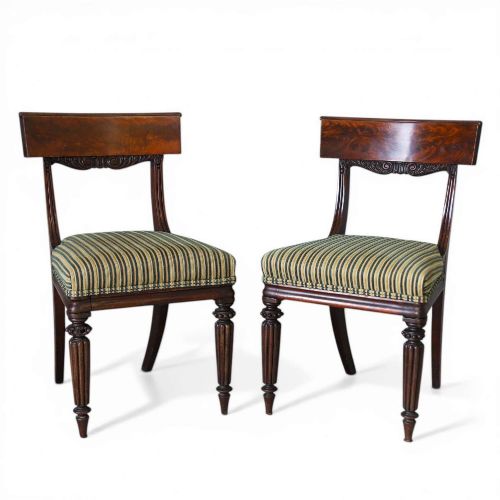
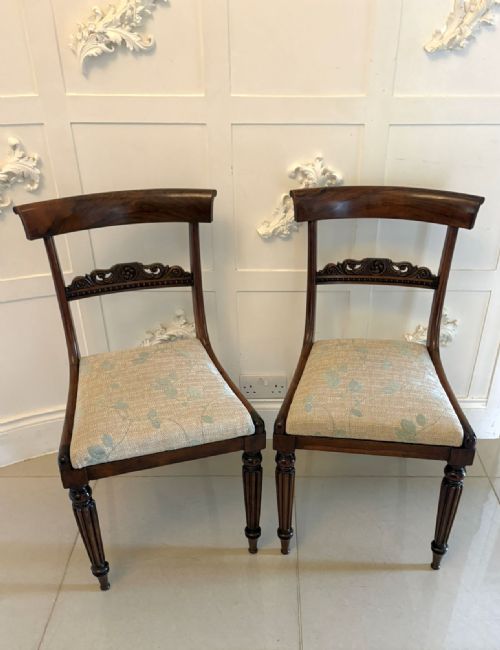
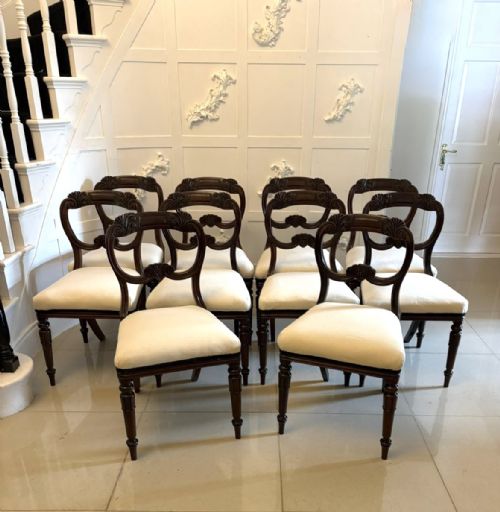
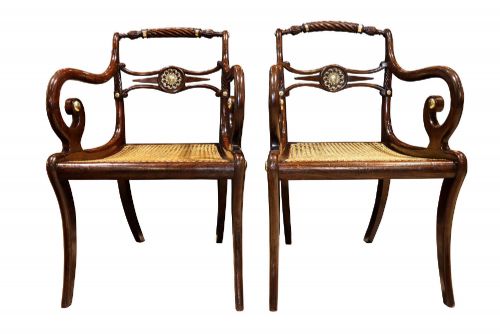
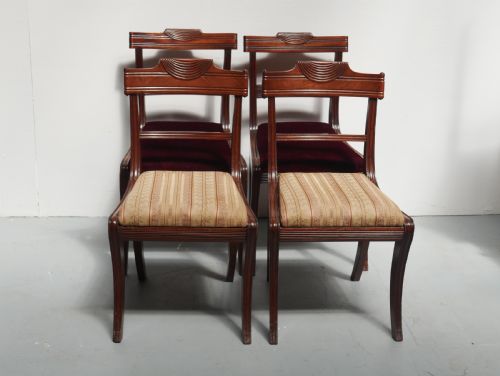
English regency dining chairs encompass dining seats originating from the Regency period through to later revivals, maintaining distinct formal traits across different decades. The standard forms include bar back, Trafalgar, klismos, and rope twist designs, built primarily as side chairs or occasional carvers. Sets frequently appear in groups of four, six, or ten pieces, reflecting the dining customs of their original domestic settings.
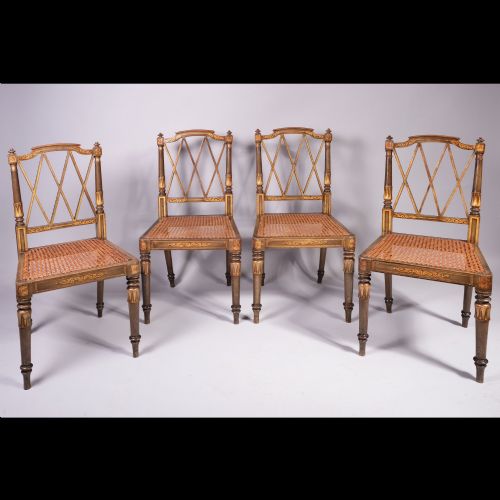
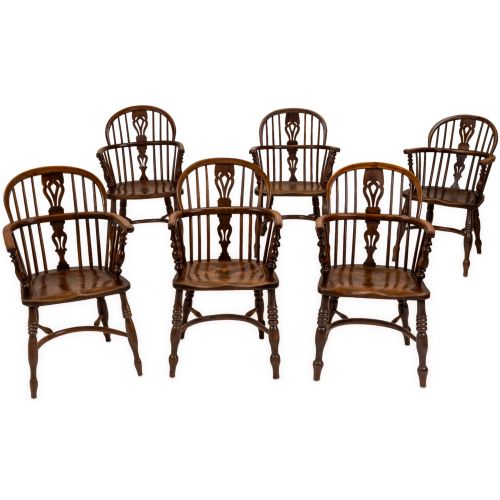
Mahogany dominates the surviving groups, supplemented by rosewood, satin birch, ebonised wood, and occasional combinations of oak and elm for provincial cottage examples. Alongside timber frames, variations incorporate cane seating, upholstery fabric, leather, and painted or parcel gilt finishes. Later nineteenth and twentieth-century interpretations, including Regency revival and specific 1910 interpretations, replicate these earlier silhouettes while employing period-appropriate materials.
Materials and construction
Cabinetmakers utilised dense timbers like flame mahogany and rosewood, often selecting grain patterns to accentuate the curved rails and tablet top rails of bar back frames. Structural joints relied on traditional mortise and tenon techniques, ensuring stability across slender members like fluted legs and curved backrests. Brass inlay and parcel gilt details were applied directly to timber surfaces to catch the light, echoing classical design motifs.
Seating platforms utilised cane panels, drop-in pads, or webbed upholstery frames covered in fabric or leather. Paint finishes were layered over wooden bases, particularly on sets featuring hand-painted decorative schemes. Ebonised wood elements provided stark contrast against lighter gilding or polished mahogany surfaces.
Retail Price Guide 2026
Typical UK retail prices for english regency dining chairs, calculated from the Sellingantiques database of over a million retail prices indexed since 2003. This retail price guide relies exclusively on Sellingantiques data; no external sources or auction records are used, so the figures do not describe the wider market.
Listings feature mahogany, rosewood, satin birch, oak, elm, and ebonised wood across periods spanning the early nineteenth century to the twentieth century.
Judging the range
The distinction between tiers rests on timber selection and the precision of carved details such as pierced splats, rope twists, and carved crest rails. Sets displaying uniform grain matching across multiple chairs command greater consideration than assembled groups of mixed origin. Maker attribution, through authentic stamps such as those from Lancaster workshops, elevates an ensemble beyond standard cabinet production.
Originality of surface finish and the integrity of structural joinery determine the standing of individual sets. Examples retaining their early upholstery configuration, period cane work, or integrated brass inlay demonstrate superior craftsmanship compared to heavily restored counterparts. Consistency within larger sets of ten or twelve chairs further separates exceptional dining suites from smaller, mismatched groupings.
Gillows Lancaster
The English Regency Dining Chairs Glossary
- Bar Back
- A chair back featuring a horizontal crossbar or tablet rail between the uprights, frequently shaped with carved mouldings.
- Klismos
- An ancient Greek chair form revived during the Regency period, characterised by outward-curving legs and a concave backrest.
- Trafalgar
- A chair style featuring a distinctive tablet top rail and sabre legs, named in commemoration of naval victories.
- Parcel Gilt
- A decorative technique where specific carved details or mouldings are partially covered in gold leaf while the underlying timber remains visible.
- Rope Twist
- A carved wooden decorative motif simulating the appearance of twisted cord along the horizontal rails or vertical splats.
Frequently Asked Questions
What defines English regency dining chairs?
These seating pieces draw inspiration from classical Greek, Roman, and Egyptian forms, translated through early nineteenth-century English cabinet making. They feature clean structural lines, curved back rails, and slender legs.
Mahogany and rosewood serve as the primary timbers, often enhanced by carved splats, brass inlay, or parcel gilt accents. Sets range from small pairs to large suites intended for formal dining rooms.
How do I arrange them around a table?
Mixing armchairs, known as carvers, at the head and foot of the table with side chairs along the flanks creates a balanced traditional arrangement. Matching timber tones and leg styles maintain visual harmony across the setting.
Larger matching sets of six or ten pieces provide a unified appearance for extended dining tables without requiring supplementary seating.
Are later revival chairs genuine antiques?
Revival pieces date from subsequent periods, such as the early twentieth century or late nineteenth century, replicating earlier Regency aesthetics. These items possess their own historical validity and cabinet making standards.
Examining timber ageing, joinery methods, and wear patterns helps differentiate original early nineteenth-century production from later revival interpretations.
How do I care for polished mahogany frames?
Regular dusting with a soft, dry cloth prevents particulate accumulation on polished timber and delicate carved surfaces. Avoiding direct sunlight and stable humidity levels protects the wood from drying or splitting.
Occasional application of appropriate furniture wax maintains the lustre of flame mahogany and rosewood without building up heavy residues.