

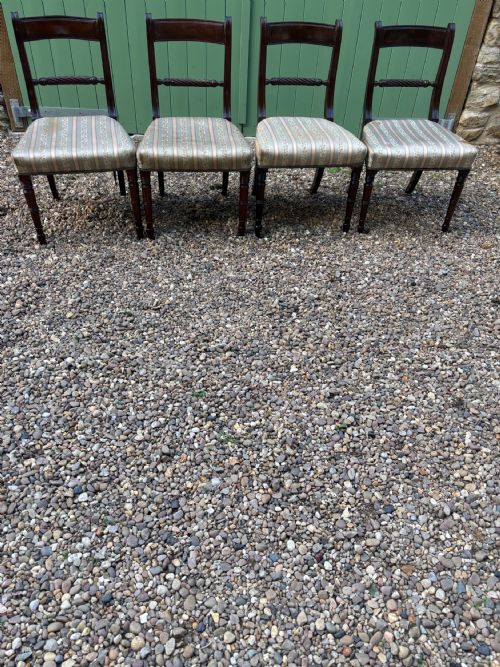
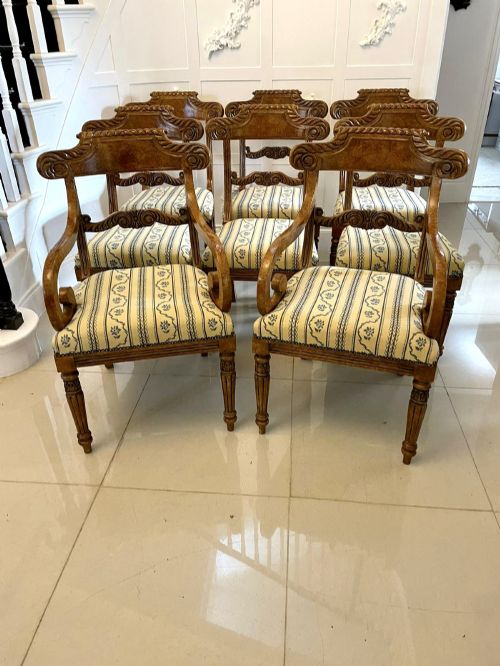
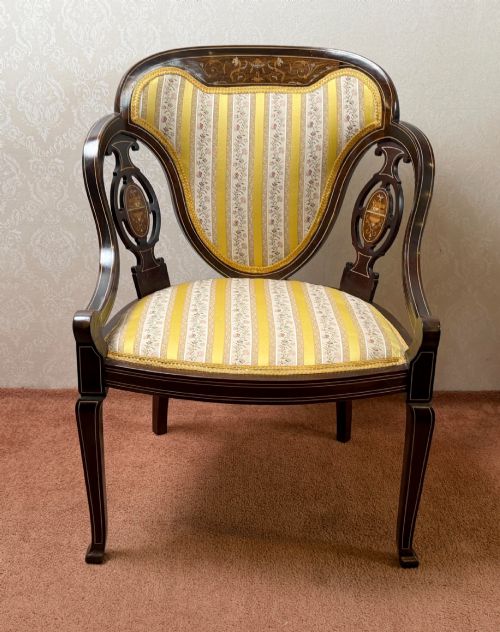
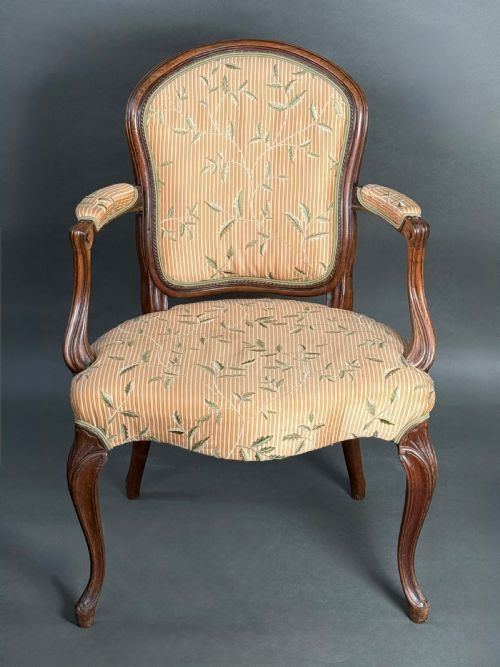
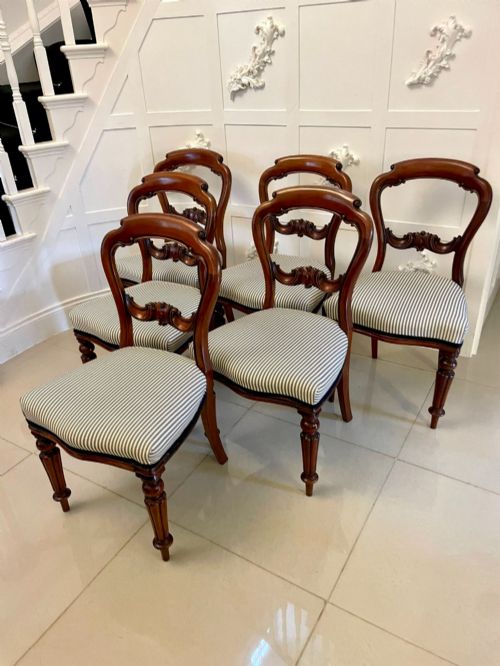
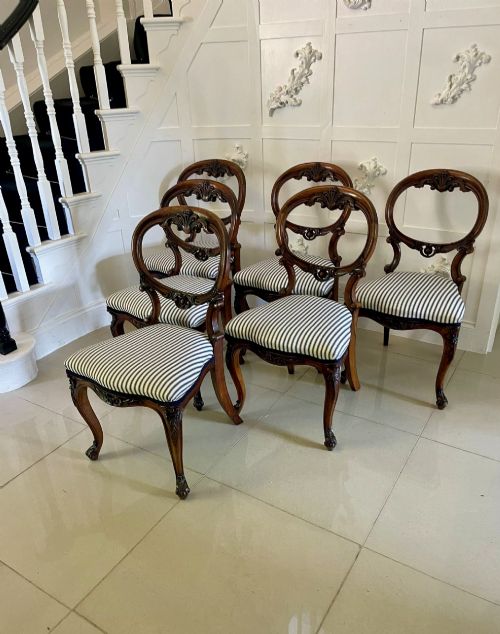
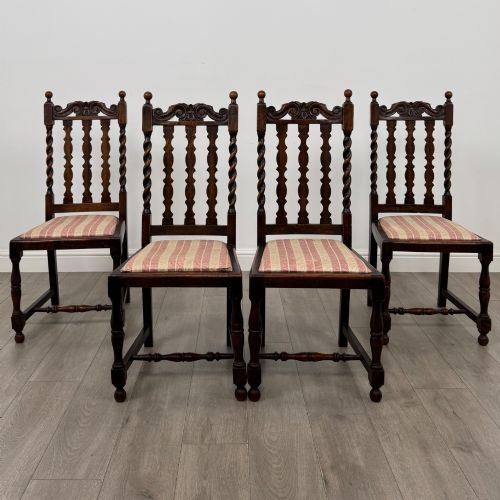
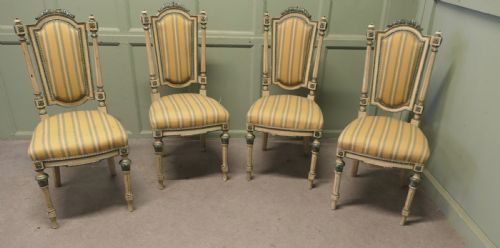
Striped Upholstered Chairs
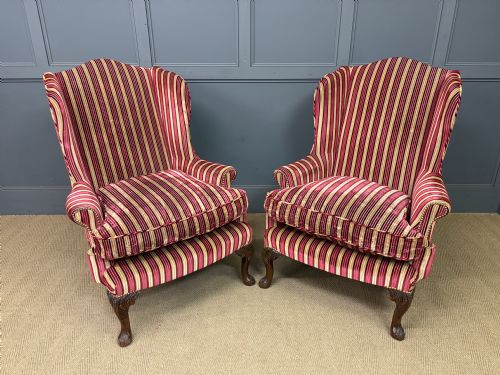
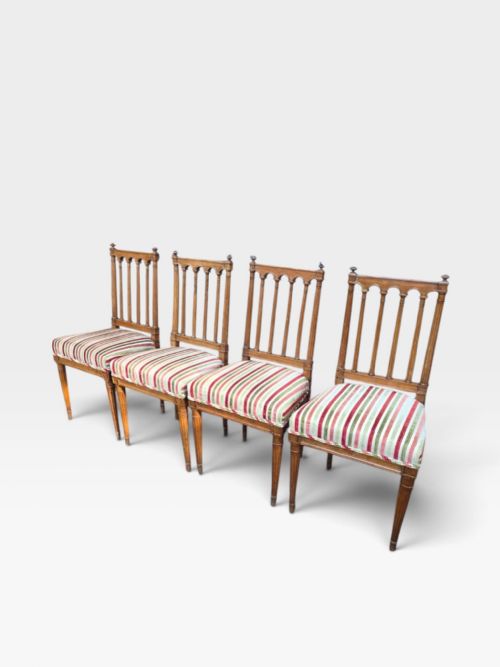
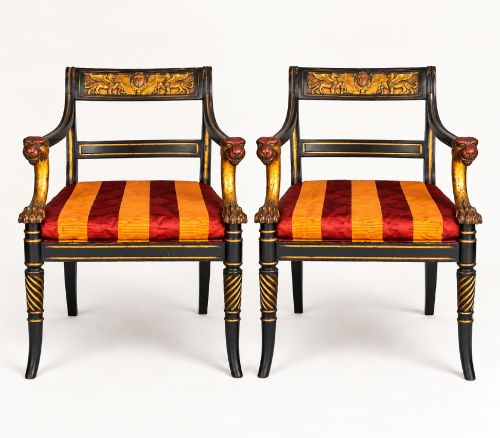
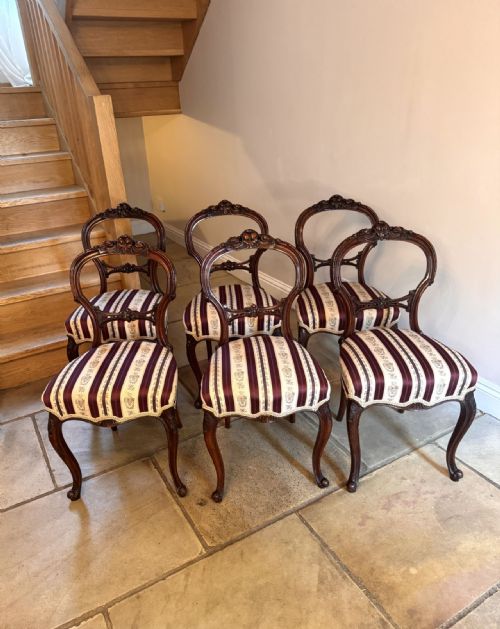
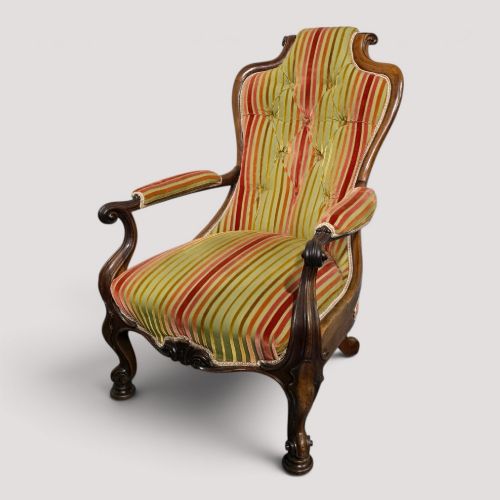
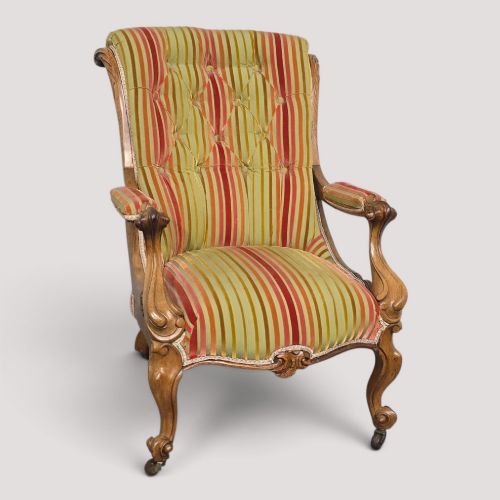
Striped upholstered chairs bring pattern and texture to a room, spanning periods from the Regency era through to the early twentieth century.
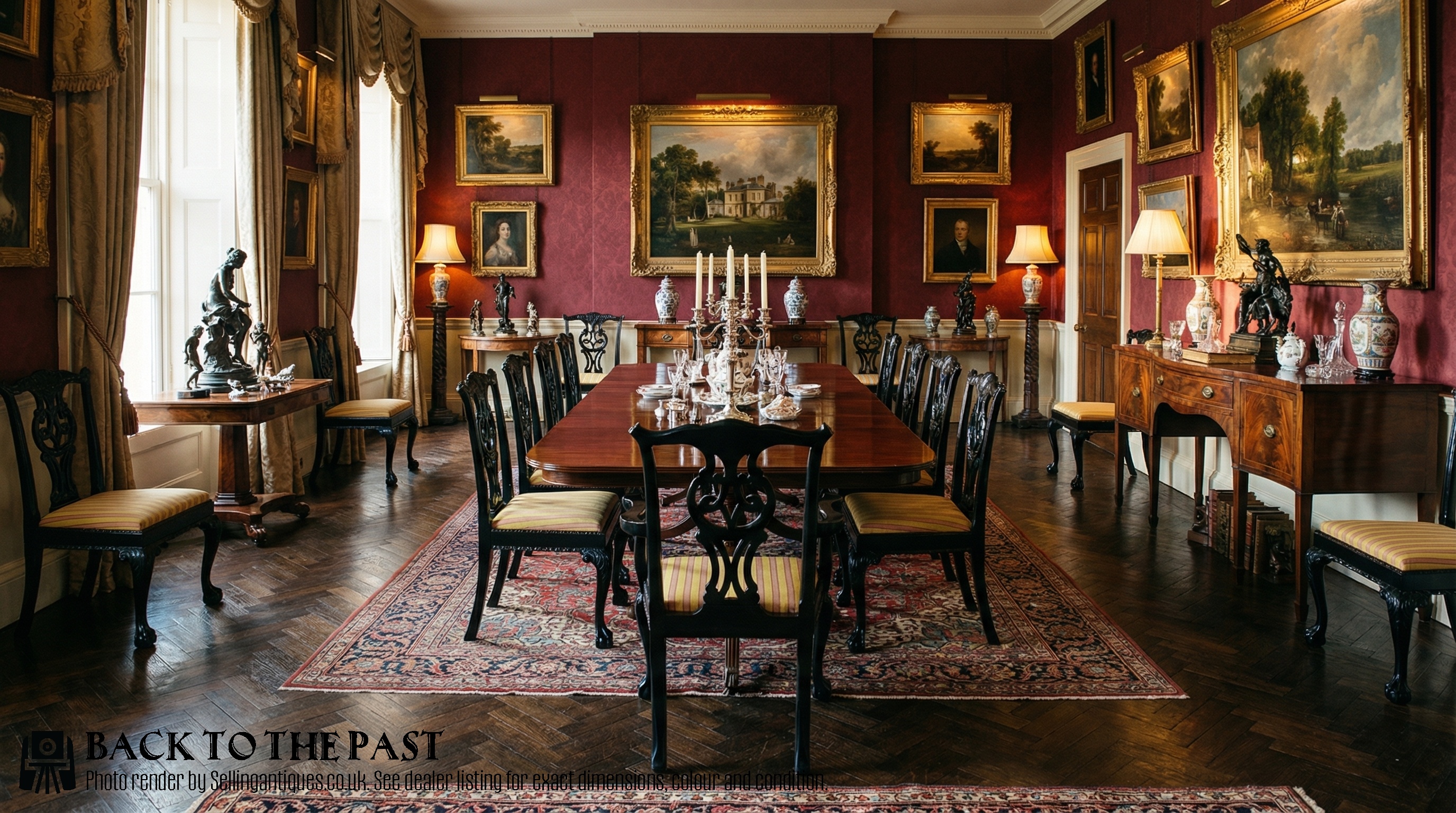
Striped Upholstered Chairs
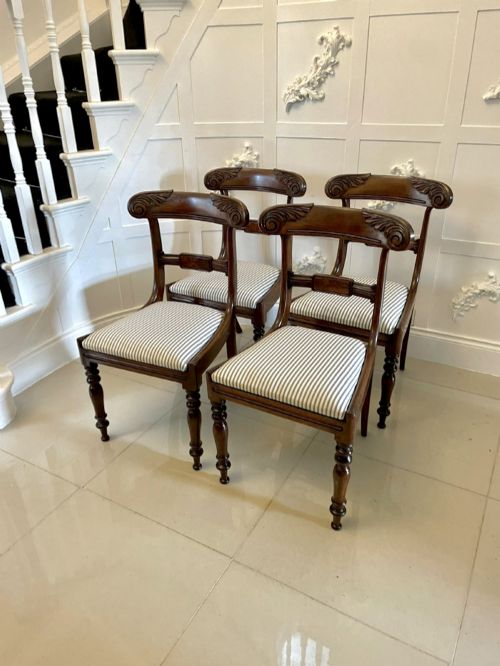
Striped upholstered chairs encompass seating forms ranging from nineteenth-century library armchairs and salon chairs to Edwardian bedroom chairs and dining sets. Buyers searching for striped upholstered chairs encounter diverse timber frames supporting textile coverings, drawn from periods including the Regency, Victorian, and Edwardian eras.
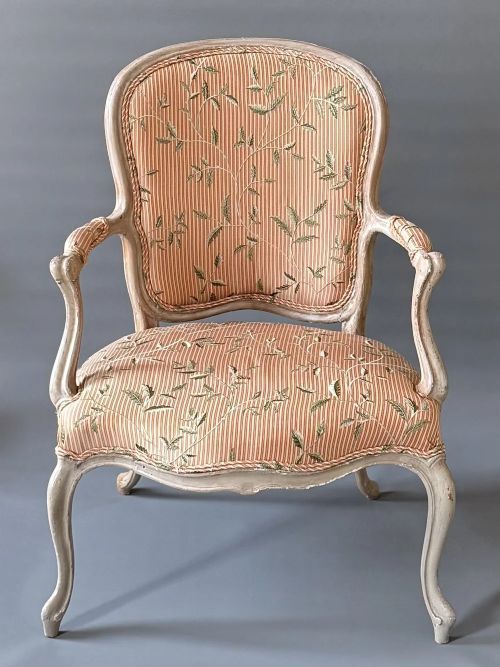
The selections span distinct seating types, notably open armchairs, tub chairs, carver chairs, and complete dining suites. French designs such as Napoleon III armchairs and Louis XVI style settees appear alongside English mahogany and walnut frameworks.
Makers and designers utilised various woods including mahogany, walnut, rosewood, satinwood, and oak to build the underlying structures. Fabric choices vary from silk and velvet to general upholstery textiles applied across single items and sets of chairs.
Construction and materials
Makers constructed the timber frames using traditional cabinet-making techniques in woods such as mahogany, walnut, oak, satinwood, and maple. Structural elements frequently feature carved details, barley twist turnings, or painted finishes.
Upholstery textiles are secured over internal padding and webbing, utilising fabrics like silk, velvet, and patterned materials to form the striped aesthetic. Brass fittings and specific showwood frames appear on select nineteenth-century and early twentieth-century examples.
Striped Upholstered Chairs Retail Price Guide 2026
Typical asking prices for striped upholstered chairs among the pieces listed under this phrase on Sellingantiques today, from the lower quarter to the upper quarter. They describe what is for sale here now, not the wider market.
Listings feature timbers such as mahogany, walnut, rosewood, oak, satinwood, and birch across nineteenth and early twentieth-century periods.
Distinctions in craftsmanship and materials
The standard of timber selection and carving defines the better examples, with dense woods like mahogany and walnut showing crisp detail in moulded frames and carved decoration. Sets of dining chairs demonstrate superior consistency when timber grain and proportions match precisely across every piece.
Upholstery execution and fabric choice separate standard production from finer pieces, particularly where specialist textiles such as silk are employed on antique frames. The integrity of the underlying joinery and the retention of original decorative elements influence the standing of each piece.
The Striped Upholstered Chairs Glossary
- Bergere chair
- An enclosed upholstered armchair with wooden framing, typically featuring cane or fabric sides. This form originated in France and remains common in nineteenth-century designs.
- Carver chair
- An armchair designed to match a set of dining chairs, usually placed at the head of a table. These pieces share stylistic traits with the smaller side chairs in the set.
- Showwood
- Timber framework left visible around the upholstered portions of a chair. It highlights the grain and carving quality of woods like rosewood and walnut.
- Balloon-back chair
- A dining chair featuring a rounded, oval-shaped backrest resembling a balloon. This silhouette is frequently encountered in Victorian seating.
- Barley twist
- A decorative turning on furniture legs and stretchers resembling a twisted rope. It appears on oak and walnut frames from various periods.
Striped Upholstered Chairs: Frequently Asked Questions
What periods do these chairs come from?
The available pieces span the eighteenth, nineteenth, and early twentieth centuries. Key periods represented include Regency, Victorian, Edwardian, and Napoleon III.
Craftsmanship and timber choices shift across these eras, moving from Georgian mahogany forms to later walnut and birch variations.
Are these chairs sold as sets or singles?
Both individual chairs and larger sets are available. Dining chairs and salon chairs frequently appear in matched sets numbering four, six, or eight pieces.
Single items typically comprise library armchairs, chaise longues, and boudoir chairs intended for accent placement.
What woods are used in the frames?
Makers utilised a wide range of hardwoods for the structural frames. Mahogany and walnut appear most frequently, alongside rosewood, satinwood, oak, and birch.
Some pieces feature painted finishes or decorative treatments such as faux birds-eye maple.
How do I identify a French style chair?
French styles on this page include Napoleon III, Louis XVI, and French Rococo designs. These pieces often feature painted frames, tub configurations, or ornate carved showwood.
Upholstery fabrics on these chairs frequently include silks and fine textiles matching continental aesthetics.