



Fluted Leg Dining Chairs
These fluted leg dining chairs bring classical elegance and sturdy seating to a room, offering both historical charm and reliable daily function.
Fluted Leg Dining Chairs
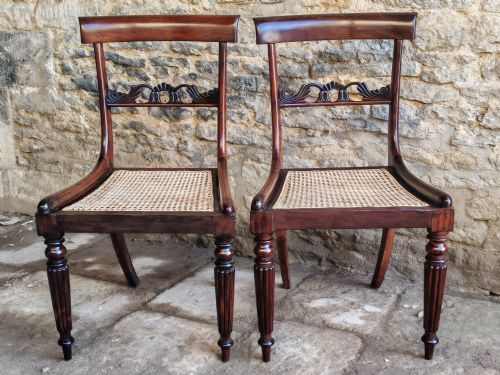
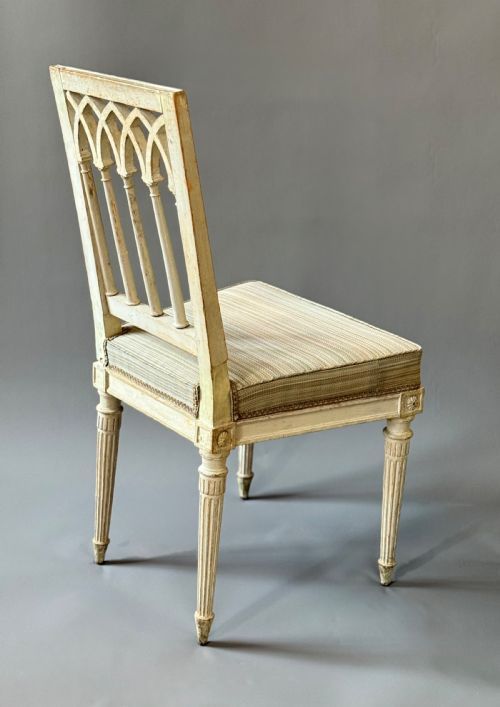
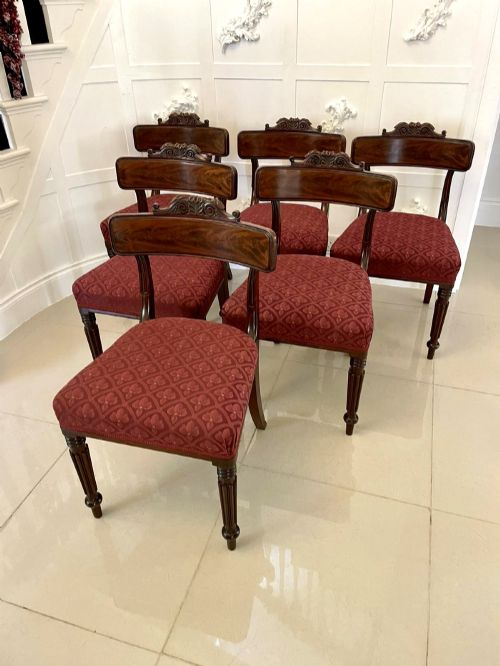
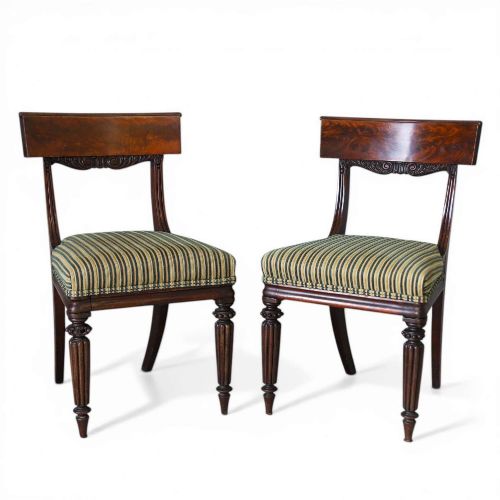
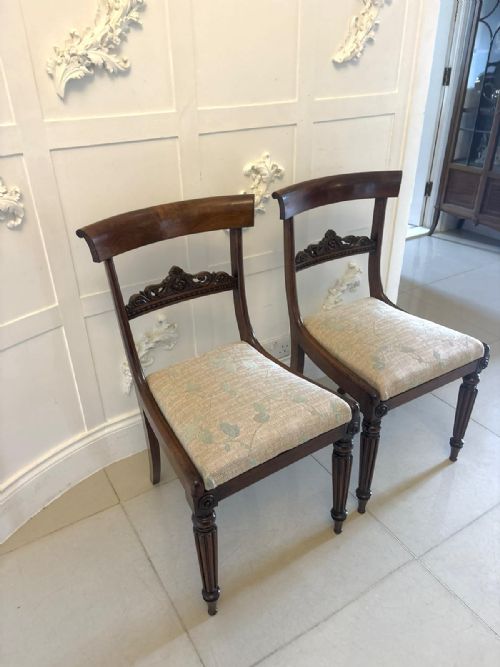
Fluted leg dining chairs are seating pieces defined by vertical grooves carved into their wooden supports, drawing heavily from classical architectural details. When browsing fluted leg dining chairs, buyers encounter various configurations ranging from single side chairs to extensive sets originating across the eighteenth and nineteenth centuries.
The selections span distinct stylistic movements including Regency, William IV, and Louis XVI styles, alongside Georgian and Victorian interpretations. Mahogany and rosewood form the bulk of the wooden structures, paired with diverse coverings such as velvet, silk damask, and standard upholstery fabric.
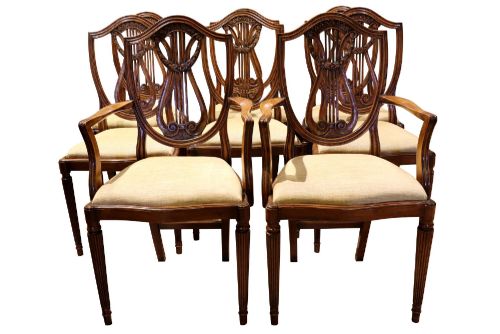
Armchairs, side chairs, and carver chairs make up the physical forms available, often appearing in matched pairs or larger sets suitable for formal dining rooms. Regional variations also emerge through Continental, French, and Anglo-Indian pieces, expanding the aesthetic scope beyond standard British cabinet-making.
Materials and Construction Techniques
Cabinet-makers relied heavily on dense hardwoods like mahogany and rosewood, ensuring structural integrity for daily seating over centuries. Skilled artisans shaped these timbers using hand-carving techniques, cutting precise vertical channels into the legs to mimic ancient stone columns.
Decorative enhancements frequently involved brass inlay, giltwood finishes, and painted wood surfaces, particularly on French and Continental pieces. Upholstered elements utilised traditional stuffing materials beneath outer layers of velvet, silk damask, and patterned fabric, secured with careful tacking.
Fluted Leg Dining Chairs Retail Price Guide 2026
Typical asking prices for fluted leg dining chairs among the pieces listed under this phrase on Sellingantiques today, from the lower quarter to the upper quarter. They describe what is for sale here now, not the wider market.
Mahogany remains the dominant timber across these entries, though rosewood, satinwood, walnut, and painted wood surfaces appear regularly in French and British rooms.
Assessing Craftsmanship and Distinction
Quality rests upon the crispness of the carved fluting on the legs and the overall integrity of the timber joints. Superior examples demonstrate refined proportions and harmonious design consistency across an entire set rather than isolated pairs.
The selection of primary wood grain and the finesse of secondary details, such as brass inlay or painted decoration, separate standard utility seating from high-status commissions. Original upholstery schemes and documented maker attributions further elevate the standing of individual chairs.
Gillows
The Fluted Leg Dining Chairs Glossary
- Carver chair
- An armchair designed specifically for the head of a dining table, featuring supportive side arms. These pieces match the smaller side chairs in a larger dining set.
- Giltwood
- Timber coated with a thin layer of gold leaf or gilt powder to create a brilliant, metallic surface finish. This treatment appears frequently on formal Continental and French seating.
- Lyre back
- A chair backrest shaped to resemble the ancient Greek stringed musical instrument, often centered on mahogany frames. This motif defines specific Georgian and later revival designs.
- Bar back
- A horizontal wooden slat forming the upper section of a chair back, frequently carved and reeded. William IV and Regency sets utilise this configuration extensively.
- Anglo-Indian
- Furniture made in India by local craftsmen using British stylistic templates, often utilising exotic native timbers. These pieces combine familiar European forms with distinctive regional carving traditions.
Fluted Leg Dining Chairs: Frequently Asked Questions
How do I care for antique wood chairs?
Maintain stable indoor humidity levels and keep wooden frames away from direct heat sources to prevent timber splitting. Apply a suitable microcrystalline wax sparingly to preserve the polished finish without building up residue.
Inspect the joints periodically for looseness and avoid dragging chairs across uncarpeted floors to protect the lower leg sections and foot blocks.
Are these chairs suitable for daily use?
Period seating is generally robust, especially hardwood examples constructed from dense timbers like mahogany and rosewood. However, antique joints and older upholstery webbing require careful handling during heavy daily dining.
Buyers intending frequent use should ensure structural checks are performed by a professional conservator to reinforce older glue lines.
How can I identify a Louis XVI style chair?
Louis XVI style pieces typically exhibit straight fluted legs, geometric frames, and neoclassical motifs derived from ancient Roman and Greek architecture. Oval or rectangular backrests are standard characteristics of this refined aesthetic.
Later nineteenth and twentieth-century revivals often adopt these exact proportions, utilising painted finishes or giltwood alongside silk damask coverings.
What is the difference between a side chair and a carver?
Side chairs are built without armrests, allowing multiple units to tuck neatly alongside a dining table. Carver chairs incorporate supportive arm structures on either side, traditionally reserved for the host.
While carvers are larger and visually dominant, they share matching leg designs, timber choices, and backrest motifs with their corresponding side chair counterparts.