


Louis XVI Side Chairs
Louis xvi side chairs bring French neoclassical elegance into any room, offering refined symmetry and slender proportions.
Identifying Louis xvi side chairs
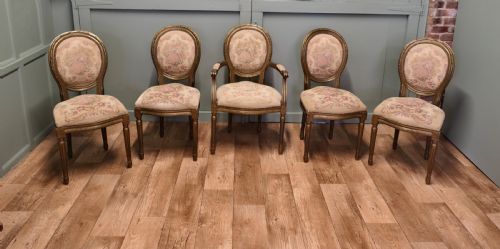
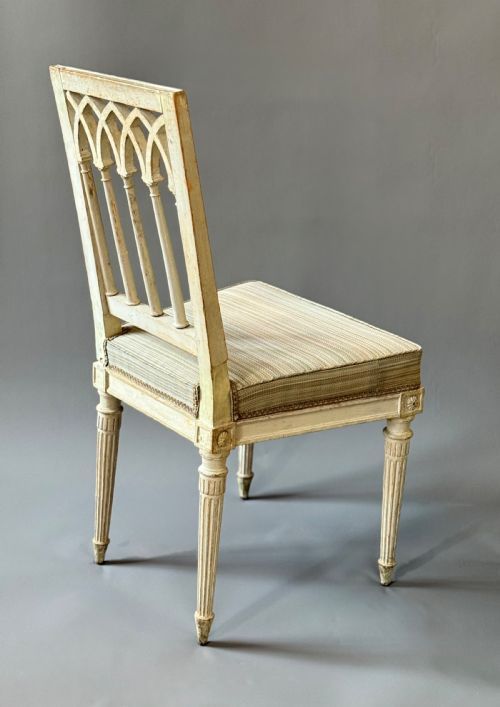
Louis xvi side chairs present classic French neoclassical lines, featuring rectilinear geometry and straight, fluted legs that depart entirely from earlier baroque curves. These seats appear in sets, pairs, or individually, taking the form of dining chairs, salon chairs, and decorative seating.
The most common examples on this page are revival pieces dating from the nineteenth and early twentieth centuries, particularly around eighteen-eighty and nineteen-ten, alongside Victorian interpretations. These later iterations adopt the Louis xvi style with varying degrees of fidelity to the original eighteenth-century aesthetic.
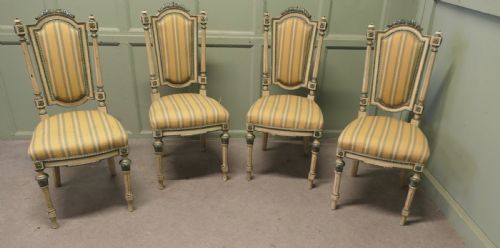
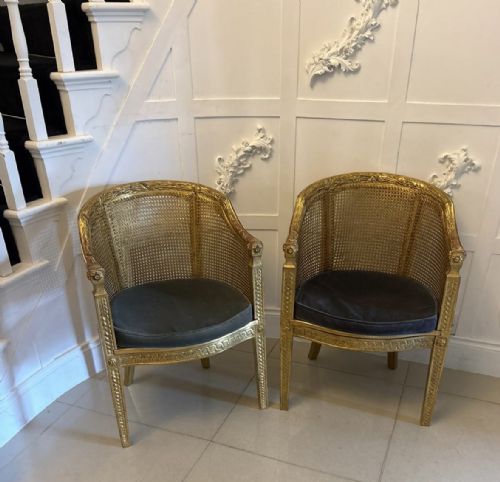
Makers produced these chairs for formal entertaining and daily dining, utilising forms that function easily around a table or beside a salon wall. The inventory spans straightforward painted frames to grander giltwood examples with cane or upholstered seats.
Materials and Construction
Workshops built these frames using traditional timber construction, with walnut and general wood forming the structural core of the chairs. Craftsmen then applied finishes such as giltwood, paint, or parcel gilt to achieve the desired neoclassical surface texture.
Seating areas rely on tightly woven cane or traditional upholstery finished in velvet, silk damask, and standard fabric coverings. Hand carving details the wooden frames, adding decorative fluting and classical motifs consistent with the French revival style.
Retail Price Guide 2026
Typical UK retail prices for louis xvi side chairs, calculated from the Sellingantiques database of over a million retail prices indexed since 2003. This retail price guide relies exclusively on Sellingantiques data; no external sources or auction records are used, so the figures do not describe the wider market.
Materials recorded across the inventory include giltwood, painted wood, cane, velvet, and silk damask.
Assessing Quality and Execution
The sophistication of the hand carving dictates the visual success of the piece, separating finely detailed woodwork from routine commercial production. Crisp fluting on the legs and cleanly rendered neoclassical details indicate superior workshop output.
The choice of primary finish alters the character of the chair, with genuine giltwood and carefully layered paint finishes showing greater depth than flat modern applications. Original cane work or period upholstery materials retain historical integrity better than modern replacements.
The Louis XVI Side Chairs Glossary
- Giltwood
- Wood that has been coated with a thin layer of gold leaf or gilt. This finish provides a luminous and reflective surface characteristic of formal seating.
- Cane
- Material woven from rattan or allied plant stems to form a resilient seat or back panel. It offers a light, open texture frequently paired with painted frames.
- Neoclassical
- A style reviving the architectural and decorative forms of classical antiquity. It emphasises straight lines, symmetry, and restrained classical ornamentation.
- Parcel Gilt
- A technique where only specific portions of a wooden object are highlighted with gold leaf. The remaining surface receives paint or a clear wood finish to create contrast.
Frequently Asked Questions
How do I use these chairs in a modern home?
These chairs function effectively as dining seating or as accent pieces in a living room or bedroom. Their slender proportions allow them to fit comfortably around various table sizes without overcrowding the space.
Pairing a matched set with a contemporary table creates a striking contrast between old and new design elements. Single pairs work well flanking a console table or serving as occasional seating in a hallway.
What is the difference between original and revival pieces?
Original eighteenth-century pieces date from the reign of Louis XVI, whereas revival pieces were manufactured during the nineteenth and twentieth centuries. Revival items copy the classical vocabulary of the earlier period while utilising nineteenth-century production methods.
Most examples encountered today belong to the revival eras, reflecting later European and British demand for French interior styling. These revival pieces often incorporate Victorian or Edwardian workshop practices into their construction.
How do I care for painted and giltwood finishes?
Painted and giltwood surfaces require gentle dusting with a soft, dry cloth to prevent the accumulation of abrasive particles. Avoid commercial cleaning sprays and moisture, which can damage fragile surface coatings over time.
Keep the chairs away from direct sunlight and strong heat sources to prevent the wood from drying out and the paint or gilt from cracking.
Can I reupholster these dining chairs?
Upholstered and caned panels can be updated or repaired by a specialist using appropriate traditional materials. Selecting fabrics sympathetic to the neoclassical style helps preserve the visual harmony of the piece.
Retaining the original upholstery fabric when possible preserves historical evidence, but replacement is common on seating intended for daily dining use.