

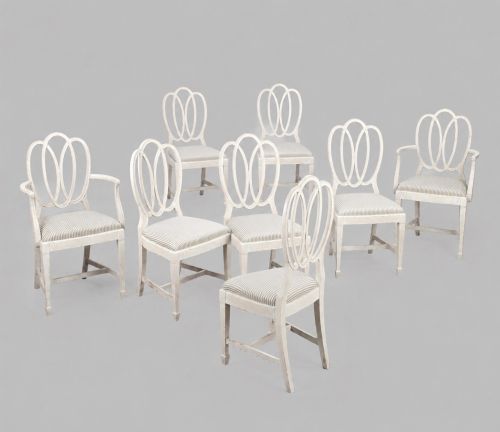
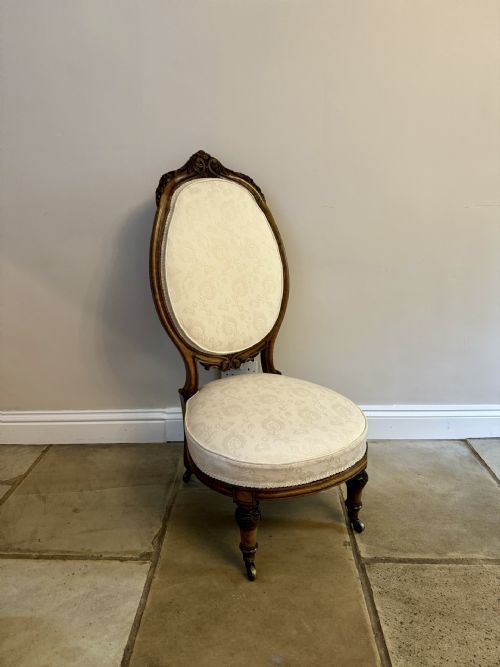
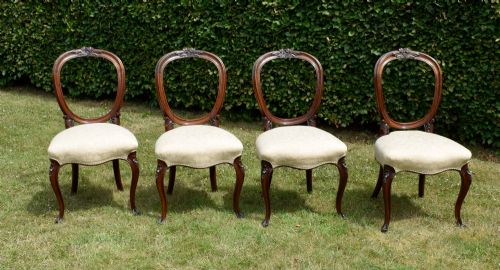


Oval Back Side Chairs
These oval back side chairs bring classic form and seating elegance to any interior, prized for their curved wooden framing and refined silhouettes.
Oval Back Side Chairs
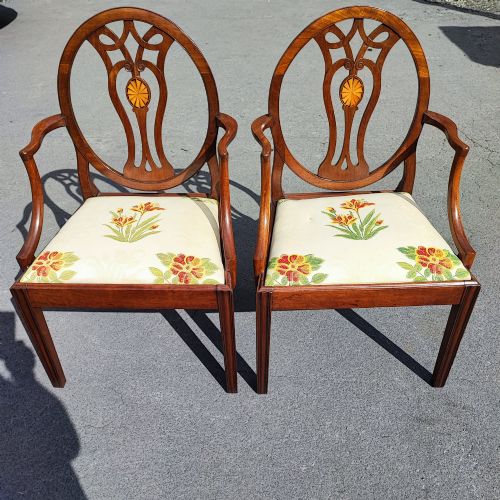
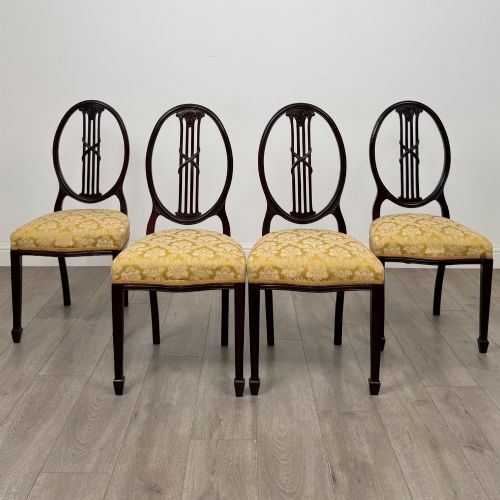
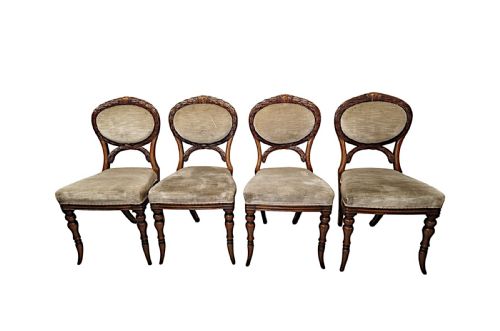
Oval back side chairs encompass seating forms shaped with characteristic rounded upper frames, appearing across multiple periods and styles in the evidence. Buyers seeking these pieces encounter examples ranging from 18th century origins through Victorian revivals and Edwardian iterations.
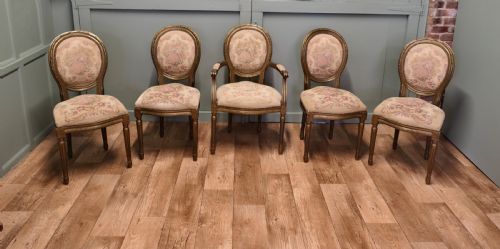
The selections span distinct formal categories within seating, including dining chairs, hall chairs, salon chairs, and bedroom chairs. Woods like mahogany, walnut, and oak form the primary structural frameworks.
Makers and workshops adapted the oval back motif across various regional aesthetic movements, producing both understated domestic seating and grander giltwood or painted salon suites.
Materials and Construction
Solid hardwoods such as mahogany, walnut, and oak provide the structural foundation for framing the distinctive oval backrests. Craftsmen utilised traditional joinery to secure the curved rails and legs.
Surface treatments range from natural polished wood grains to painted finishes, giltwood applications, and delicate inlaid decoration. Upholstery materials include fabric, velvet, wool work, and silk damask.
Specific variations involve hand-carved detailing on the wooden frames, brass accents, and caned seating inserts alongside traditional textile upholstery.
One grand historic suite previously furnished Spencer House for Lady Diana.
Assessing Quality
Quality rests upon the crispness of wood carving and the integrity of the joinery within the curved back frame. Superior examples demonstrate harmonious proportions and precise execution of stylistic details like inlay or giltwood enrichment.
The grade of materials matters significantly, from the depth of figure in mahogany and walnut timbers to the quality of the silk damask, velvet, or wool work upholstery. Original finishes and intact structural components elevate a piece above later alterations.
Strahan of Dublin
The Oval Back Side Chairs Glossary
- Side Chair
- A chair without arms, designed primarily for dining or occasional use around a room. These forms make up a substantial portion of the available seating.
- Giltwood
- Wood that has been treated with gold leaf or a metallic gilding process. This finish appears on grander salon and dining seating.
- Mahogany
- A durable tropical hardwood prized for its rich reddish-brown colour and stability. It serves as a principal material for many 18th and 19th-century chairs.
- Caning
- Woven rattan or plant material used to form light, patterned seats and back panels. It adds texture and breathability to wooden frames.
- Louis XVI Style
- A neoclassical design vocabulary characterised by straight tapered legs, classical motifs, and restrained symmetry. Pieces in this style often feature painted or giltwood surfaces.
Oval Back Side Chairs: Frequently Asked Questions
What are oval back side chairs?
Oval back side chairs are seating pieces defined by their rounded, looped upper backrests. They appear across various historical periods in formal dining, salon, and hall contexts.
Craftsmen produced these chairs in woods like mahogany, walnut, and oak, frequently incorporating decorative carving, paint, or gilding to match prevailing interior fashions.
How were these chairs used?
These chairs served multiple domestic functions depending on their scale and framing. Dining variants gathered around large tables, while lighter salon and bedroom versions stood against walls for occasional seating.
Grand sets often furnished formal drawing rooms or reception spaces, sometimes accompanied by matching armchairs, sofas, and footstools.
How do I live with them?
Integrating these chairs into modern spaces involves balancing their historical character with everyday utility. They function effectively as dining seating, desk chairs, or decorative accent pieces in living areas.
Care involves protecting wooden surfaces from excessive moisture and safeguarding delicate textiles like silk damask, velvet, or wool work from direct sunlight.
How do I tell periods apart?
Differentiating periods relies on observing shifts in wood choice, carving depth, and stylistic revivals. 18th-century pieces often display restrained lines, whereas Victorian examples tend towards heavier carved walnut and ebonised finishes.
Revival pieces from the later 19th and early 20th centuries reinterpret earlier Regency, Sheraton, or Louis XVI forms, combining historical motifs with period-specific manufacturing methods.