
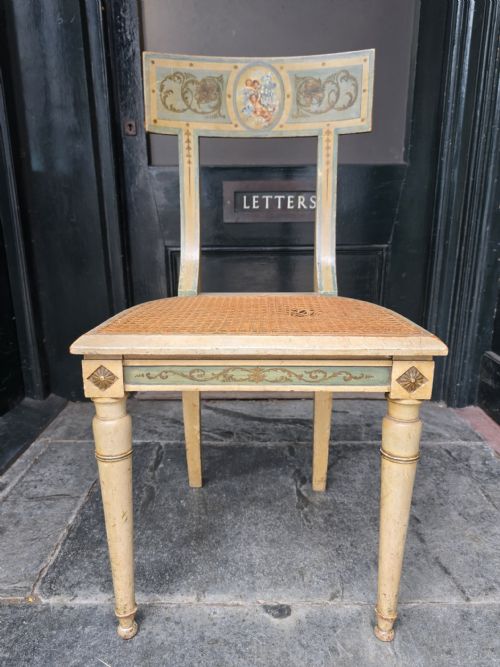
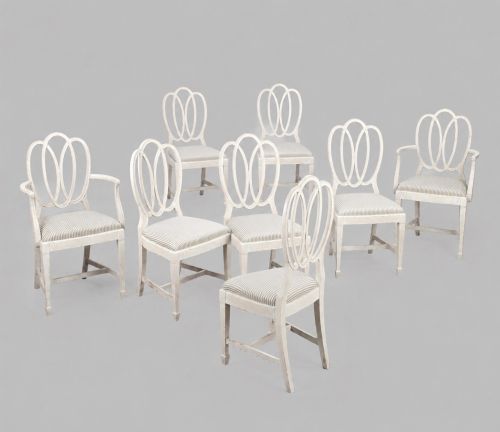
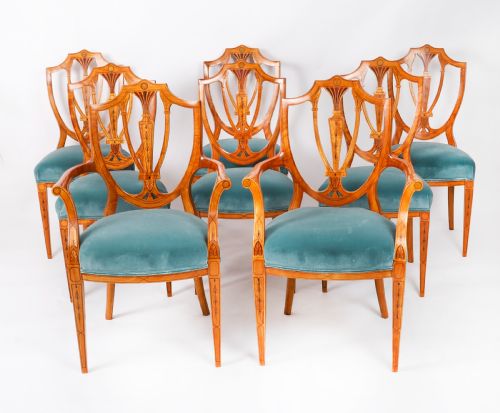
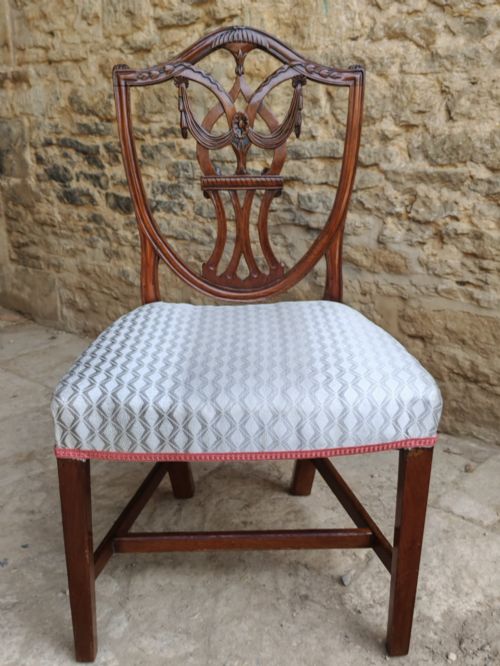
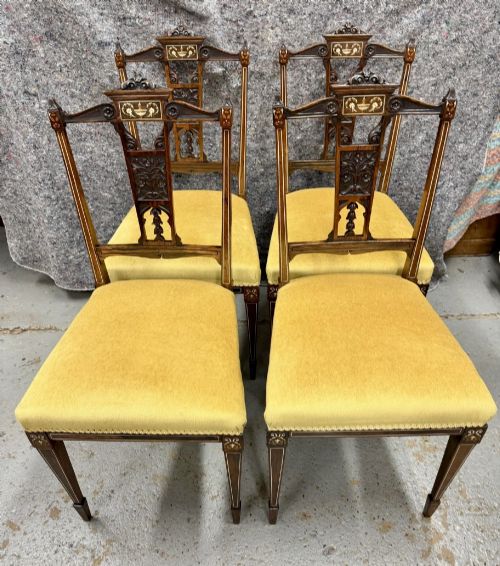


Neoclassical Side Chairs
Neoclassical side chairs bring classical restraint and balanced proportion into a room, offering enduring elegance for dining and sitting spaces.
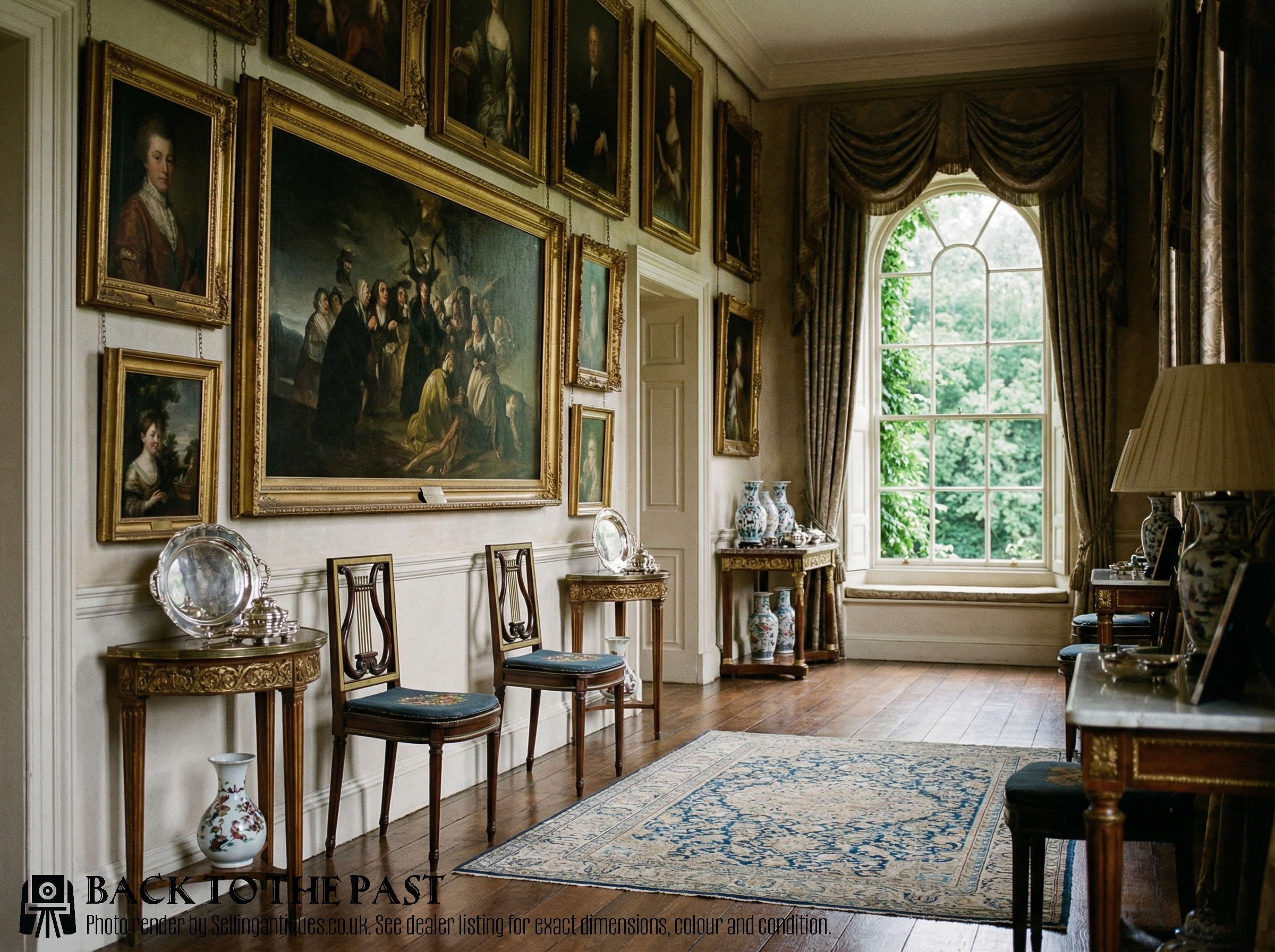
Neoclassical Side Chairs
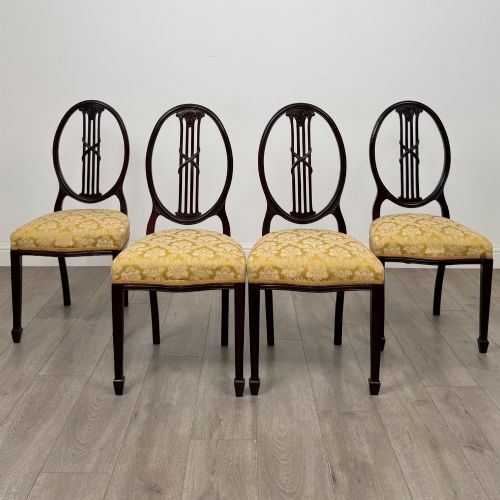
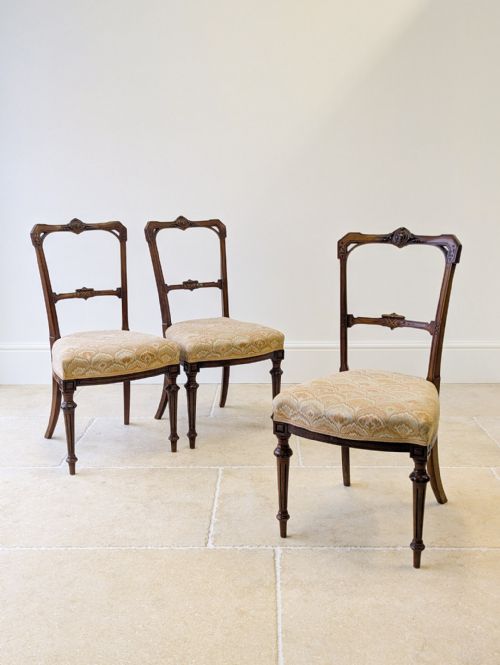
Neoclassical side chairs span a wide chronological range, appearing in 18th century forms as well as later revival periods including Victorian, Edwardian, and the year 1900. These pieces primarily function as dining chairs, salon chairs, and single chairs.
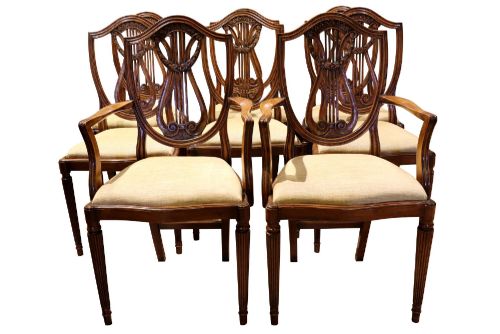
Buyers frequently encounter sets of four or six chairs, though pairs, sets of three, and larger sets of ten also appear. These seating options embody formal classical design tailored for domestic interiors.
Materials and Construction
Makers utilised solid mahogany and painted wood to construct the frames, often employing carved details in the neoclassical manner. The structural woodwork supports various seating configurations.
Seating surfaces incorporate leather, damask fabric, standard upholstery fabric, and general textile coverings. Brass elements also appear as decorative or structural components across the pieces.
Retail Price Guide 2026
Typical UK retail prices for neoclassical side chairs, calculated from the Sellingantiques database of over a million retail prices indexed since 2003. This retail price guide relies exclusively on Sellingantiques data; no external sources or auction records are used, so the figures do not describe the wider market.
A set of ten carved dining chairs demands a very large dining table and an appreciation for symmetrical grandeur.
Judging Quality
Quality rests in the crispness of the carving and the fidelity of the period revival style, distinguishing finely executed 18th century work from later interpretations. Timber selection and the integrity of the frame construction dictate the longevity of each chair.
The choice of upholstery materials, from supple leather to heavy damask fabric, reflects the original tier of the commission. Cohesion across larger sets maintains higher value than mismatched assemblies.
The Neoclassical Side Chairs Glossary
- Hepplewhite Revival
- A late 19th or 20th century interpretation of the graceful, shield-back designs associated with the 18th century cabinetmaker. These pieces emulate classical proportions and delicate tapering legs.
- Sheraton period
- Dating from the late 18th century, this style favours rectilinear frames, restrained classical ornamentation, and straight, tapered supports. It represents a refined phase of English furniture design.
- Louis XVI Neoclassical
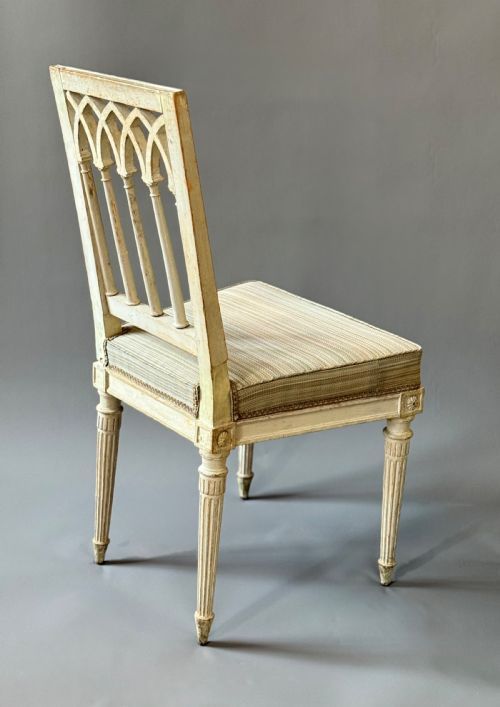
- A continental French style characterised by straight vertical lines, fluted columns, and symmetrical geometric forms. Painted wood frames frequently define this aesthetic.
- Salon chair
- A light, decorative chair intended for formal reception rooms rather than heavy dining use. These often feature ornate painted or carved frames.
Frequently Asked Questions
What defines a neoclassical side chair?
Neoclassical side chairs draw inspiration from classical Greek and Roman architecture, featuring straight lines, symmetrical proportions, and restrained ornamentation.
They typically lack arms and serve multiple purposes around a dining table or within a formal parlour.
How do I care for mahogany chair frames?
Mahogany requires minimal maintenance, benefiting mostly from occasional dusting with a soft, dry cloth. Avoid placing wooden furniture near direct heat sources to prevent the timber from splitting.
Condition the wood periodically with appropriate natural waxes to preserve the finish.
Are these chairs suitable for daily use?
Many of these chairs remain structurally sound for everyday seating, provided the joints are stable and secure. Period and revival pieces constructed from solid mahogany offer robust durability.
Consider the weight capacity and delicate carved details when selecting chairs for heavy daily dining.
How can I tell a revival piece from an 18th century original?
Distinguishing periods relies on examining tool marks, timber ageing, and construction methods used within the frame. Revival pieces from the Victorian and Edwardian eras often show standardised machine-assisted joinery.
Consulting the specific revival style indicators helps clarify the exact date of manufacture.