

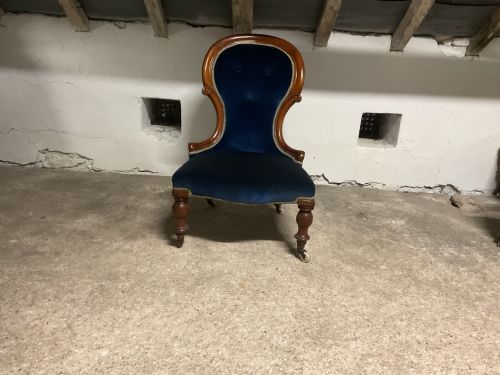
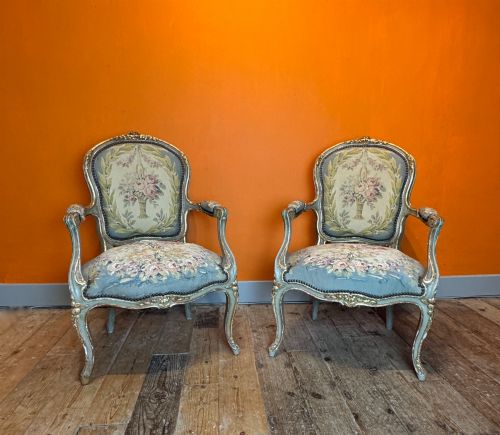
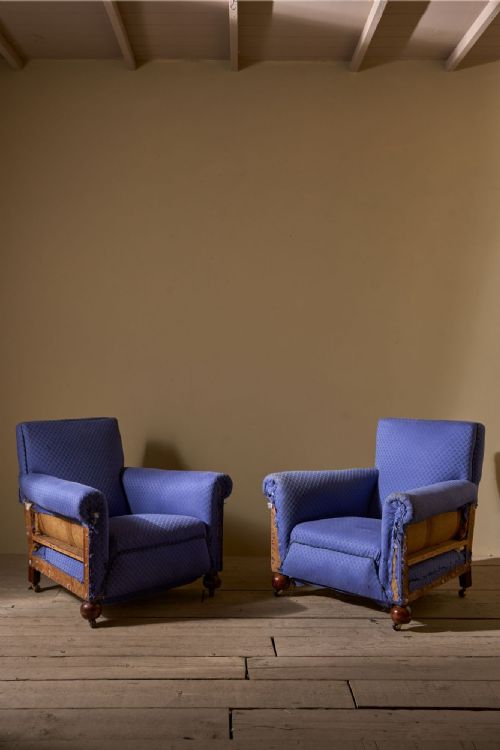
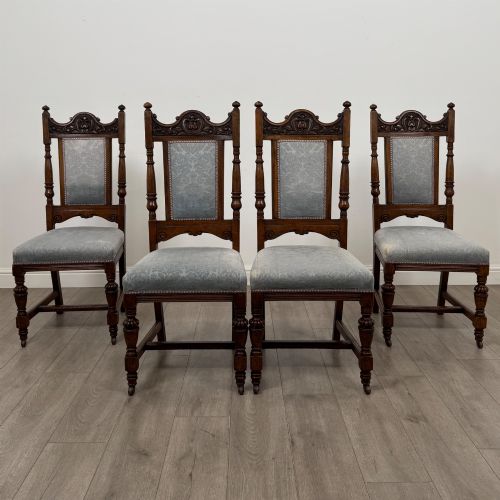
Blue Upholstered Chairs
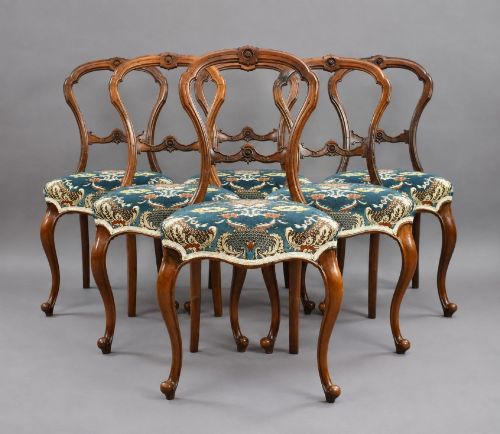
Blue upholstered chairs span everything from Edwardian armchairs to Victorian balloon backs, offering functional seating defined by period upholstery.
Blue Upholstered Chairs
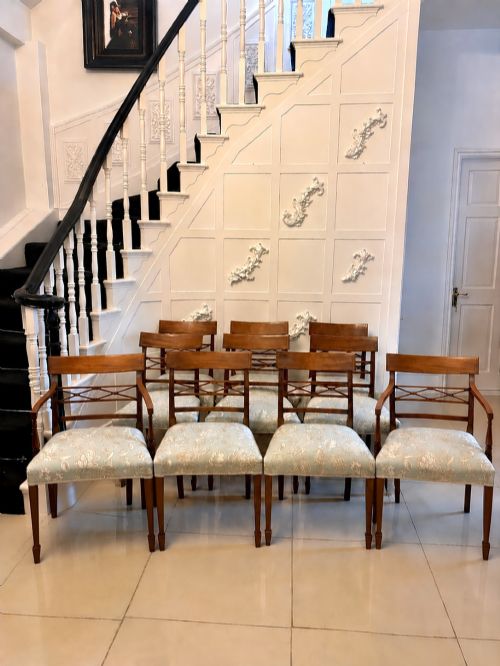
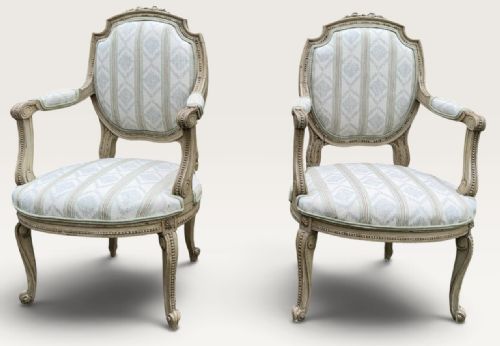
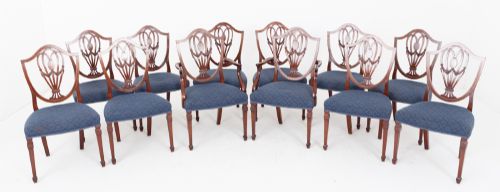
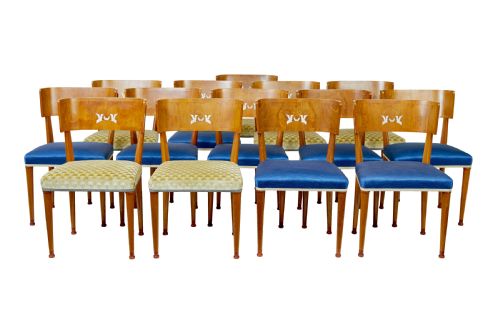
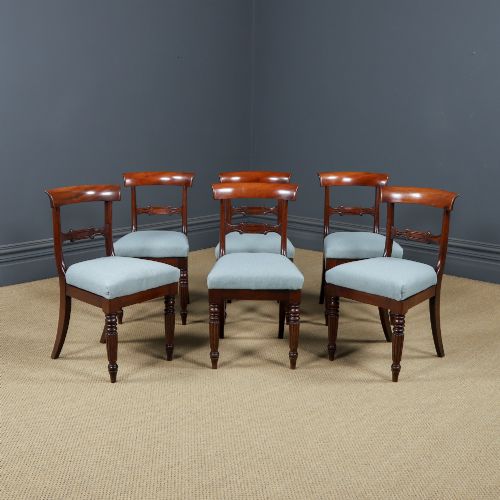
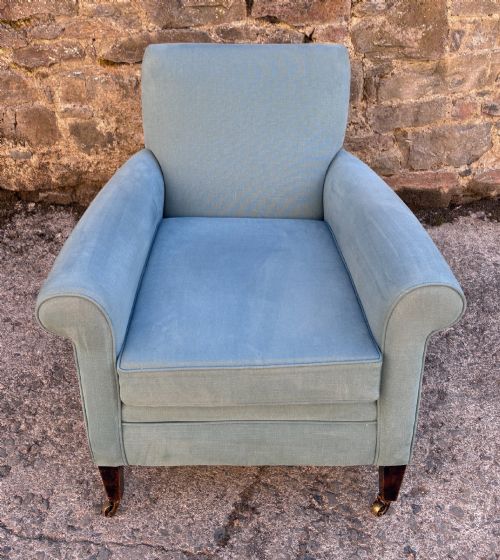
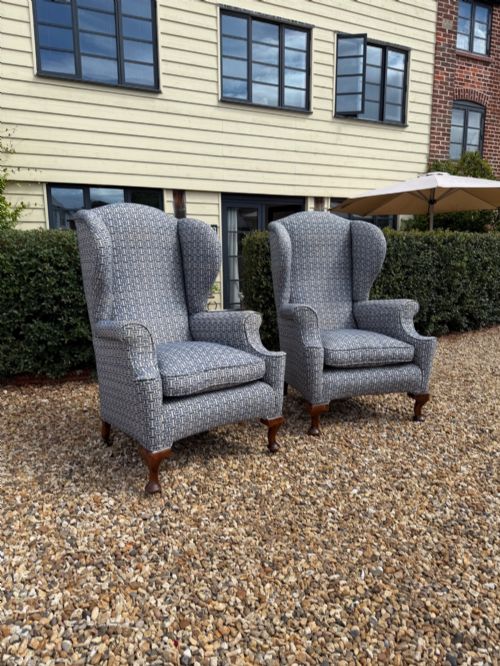
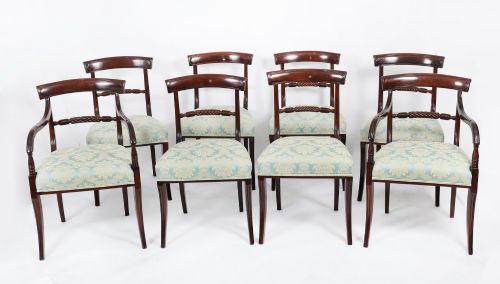
When searching for blue upholstered chairs, buyers encounter a diverse selection ranging from Georgian and Victorian dining sets to Edwardian armchairs and Art Deco club chairs. These pieces appear in forms including armchairs, nursing chairs, wingbacks, and large dining sets with carvers.
The materials span mahogany, walnut, oak, and rosewood frames paired with textile, velvet, and fabric coverings. Origins stretch across English country house pieces, French painted seating, and Scottish dining chairs from the nineteenth and twentieth centuries.
Materials and construction
Frames rely on dense timbers such as mahogany, walnut, and oak, shaped into balloon backs, shield backs, or klismos profiles using traditional joinery. Carved details often incorporate parcel gilt or original paint finishes.
Upholstery relies on textiles, velvet, and leather applied over sprung or stuffed foundations. Brass tacks frequently secure the edges on period pieces from makers like Howard and Sons.
Blue Upholstered Chairs Retail Price Guide 2026
Typical asking prices for blue upholstered chairs among the pieces listed under this phrase on Sellingantiques today, from the lower quarter to the upper quarter. They describe what is for sale here now, not the wider market.
Some nineteenth-century armchairs hide maker stamps so discreetly beneath the webbing that finding one feels like discovering a secret signature.
Judging the standard
Quality rests on the integrity of the timber frame and the retention of original surface treatments, whether polished mahogany or period paint. Sets that retain their full complement of matching chairs command greater architectural cohesion.
The refinement of the carving, the proportion of the arms and legs, and the pedigree of the maker distinguish standard production from exceptional workshops.
Howard and Sons·Morison and Co
The Blue Upholstered Chairs Glossary
- Carver armchair
- An armchair with wooden armrests, historically placed at the head of a dining table. These often accompanied sets of matching single chairs.
- Balloon back
- A rounded, oval-shaped chair back popular during the Victorian period. This profile offers ergonomic support while displaying polished mahogany grain.
- Shield back
- A chair back shaped like a heraldic shield, frequently seen in Georgian and Federal Revival designs. Carved splats often fill the interior frame.
- Klismos
- An ancient Greek chair form with curved legs and a sweeping concave backrest. Revived in later periods, particularly in Art Deco design.
- Wingback armchair
- A high-backed chair with projecting side panels designed to shield the sitter from drafts. These pieces often feature deep upholstery and wooden cabriole legs.
Blue Upholstered Chairs: Frequently Asked Questions
How do I identify a Victorian blue upholstered chair?
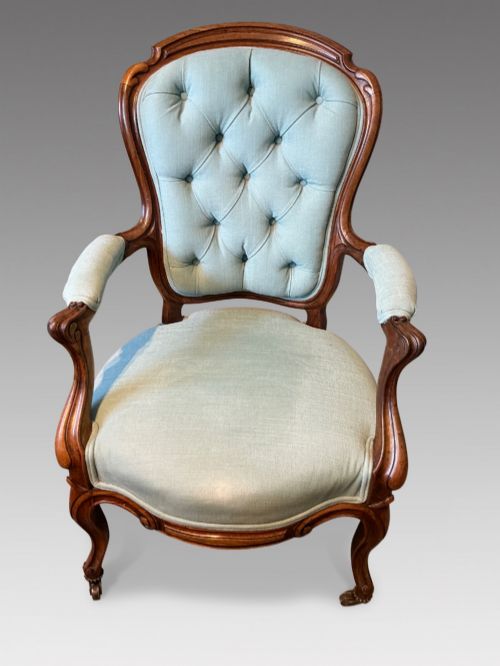
Victorian examples typically display dark timbers such as mahogany or rosewood, often shaped into balloon backs or open armchairs with button-tufted upholstery.
Look for turned wooden legs and heavy sprung seats that reflect mid to late nineteenth-century seating comfort.
Are dining chairs sold as complete sets?
Many dining chairs appear in matched sets ranging from four to sixteen pieces, frequently including two carver armchairs for the heads of the table.
Individual carvers and pairs of armchairs are also common across the Edwardian and Georgian periods.
What distinguishes Edwardian armchairs?
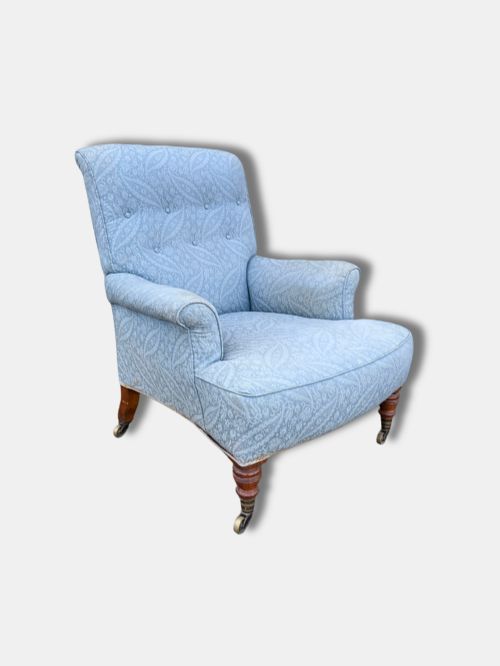
Edwardian armchairs generally offer deep seating proportions and softer, more relaxed profiles than their Victorian predecessors.
They often appear as tub chairs or country house wingbacks upholstered in textiles or velvet.
How should I care for antique upholstery fabrics?
Protect antique textiles and velvets from direct sunlight to prevent fading and degradation of the fibres over time.
Gentle surface vacuuming with a low-suction attachment helps maintain the fabric without disturbing the underlying stuffing.