
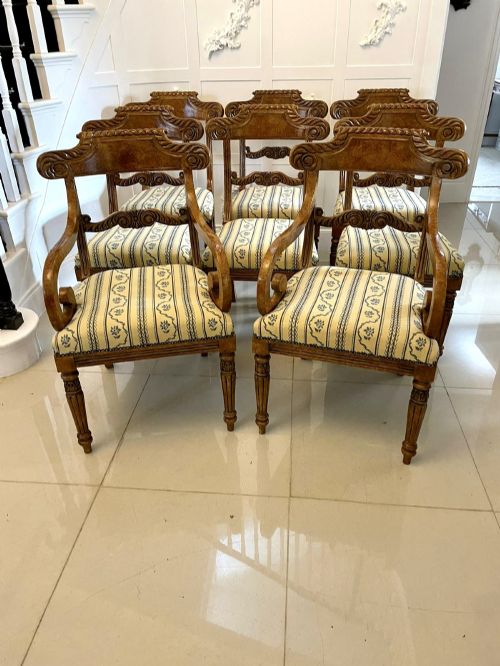
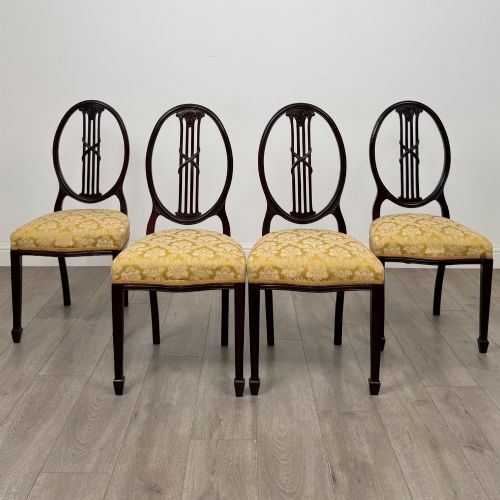
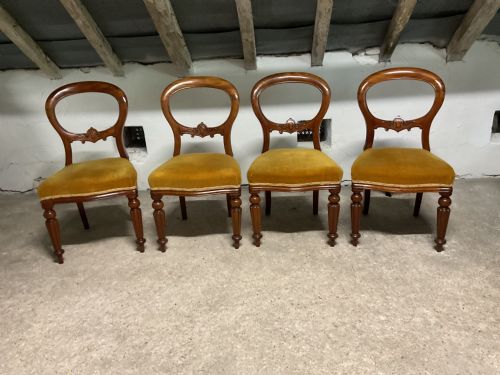
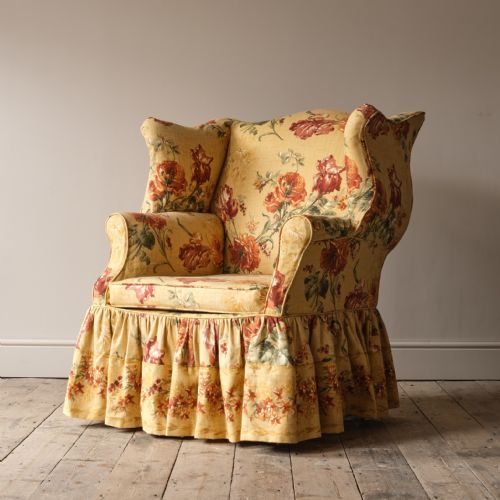
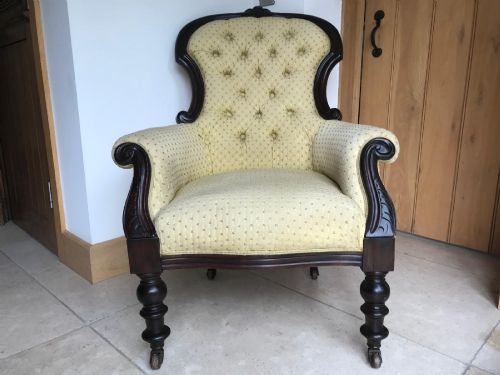
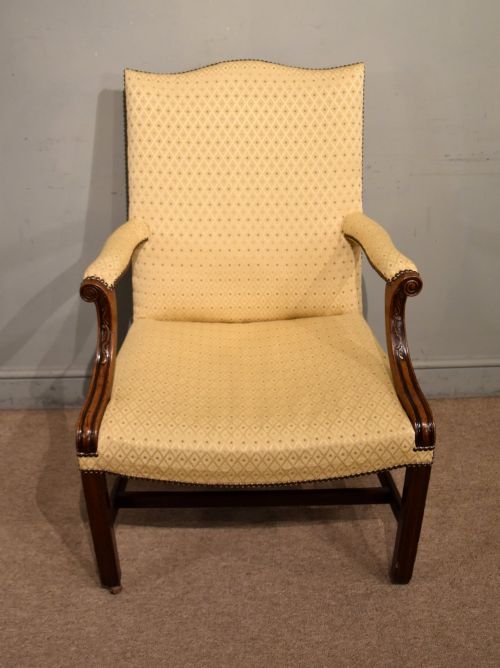
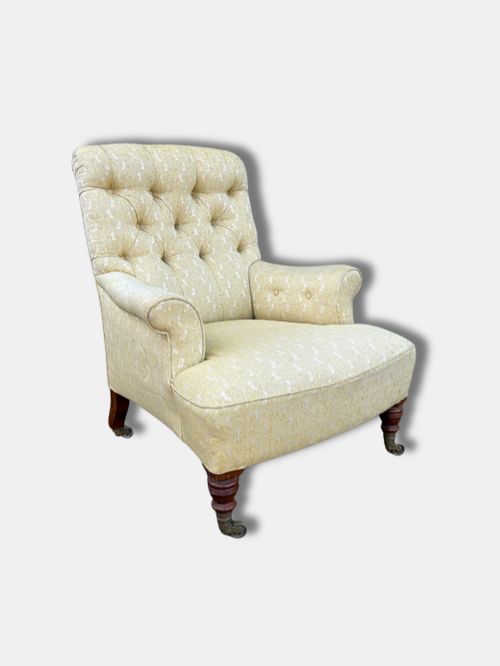
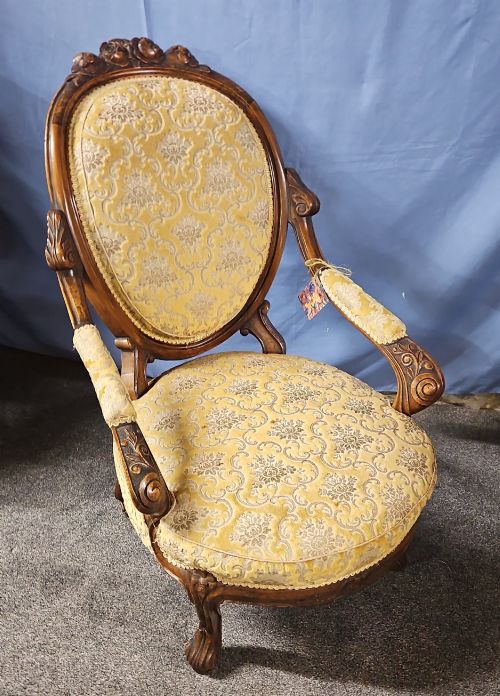
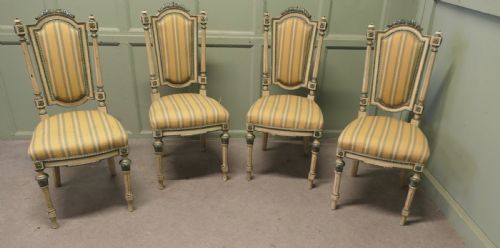
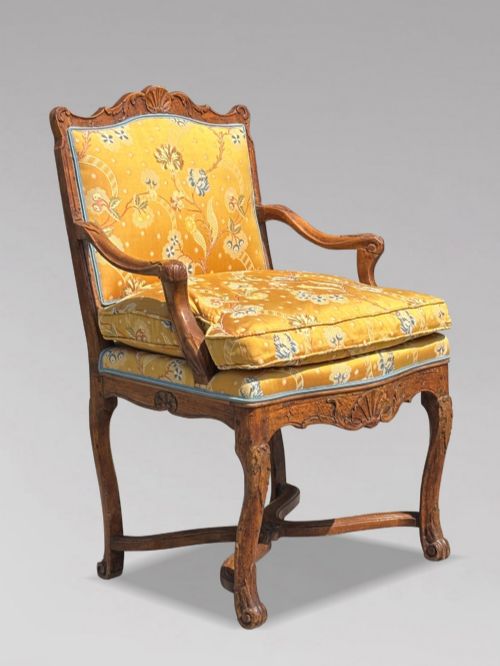
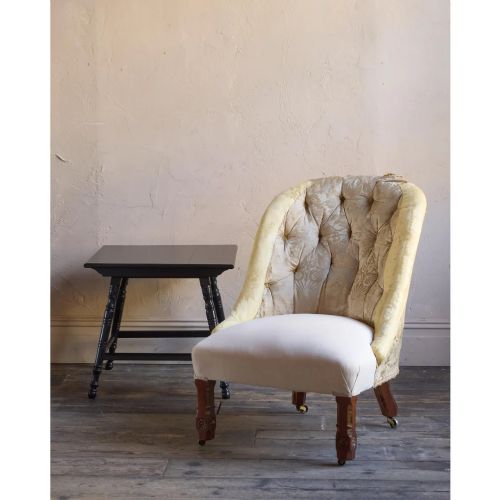
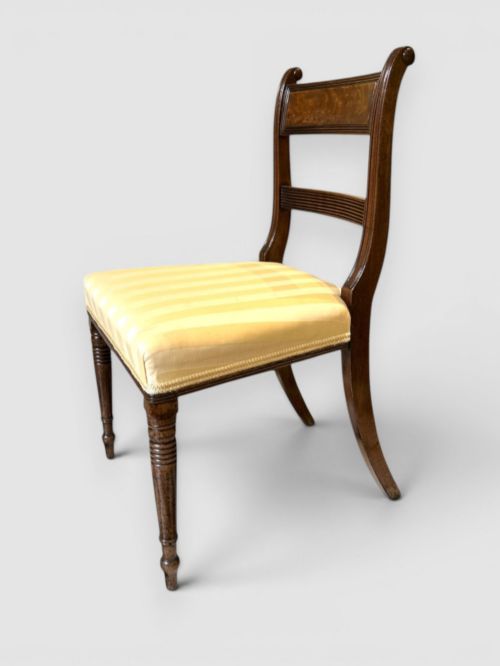

Yellow Upholstered Chairs
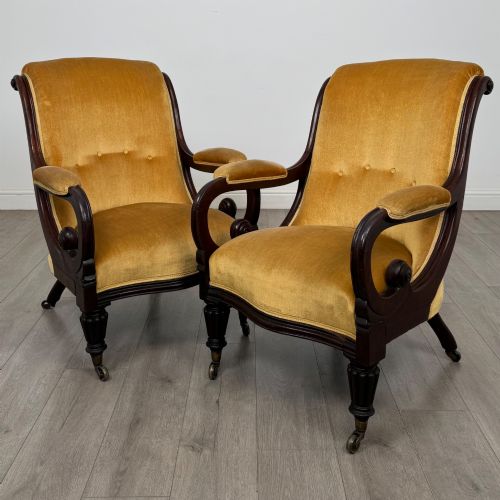
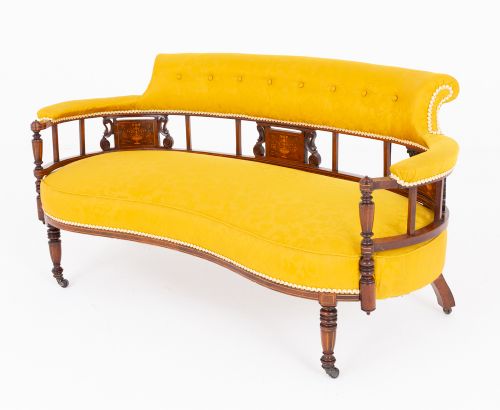
Yellow upholstered chairs bring a striking jolt of colour and seating presence into a room, spanning periods from Regency to the Arts and Crafts era.
Identifying yellow upholstered chairs
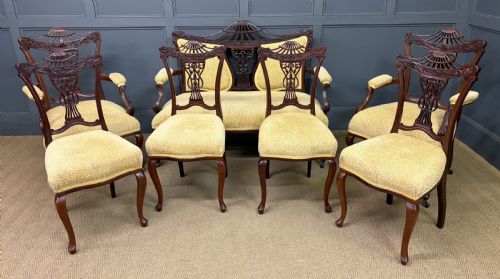
Yellow upholstered chairs encompass seating forms ranging from Victorian side chairs to large dining sets in mahogany, walnut, oak, and rosewood. The pieces on this page span several distinct periods including Regency, Victorian, Arts and Crafts, and later revivals.
Buyers will find both intimate pairs and substantial sets of six, eight, or ten dining chairs. These items bridge formal entertaining spaces and rustic farmhouse interiors through diverse architectural frameworks.
The combination of traditional timber structures with bright textile covers defines this grouping. Each era brings its own distinct leg profile, back rail shape, and woodwork carving style.
Construction and materials
Frames are built predominantly from dense hardwoods such as mahogany, walnut, oak, and rosewood. These timbers provide the structural rigidity required for antique dining and side chairs.
Upholstery fabrics and textiles are applied over traditional stuffing techniques to secure the bright yellow colourways seen across the pieces. Joinery methods reflect the specific manufacturing standards of their respective nineteenth and twentieth-century decades.
Retail Price Guide 2026
Typical UK retail prices for yellow upholstered chairs, calculated from the Sellingantiques database of over a million retail prices indexed since 2003. This retail price guide relies exclusively on Sellingantiques data; no external sources or auction records are used, so the figures do not describe the wider market.
The listings span five distinct periods, stretching from the Regency era through Victorian production to twentieth-century Arts and Crafts and revival pieces.
Assessing quality
The distinction between standard examples and superior pieces rests on the integrity of the timber frame and the refinement of the carved details. Higher quality sets demonstrate precise joinery and well-figured mahogany, walnut, or rosewood grain.
Proportion and scale dictate the visual success of a dining set, with finer chairs exhibiting balanced rake in the back legs and careful execution of period-specific stylistic motifs. The application of the textile covering must complement the underlying architectural form without obscuring original woodwork.
The Yellow Upholstered Chairs Glossary
- Mahogany
- A durable tropical hardwood prized for its reddish-brown tone and stability in fine furniture making. It frequently forms the primary structure of Regency and revival dining chairs.
- Rosewood
- A heavily figured, dense timber with dark grain patterns often utilised in high-status Victorian seating. It provides a rich visual contrast to bright textile upholstery.
- Side Chair
- An upright chair without arms, traditionally used for dining or occasional placement against a wall. These items form a significant portion of earlier Victorian offerings.
- Arts and Crafts
- A design movement prioritising honest construction, solid oak materials, and local craftsmanship. Pieces from this aesthetic display simpler, more functional wooden frames.
Frequently Asked Questions
How do I date these chairs?
Dating relies on examining the timber species, joinery techniques, and stylistic cues inherent to periods like the Regency or Victorian eras. Cabinet makers shifted their decorative motifs significantly between eighteen hundred and nineteen twenty.
Comparing leg turnings, back splat designs, and framing methods against known historical examples helps establish the correct decade of manufacture.
Are large dining sets matched?
Large sets of eight or ten chairs are typically assembled or expanded to meet dining requirements of later periods. Original large sets from a single workshop are exceptionally uncommon.
Close inspection of minor variations in timber colour and carving hand reveals whether chairs originated together as a unified commission.
How do I care for antique upholstery?
Maintenance involves regular, gentle vacuuming with a soft brush attachment to prevent dust accumulation in the fabric weave. Professional cleaning is recommended for textile removal.
Protecting the yellow fabric from direct sunlight prevents fading and preserves the visual impact of the colour over years of domestic use.
Will these fit a modern table?
Seat heights across nineteenth and early twentieth-century dining chairs generally align well with standard modern dining table clearances. Checking specific dimensions prevents leg room conflicts.
Armless side chairs offer the most flexibility for sliding beneath modern table frames regardless of historical seat depths.