


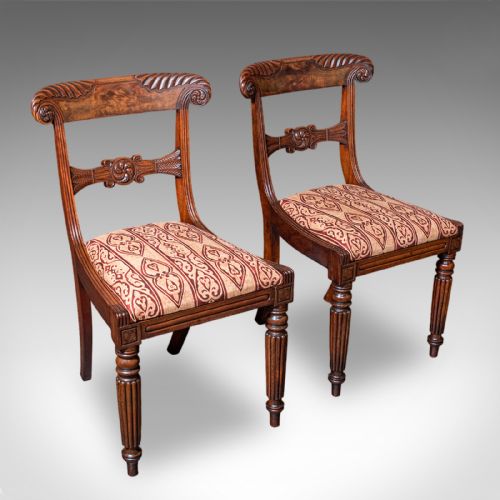
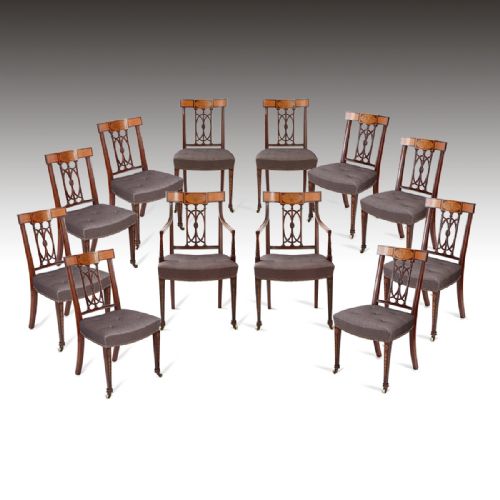
Brown Mahogany Side Chairs
Brown mahogany side chairs bring enduring British timber and classic seating forms together for formal rooms and daily dining.
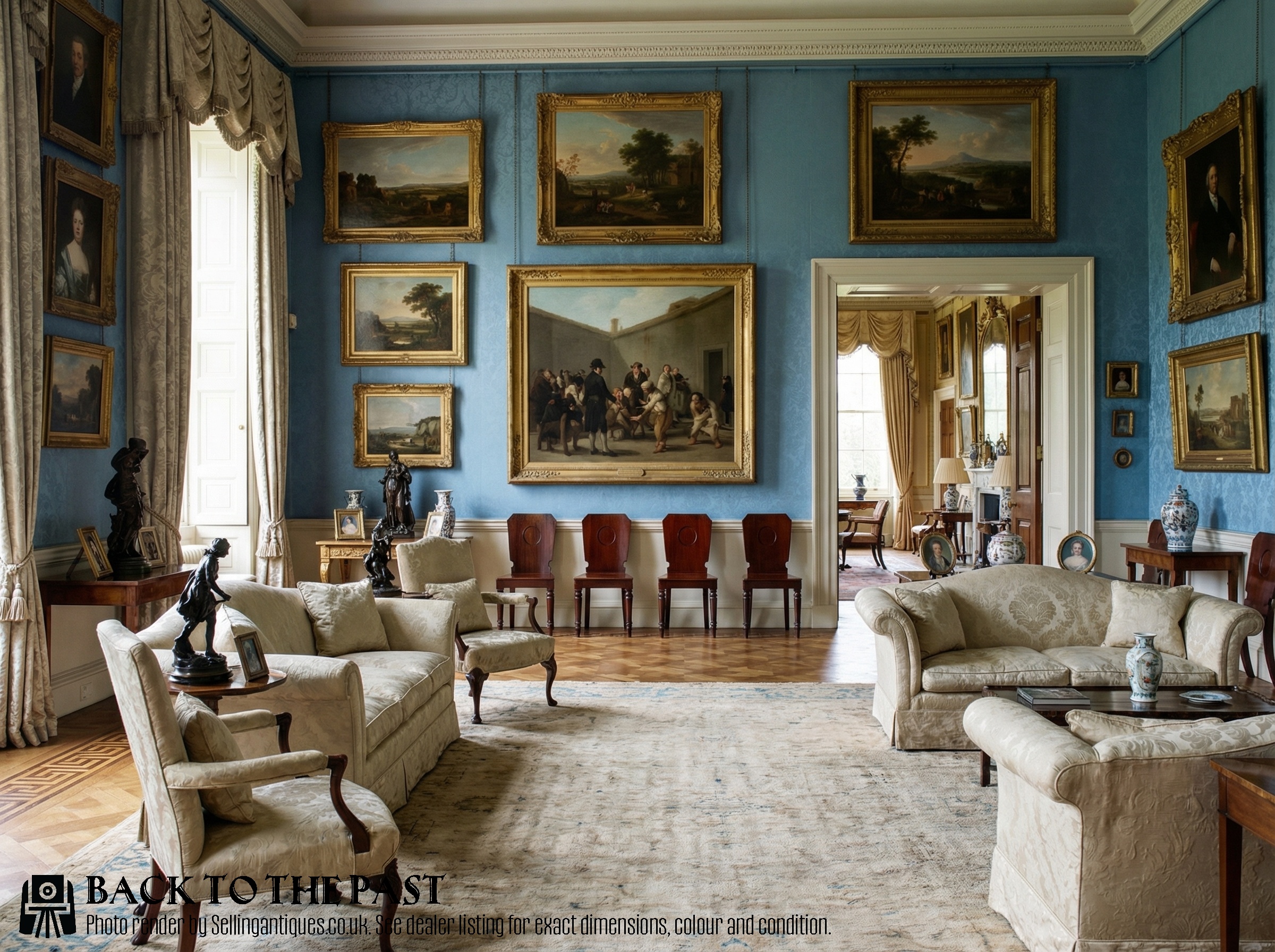
Brown Mahogany Side Chairs
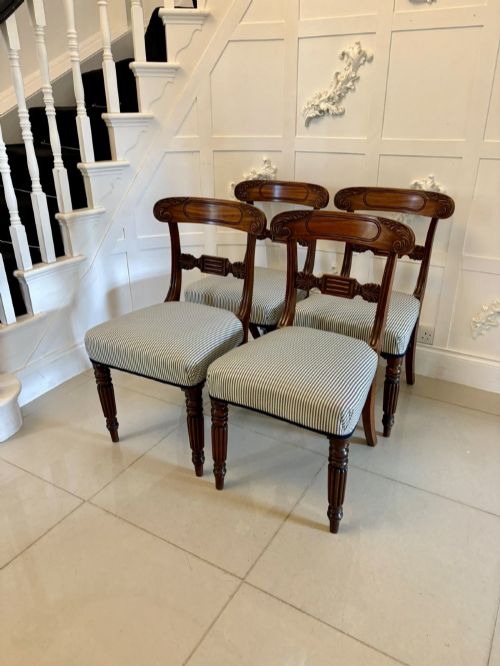
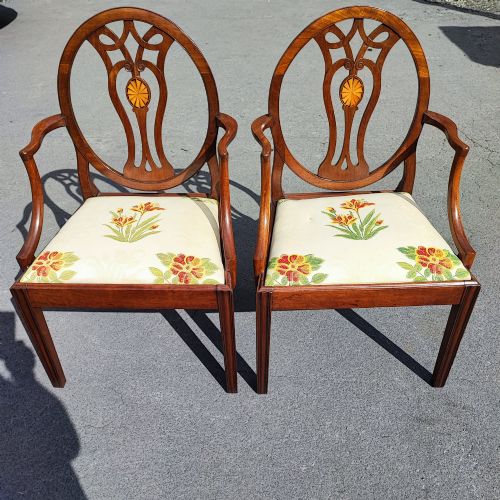
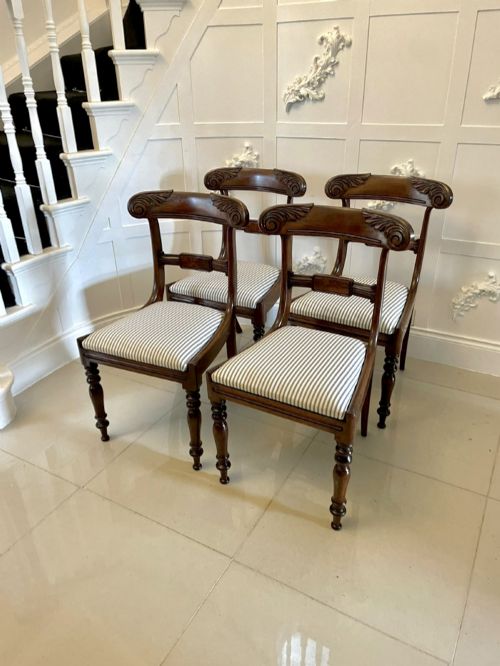
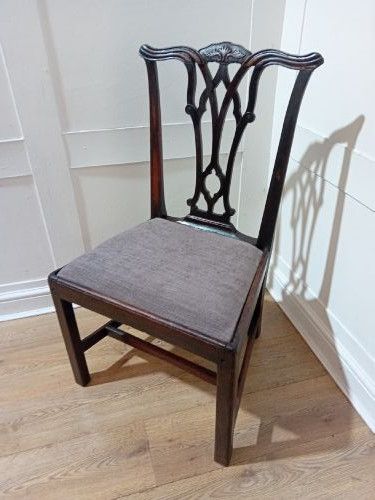
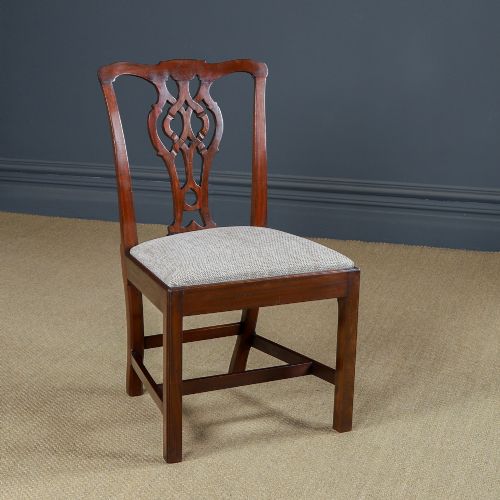
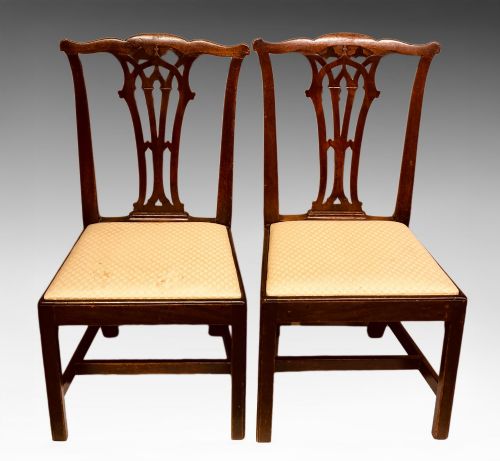
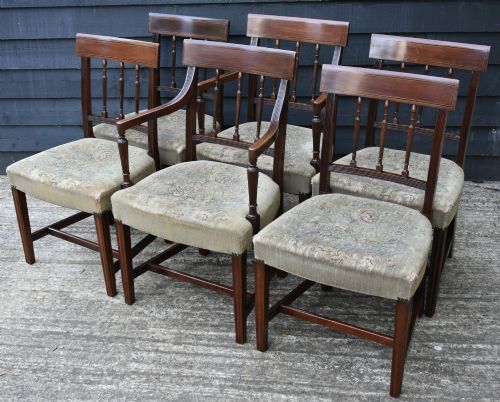
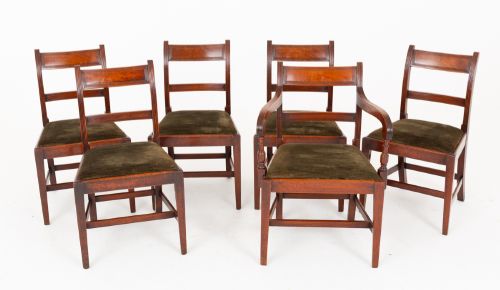
Brown mahogany side chairs encompass dining seats, hall chairs and occasional bedroom seating created across the eighteenth, nineteenth and early twentieth centuries. The listings show heavy representation from the Georgian, Regency and Victorian periods, alongside later revival pieces produced in the Edwardian era and beyond.
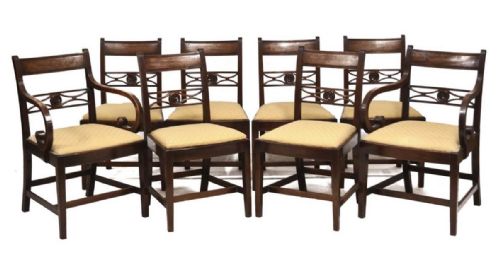
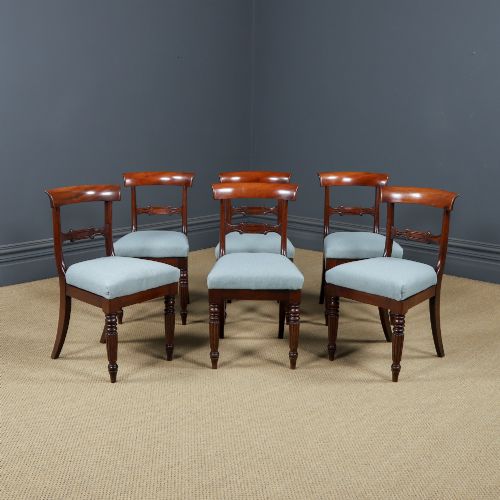
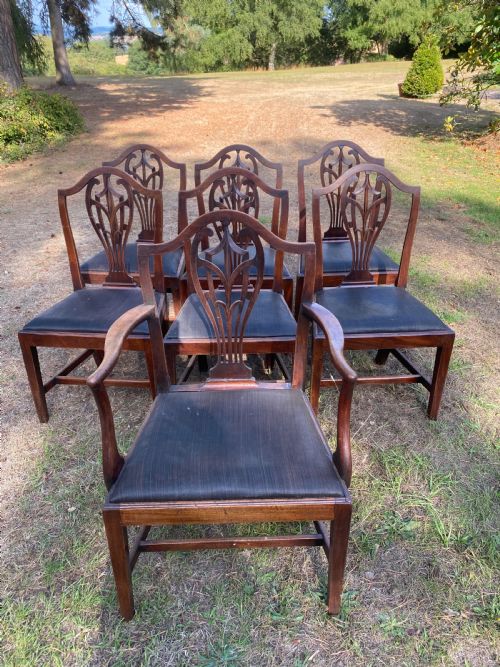
Buyers encounter single chairs, pairs and substantial sets reaching twelve pieces, often featuring specific regional styles such as Sheraton, Chippendale, Hepplewhite and William IV. These forms serve practical dining functions while displaying distinct historic design vocabulary in their backs and legs.

How they were made
Makers utilised solid mahogany for structural integrity and rich grain patterns, frequently combining wood with secondary timbers for internal framing. Upholstered elements rely on traditional stuffing materials covered in fabric, leather or velvet.
Detailing involves hand carving, brass embellishments, cane seating inserts and delicate inlaid stringing. Construction employs time-honoured joinery techniques to ensure stability across centuries of daily use.
Brown Mahogany Side Chairs Retail Price Guide 2026
Typical asking prices for brown mahogany side chairs among the pieces listed under this phrase on Sellingantiques today, from the lower quarter to the upper quarter. They describe what is for sale here now, not the wider market.
The inventory spans the eighteenth to twentieth centuries, featuring mahogany paired with fabric, leather, brass, cane and velvet.
What varies in quality
The degree of crispness in hand-carved details separates standard production from superior examples, particularly in the execution of back splats and crest rails. Timber selection dictates the depth of colour and figure visible across the mahogany grain.
Larger sets maintaining matching proportions and original timber patination achieve higher distinction than assembled groups or pieces with extensive later timber replacement.
Gillows·Warings
The Brown Mahogany Side Chairs Glossary
- Side chair
- A chair without arms, traditionally used for dining or occasional placement around a room. These pieces form the majority of seating found in larger sets.
- Hall chair
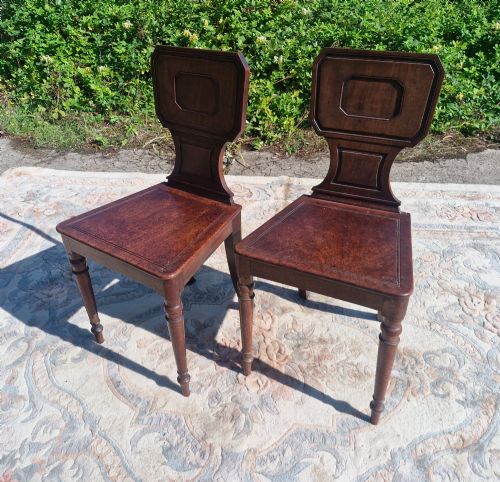
- A rigid wooden seat designed for entrance halls, often featuring carved or painted family crests and solid timber panels without upholstery.
- Bar back
- A chair back featuring horizontal wooden slats resembling the rail of a tavern bar, popular during the William IV period.
- Balloon back
- An oval or rounded upholstered chair back shaped like a gas balloon, characteristic of Victorian seating design.
- Shield back
- A chair back shaped in the outline of a heraldic shield, commonly associated with eighteenth-century Hepplewhite styles.
Brown Mahogany Side Chairs: Frequently Asked Questions
How do I date a mahogany side chair?
Dating relies on identifying stylistic markers such as Hepplewhite shield backs or Victorian balloon backs, combined with construction methods visible beneath the seat frame. Secondary woods and tool marks help confirm the period of manufacture.
Comparing the timber finish and joinery against documented examples from the eighteenth and nineteenth centuries provides a reliable timeline for each specific chair.
Can I mix side chairs with carvers?
Mixing armchairs, or carvers, with side chairs is historically accurate for dining sets dating from the Georgian period onward. Larger sets frequently incorporate two armchairs for the heads of the table alongside matching armless sides.
Ensure the wood tone, leg style and general height align harmoniously to maintain a cohesive appearance around the dining space.
Are these chairs suitable for daily use?
Solid mahogany construction and sturdy joinery make these antique chairs robust enough for regular seating when properly maintained. Traditional upholstery can be renewed with modern internal support if required for comfort.
Regular checks on joint stability ensure the timber frames withstand the demands of daily dining or desk work.
What is the difference between Georgian and Regency styles?
Georgian furniture spans the eighteenth century, featuring classic proportions, intricate carving and styles named after designers like Chippendale and Hepplewhite. Regency pieces reflect early nineteenth-century influences with classical revival motifs and cleaner architectural lines.
Regency design often incorporates brass inlay and sabre legs, moving away from the heavier carved splats typical of earlier Georgian production.