
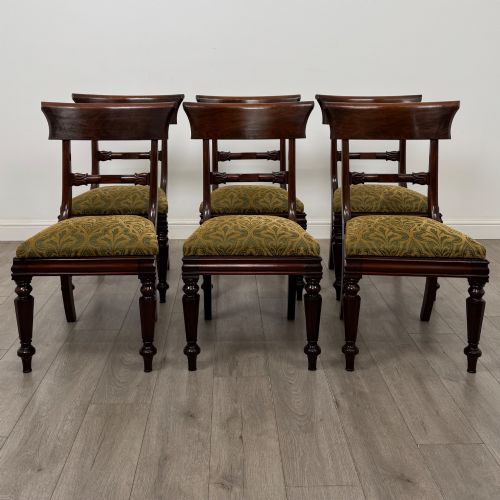
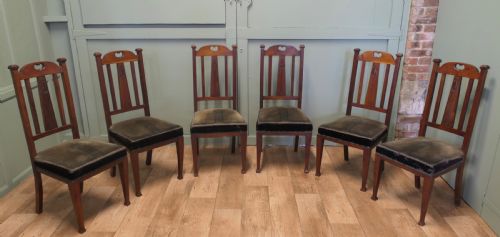
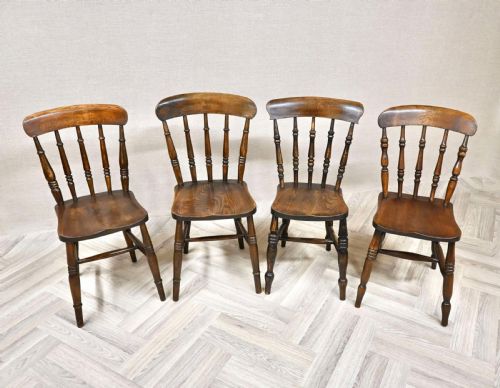
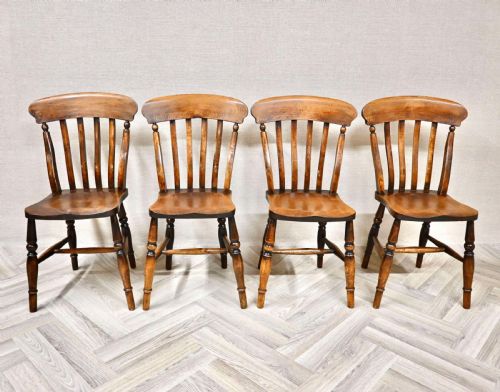
Set Dining Chairs
These set dining chairs bring matched seating together around the table, spanning multiple centuries of British and continental design.
What the pieces are
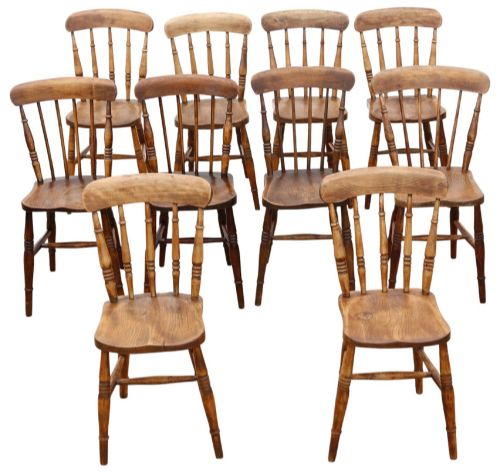
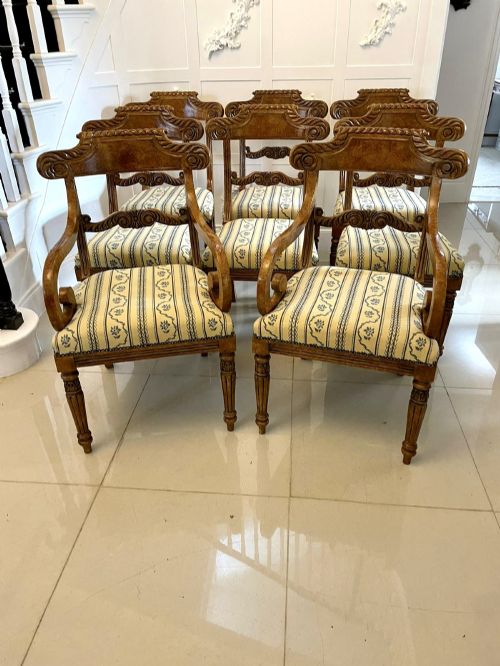
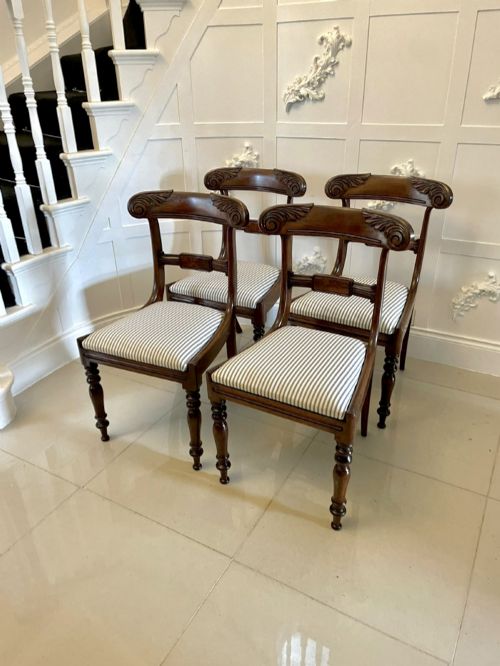
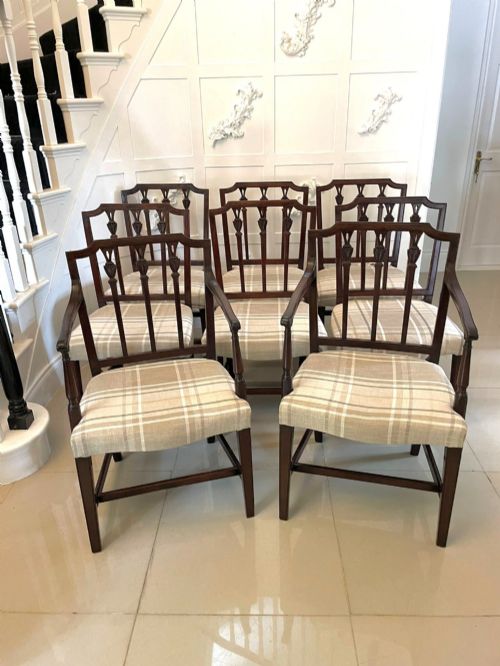
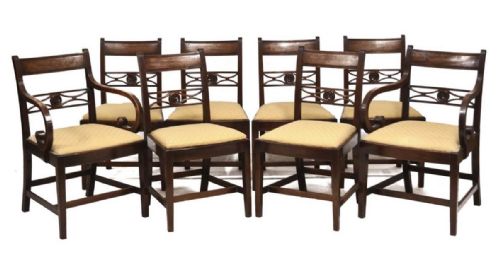
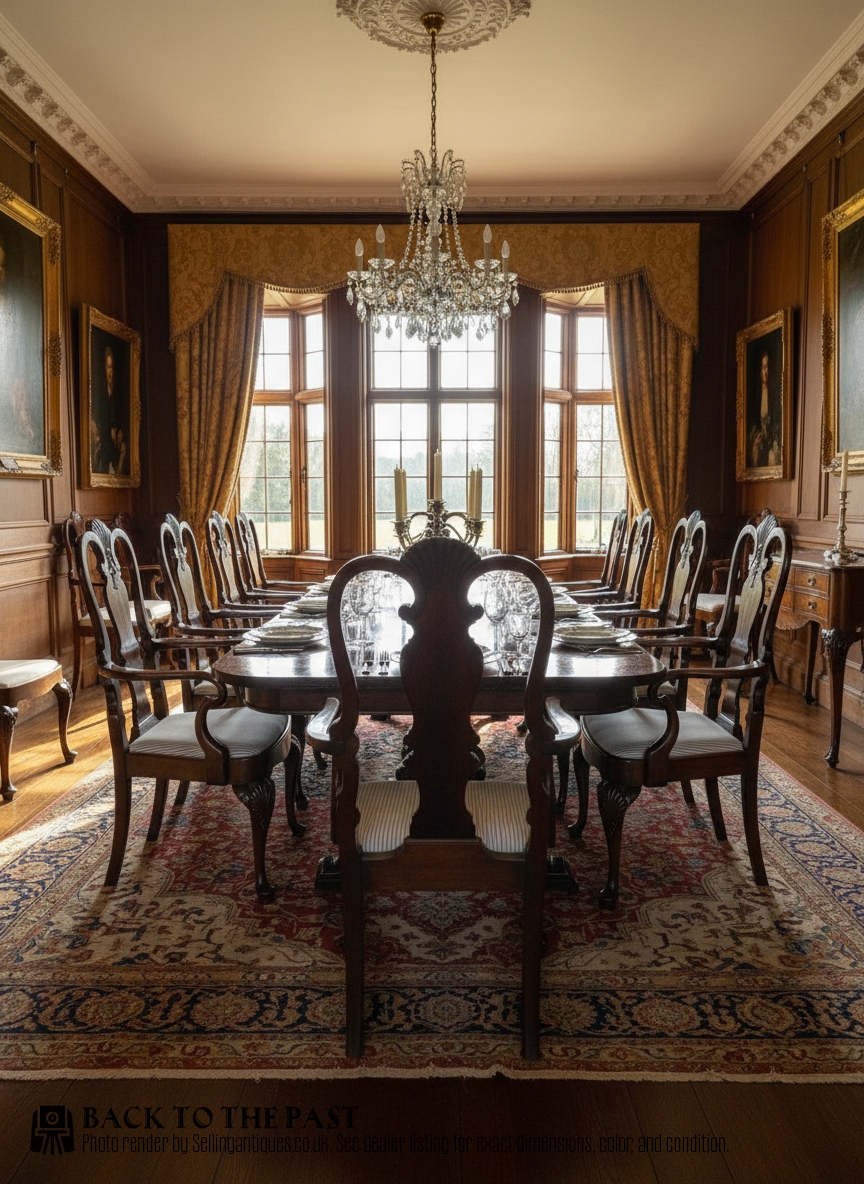
A set dining chairs selection brings together groups of matching seats designed to surround a dining table, appearing across varied historic periods. These groupings range from compact sets of four up to grand gatherings of ten or twelve chairs.
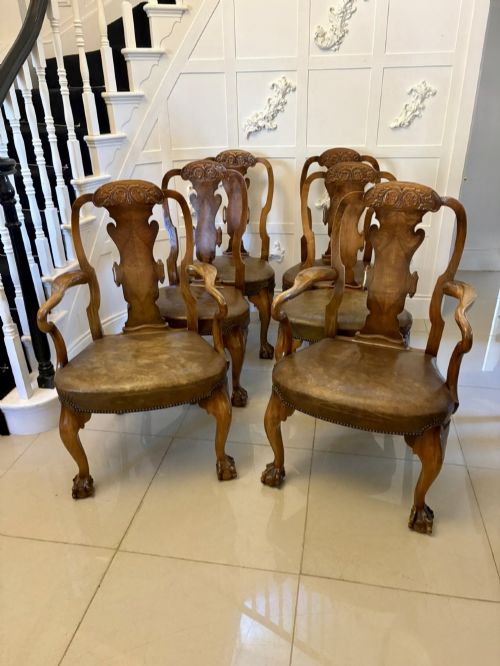
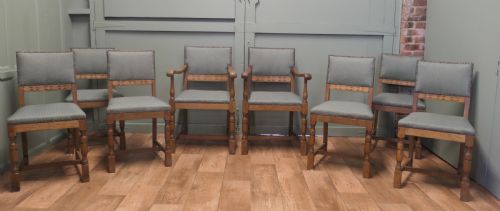
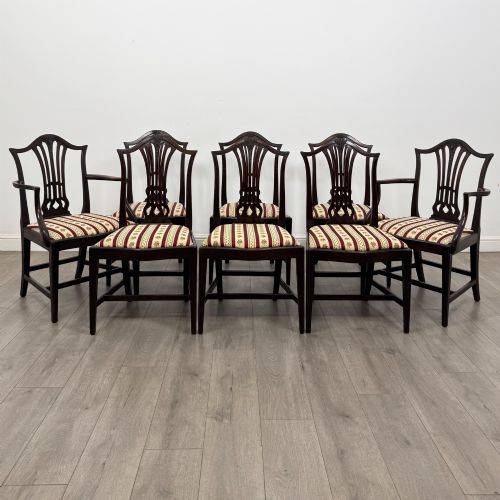
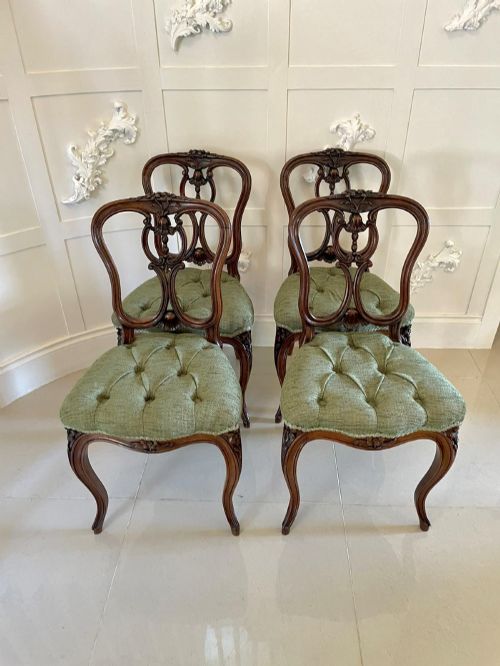
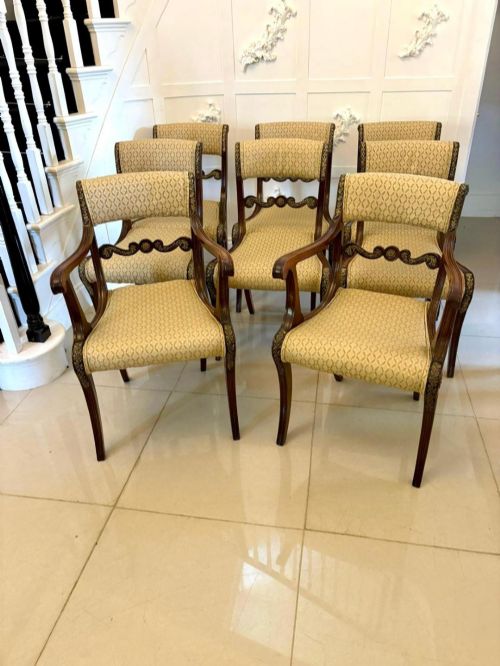
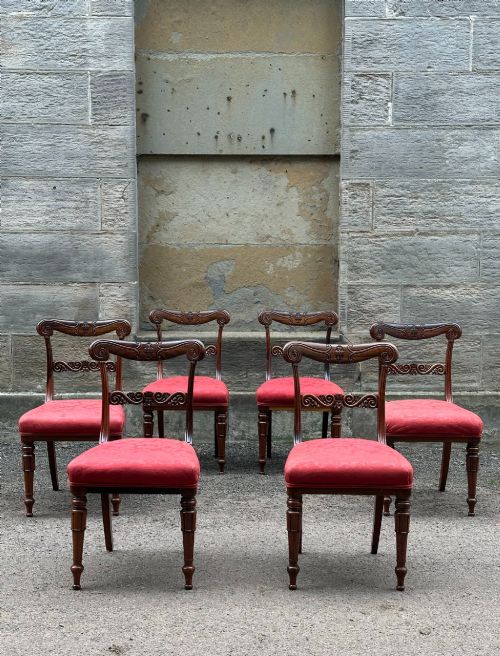
The materials span traditional hardwoods like mahogany, rosewood, walnut, and oak, often paired with upholstered fabric or textile seats. Styles draw on Georgian, Regency, Victorian, and Arts and Crafts traditions, alongside specific revivals like Queen Anne and Chippendale manners.
Evidence shows forms varying from shield backs and balloon backs to lattice backs and barley twist frames. Sets frequently emerge from English workshops, alongside continental pieces in walnut and oak.
How they were made
Cabinetmakers constructed these frames using solid hardwoods such as mahogany, oak, walnut, and rosewood, employing traditional joinery techniques. Carved details, such as those found on Regency and Chippendale manner examples, relied on hand-chiselling the timber.
Upholstery techniques applied textile, fabric, or embossed leather over padded seat foundations. Frames incorporated turned elements, including barley twist supports, or integrated steam-bent components to shape shield backs and balloon backs.
Retail Price Guide 2026
Typical UK retail prices for set dining chairs, calculated from the Sellingantiques database of over a million retail prices indexed since 2003. This retail price guide relies exclusively on Sellingantiques data; no external sources or auction records are used, so the figures do not describe the wider market.
Listings feature mahogany, oak, walnut, and rosewood across Georgian, Victorian, and twentieth-century periods.
What varies in quality
Quality separates ordinary utility seating from master cabinet work through the choice and figure of the timber. Dense, well-figured mahogany or richly grained rosewood indicates higher workshop standards than plain secondary woods.
The crispness of carved detail and the integrity of the joinery distinguish superior sets. Maker signatures, stamps, or attributions to prominent workshops elevate the standing of a set within the archive of surviving pieces.
Heals·Edward Barnsley·Neville Neal Clissett·Gillows·Lethaby
The Set Dining Chairs Glossary
- Balloon back
- A rounded, oval-shaped wooden chair back popular during the Victorian period. This profile curves outwards to resemble a balloon.
- Shield back
- A chair back shaped like a heraldic shield, characteristic of late eighteenth-century and revival dining seats. This design often incorporates carved splats.
- Barley twist
- A turned wooden furniture leg or stretcher carved in a spiral resembling a twist of barley. This decorative detail frequently appears on oak dining chairs.
- Chippendale manner
- A style following the designs of Thomas Chippendale, featuring elaborate carved splats and cabriole legs. These pieces draw on mid-eighteenth-century aesthetic principles.
- Limed oak
- An oak finish treated with a white pigment to highlight the open grain of the wood. This technique gained prominence in twentieth-century modernist and Arts and Crafts design.
Frequently Asked Questions
How many chairs come in a set?
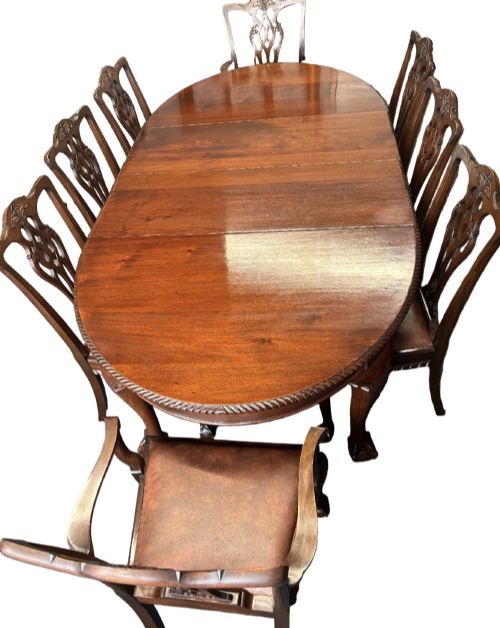
Sets appear in varying quantities, most commonly comprising groups of four, six, eight, ten, or twelve chairs. Larger configurations sometimes include a combination of standard dining chairs and matching armchairs.
Matching larger numbers of chairs proves more difficult to source than smaller groups. Historic dining requirements dictated these specific quantities for hosting dinner parties.
How do I identify a Victorian dining chair?
Victorian chairs frequently feature balloon backs or heavily carved walnut and mahogany frames. These pieces date from the nineteenth century and often display robust proportions.
Cabinetmakers of this era frequently utilised rosewood alongside mahogany. The construction generally reflects industrial-age advancements combined with traditional hand-finishing.
What is a Chippendale manner dining chair?
A Chippendale manner chair borrows aesthetic cues from eighteenth-century design books, characterised by intricate pierced splats. These chairs often emerge in later revival periods as well as the Georgian era itself.
The style emphasises carved woodwork and substantial mahogany frames. Country interpretations of this style also exist in simpler oak formats.
Are oak dining chairs from the Arts and Crafts period?
Arts and Crafts dining chairs utilise solid oak and emphasise visible construction methods rather than concealed joinery. Makers such as Heals and Lethaby produced notable examples in this tradition during the early twentieth century.
These pieces value plain structural honesty over ornate carving. Limed finishes and lattice backs frequently accompany these oak designs.