


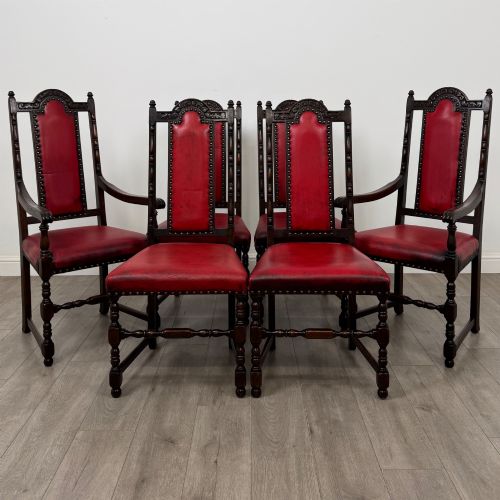
Vintage Oak Chairs
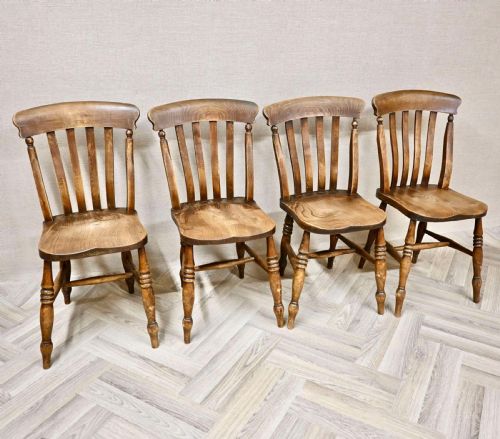
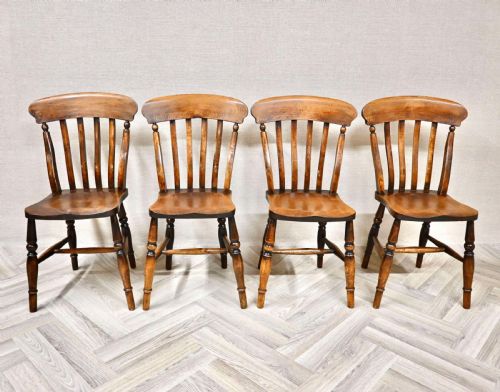
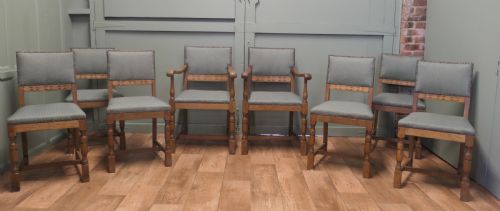
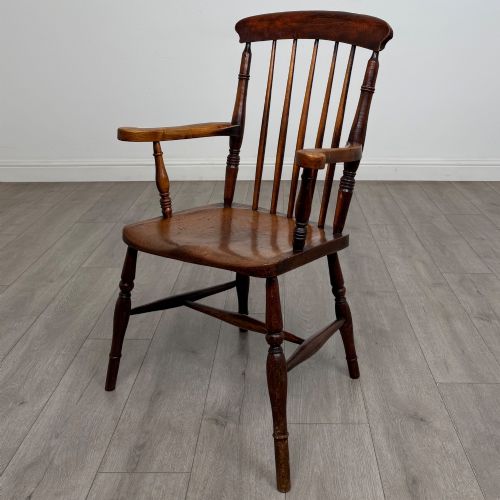
These vintage oak chairs bring sturdy timber and honest joinery into daily rooms, ranging from plain country kitchen seats to high-backed dining sets.
Vintage Oak Chairs
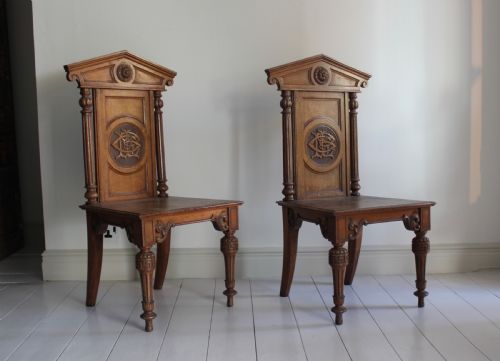
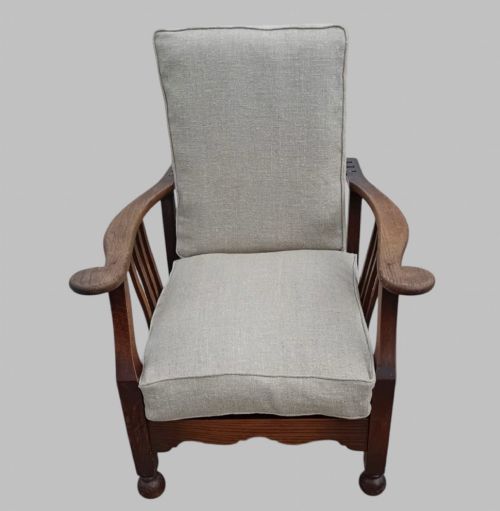
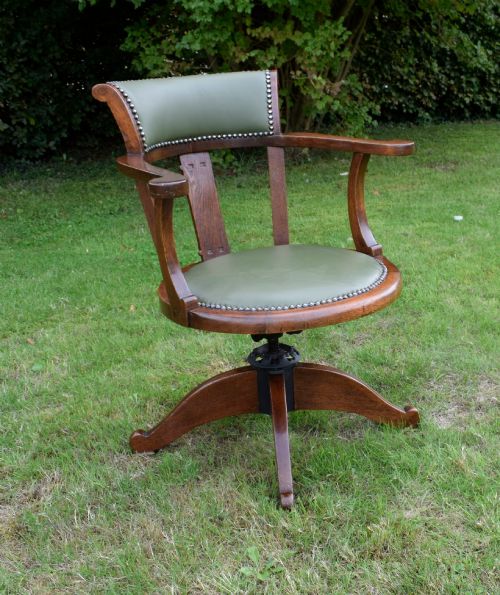
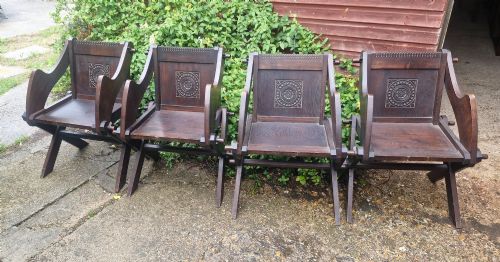
Vintage oak chairs encompass a broad selection of domestic seating spanning the eighteenth century through to the nineteen-thirties, covering styles from plain rustic farmhouse forms to formal Jacobean revival dining sets. Buyers searching for vintage oak chairs encounter everything from single library armchairs and swivel desk seats to large sets of eight or ten dining chairs.
The selection here draws heavily on nineteenth-century vernacular pieces alongside Edwardian interpretations, featuring regional kitchen windsors, ladder backs, and rush-seated low armchairs. Dining sets, hall benches, and occasional side chairs appear frequently alongside specialised forms like revolving office chairs and metamorphic library steps.
Origins stretch across English country workshops, Scottish schools, and continental makers, utilising local timber matched to specific regional traditions. Whether fitted with leather upholstery, brass details, or simple solid timber seats, each piece reflects the functional demands of its original domestic or commercial setting.
How they were made
Makers built these frames using solid oak supplemented by secondary woods like elm, beech, and ash for spindles or turning, joined with traditional pegged mortise and tenon construction. Surfaces often display the distinct medullary rays of quarter-sawn timber, shaped by hand saws and drawknives on older country examples.
Seats utilise woven rush, supple leather, or drop-in upholstered pads stuffed with natural materials and secured with brass tacks, while specific models incorporate bentwood components and steam-bent lath backs. Finishes rely on wax or polish applied directly to the bare wood, allowing the natural grain and colour to deepen over decades of use.
Several small child-sized armchairs and a metamorphic library ladder hide clever engineering in miniature.
What varies in quality
Quality rests upon the integrity of the timber selection and the tightness of the original joinery, where quarter-sawn oak displays superior stability and richer figuring than plain-sawn boards. The crispness of hand-turned spindles, the precision of bobbin turning, and the depth of carved details on revival styles separate standard workshop output from finer cabinet work.
Survival of original surfaces, authentic rush or leather seating materials, and matching harlequin sets dictate the desirability of individual pieces. Structural soundness in high-stress areas like chair legs and arm joints determines how well a piece handles active daily sitting.
Liberty Morris And Co
The Vintage Oak Chairs Glossary
- Windsor
- A traditional chair featuring a solid wooden saddle seat into which the legs and back spindles are directly bored and wedged.
- Rush
- A marsh plant twisted into cords and hand-woven to form durable, flexible seats for country and arts and crafts chairs.
- Bobbin turned
- Timber turned on a lathe to resemble a series of rounded wooden beads or bobbins threaded together, common on seventeenth-century style frames.
- Bergere
- An enclosed upholstered armchair featuring woven cane panels set into the wooden frame sides and back.
- Draw leaf
- A table or associated seating arrangement featuring pull-out extension leaves, occasionally paired in dining room suites.
Vintage Oak Chairs: Frequently Asked Questions
How do I date vintage oak chairs?
Dating relies on examining construction marks, tool traces, and stylistic markers such as bobbin turning or arts and crafts simplicity.
Changes in hardware, upholstery methods, and timber preparation help narrow the period of manufacture.
Are oak dining chairs comfortable for daily use?
Many designs offer supportive upright postures suited for long meals, particularly those featuring padded leather or woven rush seats.
Solid wood seats can be softened with loose cushions without altering the underlying vintage frame.
What is a stick back chair?
A stick back utilises plain cylindrical spindles inserted into a solid wooden seat to form the backrest structure.
This robust vernacular construction appears frequently in nineteenth-century country kitchen seating.
Can I mix different oak chair styles together?
Harlequin sets combining similar nineteenth-century vernacular forms offer a traditional method for gathering a full dining group.
Matching timber tones and general heights help unify disparate chairs around a single table.