


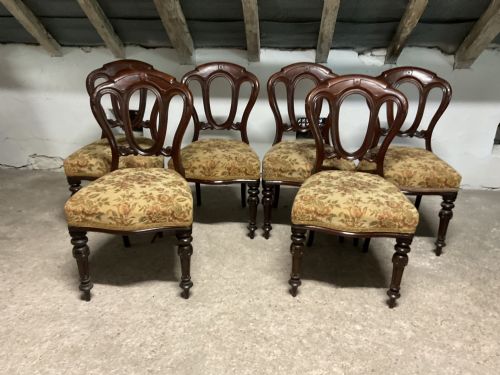
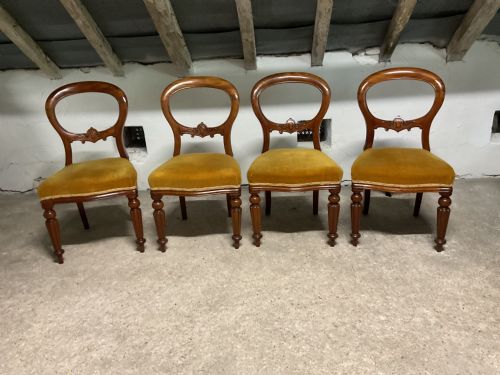
Antique Balloon Back
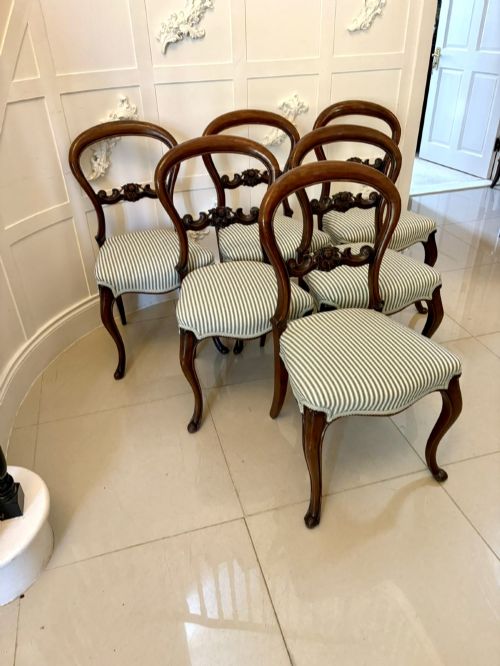
When choosing an antique balloon back, you select a seating form defined by its signature curved backrest.
Antique Balloon Back
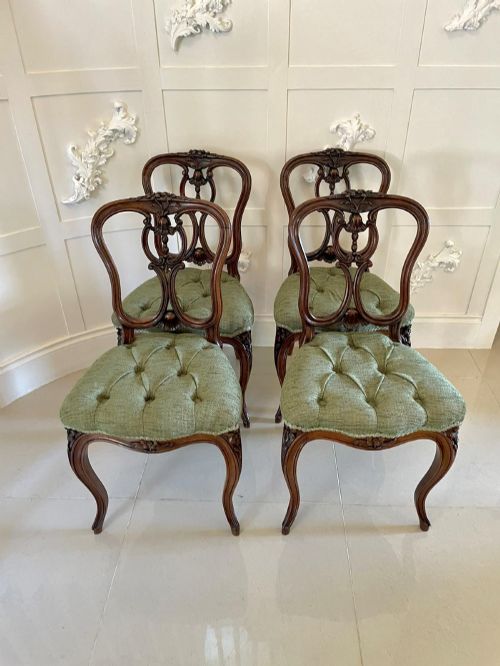
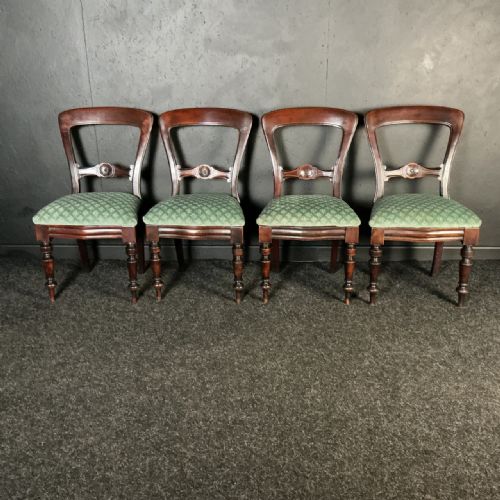
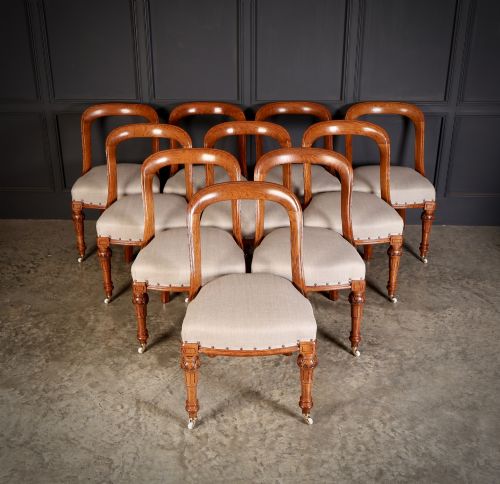
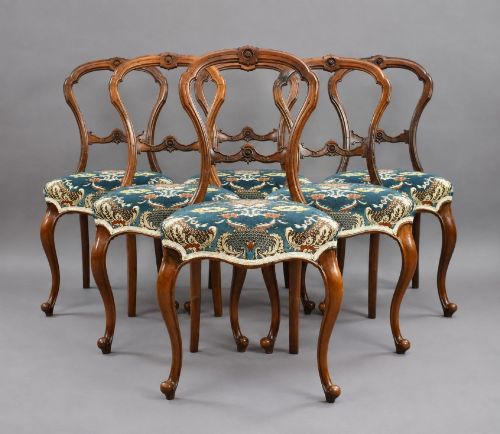
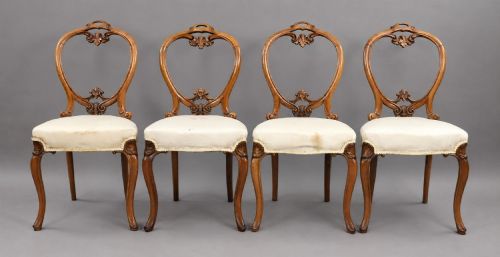
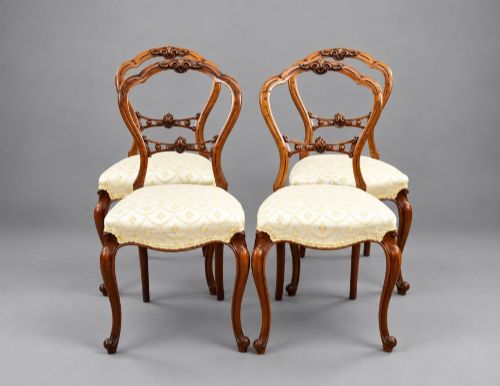
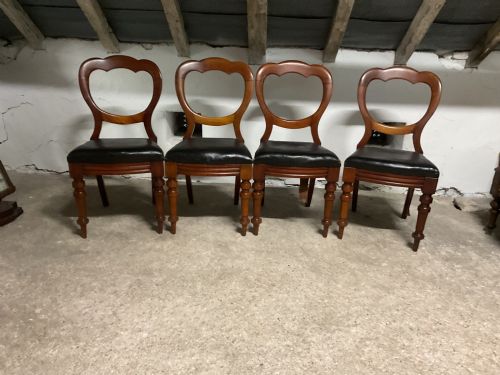
The antique balloon back encompasses dining chairs, side chairs, and armchairs primarily produced during the Victorian era and the broader nineteenth century. These seats feature an oval or loop-shaped backrest that curves smoothly from the seat rail.
Mahogany and walnut examples dominate the listings, frequently appearing in matched sets intended for formal dining rooms. Single occasional chairs, salon chairs, and low bedroom chairs also occur regularly within these periods.
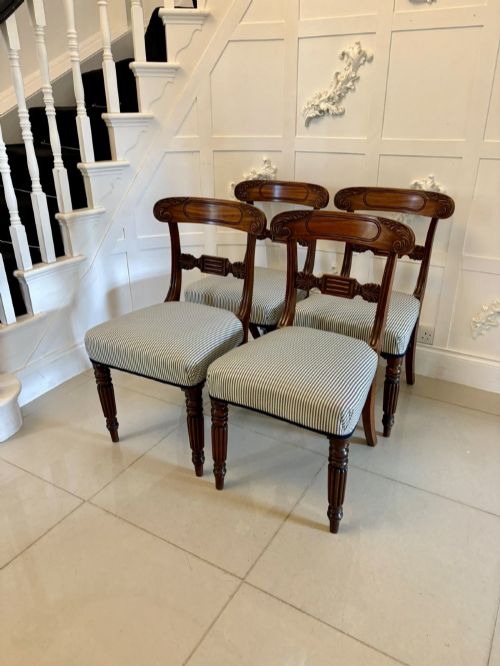
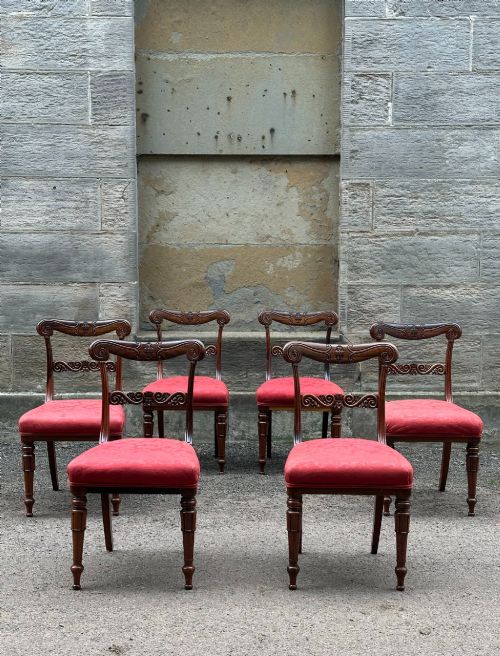
Earlier derivations connect to Regency and William IV forms, whilst later pieces extend towards the close of the nineteenth century. The design evolved through various revivals, including Rococo and Louis XV influences.
How They Were Made
Cabinetmakers constructed the continuous loop of the balloon back using steam-bent timber or by carving the shape directly from solid mahogany and walnut boards. This frame joined securely to the seat rail through traditional mortise and tenon joints.
Upholstery techniques involved drop-in seats or sprung bases secured with webbing, layered stuffing, and finishing fabrics such as velvet, brocade, and general upholstery fabric. Brass components occasionally reinforced structural stress points.
Listings demonstrate that Victorian mahogany and walnut predominate among these nineteenth-century balloon back forms.
What Varies in Quality
The sophistication of the timber grain and the depth of hand-carved ornamentation dictate the standard of the frame. Selected mahogany and figured walnut display superior visual richness compared to plain secondary woods.
Structural integrity depends on the rigidity of the backrest joinery and the original weight of the timber scantlings. Pieces retaining their early upholstery webbing and solid frame joints command greater authority than altered examples.
Gillows·John Manuel & Son
The Antique Balloon Back Glossary
- Balloon back
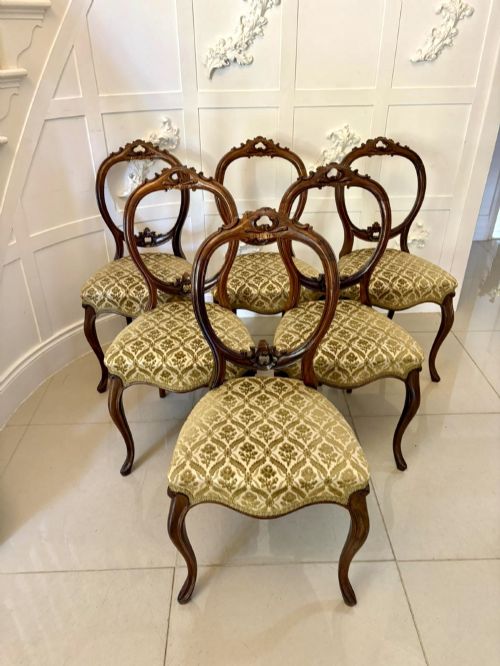
- A chair featuring a closed, oval or loop-shaped backrest resembling the silhouette of a balloon. This defining contour gained widespread popularity across Victorian dining and occasional seating.
- Cabriole leg
- A furniture leg that curves outward in a convex arc before tapering inward to a scroll or pad foot. It echoes seventeenth-century classical design principles revived during the nineteenth century.
- Rococo Revival
- A nineteenth-century decorative style characterised by asymmetrical scrolling, floral carving, and exuberant curves. It heavily influenced the ornamentation of mid-century walnut frames.
- Drop-in seat
- A removable wooden frame padded and upholstered independently before insertion into the seat rail rebate. This method allowed straightforward recovering without dismantling the main structure.
- Cameo back
- A variant of the curved backrest featuring a raised oval central panel reminiscent of a carved stone portrait. These frames often showcase elaborate floral cresting.
Antique Balloon Back: Frequently Asked Questions
How do I date a balloon back chair?
Dating relies on timber choice, leg profiles, and structural joinery observed across nineteenth-century production. Early examples often exhibit Regency influences with rosewood, while mid-Victorian pieces lean toward walnut and heavier mahogany.
Secondary characteristics such as hand-carved cresting rails and specific revival styles help narrow the decade of manufacture. Comparing the seat construction methods further clarifies the chronological sequence.
Were these chairs only used for dining?
Dining sets form the majority of surviving pieces, but the form extended across multiple domestic functions. Parlours, drawing rooms, and bedrooms utilised lighter side chairs and low occasional seats.
Larger armchairs and gentleman's chairs provided heavier upholstered seating for studies and libraries. The versatility of the curved frame suited both formal dining and casual salon use.
How should I care for antique wood and upholstery?
Maintain the timber surfaces by applying traditional beeswax sparingly and buffing with a soft cloth to preserve the finish. Avoid placing antique chairs near direct heat sources that can dry out old mahogany and walnut.
Protect delicate fabrics like velvet and brocade from prolonged direct sunlight to prevent fading. Professional conservation is recommended for restoring underlying sprung upholstery bases.
What is the difference between mahogany and walnut balloon backs?
Mahogany frames generally present a denser, straight-grained red-brown appearance associated with earlier nineteenth-century production. Walnut offers a lighter, highly figured caramel tone frequently paired with elaborate carved details.
Walnut chairs frequently align with Rococo Revival aesthetics featuring sweeping cabriole legs. Mahogany versions tend to emphasise architectural restraint and classical proportions.